

P0087 on 2013-2015 Ford Fusion: Low Fuel Rail Pressure Causes & Fixes
For a 2013-2015 Ford Fusion with an EcoBoost engine, code P0087 is most often caused by a failed Fuel Low Pressure (FLP) sensor. This is a relatively inexpensive part and a common failure point identified in Ford Technical Service Bulletin SSM 48397. The sensor can get stuck, providing a false reading to the computer. Other causes include a failing high-pressure fuel pump (HPFP), which can sometimes wear out the camshaft follower and damage the camshaft itself.
- For code P0087 on a 2013-2015 Fusion, the first part to check is the Fuel Low Pressure (FLP) sensor, not the expensive high-pressure pump.
- Symptoms include serious drivability issues like stalling and significant power loss, making it a safety concern.
- A Ford TSB directly addresses this code and points to the FLP sensor as a known issue.
- Diagnosis requires a scan tool that can read live fuel pressure data for both the low and high-pressure systems.
What's Unique About the 2013-2015 Ford FUSION
The 2013-2015 Fusion's EcoBoost (GTDI) engines use a sophisticated fuel system with two pumps: a low-pressure electric pump in the tank and a high-pressure mechanical pump driven by the camshaft. This dual-pump setup is common on direct-injection engines and creates multiple potential failure points. 🎬 Watch: How to diagnose and fix a P0087 low pressure code. Ford has specifically identified the low-pressure sensor as a common culprit on this platform and its platform-mates (like the Escape and Lincoln MKZ), even issuing TSB SSM 48397 to address it. The sensor can fail by getting 'stuck' at a certain reading (e.g., 109 PSI), fooling the PCM into thinking the low-side pressure is fine when it's actually dropping, thus starving the high-pressure pump.
Diagnostic Flowchart
Tap your situation to follow the diagnostic path that matches what you're seeing on this vehicle.
Symptoms You May Notice
- Check Engine Light is on
- Lack of power or poor acceleration, especially under load.
- Engine hesitation or stumbling.
- Engine stalling, especially when put in gear or at low speeds.
- Long crank time to start the engine.
- Rough idle.
- Engine bucking or jerking at low speeds.
- Replacing the expensive high-pressure fuel pump (HPFP) when the actual problem is the much cheaper and more common Fuel Low Pressure (FLP) sensor.
- Replacing the in-tank fuel pump when the issue is the FLP sensor providing an incorrect reading to the PCM.
Most Likely Causes
- Failed Fuel Low Pressure (FLP) Sensor 🔴 High Probability → Shop Fuel Pressure Sensor This specific sensor is identified as a frequent failure point in Ford's Technical Service Bulletin #SSM 48397 for this exact vehicle and engine range. The sensor can provide a biased or incorrect reading (e.g., stuck at a high voltage or pressure reading), causing the PCM to improperly command the fuel pumps, leading to a fuel-starved condition.
How to confirm: Use a scan tool to monitor the low-pressure fuel PID ('FLP'). Compare this reading to a mechanical fuel pressure gauge connected to the low-pressure line. If the sensor's reading is stuck (e.g., 4.8V or 109 PSI) and doesn't fluctuate with engine demand, while the mechanical gauge shows pressure dropping, the sensor has failed. The normal low-side pressure should cycle between approximately 60-85 PSI.
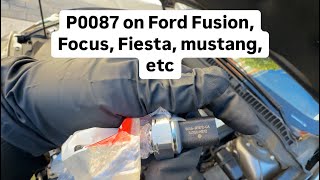
Typical fix: Replace the Fuel Low Pressure sensor. It is located on the fuel supply line leading to the high-pressure fuel pump, near the firewall. A revised part is available.
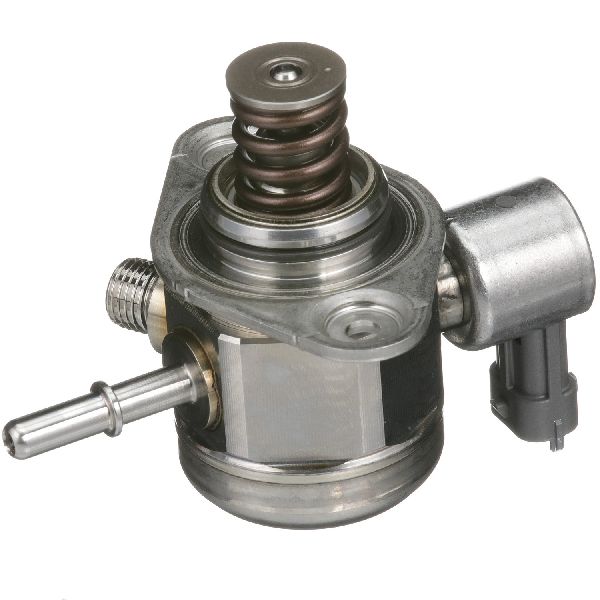
Est. part cost: $50-$120 - Failing High-Pressure Fuel Pump (HPFP) 🟡 Medium Probability → Shop Fuel Pump The HPFP is a mechanical pump driven by a lobe on the camshaft via a cam follower (tappet). Over time, the follower can wear out or fail, leading to damage to both the pump and the camshaft lobe itself, as reported by owners in NHTSA complaints and forum discussions.
How to confirm: With a capable scan tool, monitor the desired vs. actual fuel rail pressure on the high-pressure side during a test drive under load. If the actual pressure consistently fails to meet the desired pressure, the HPFP is a likely suspect. Upon removal, inspect the cam follower and the camshaft lobe for scoring, wear, or damage. Checking for metal shavings in the engine oil is also recommended.
Typical fix: Replacement of the high-pressure fuel pump and the cam follower. In severe cases where the pump has damaged the camshaft, the camshaft may also need replacement.
Est. part cost: $250-$600 - Clogged Fuel Filter ⚪ Low Probability → Shop Fuel Filter The fuel filter is a maintenance item. If neglected, it can become clogged and restrict fuel flow to the high-pressure pump, starving it of the volume it needs to build pressure. On this platform, the filter is integrated into the in-tank fuel pump module and is not considered a separately serviceable part.
How to confirm: Test the fuel pressure on the low-pressure side. If pressure is consistently below specification (typically 60-85 PSI) and the FLP sensor is known to be good, a clogged filter or weak pump is a possible cause.
Typical fix: Replace the entire in-tank fuel pump module/assembly which contains the filter.
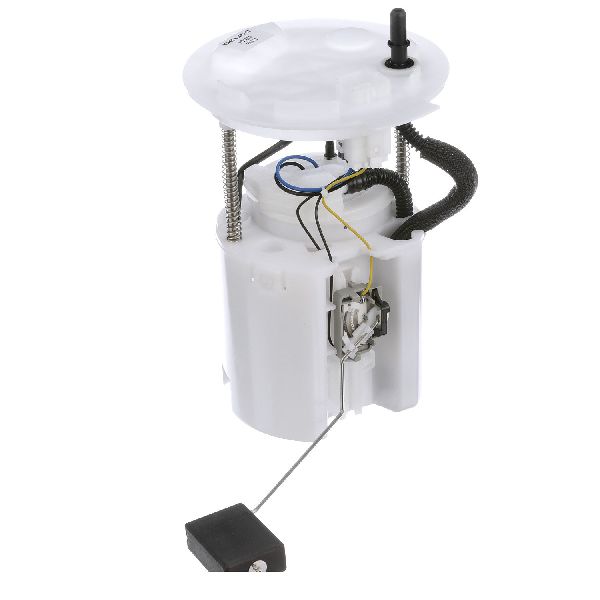
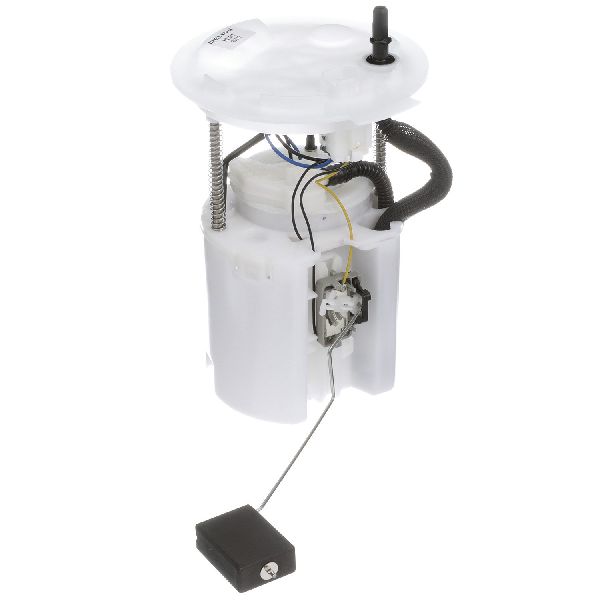
Est. part cost: $200-$400 - Weak In-Tank Low-Pressure Fuel Pump ⚪ Low Probability → Shop Fuel Pump
How to confirm: Perform a fuel pressure and volume test on the low-pressure side. If the pump fails to deliver the specified pressure (60-85 PSI) and volume under load, it is failing.
Typical fix: Replace the in-tank low-pressure fuel pump assembly.
Est. part cost: $200-$400
Rare But Worth Checking
- Wiring issue to PCM or sensors: A technician on the ScannerDanner.com forum found that two loose pins in the PCM connector caused an intermittent P0087 code on a 2014 Fusion after a prior accident repair. Always check for wiring damage or loose connections at the PCM, especially if the vehicle has a history of collision repair.
- Failed HPFP Cam Follower/Tappet: → Shop Fuel Pump The small mechanical follower that rides between the camshaft and the HPFP can fail independently. A technician on 2CarPros found a failed cam follower and high wear on the pump, causing P0087. It is highly recommended to replace this inexpensive part whenever the HPFP is replaced to prevent premature failure of the new pump.
Diagnosis Steps
- Connect an OBD-II scanner and check for P0087 and any other accompanying codes. Note the freeze frame data to see the conditions when the code was set.
- Using a scan tool with live data, monitor 'Fuel Low Pressure' (FLP), 'Fuel Rail Pressure' (FRP), and 'Desired Fuel Rail Pressure'.
- At idle, observe the FLP reading. It should fluctuate, typically between 60-85 PSI. If it's stuck at a high, unchanging value (e.g., 100+ PSI or 4.8V), the FLP sensor is the primary suspect.
- To confirm a bad FLP sensor, compare the scanner's reading to a mechanical fuel pressure gauge connected to the low-pressure line's service port. If the sensor's reading is static or significantly different from the gauge, replace the Fuel Low Pressure (FLP) sensor as recommended by TSB SSM 48397.
- If the low-pressure sensor and pressure are good, perform a test drive while monitoring the high-pressure PIDs. Under engine load (e.g., hard acceleration), observe if the actual 'Fuel Rail Pressure' can keep up with the 'Desired Fuel Rail Pressure'. A significant and consistent lag indicates a problem with the high-pressure fuel pump (HPFP).
- If the HPFP is suspected, remove it for inspection. Carefully inspect the cam follower (tappet) for wear, and check the camshaft lobe that drives the pump for any scoring or damage. Also check the engine oil for fuel contamination or metal shavings.
- Inspect the wiring and connectors for the fuel pressure sensors, fuel pumps, and the Powertrain Control Module (PCM) for any signs of damage, corrosion, or loose connections, as this has been a documented, though rare, cause.
Parts You'll Likely Need
- Fuel Low Pressure Sensor
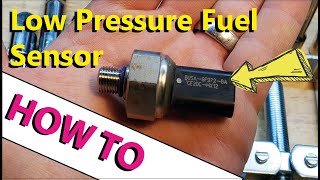
(OEM #BU5Z-9F972-B)— This is the most common cause identified by Ford in TSB SSM 48397. A revised part number, BU5A-9F972-CA, is recommended as it has an updated design. The original part number may end in -BA.
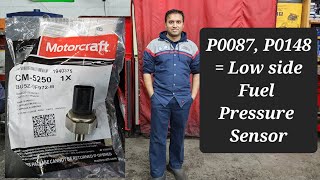
Trusted brands: Motorcraft (CM-5250), Bosch
OEM price range: $70-$120
Aftermarket price range: $40-$80 - High-Pressure Fuel Pump
(OEM #BM5Z-9350-A (1.6L), AG9Z-9350-B (2.0L))— This is the second most likely cause, responsible for generating the high pressure in the fuel rail. It can wear out mechanically, sometimes damaging the camshaft. Part numbers can vary, so VIN confirmation is recommended. Bosch is an OEM supplier for this part.
Trusted brands: Motorcraft, Bosch
OEM price range: $400-$600
Aftermarket price range: $250-$450 - HPFP Cam Follower (Tappet) — This small mechanical follower that rides between the camshaft and the HPFP can fail independently. It is highly recommended to replace this inexpensive part whenever the HPFP is replaced to prevent premature failure of the new pump.
Related Codes That Often Appear With This One
- P2196 — O2 Sensor Signal Stuck Rich. This can occur if a faulty pressure sensor causes incorrect fuel delivery calculations, as noted in an owner complaint and a repair forum.
- P1450 — Unable to Bleed Up Fuel Tank Vacuum. This EVAP system code was reported alongside P0087, potentially indicating multiple unrelated issues or a complex electrical fault.
- P00C6 — Fuel Rail Pressure Too Low - Engine Cranking. This code is listed in the same TSB (SSM 48397) as P0087 and points to the same faulty low-pressure fuel sensor.
- P0148 — Fuel Delivery Error. This code often appears with P0087 and indicates a general problem with the fuel supply, often traced back to the low-pressure sensor or pump.
- P219A — Bank 1 Air-Fuel Ratio Imbalance. This was reported along with P0087 in an NHTSA complaint where the HPFP had failed and damaged the camshaft.
Technical Service Bulletins (TSBs) & Recalls
- SSM 48397: For 2013-2015 Fusion/MKZ/Escape/MKC with 1.5L, 1.6L, or 2.0L GTDI engines, this bulletin notes that a lack of power or stall with DTCs P00C6, P0087, P008A, P008B, P018C, or P018D may be due to a failed Fuel Low Pressure (FLP) sensor. It confirms the sensor is available for individual sale (Part No. BU5Z-9F972-B) and advises technicians to compare the FLP PID on a scan tool to a manual pressure gauge to confirm the failure.
Platform-Specific Known Issues
- A known issue, documented in TSB SSM 48397, is the failure of the Fuel Low Pressure (FLP) sensor, which can cause a lack of power, stalling, and trigger P0087. The bulletin clarifies that this sensor is available to be replaced separately from the entire fuel line.
- An owner of a 2015 Fusion reported that the high-pressure pump failed by grinding into the camshaft, leading to fuel rail failure and codes P0087 & P219A. This was documented in NHTSA complaint #11360172.
- A technician on 2CarPros.com detailed a 2015 Fusion 1.5L where the P0087 code was caused by a failed cam follower and high wear on the HPFP, with minor marring on the camshaft.
- A YouTube video for a 2016 Fusion with P0087 and P0148 showed the low-side sensor was stuck reading 109 PSI while actual pressure was dropping below 30 PSI, confirming the sensor as the fault. After replacement, the live data showed a healthy 72 PSI.
Mechanic-Grade Diagnostic Values
- Low-Side Fuel Pressure (FLP) Sensor Voltage (Live Data) — expected: ~3.47V, fluctuating with demand.. Failure: Stuck at a high value like 4.8V, or shorted to ground at 0V.
- Low-Side Fuel Pressure (FLP) (Live Data) — expected: Fluctuating between 60-85 PSI at idle.. Failure: Stuck at a high, static reading (e.g., 109 PSI) or reading 0 PSI, which doesn't match mechanical gauge readings.
- Low-Side Fuel Pressure Sensor Signal Wire Voltage (Unplugged) — expected: 5V.. Failure: If the scan tool reads 0V when the sensor is plugged in, but jumps to 5V when unplugged, this confirms the sensor itself is internally shorted to ground.
Hidden / Shadow Codes Worth Checking
- N/A: Ford's PCM calculates a 'fuel fractional pressure error,' which is a ratio of the pressure error over the desired pressure. When this unitless ratio exceeds a calibrated threshold for being too low, DTC P0087 is set. (see via This is an internal PCM strategy, not a user-visible code.)
Scan Tool Commands That Help
- Any OBD-II Scanner with Live Data: Circuit Integrity Check by Disconnecting Sensor — When P0087 is present and live data for the Fuel Low Pressure (FLP) sensor shows 0V or 0 PSI. Unplugging the sensor should cause the voltage to jump to 5V on the scan tool. If it does, the wiring and PCM are likely good, and the sensor itself is internally shorted.
Wiring & Ground Locations
- G101 / G102 — Left front of engine compartment.. Provides a ground path for various engine components and sensors. A corroded or loose ground here can cause erratic sensor readings.
- G104 / G105 — Right side of engine compartment.. Serves as another critical engine-area ground point. Problems here can affect sensor and module operation.
- Fuel Pump Control Module — Located in the left front of the luggage compartment (trunk).. This module controls the in-tank low-pressure fuel pump. Any wiring or connection issues at this location can directly impact low-side fuel supply.
- Fuel Low Pressure Sensor Connector — On the low-pressure fuel line near the firewall, leading to the HPFP.. The 3-pin connector contains a 5V reference wire, a ground wire, and a signal return wire to the PCM.
Real Owner Repair Stories
- ScannerDanner Forum (2014 Ford Fusion 2.0L) — Long crank time to start, poor acceleration, check engine light on.
❌ Tried (didn't work) Customer had already replaced the low-pressure fuel pump.
✅ What actually fixed it Two pins were found to be pushed out of the Powertrain Control Module (PCM) connector socket. The car had been in an accident six months prior and the PCM was replaced, but the connector was not properly seated/locked. Pushing the pins back into the connector resolved all issues.
OEM Part Supersession History
BU5A-9F972-BA→BU5Z-9F972-B (also known as Motorcraft CM-5250)— Standard part lifecycle update.BU5Z-9F972-B→BU5A-9F972-CA— A revised part was issued to address common failures. The revised '-CA' part is identifiable by a small hole in its body that the original does not have.
Heads up: The '-CA' version is the recommended replacement to prevent repeat failures.CM-5226→BU5Z-9F972-B— Supersession of an older Motorcraft part number.
Model Year Variations Within This Range
- 2013-2014: The 1.6L GTDI engine was available. This engine was discontinued and replaced by the 1.5L GTDI for the 2014 model year onwards. While different displacements, they share a similar GDI fuel system architecture and both are susceptible to the P0087 code from a failed low-pressure fuel sensor.
Helpful Videos

Used OEM Parts in Stock
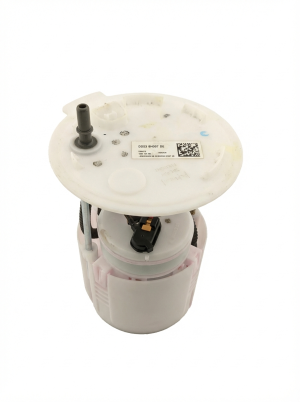
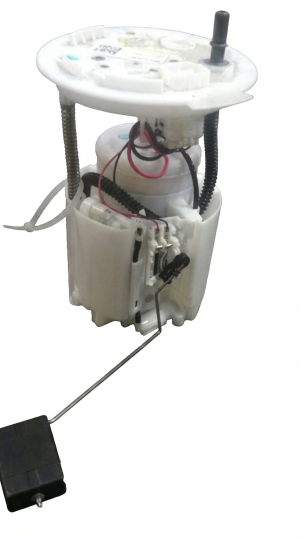
New Aftermarket Parts Available


The information in this article is provided for general reference and educational purposes only. Vehicle specifications, procedures, and part compatibility can vary by production date, trim level, and region. Always consult your vehicle's factory service manual and verify part numbers before purchasing or performing repairs. Safety-critical components such as airbags, seat belts, and braking systems should be installed by a qualified professional.
- Ford FUSION:
- 🧭 Diagnostic Flowchart
- 🎬 Helpful Videos
- 🛍️ Shop This Part
- What's Unique About the 2013-2015 Ford FUSION
- Symptoms You May Notice
- Most Likely Causes
- Rare But Worth Checking
- Diagnosis Steps
- Parts You'll Likely Need
- Related Codes That Often Appear With This One
- Technical Service Bulletins (TSBs) & Recalls
- Platform-Specific Known Issues
- Mechanic-Grade Diagnostic Values
- Hidden / Shadow Codes Worth Checking
- Scan Tool Commands That Help
- Wiring & Ground Locations
- Real Owner Repair Stories
- OEM Part Supersession History
- Model Year Variations Within This Range
- 🎟️ Get 5% Off