

P0087 on 2013-2020 Ford Fusion 2.0L EcoBoost: Causes and Fixes for Low Fuel Pressure
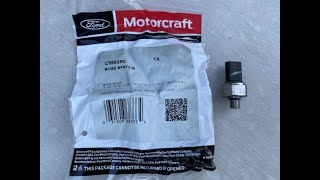
For a 2013-2020 Fusion 2.0L EcoBoost, P0087 is most often caused by a faulty low-pressure fuel sensor (FLP sensor), a known issue covered by Ford TSB SSM 48397. Before replacing the expensive high-pressure fuel pump, check this sensor first. A key symptom is the low-pressure reading being 'stuck' at a fixed value (like 109 PSI) on a scan tool. The sensor costs around $50-$100 for an OEM part (Motorcraft CM-5250 / BU5Z-9F972-B).
- For code P0087 on a 2.0L EcoBoost Fusion, suspect the low-pressure fuel sensor (FLP sensor) first. It's a known weak point and a common, inexpensive fix.
- Do not immediately assume the expensive high-pressure fuel pump (HPFP) has failed. Proper diagnosis by comparing sensor readings to actual pressure is crucial to avoid a costly misdiagnosis.
- Driving with this code is unsafe due to the high risk of the engine stalling in traffic.
- If the high-pressure fuel pump does need replacement, always replace the inexpensive cam follower (tappet) at the same time to ensure the longevity of the repair.
What's Unique About the 2013-2020 Ford Fusion

On this specific platform and its mates (Lincoln MKZ, Ford Escape), the low-pressure fuel sensor (FLP sensor) is a very common failure point and a primary cause for code P0087. Ford issued a Technical Service Bulletin (TSB SSM 48397) for 2013-2015 models acknowledging that this sensor can fail or provide biased readings, leading to this code. Many owners and technicians mistakenly replace the expensive high-pressure fuel pump when the much cheaper sensor is the actual root cause. NHTSA ODI #11297884 further confirms this issue, specifically documenting the "Fuel Rail/System Pressure Too Low" fault on this platform.
Symptoms You May Notice
- Check Engine Light is on
- Significant loss of power, especially when accelerating or climbing hills
- Engine hesitation, stumbling, or surging
- Engine stalling, sometimes without warning, especially at idle or low speeds 🎬 Watch: How to fix stalling issues and clear code P0087.
- Hard starting or long crank times
- Rough or unstable idle, sometimes with shaking or vibration
- Decreased fuel economy
- Engine is hard to restart after stalling
- Replacing the high-pressure fuel pump (HPFP) when the actual fault is the much cheaper and easier to replace low-pressure fuel sensor (FLP sensor). This is the most common misdiagnosis on this platform due to the high failure rate of the sensor.
Most Likely Causes


- Faulty Low-Pressure Fuel Sensor (FLP Sensor) 🔴 High Probability → Shop Fuel Pressure Sensor This is a well-documented failure item for this engine, as confirmed by Ford TSB SSM 48397. The sensor can send incorrect, 'stuck', or biased readings to the PCM. NHTSA ODI #11160628 describes a case where an owner's vehicle read code P0087 and diagnosis confirmed the fuel pressure sensor needed replacement.
How to confirm: Use an OBD-II scanner to monitor the 'Fuel Low Pressure' PID. A common failure is the reading being stuck at a fixed value (e.g., 109 PSI) regardless of engine load or RPM. If you disconnect the sensor's electrical connector, the PID value should change to a default high reading (e.g., 113 PSI) and the voltage to 5V; if it doesn't, the sensor is almost certainly faulty. The best confirmation is to compare the scanner's reading to a mechanical fuel pressure gauge; a significant difference indicates a faulty sensor.
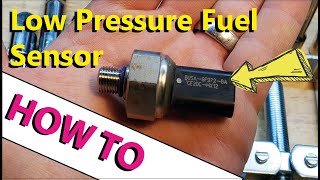
Typical fix: Replace the low-pressure fuel sensor. It is located on the fuel supply line near the firewall, on the driver's side. Access is tight and may require removing the wiper cowl assembly. 🎬 See this walkthrough on replacing the low fuel pressure sensor. A 15/16" or 24mm socket is needed for the sensor and a 13mm wrench to counter-hold the fuel line fitting to prevent damage.
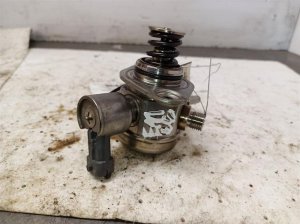
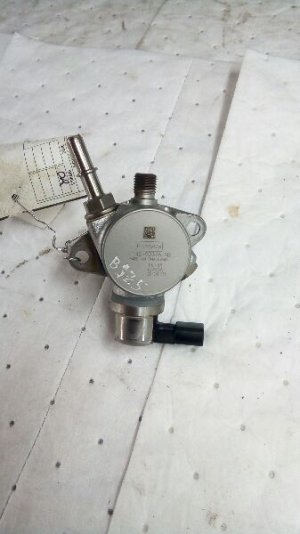
Est. part cost: $50-$100 - Failing High-Pressure Fuel Pump (HPFP) 🟡 Medium Probability → Shop Fuel Pump The HPFP is a mechanical pump driven by the camshaft that operates under extreme pressure. It is a common failure point on many GDI engines, including the EcoBoost, due to mechanical wear. NHTSA ODI #11360172 notes a severe failure mode where the high pressure pump is ground into the top of the camshaft cam, causing fuel rail failure and code P0087.
How to confirm: With a scan tool, monitor the high-pressure fuel rail pressure desired vs. actual readings during a test drive. If the actual pressure cannot keep up with the desired pressure, especially under acceleration, the HPFP is likely weak. This diagnosis should only be made after confirming the low-pressure system and its sensor are working correctly. Also, check the engine oil for a strong gasoline smell, which can indicate the HPFP seal has failed and is leaking fuel into the crankcase.
Typical fix: Replace the high-pressure fuel pump and the associated cam follower (tappet).
Est. part cost: $200-$450 - Worn HPFP Cam Follower (Tappet) 🟡 Medium Probability → Shop Fuel Pump The cam follower is a critical wear item that sits between the camshaft lobe and the HPFP plunger. Over time, it can wear down or fail completely, preventing the pump from being actuated. In severe cases, it can disintegrate and cause damage to the camshaft lobe, potentially requiring engine replacement.
How to confirm: Visual inspection is required. The HPFP must be removed to access and inspect the cam follower for wear, scoring, or damage. If it has worn through, the camshaft lobe must also be inspected for damage.
Typical fix: Replace the cam follower. This is almost always done whenever the HPFP is replaced as a preventative measure.
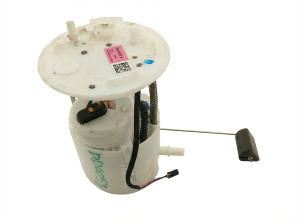
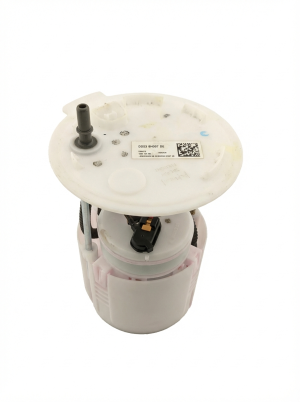
Est. part cost: $20-$50 - Failing In-Tank Low-Pressure Fuel Pump ⚪ Low Probability → Shop Fuel Pump
How to confirm: Test the low-pressure fuel system with a mechanical gauge at the supply line to the HPFP. If the pressure is below specification (typically should be around 60-85 PSI and stable) and the FLP sensor has been ruled out, the in-tank pump may be at fault.
Typical fix: Replace the in-tank fuel pump assembly.
Est. part cost: $250-$500
Rare But Worth Checking
- Clogged In-Tank Fuel Filter/Strainer: → Shop Fuel Filter The fuel filter is part of the in-tank fuel pump module and is not separately serviceable. A clogged filter will exhibit the same symptoms as a weak low-pressure pump.
- Wiring or Connector Issue: In rare cases, a poor connection at the sensor, fuel pump module, or even the PCM can cause this code. One documented case on a ScannerDanner forum involved two loose pins that had backed out of the PCM connector after a previous repair, causing an intermittent P0087 that was difficult to diagnose.
Diagnosis Steps

- Connect an OBD-II scanner and check for any other accompanying codes. Pay special attention to codes like P00C6 and P018C, which point towards the low-pressure sensor. NHTSA ODI #11653155 notes that P0087 can often be accompanied by P0302 (misfire) and P1450 (evaporative system).
- Using the scanner's live data function, monitor 'Fuel Low Pressure' and 'Fuel Rail Pressure' (high pressure) - both desired and actual values.
- Confirm the low-pressure fuel sensor (FLP sensor) is responding. Watch its value at idle and while revving the engine. If the value is stuck (e.g., at 109 PSI) and does not change, the sensor is highly suspect.
- For definitive diagnosis, connect a mechanical fuel pressure gauge to the low-pressure line. Compare the gauge reading (should be 60-85 PSI) to the scanner's reported value. If they differ significantly, replace the FLP sensor.
- If the low-pressure system is confirmed good, turn your attention to the high-pressure side. During a test drive, observe the 'Fuel Rail Pressure' PIDs. If the 'actual' pressure drops and cannot meet the 'desired' pressure during acceleration, the HPFP is likely failing.
- Check the engine oil. Open the oil cap or pull the dipstick and smell for a strong odor of gasoline. Fuel in the oil is a strong indicator of a failed HPFP seal or a stuck fuel injector.
- Before replacing the HPFP, inspect the wiring and connectors to the pump and sensors for any visible damage or corrosion.
- If you replace the HPFP, it is critical to also inspect and replace the cam follower (tappet). Inspect the camshaft lobe for scoring or damage at the same time, as a damaged lobe will destroy a new pump.
- If all pumps and sensors check out, investigate rare causes like a restriction in a fuel line or a wiring issue, such as checking for loose pins at the PCM connector.
Parts You'll Likely Need
- Low-Pressure Fuel Sensor (FLP Sensor)
(OEM #BU5Z-9F972-B (Ford Engineering Number), CM-5250 (Motorcraft Service Number))— This is the most common cause of P0087 on this vehicle, as documented by owner experiences and Ford TSB SSM 48397.
Trusted brands: Motorcraft, Bosch, Standard Motor Products
OEM price range: $50-$100
Aftermarket price range: $30-$70 - High-Pressure Fuel Pump (HPFP)
(OEM #0-261-520-152 (Bosch part number for 2013-2016 models))— This is the second most likely cause if the low-pressure system is functioning correctly. It is responsible for generating the very high pressures needed for direct injection.
Trusted brands: Motorcraft, Bosch
OEM price range: $300-$500
Aftermarket price range: $150-$350 - HPFP Cam Follower / Tappet — This inexpensive wear item is critical for HPFP function and should always be replaced when the HPFP is serviced to prevent premature failure of the new pump or catastrophic damage to the camshaft.
Trusted brands: Motorcraft
OEM price range: $20-$50
Aftermarket price range: $15-$30
Related Codes That Often Appear With This One
- P00C6 — This code for 'Fuel Rail Pressure Too Low - Engine Cranking' often appears with P0087 as it indicates the system is failing to build sufficient pressure even during startup. It is specifically mentioned in TSB SSM 48397.
- P018C — This code for 'Fuel Pressure Sensor 'B' Circuit Low' points directly to an electrical fault or failure of the low-pressure fuel sensor, which is a primary cause of P0087 on this vehicle. It is also listed in TSB SSM 48397.
- P030x (e.g., P0300, P0301) — Misfire codes can be triggered because the low fuel pressure leads to a lean air/fuel mixture, causing incomplete combustion in one or more cylinders.
Technical Service Bulletins (TSBs) & Recalls
- TSB SSM 48397: Issued for 2013-2015 Fusion/MKZ/Escape/MKC with 1.5L, 1.6L, or 2.0L GTDI engines. Addresses symptoms of lack of power, stalling, or loss of power accompanied by DTCs P00C6, P0087, P008A, P008B, P018C, or P018D. It confirms that if diagnosis points to a biased or failed Fuel Low Pressure (FLP) sensor, the sensor is available for replacement individually without needing to replace the entire fuel line assembly.
Platform-Specific Known Issues
- TSB SSM 48397 was issued for 2013-2015 models with GTDI engines, specifically identifying the low-pressure fuel sensor as a likely cause for P0087, P00C6, and P018C.
Mechanic-Grade Diagnostic Values
- Low-Pressure Fuel System (Mechanical Gauge) — expected: 60-85 PSI, stable at idle.. Failure: Pressure below 60 PSI or unstable readings suggest a weak in-tank pump or clogged filter.
- Low-Pressure Fuel Sensor PID (Scan Tool) — expected: Should fluctuate with engine RPM/load, typically reading near the mechanical gauge value (e.g., ~72 PSI).. Failure: Reading is 'stuck' at a fixed value (e.g., 109 PSI) or reads 0 PSI while the engine is running. A stuck reading of 4.82V has also been observed.
- Low-Pressure Fuel Sensor Voltage (KOEO, unplugged) — expected: 5.0V on the reference wire.. Failure: Unplugging a faulty sensor that reads 0V may cause the scan tool voltage PID to jump to 5V and the pressure to a default of ~113 PSI, confirming a shorted sensor.
- High-Pressure Fuel System (Scan Tool, WOT) — expected: Actual pressure should closely match desired pressure, which can exceed 2,000 PSI.. Failure: Actual pressure significantly lags behind desired pressure under load, indicating a weak HPFP or worn cam follower.
Scan Tool Commands That Help
- Ford IDS / FORScan: Fuel Pump Driver Module (FPDM) Duty Cycle Command — To manually command the in-tank low-pressure fuel pump to a specific speed (duty cycle) and verify its function independently of the PCM's automatic control. This helps isolate a weak pump from a sensor or command issue.
- Ford IDS / FORScan: Reset All Adaptations — After replacing a major fuel system component like the HPFP or low-pressure sensor, resetting fuel trim and pressure adaptations can help the PCM learn the new component's characteristics faster and prevent residual performance issues.
Wiring & Ground Locations
- Low-Pressure Fuel Sensor Connector (C1683) — On the low-pressure fuel line, near the firewall on the driver's side of the engine bay, below the brake master cylinder.. This is the primary connector to test for voltage, ground, and signal from the most common failure point. Pin 1: Signal (VT-GY), Pin 2: Ground (BK-GY), Pin 3: 5V Reference (YE-VT).
- Under-Hood Fuse Box — In the engine compartment, driver's side, near the battery.. Contains the fuel pump relay and fuse. The fuel pump feed fuse is a 30A fuse in location F85 (for 2013-2016 models). A failure here would cut power to the low-pressure pump.
- Ground Point G101 / G102 — Located at the left front (driver's side) of the engine compartment.. This is a primary ground location for the Powertrain Control Module (PCM). A corroded or loose ground here can cause erratic sensor readings and phantom codes, including incorrect fuel pressure readings.
- PCM Connector — Varies slightly by year, but typically located in the engine bay near the firewall or battery.. The signal from the fuel pressure sensor terminates here. A loose pin at this connector can cause intermittent P0087, mimicking a sensor or pump failure. This is a rare but difficult-to-diagnose fault.
Real Owner Repair Stories
- ScannerDanner Forum Post (2014 Ford Fusion 2.0L) — Long crank time, poor acceleration, P0087 code present.
❌ Tried (didn't work) Replaced low-pressure fuel sensor, Replaced high-pressure fuel sensor, Installed a used high-pressure fuel pump
✅ What actually fixed it The technician removed the PCM and found two pins had backed out of the connector. The vehicle had a prior accident where the PCM was replaced, and the locking handle on one harness was broken. Pushing the pins back into the connector and securing it resolved the P0087 code and all symptoms. - YouTube video by 'I AM THE FIX' (Ford Fusion (model year not specified, but 2.0L EcoBoost)) — Stalling, hesitation, jerking, shaking, P0087 and P0148 codes.
❌ Tried (didn't work) Customer had already replaced the high-pressure fuel pump, low-pressure fuel pump, and fuel pump module.
✅ What actually fixed it The technician diagnosed a faulty low-pressure fuel sensor. The scan tool showed the sensor was 'stuck' reading 109 PSI, while a mechanical gauge showed the actual pressure was dropping below 30 PSI. Replacing the sensor (Part No. CM-5250 / BU5Z-9F972-B) fixed the issue, with the new sensor correctly reading ~72 PSI at idle. - NHTSA ODI #11653155 — An owner reported that the vehicle required pressing the accelerator pedal to start. A mechanic retrieved several codes including P0087, P0131, P0302, and P1450, informing the owner that the vehicle would not pass inspection.
- NHTSA ODI #11360172 — An owner experienced a failure where the high pressure pump ground into the top of the camshaft cam, leading to fuel rail failure and codes P0087 and P219A.
OEM Part Supersession History
BU5A-9F972-BA→BU5A-9F972-CA / BU5Z-9F972-B / Motorcraft CM-5250— Revision to improve reliability and prevent the 'stuck' reading failure mode. The revised part is identifiable by a small hole on the body of the sensor.
Heads up: The original part (ending in BA) is known to be failure-prone and should always be replaced with the revised version.
Model Year Variations Within This Range
- 2017-2020: The Ford Fusion received a facelift for the 2017 model year. While the 2.0L EcoBoost engine is fundamentally the same, some part numbers for components like the high-pressure fuel pump may differ. For example, when ordering an HPFP for a 2017-2020 Fusion, it is critical to verify the 8th digit of the VIN is '9' to ensure compatibility.
Diagnostic Flowchart
Real Owner Stories
Aggregated from forums and TSBs cited above. Mileages and costs reflect what owners reported in those sources.
Ford Fusion 1.5L EcoBoost
Symptoms: Triggered a P0087 code. The issue escalated from a fuel pump problem to severe mechanical damage.
What fixed it: The root cause was a failed HPFP plunger that disintegrated and damaged the camshaft lobe, ultimately requiring a complete engine replacement.
Source hint: Reddit - r/fordfusion: 'P0087 Fuel Pump turned into Engine Replacement'
Ford (Model Unspecified)
Symptoms: Vehicle presented with a P0087 code for fuel pressure too low in the fuel rail system. The owner initially replaced both fuel pressure sensors and the high-pressure fuel pump without success.
What fixed it: The actual fix was repairing two loose pins in the PCM connector, which had been damaged during a previous accident repair.
Source hint: ScannerDanner Forum: 'FORD DTC CODE P0087:Fuel pressure to low in the fuel rail system'
2016 Ford Fusion
Symptoms: The vehicle was stalling and experiencing low power, accompanied by codes P0087 and P0148. The scanner showed the low-pressure fuel PID stuck at exactly 109 PSI.
What fixed it: Replaced the Low Side Fuel Pressure Sensor, which restored the fuel pressure readings to the normal 60-85 PSI range and resolved the stalling.
Source hint: YouTube - Cars and Service: 'Ford Fusion 2016 Stall, Low Power P0087, P0148 = Low Side Fuel Pressure Sensor'
Ford Escape 2.0L EcoBoost
Symptoms: The engine was stalling and triggered a Check Engine Light with code P0087.
What fixed it: Replaced the low-pressure fuel sensor. The repair required removing the wiper cowl for access and using a 15/16" deep socket and 13mm wrench.
Source hint: YouTube - How to ESCAPE / RAHRENA: 'How to Fix Stalling EcoBoost Engine - CEL P0087'
Related OBD-II Codes
Frequently Asked Questions
Does TSB SSM 48397 apply to my Ford Fusion?
How can I test if the low-pressure fuel sensor is causing my P0087 code?
Why does my Fusion's engine oil smell strongly of gasoline?
What tools do I need to replace the low-pressure fuel sensor on the 2.0L EcoBoost?
If I replace the high-pressure fuel pump (HPFP), do I need to replace anything else?
Can a wiring issue cause a P0087 code on my Fusion?
Helpful Videos
Used OEM Parts in Stock
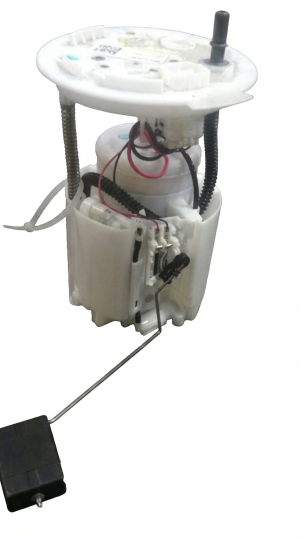
New Aftermarket Parts Available
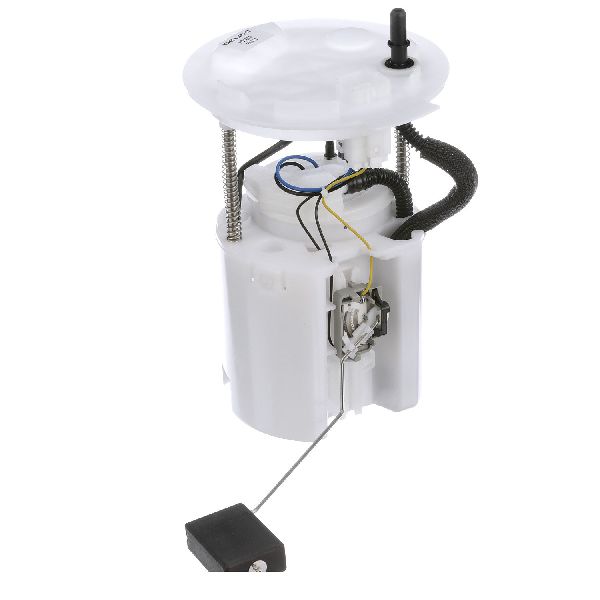
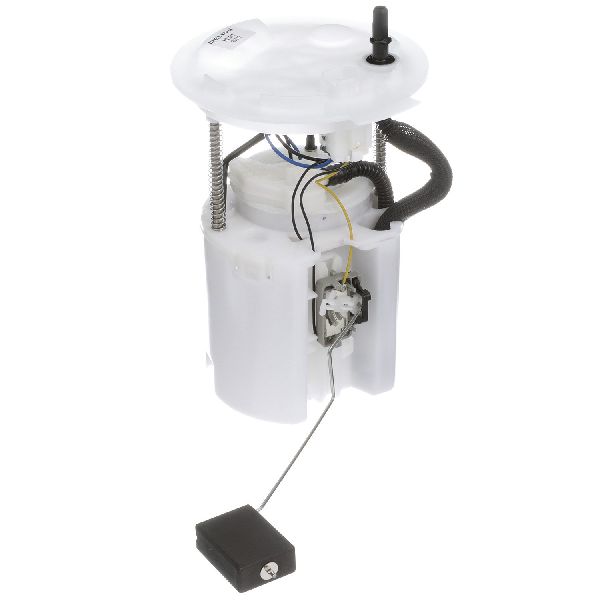


The information in this article is provided for general reference and educational purposes only. Vehicle specifications, procedures, and part compatibility can vary by production date, trim level, and region. Always consult your vehicle's factory service manual and verify part numbers before purchasing or performing repairs. Safety-critical components such as airbags, seat belts, and braking systems should be installed by a qualified professional.
- Ford Fusion:
- 🧭 Diagnostic Flowchart
- 🎬 Helpful Videos
- 🛍️ Shop This Part
- What's Unique About the 2013-2020 Ford Fusion
- Symptoms You May Notice
- Most Likely Causes
- Rare But Worth Checking
- Diagnosis Steps
- Parts You'll Likely Need
- Related Codes That Often Appear With This One
- Technical Service Bulletins (TSBs) & Recalls
- Platform-Specific Known Issues
- Mechanic-Grade Diagnostic Values
- Scan Tool Commands That Help
- Wiring & Ground Locations
- Real Owner Repair Stories
- OEM Part Supersession History
- Model Year Variations Within This Range
- Real Owner Stories
- Ford Fusion 1.5L EcoBoost
- Ford (Model Unspecified)
- 2016 Ford Fusion
- Ford Escape 2.0L EcoBoost
- Related OBD-II Codes
- Frequently Asked Questions
- 🎟️ Get 5% Off