

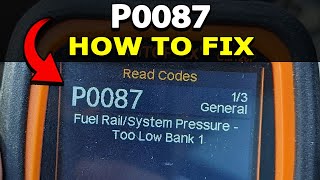
P0087 on 2018-2023 Genesis G70 / G80 3.3T: Fuel Pressure Too Low Causes and Fixes
On the Genesis 3.3T engine, code P0087 most often points to a failing high-pressure fuel pump (HPFP), a common issue for these GDI engines confirmed by Kia Master Technicians. A failing low-pressure fuel pump (LPFP) is also a strong possibility, especially on 2021-2023 G80 models which were subject to a major recall (NHTSA 23V-630 / 022G). Diagnosis is required to differentiate between the two. Expect to pay $700-$1,350 for an HPFP replacement at a shop.
- P0087 on a 3.3T Genesis is a critical code indicating low fuel pressure, making the vehicle unsafe to drive due to stalling risk.
- For 2021-2023 G80 models, the first step should be checking for the LPFP recall (NHTSA 23V-630 / 022G), which provides a free fix.
- For all other models, the most likely cause is a failed High-Pressure Fuel Pump (HPFP), a known issue with this engine.
- Diagnosis is key. Do not replace parts without confirming whether the low-pressure or high-pressure side of the fuel system is at fault.
- Due to the extremely high pressures and fire risk, this repair is strongly recommended for professional mechanics.
What's Unique About the 2018-2023 Genesis G70 / G80
The 3.3T Lambda II is a twin-turbo, Gasoline Direct Injection (GDI) engine that relies on extremely high fuel pressure (up to 2,900 PSI) to operate correctly. While P0087 is a generic code, on this platform and its direct mate, the Kia Stinger GT, it's frequently linked to the failure of the mechanical high-pressure fuel pump (HPFP), a widely documented issue. Additionally, a significant recall (NHTSA 23V-630 / Genesis Recall 016G/022G) was issued for the low-pressure fuel pump (LPFP) on many 2021-2023 Genesis models, which can also cause this code by starving the HPFP of fuel. This means that unlike some vehicles where a clogged filter is a primary suspect, on the G70/G80, the pumps themselves are the most likely culprits.
Generation note: Yes, this range covers two generations of the G80. The 2018-2020 G80 is the second generation (DH), and the 2021-2023 G80 is the third generation (RG3). The G70 (IK) is covered for its entire first generation, including the 2022 facelift which was primarily cosmetic. A key difference is that the 2021-2023 G80 models were included in a major recall (NHTSA 23V-630 / 022G) for the low-pressure fuel pump, making it a primary suspect for those specific years. The underlying high-pressure fuel system and HPFP issues are common to the 3.3T engine across all models.
Symptoms You May Notice
- Sudden loss of power or engine hesitation, especially during acceleration.
- Engine stalling, sometimes without warning, particularly when coming to a stop or at idle.
- Check Engine Light is on.
- Rough or uneven idle.
- Hard starting or long crank times.
- Vehicle enters 'limp mode' with reduced power.
- Shuddering when coming to a stop, even before a code is stored.
- Replacing the LPFP when the HPFP is the actual cause, or vice-versa. Proper diagnosis by monitoring both low and high-side fuel pressure is crucial to avoid replacing the wrong, expensive part.
- Replacing the fuel pressure sensor when one of the pumps is the actual mechanical failure.
Most Likely Causes
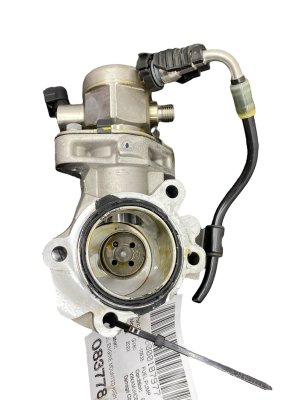
- Failing High-Pressure Fuel Pump (HPFP) 🔴 High Probability → Shop Fuel Pump The cam-driven HPFP is a widely documented failure point on the Lambda II GDI engine family, including the platform-mate Kia Stinger. A Kia Master Technician on Reddit confirmed it's a common failure. Internal components, including the cam follower, can wear, causing a loss of pressure.
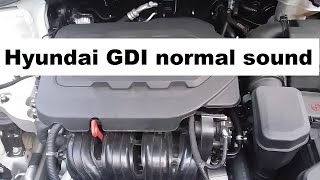
How to confirm: Use a high-end OBD-II scanner to monitor 'Fuel Rail Pressure (Desired)' vs. 'Fuel Rail Pressure (Actual)'. If the actual pressure consistently lags behind the desired pressure, especially under load, the HPFP is a likely culprit. A ticking noise from the pump is also an indicator. A professional diagnosis is the best approach.
Typical fix: Replace the high-pressure fuel pump, its mounting bolts, and the one-time-use high-pressure fuel line connected to it.
Est. part cost: $400-$800 - Failing Low-Pressure Fuel Pump (LPFP) 🔴 High Probability → Shop Fuel Pump A massive recall (NHTSA 23V-630, expanded by 022G) was issued for 2021-2023 G80s and other Genesis models because the LPFP impeller can deform in high temperatures and cause the pump to shut down. This starves the HPFP of fuel. Even on non-recalled vehicles, the LPFP can fail from normal wear.
How to confirm: First, check if your vehicle's VIN is part of the recall on the NHTSA or Genesis website. If not, a technician can perform a low-side fuel pressure test; pressure should be around 50-80 PSI at idle. A distinct whining noise from the rear seat area (above the fuel tank) is also a classic sign of a failing LPFP.
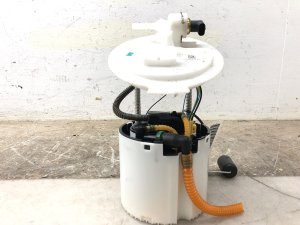
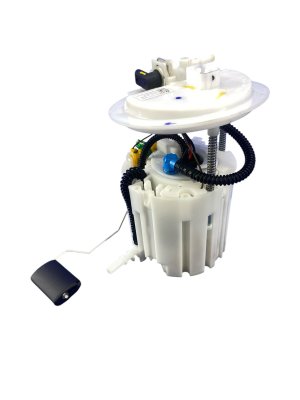
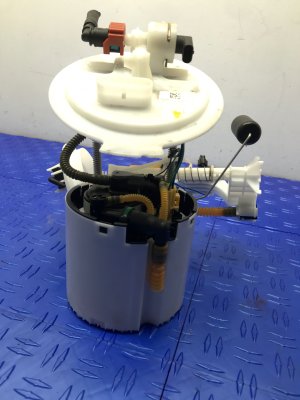
Typical fix: If under recall, the dealer will replace the LPFP assembly for free with a part using improved materials. Otherwise, the in-tank fuel pump assembly needs to be replaced.
Est. part cost: $350-$500 - Faulty Fuel Pressure Sensor ⚪ Low Probability → Shop Fuel Pressure Sensor
How to confirm: If fuel pressure tests on both the low and high side are inconclusive, the sensor providing the reading to the ECM may be faulty. This is often a process-of-elimination diagnosis after verifying the pumps are healthy. With key-on, engine-off, the sensor signal voltage should be approximately 0.5V.
Typical fix: Replace the fuel rail pressure sensor.
Est. part cost: $50-$100
Rare But Worth Checking
- Clogged Fuel Filter: → Shop Fuel Filter The primary fuel filter is typically integrated into the low-pressure fuel pump assembly. It's not usually a separate service item but will be replaced along with a new LPFP.
- Leaking Fuel Injectors: → Shop Fuel Injector A leaking injector can cause a drop in rail pressure. This would usually be accompanied by other symptoms like a smell of fuel, black smoke, or misfire codes for a specific cylinder.
- Restricted Fuel Line: → Shop Fuel Line A crimped or otherwise restricted fuel supply line can starve the pumps of fuel, leading to low pressure.
- Faulty Fuel Pump Control Module (FPCM): → Shop Fuel Pump The FPCM controls the voltage to the low-pressure fuel pump. A failure in this module can mimic a failed LPFP. It may be accompanied by code U0109 (Lost Communication With Fuel Pump Control Module).
Diagnosis Steps
- Verify the code with a qualified OBD-II scanner.
- Check your VIN on the NHTSA or Genesis website for open recalls, specifically NHTSA 23V-630 / Genesis recall 016G/022G for the low-pressure fuel pump. If your vehicle is affected, contact a dealer for a free repair.
- Using a scanner, observe live data for 'Desired Fuel Rail Pressure' and 'Actual Fuel Rail Pressure'. Start the engine and let it idle. The values should be very close.
- Lightly rev the engine in neutral, and if safe, perform a test drive under load. The actual pressure should track the desired pressure with minimal lag. A significant drop or delay points to a fuel delivery problem.
- If the actual pressure is consistently low, the next step is to determine if the issue is on the low-pressure side or high-pressure side.
- (Professional) Perform a low-side fuel pressure test using a fuel pressure gauge. If the pressure is below specification (typically ~50-80 PSI), the LPFP or its integrated filter is likely the cause.
- (Professional) If low-side pressure is good but high-side pressure is low, the HPFP is the primary suspect.
- Inspect all visible fuel lines and connections for leaks, especially around the HPFP and fuel rail.
- Inspect the wiring and connectors for the fuel pressure sensor, HPFP, and LPFP for any damage or corrosion.
Parts You'll Likely Need
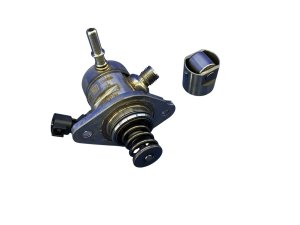
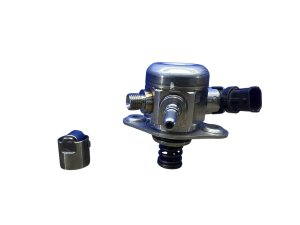
- High-Pressure Fuel Pump (HPFP)
(OEM #35326-3L000 (supersedes 35320-3L000))— This is the most common failure part on the 3.3T engine that causes code P0087, especially when not related to the LPFP recall.
Trusted brands: Hyundai/Genesis OE, Bosch
OEM price range: $400-$600
Aftermarket price range: $250-$450 - Low-Pressure Fuel Pump (LPFP) Assembly
(OEM #31110-AR000)— This is the subject of a major safety recall for 2021-2023 G80 models and is the most probable cause of P0087 on those vehicles.
Trusted brands: Hyundai/Genesis OE
OEM price range: $350-$500
Aftermarket price range: $200-$350 - High-Pressure Fuel Pipe — This is a one-time-use part that must be replaced anytime the HPFP is replaced to ensure a proper seal under extreme pressure.
Trusted brands: Hyundai/Genesis OE
OEM price range: $30-$60
Related Codes That Often Appear With This One
- P0300-P0306 — Insufficient fuel pressure can lead to incomplete combustion, causing random (P0300) or cylinder-specific misfires as the engine runs lean.
- P0171 / P0174 — If the low fuel pressure causes the engine to run lean (too much air, not enough fuel), these codes for 'System Too Lean' may appear.
- P0088 — Although it means 'Fuel Rail/System Pressure - Too High', it can sometimes appear if the fuel pressure sensor or pump control is behaving erratically. On the related 2.0T engine, a recall for P0088 involved replacing the HPFP.
- U0109 — This code for 'Lost Communication With Fuel Pump Control Module' points directly to an issue with the FPCM or its wiring, which can be the root cause of the low fuel pressure.
Technical Service Bulletins (TSBs) & Recalls
- NHTSA 23V-630 / Genesis Recall 016G/022G: Recall for low-pressure fuel pump impeller deformation.
- TSB 19-EM-001HG: Notes a change in timing chain and crankshaft sprocket parts for 2017-18 G80/G90 3.3T
Platform-Specific Known Issues
- Recall NHTSA 23V-630 / Genesis Recall 016G/022G: Affects many 2021-2023 G80 models (among other Genesis vehicles, but not typically the G70) for a faulty low-pressure fuel pump impeller that can deform and cause the pump to fail, leading to a loss of power.
- Known High-Pressure Fuel Pump (HPFP) Failure: The HPFP is a widely documented failure item on the Lambda II GDI engine family, including the platform-mate Kia Stinger, leading to the symptoms of P0087.
- Intermittent Failure: Some owners report symptoms like shuddering or stalling when stopping even before a persistent P0087 code is stored, pointing to an intermittent HPFP failure.
Mechanic-Grade Diagnostic Values
- Low-Pressure Fuel System Pressure at Idle — expected: 50 - 80 PSI (3.4 - 5.5 bar). Failure: Pressure below this range indicates a weak LPFP, a clogged filter, or an issue with the FPCM.
- High-Pressure Fuel System Pressure at Idle — expected: ~40 bar (~580 PSI). Failure: Pressure reading similar to the low-side pressure (~4.5 bar) indicates the HPFP is not activating or has failed.
- High-Pressure Fuel System Pressure under Heavy Load — expected: Up to 200 bar (2,900 PSI). Failure: If the 'Actual' pressure on a scan tool cannot keep up with the 'Desired' pressure under acceleration, it points to a failing HPFP or a fuel supply restriction.
- Fuel Rail Pressure Sensor Signal Voltage (KOEO) — expected: Approximately 0.5 V. Failure: A voltage significantly different from 0.5V with the key on and engine off suggests a faulty sensor or a wiring issue.
Scan Tool Commands That Help
- Genesis GDS (Global Diagnostic System): Fuel Supply Pump Activation / Actuation Test — This bidirectional command allows a technician to manually turn the low-pressure fuel pump on and off to verify its electrical circuit and listen for pump operation without starting the engine.
- Genesis GDS (Global Diagnostic System): Resetting Adaptive Values — After replacing a major fuel system component like the HPFP or LPFP, this function clears the old learned fuel trim values from the ECM. This forces the system to re-learn with the new component's behavior, preventing performance issues that can arise from using old, incorrect data.
Wiring & Ground Locations
- Fuel Pump Control Module (FPCM) — For the 2021-2023 G80, the FPCM is located in the trunk, mounted behind the interior trim panel on the left-hand (driver's) side. For other models, it is often near the fuel tank or under the rear seat.. The FPCM controls the low-pressure fuel pump. A failure of this module, its wiring, or its ground can cut power to the pump, directly causing a P0087 code and mimicking a failed LPFP. It is often diagnosed with code U0109.
Real Owner Repair Stories
- YouTube User Comment (2015+ Genesis (exact model not specified, but behavior is relevant)) — Check Engine Light with code U0109, which is often related to P0087 fuel delivery issues.
✅ What actually fixed it The user reported that replacing the Fuel Pump Controller Module resolved the U0109 code. This is a critical data point as an FPCM failure can cause the LPFP to stop working, leading to a P0087 code.
OEM Part Supersession History
35320-3L000→35326-3L000— Not officially stated, but part supersessions for high-failure items like HPFPs typically involve internal improvements for durability and reliability.
Heads up: The parts are interchangeable, with 35326-3L000 being the correct current replacement part.
Model Year Variations Within This Range
- 2021-2023 G80 (RG3): These models were subject to the major low-pressure fuel pump recall (NHTSA 23V-630), making the LPFP a much higher probability cause for P0087 on these specific years compared to the 2018-2020 G80 or any year G70.
- 2022-2023 G70: The G70 received a significant facelift for the 2022 model year. However, this was primarily cosmetic, and the 3.3T powertrain and its fuel system remained consistent with the pre-facelift (2018-2021) models. The causes and fixes for P0087 are the same.
Diagnostic Flowchart
Other Known Issues on This Vehicle
Issues unrelated to this code that are worth knowing about as an owner of this generation:
- Cracking Left Turbo Oil Feed Pipe 🔴 High — Common enough to trigger a safety recall (NHTSA 24V-191 / Genesis Recall 019G) on 2019-2022 G70 and other 3.3T models. (Ref: NHTSA 24V-191 / 24-01-032G)
- Failing Oil Pressure Sensor 🟠 Medium — Reported to fail around 60k+ miles. The part is cheap, but labor is expensive ($1k-$3k) as it is located under the intake manifold.
- Intake Valve Carbon Buildup 🟠 Medium — A common issue for all GDI engines, becomes noticeable after 60,000-80,000 miles, causing rough idle or reduced performance. Requires walnut blasting to clean.
- Steering Rack Sticking 🔴 High — Some owners of 2019 G80 Sports have reported the steering wheel sticking on the highway, requiring steering rack replacement under warranty.
- Sunroof Rattles 🟡 Low — A widely reported annoyance, particularly on rough roads. Seems to be a design flaw that is difficult to permanently fix.
Used vs. New Parts: Buying Guide for This Vehicle
When a used part is the smart pick: For this specific P0087 issue, using a used part is generally not recommended. Both the HPFP and LPFP are known high-failure items. A used part from a salvage yard carries a high risk of having the same wear or defect as the part you are replacing.
Donor-vehicle mileage cap: roughly under 30000 miles for the part to have meaningful remaining life.
What to inspect on the donor part:
- If considering a used HPFP, visually inspect the cam follower for any scoring or wear.
- Check electrical connectors for corrosion or damage.
- Verify the OEM part number exactly matches the required part; avoid 'close enough' matches.
OEM-only on this vehicle (don't cheap out):
- High-Pressure Fuel Pump (HPFP)
- Low-Pressure Fuel Pump (LPFP)
- High-Pressure Fuel Pipe (one-time use)
Aftermarket brands forum-validated for this vehicle:
- Bosch (often the OEM supplier)
- For high-performance applications, brands like Burger Motorsports offer upgraded HPFPs, but these are for modified vehicles and require tuning.
Brands owners have reported issues with on this vehicle:
- Unbranded, no-name parts from online marketplaces should be avoided. The GDI fuel system's high pressures and tight tolerances require quality components to function safely and reliably.
Real Owner Stories
Aggregated from forums and TSBs cited above. Mileages and costs reflect what owners reported in those sources.
2018-2023 Kia Stinger GT 3.3T
Symptoms: High rate of HPFP failures leading to code P0087; shares the exact same Lambda II 3.3T GDI engine and powertrain as the G70.
What fixed it: Replacement of the high-pressure fuel pump.
Source hint: platform_mates section citing Kia Stinger GT relationship
2019-2023 Genesis G70 3.3T
Symptoms: Shuddering and stalling when stopping, occurring intermittently even before a trouble code is logged.
What fixed it: High-pressure fuel pump (HPFP) replacement.
Source hint: r/GenesisG70 - HPFP Issue with NO CODES
2021-2023 Genesis G80 3.3T
Symptoms: Loss of power due to the fuel pump impeller deforming in high temperatures, causing the pump to shut down.
What fixed it: Dealer replacement of the low-pressure fuel pump (LPFP) assembly with a part using improved materials under recall.
Source hint: NHTSA 23V-630 / Genesis Recall 016G/022G
2018 Genesis G80 3.3T — ~60000 miles
Symptoms: Rough idle or reduced performance due to carbon buildup on intake valves; also noted for having more reported problems than other years.
What fixed it: Walnut blasting to clean intake valves.
Source hint: GenesisOwners.com Forum and known_issues
Related OBD-II Codes
Frequently Asked Questions
Is there a recall for the fuel pump on my 2021-2023 Genesis G80?
My G70 is shuddering when I come to a stop, but there is no Check Engine Light yet. Could this be the HPFP?
What parts are required to fix a failing High-Pressure Fuel Pump on the 3.3T engine?
Does the Kia Stinger experience the same P0087 issues as the Genesis G70?
How can I tell if my P0087 code is caused by the low-pressure pump or the high-pressure pump?
Are there any other recalls for the 3.3T engine I should be aware of while fixing the fuel system?
Helpful Videos


We Have This Part in Stock

The information in this article is provided for general reference and educational purposes only. Vehicle specifications, procedures, and part compatibility can vary by production date, trim level, and region. Always consult your vehicle's factory service manual and verify part numbers before purchasing or performing repairs. Safety-critical components such as airbags, seat belts, and braking systems should be installed by a qualified professional.
- Genesis G70 / G80:
- 🧭 Diagnostic Flowchart
- 🎬 Helpful Videos
- 🛍️ Shop This Part
- What's Unique About the 2018-2023 Genesis G70 / G80
- Symptoms You May Notice
- Most Likely Causes
- Rare But Worth Checking
- Diagnosis Steps
- Parts You'll Likely Need
- Related Codes That Often Appear With This One
- Technical Service Bulletins (TSBs) & Recalls
- Platform-Specific Known Issues
- Mechanic-Grade Diagnostic Values
- Scan Tool Commands That Help
- Wiring & Ground Locations
- Real Owner Repair Stories
- OEM Part Supersession History
- Model Year Variations Within This Range
- Other Known Issues on This Vehicle
- Used vs. New Parts: Buying Guide for This Vehicle
- Real Owner Stories
- 2018-2023 Kia Stinger GT 3.3T
- 2019-2023 Genesis G70 3.3T
- 2021-2023 Genesis G80 3.3T
- 2018 Genesis G80 3.3T — ~60000 miles
- Related OBD-II Codes
- Frequently Asked Questions
- 🎟️ Get 5% Off