

P0087 on 2015-2019 GMC Canyon: Fuel Pressure Too Low Causes & Fixes
On a 2015-2019 GMC Canyon, P0087 most often points to a failing high-pressure fuel pump (HPFP), especially on the 3.6L V6, or a faulty in-tank low-pressure fuel pump. A specific GM TSB points to the in-tank pump failing in cold weather. Expect to pay $400-$1000+ for a professional HPFP replacement, and check the engine oil for a fuel smell as a key diagnostic clue.
- P0087 on a GMC Canyon indicates dangerously low fuel pressure and should be addressed immediately due to the risk of stalling.
- The most likely causes are a failed high-pressure fuel pump (HPFP) or a failed in-tank low-pressure fuel pump.
- Check for GM Technical Service Bulletins (TSBs), as there are known issues with cold-weather pump failures and faulty sensor connectors.
- Proper diagnosis requires a scan tool to monitor both low and high-side fuel pressure to avoid replacing the wrong expensive component.
- If you have a 2016-2018 model, check if your vehicle was part of the safety recall for the high-pressure fuel pump.
What's Unique About the 2015-2019 Gmc CANYON

The GMC Canyon of this era uses a gasoline direct injection (GDI) system that is sensitive to fuel pressure drops. While many vehicles can trigger a P0087, the Canyon has specific documented issues. Manufacturer bulletins point directly to failures of the in-tank fuel pump in cold weather and problems arising from fuel system contamination. Additionally, the 3.6L V6 engine was updated mid-cycle (from LFX to LGZ in 2017), with the newer LGZ having a redesigned fuel system. Failures of the high-pressure fuel pump (HPFP) are common and can sometimes leak fuel into the engine oil.
Diagnostic Flowchart

Tap your situation to follow the diagnostic path that matches what you're seeing on this vehicle.
Symptoms You May Notice
- Check Engine Light is on
- Reduced Engine Power message displayed
- Engine hesitation or stumbling, especially during acceleration or when towing.
- Hard starting or extended cranking time
- Rough idle or rolling idle
- Engine stalling, sometimes unexpectedly
- No-start condition
- Strong smell of gasoline in the engine oil
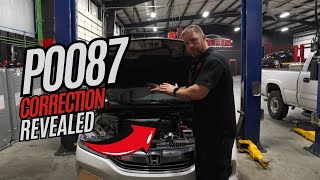
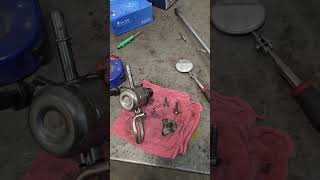
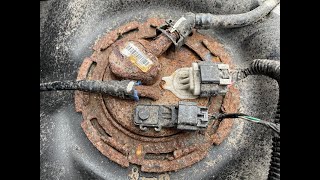
- Replacing the in-tank fuel pump when the high-pressure fuel pump is the actual cause, or vice-versa. Proper diagnosis by monitoring both low-side and high-side pressure is crucial to avoid replacing the wrong, expensive part. 🎬 See this breakdown of common P0087 causes and fixes.
- Replacing fuel pumps when the actual issue is a corroded electrical connector at the fuel rail pressure sensor, as outlined in TSB #20-NA-197.
Most Likely Causes

- Failing High-Pressure Fuel Pump (HPFP) 🔴 High Probability → Shop Fuel Pump The 3.6L V6 engine has a known history of HPFP failures across many GM models. GM issued a safety recall (18V358, GM #18268) for improperly welded HPFPs on some 2016-2018 Canyons, which could lead to fuel leaks and fire risk.
How to confirm: Use a scan tool to monitor desired vs. actual fuel rail pressure under load. If actual pressure cannot keep up with desired pressure during acceleration, the HPFP is a likely culprit. Another critical check is to smell the engine oil on the dipstick for gasoline. A fuel smell strongly indicates the internal seals of the HPFP have failed, allowing fuel to leak into the crankcase.
Typical fix: Replace the high-pressure fuel pump, its gasket/O-ring, and the single-use high-pressure fuel line that connects the pump to the fuel rail. An oil and filter change is mandatory if the oil is contaminated with fuel.
Est. part cost: $200-$500 - Failing In-Tank Low-Pressure Fuel Pump 🟡 Medium Probability → Shop Fuel Pump A GM Technical Service Bulletin (#18-NA-103) specifically identifies the in-tank fuel pump on 2016 models failing in temperatures below 20°F (-6°C), causing a P0087 code, stalling, and a whining noise from the tank.
How to confirm: Check the low-side fuel pressure with a mechanical gauge or capable scan tool. If the pressure is below specification (target is often 40-75 PSI, but some aftermarket pumps are rated for 82-86 PSI), the in-tank pump is suspect. The issue may only appear in cold weather.
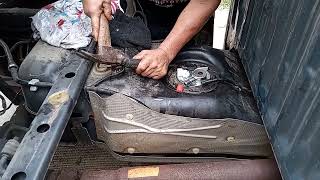
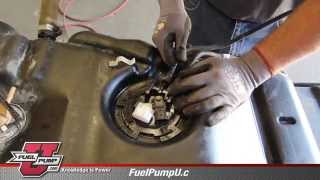
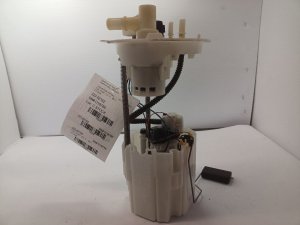
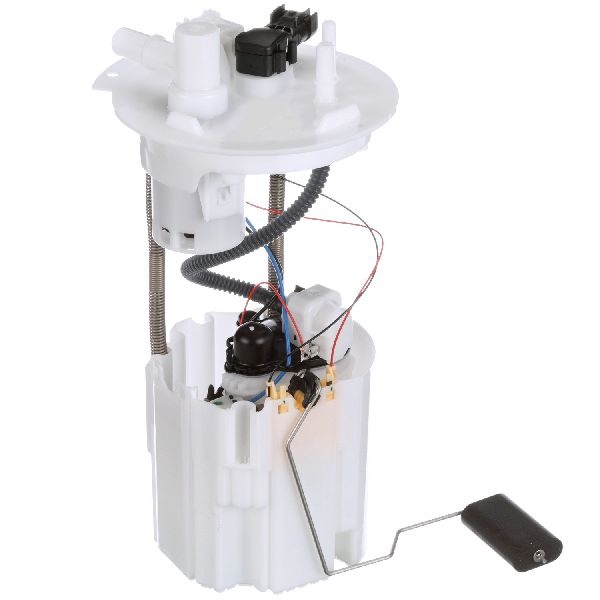
Typical fix: Replace the in-tank fuel pump module, which includes the pump, filter, and sending unit. This requires either dropping the fuel tank or lifting the truck bed for access. 🎬 Watch: How to replace the in-tank fuel pump module.
Est. part cost: $250-$600 - Clogged Fuel Filter 🟡 Medium Probability → Shop Fuel Filter The fuel filter is integrated into the in-tank fuel pump module and is not a separate serviceable item. Fuel contamination, as mentioned in TSB #PIP5151F, can clog this filter, starving the HPFP of fuel.
How to confirm: Diagnosing a clogged filter involves testing low-side fuel pressure. A low reading points to a restriction, which is often the integrated filter. If contamination is suspected, the fuel should be sampled and inspected.
Typical fix: The entire in-tank fuel pump module must be replaced.
Est. part cost: $250-$600 - Faulty Fuel Rail Pressure Sensor ⚪ Low Probability → Shop Fuel Pressure Sensor GM issued TSB #20-NA-197 for 2016-2021 models, noting that corrosion or damage at the fuel pressure sensor's electrical connector can cause erratic signals and trigger a P0087 code among others.
How to confirm: Inspect the fuel pressure sensor's electrical connector for corrosion or backed-out pins. A scan tool may show erratic pressure readings that don't correspond to engine load. The TSB recommends dragging the terminals with a test probe to check for fretting corrosion. With the key on and engine off, the sensor's signal wire should read between 1.5V and 1.8V.
Typical fix: Clean the connector and apply dielectric grease, or replace the connector pigtail if damaged. In some cases, the sensor itself may need replacement.
Est. part cost: $50-$150
Rare But Worth Checking
- Fuel System Contamination: TSB #PIP5151F warns that if contamination (like water, debris, or incorrect fuel like diesel/DEF) is found, the *entire* fuel system may need to be flushed or replaced to prevent repeat failures. This is a rare but extremely costly repair and is not covered by warranty.
- Leaking Fuel Injector(s): → Shop Fuel Injector A fuel injector stuck open can cause a drop in rail pressure. This is less common than pump or sensor issues but should be considered if other causes are ruled out, especially if accompanied by misfire codes for a specific cylinder.
- Worn Camshaft Lobe: → Shop Engine Camshaft The high-pressure fuel pump is driven by a dedicated lobe on one of the camshafts. Excessive wear on this lobe can prevent the pump from generating sufficient pressure. This is a rare and significant mechanical failure.
Diagnosis Steps
- Connect an OBD-II scanner and confirm P0087 is present. Check for any other related codes and freeze frame data.
- Check the engine oil dipstick for a strong smell of gasoline. If fuel is present, the High-Pressure Fuel Pump (HPFP) is almost certainly the cause and must be replaced immediately.
- Use a scan tool with live data to monitor 'Desired Fuel Rail Pressure' and 'Actual Fuel Rail Pressure'. Also monitor 'Low Side Fuel Pressure'.
- At idle, observe the low-pressure fuel system readings. Pressure should be stable and within the manufacturer's specification (typically 40-75 PSI). If it's low or erratic, suspect the in-tank pump, its control module, or a clogged filter.
- If low-side pressure is good, safely test drive the vehicle while monitoring live data. Under acceleration, watch if the 'Actual Fuel Rail Pressure' fails to meet the 'Desired Fuel Rail Pressure'. A significant lag or drop points to a failing HPFP.
- Inspect the fuel rail pressure sensor connector (on the driver's side of the engine, near the firewall) for any signs of corrosion, damage, or loose pins, as indicated by TSB #20-NA-197.
- Perform a visual inspection of all fuel lines, especially the high-pressure line from the HPFP to the fuel rail, for any visible leaks, kinks, or damage.
- If all else fails, consider testing for leaking injectors or checking the HPFP's camshaft follower/lobe for wear, though these are less common causes.
Parts You'll Likely Need
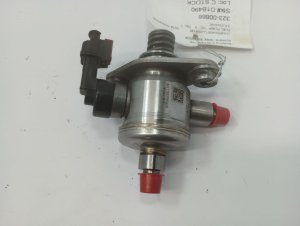
- High-Pressure Fuel Pump (HPFP)
(OEM #Varies by engine (LFX vs LGZ). Consult dealer with VIN.)— This is a very common failure point causing P0087 on the 3.6L V6 engine, responsible for generating the final high pressure for direct injection.
Trusted brands: ACDelco, Bosch, GM Genuine
OEM price range: $300-$500
Aftermarket price range: $200-$400 - In-Tank Fuel Pump Module
(OEM #ACDelco M100138)— This pump feeds the HPFP. TSB #18-NA-103 specifically calls out its failure in cold weather as a cause for P0087. The integrated fuel filter can also clog.
Trusted brands: ACDelco, Delphi
OEM price range: $400-$670
Aftermarket price range: $250-$450 - High-Pressure Fuel Pipe
(OEM #12688668)— This is a single-use, 'torque-to-yield' part that must be replaced any time it is disconnected, such as during an HPFP replacement, to prevent dangerous high-pressure leaks.
Trusted brands: GM Genuine
OEM price range: $40-$80
Aftermarket price range: $30-$60
Related Codes That Often Appear With This One
- P0088 — Fuel Rail/System Pressure - Too High. This can appear with P0087 if the fuel pressure regulation is erratic, as noted in TSB #PIP5151F.
- P0191 — Fuel Rail Pressure Sensor Circuit Range/Performance. This code often accompanies P0087 and can indicate a problem with the sensor itself or its wiring, as mentioned in TSBs #PIP5151F and #20-NA-197.
- P018B — Fuel Pressure Sensor 'B' Circuit Range/Performance. TSB #18-NA-103 lists this code as appearing alongside P0087, often related to cold-weather in-tank pump failures.
- P2635 — Fuel Pump 'A' Low Flow/Performance. This code directly points to a problem with the low-pressure in-tank pump and is cited in TSB #18-NA-103 as a related code.
- P0300 — Random/Multiple Cylinder Misfire Detected. Insufficient fuel pressure can lead to a lean condition, causing misfires across multiple cylinders.
Technical Service Bulletins (TSBs) & Recalls

- 18-NA-103: Addresses in-tank fuel pump whining, stalling, and P0087 in cold weather (below 20°F/-6°C) for 2016 models. It suggests the issue may be related to the winter fuel blend and recommends warming the vehicle to see if the symptom disappears before replacing the pump.
- PIP5151F: A diagnostic tip for various fuel pressure codes (including P0087) caused by fuel contamination (water, debris, wrong fuel type). It warns that if contamination is found, the entire fuel system may need to be cleaned or replaced.
- 20-NA-197: Details a problem where corrosion or damage at the fuel pressure sensor electrical connector can cause P0087 and a host of other fuel pressure codes. It provides a diagnostic procedure for inspecting and repairing the connector.
- GM Recall 18V358 / 18268: A safety recall for a potentially cracked high-pressure fuel pump weld on certain 2016-2018 models, which can cause a fuel leak.
Platform-Specific Known Issues
- Cold Weather In-Tank Pump Failure: TSB #18-NA-103 notes that 2016 models can experience in-tank fuel pump failure in temperatures below 20°F, leading to P0087 and no-start or stalling conditions. The bulletin advises warming the vehicle to confirm the issue is fuel-related before replacing parts.
- Fuel System Contamination: TSB #PIP5151F warns that if fuel contamination is found during inspection for P0087, the entire fuel system may require replacement to ensure a complete repair. This is not a warranty-covered repair.
- High-Pressure Fuel Pump Recall: Safety recall 18V358 (GM #18268) was issued for some 2016-2018 GMC Canyon models due to an improperly welded high-pressure fuel pump that could crack, leak fuel, and increase fire risk.
- Fuel Pressure Sensor Connector Corrosion: TSB #20-NA-197 describes a condition where corrosion in the fuel rail pressure sensor connector can cause P0087 and other fuel-related codes. The fix involves inspecting, cleaning, and applying dielectric grease to the connector, or replacing it if damaged.
Mechanic-Grade Diagnostic Values
- Low-Pressure Fuel System Pressure (at idle) — expected: 40-75 PSI (GM Spec), though some aftermarket pumps are rated for 82-86 PSI.. Failure: Pressure is significantly below 40 PSI or is erratic.
- High-Pressure Fuel System Pressure (under load) — expected: Can range from 2,000 to 2,800 PSI on LGZ engines (2017+). Idle pressure is typically 500-600 PSI.. Failure: Actual pressure on a scan tool fails to meet desired pressure during acceleration.
- Fuel Rail Pressure Sensor Signal Voltage (Key On, Engine Off) — expected: 1.5V to 1.8V on the signal wire.. Failure: Voltage is 0V, 5V, or significantly outside the expected range, indicating a sensor or wiring fault.
- Fuel Rail Pressure Sensor Reference Voltage — expected: 5V.. Failure: Voltage is missing or low, indicating a problem with the ECM or wiring.
Hidden / Shadow Codes Worth Checking
- P0089, P0191, P228A, P228B, P228C, P228D: While not 'shadow codes,' GM TSB #20-NA-197 indicates that a single fault, like a corroded fuel pressure sensor connector, can trigger a wide array of these related fuel pressure codes along with P0087. Seeing P0087 with these other codes strongly suggests an electrical or sensor circuit issue rather than a purely mechanical pump failure. (see via Standard OBD-II scanner.)
Scan Tool Commands That Help
- GDS2 / Professional Scan Tool: Fuel Pump Driver / Control Module Test — This bidirectional command allows the technician to directly activate the low-pressure fuel pump circuit via the Fuel Pump Control Module (FPCM). It helps determine if the FPCM and the pump itself are capable of responding to commands from the ECM, isolating the fault to the control side or the mechanical side.
Wiring & Ground Locations
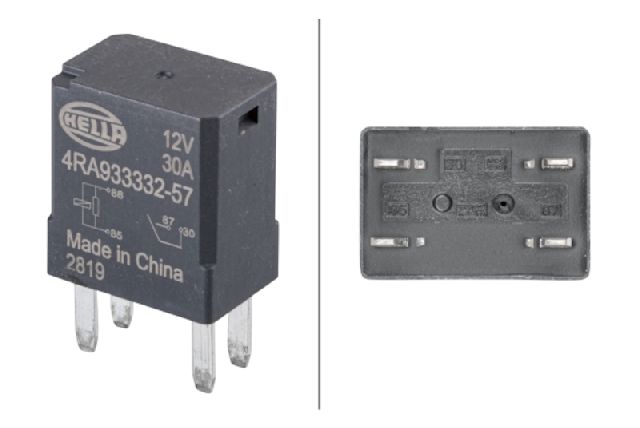
- Fuel Pump Control Module (FPCM) — Located at the rear of the vehicle on the passenger side, behind the rear fender well. It is a small electronic box with a wiring harness connected to it.. The FPCM controls the voltage and speed of the in-tank low-pressure fuel pump. A failure of this module can starve the high-pressure pump of fuel, directly causing a P0087 code. Its location makes it susceptible to corrosion and damage.
- Fuel Rail Pressure Sensor Connector — On the driver's side of the engine, on the fuel rail, located towards the firewall at the back of the engine. It is a four-pin connector.. This is the sensor that reports the pressure to the ECM. TSB #20-NA-197 specifically calls out corrosion at this connector as a cause for P0087. Checking this connector is a critical and easy first step before replacing expensive parts.
Real Owner Repair Stories
- Reddit user on r/gmcsierra (2020 GMC Sierra 1500 w/ 3.0L Diesel (Note: Different engine, but identical symptoms and related components)) — P0087 and P228B codes appearing in cold weather (<30°F). Vehicle would sputter and go into reduced acceleration mode. The issue persisted for over a year.
❌ Tried (didn't work) Using fuel additive to prevent gelling., Dealer replaced the fuel rail and other unspecified parts.
✅ What actually fixed it The dealership finally replaced the high-pressure fuel pump, which seemed to resolve the cold-weather issue after three days of testing. - Reddit user on r/gmcsierra (comment in same thread) (2020 GMC Sierra 1500 w/ 3.0L Diesel) — Codes P228B, U18A2, P228C.
❌ Tried (didn't work) The user implies that dealers were incorrectly replacing fuel rails and sensors based on the codes.
✅ What actually fixed it An independent shop diagnosed and replaced the Fuel Pump Control Module (FPCM), determining it was the root cause of the sensor codes. They also replaced a regen nozzle. The user stated, 'Dealers are a joke like a doctor giving you medicine for symptoms not the cause.'
OEM Part Supersession History
12698483→19420316— This part number is for a Direct Fuel Injector Kit, not a high-pressure fuel pump. The number 19420316 is the current service part number.
Heads up: This part is commonly misidentified online. It is not the HPFP. Installing this will not fix a P0087 code unless the cause is a leaking injector and you are replacing it.
Model Year Variations Within This Range
- 2015-2016: These model years use the 3.6L LFX V6 engine.
- 2017-2019: These model years use the updated 3.6L LGZ V6 engine. The LGZ is a significant redesign with a different cylinder head, larger valves, and a fuel system tuned for better low-RPM torque in a truck application. The high-pressure fuel pump and its operating parameters (up to 2,800 PSI) may differ from the earlier LFX engine. Always verify parts by VIN, especially for fuel system components.
Helpful Videos

Used OEM Parts in Stock
New Aftermarket Parts Available


The information in this article is provided for general reference and educational purposes only. Vehicle specifications, procedures, and part compatibility can vary by production date, trim level, and region. Always consult your vehicle's factory service manual and verify part numbers before purchasing or performing repairs. Safety-critical components such as airbags, seat belts, and braking systems should be installed by a qualified professional.
- Gmc CANYON:
- 🧭 Diagnostic Flowchart
- 🎬 Helpful Videos
- 🛍️ Shop This Part
- What's Unique About the 2015-2019 Gmc CANYON
- Symptoms You May Notice
- Most Likely Causes
- Rare But Worth Checking
- Diagnosis Steps
- Parts You'll Likely Need
- Related Codes That Often Appear With This One
- Technical Service Bulletins (TSBs) & Recalls
- Platform-Specific Known Issues
- Mechanic-Grade Diagnostic Values
- Hidden / Shadow Codes Worth Checking
- Scan Tool Commands That Help
- Wiring & Ground Locations
- Real Owner Repair Stories
- OEM Part Supersession History
- Model Year Variations Within This Range
- 🎟️ Get 5% Off