

P0087 on 2010-2017 GMC Sierra 1500: Low Fuel Pressure Causes and Fixes
P0087 on a GMC Sierra 1500 means fuel pressure is too low. For 2014-2017 models with direct injection, this often points to a failing high-pressure fuel pump (HPFP), OEM #12677329. For all years, a weak in-tank fuel pump or a corroded Fuel Pump Driver Module (FPDM) located above the spare tire are very common culprits. Diagnosis must start by testing the low-pressure side of the system for 50-75 PSI.
- P0087 signifies dangerously low fuel pressure that can cause stalling and is a safety concern.
- For 2014-2017 models, the cause could be the low-pressure pump, high-pressure pump (HPFP), or the control module. For 2010-2013, it's the low-pressure pump or control module.
- Always start diagnosis by checking the low-pressure fuel system first. A simple pressure test can prevent the misdiagnosis and unnecessary replacement of the expensive HPFP.
- The Fuel Pump Driver Module (FPDM), located above the spare tire, is a very common failure point due to corrosion and should be inspected early in the diagnostic process.
- GM has issued service bulletins regarding this code related to cold weather performance (TSB #18NA103) and fuel contamination (TSB #PIP5151F).
What's Unique About the 2010-2017 Gmc SIERRA 1500
The 2010-2017 Sierra 1500 spans two generations with different fuel systems, which is key to diagnosing P0087. The 2010-2013 (GMT900) trucks use a traditional port injection system, where the main suspects are the in-tank pump and the Fuel Pump Driver Module (FPDM). The 2014-2017 (K2XX) trucks use a more complex Gasoline Direct Injection (GDI) system with both a low-pressure and a high-pressure fuel pump. Because of this, causes differ by year: 2014+ models have a high-pressure fuel pump (HPFP) that is a known failure point, while all years are susceptible to issues with the in-tank pump and the frame-mounted FPDM, which is notoriously prone to corrosion due to its location above the spare tire.
🎬 Watch: How to inspect the FPCM before buying parts.Diagnostic Flowchart
Tap your situation to follow the diagnostic path that matches what you're seeing on this vehicle.
Generation note: This range covers two Sierra generations. The 2010-2013 models are the second generation (GMT900). The 2014-2017 models are the third generation (K2XX) and feature direct injection engines (EcoTec3), which adds a high-pressure fuel pump (HPFP) to the system. The HPFP is a common cause for P0087 on 2014+ models but does not exist on the earlier trucks.
Symptoms You May Notice
- Check Engine Light illuminated
- Engine stalling or failing to start
- Reduced engine power or 'limp mode'
- Rough running or idling
- Hesitation or stumbling during acceleration
- Hard starting, especially in cold weather
- Loud whining noise from the fuel tank area, particularly in cold weather
- Replacing the expensive high-pressure fuel pump (on 2014+ models) when the actual fault is the cheaper in-tank low-pressure pump or the Fuel Pump Driver Module.
- Replacing fuel pumps without first lowering the spare tire to check for a corroded FPDM or its wiring harness, which is a very common and easily visible failure point.
- Ignoring a worn camshaft lobe, which leads to the premature failure of a newly installed high-pressure fuel pump.
Most Likely Causes
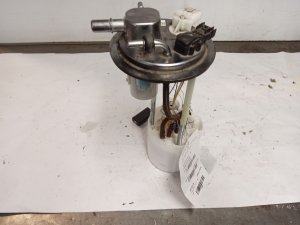
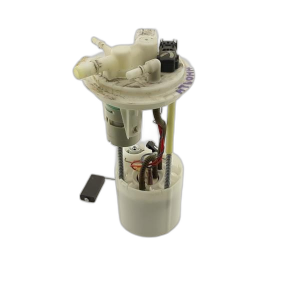
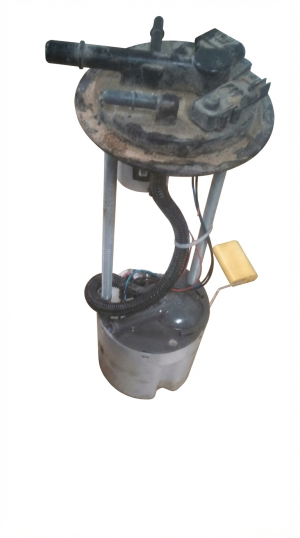
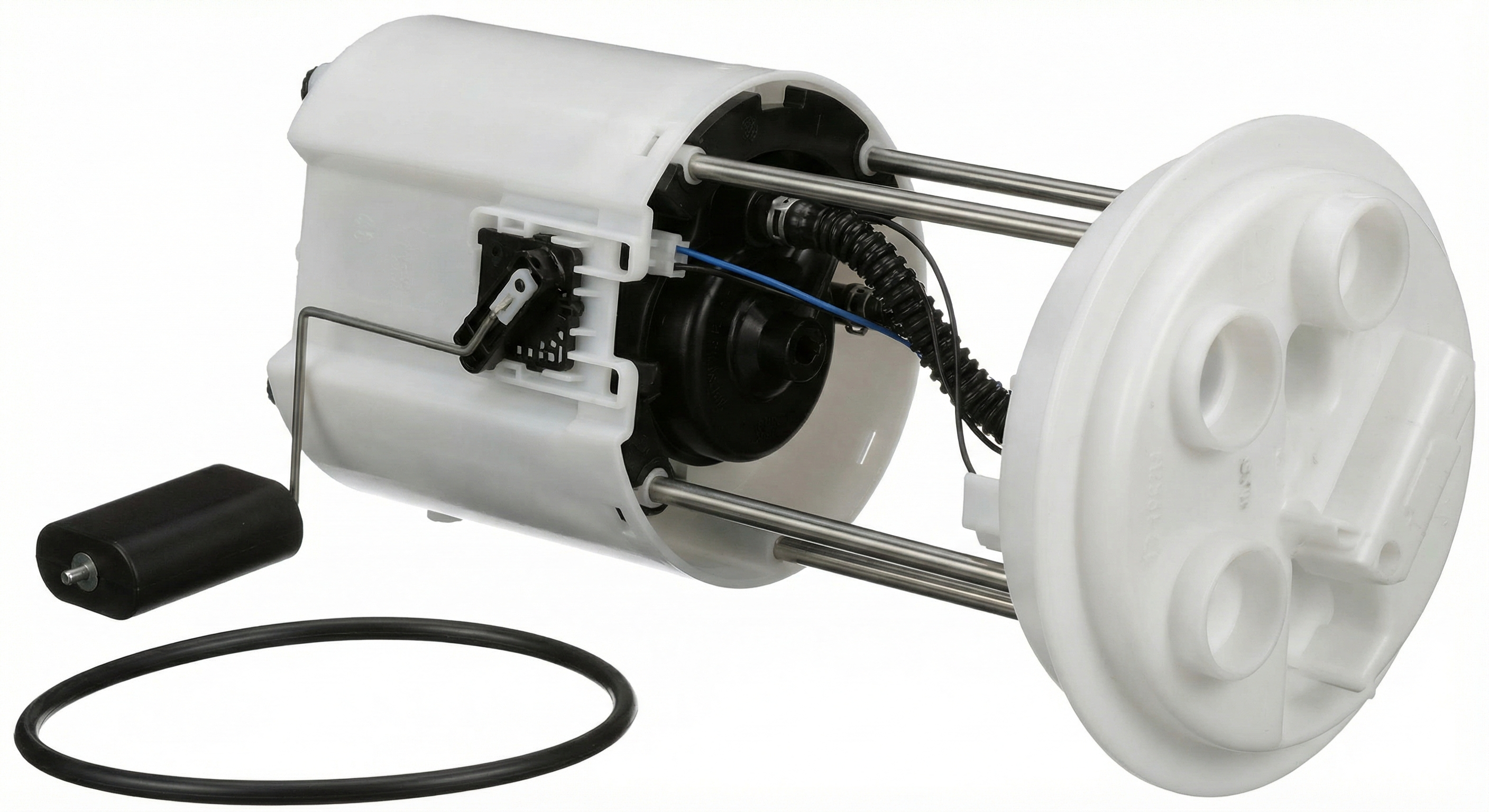
- Failing In-Tank Fuel Pump 🔴 High Probability → Shop Fuel Pump GM issued TSB #18-NA-103 specifically noting the in-tank pump can fail to provide adequate pressure in temperatures below 20°F (-6°C), causing a stall or no-start with P0087. This pump supplies the entire system on 2010-2013 models and acts as the lift pump for the HPFP on 2014-2017 models.
How to confirm: Perform a fuel pressure test on the low-pressure side of the system using a mechanical gauge. Pressure should meet manufacturer specifications, which is typically 50-75 PSI at idle. If pressure is low, the pump is a likely fault, assuming the FPDM is functioning.
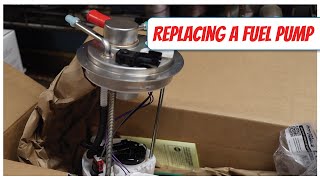
Typical fix: Replacement of the in-tank fuel pump module assembly. A common OEM part number is ACDelco MU2373. 🎬 Watch: Step-by-step guide to replacing the in-tank fuel pump.
Est. part cost: $250-$500 - Failing High-Pressure Fuel Pump (HPFP) (2014-2017 models only) 🔴 High Probability → Shop Fuel Pump The mechanical HPFP on the direct-injected EcoTec3 engines is a well-documented failure point. It is located in the engine valley under the intake manifold. A common failure mode involves the internal seal failing, allowing gasoline to leak directly into the engine crankcase.
How to confirm: Use a scan tool to monitor desired vs. actual fuel rail pressure. If the low-pressure system is confirmed to be working correctly (50-75 PSI), but the actual high-side pressure consistently fails to meet the desired pressure under load, the HPFP is the likely culprit. A critical and simple check is to smell the engine oil on the dipstick for a strong odor of gasoline, which strongly indicates a failed HPFP.
Typical fix: Replacement of the high-pressure fuel pump (e.g., GM #12677329 or #12688606) and the one-time-use high-pressure fuel line. An engine oil and filter change is mandatory if fuel contamination is suspected. It is also critical to inspect the camshaft lobe that drives the pump for wear.
Est. part cost: $300-$700 - Faulty Fuel Pump Driver Module (FPDM / FSCM) 🟡 Medium Probability → Shop Fuel Pump The module is mounted on a frame crossmember, typically above the spare tire, exposing it to moisture and road salt. This leads to severe corrosion on the module's aluminum housing, connector pins, and wiring, causing intermittent or total loss of power to the in-tank fuel pump.
How to confirm: Lower the spare tire and visually inspect the module and its connector for white, crusty corrosion or physical damage. Use a scan tool to check for FPDM-specific codes like P069E or P2635. Test for power and ground at the module and check the output signal to the fuel pump.
Typical fix: Replacement of the Fuel Pump Driver Module. OEM part numbers vary by year, including #20877116 for earlier models. Some aftermarket modules like the Dorman 601-131 come pre-programmed, avoiding a trip to the dealer.
Est. part cost: $70-$195 - Clogged Fuel Filter ⚪ Low Probability → Shop Fuel Filter While a possible cause, the fuel filter is integrated into the fuel pump module on these trucks and is not a separate serviceable item. Fuel contamination, as noted in TSB #PIP5151F, can clog the internal filter sock, restricting flow.
How to confirm: This is typically diagnosed by exclusion. If the in-tank pump is running (audible) but fuel pressure at the rail is low, and the FPDM is confirmed good, a restriction is likely. This points to a clogged filter sock inside the module.
Typical fix: The filter is part of the fuel pump module, so the entire module must be replaced.
Est. part cost: $250-$500 - Faulty Fuel Rail Pressure Sensor ⚪ Low Probability → Shop Fuel Pressure Sensor
How to confirm: With the engine off (but ignition on), compare the fuel pressure reading on a scan tool to a mechanical gauge. If the scan tool shows a very low or zero reading while the mechanical gauge shows pressure, the sensor is likely faulty. Also inspect the sensor's electrical connector for corrosion, as noted in TSB #20-NA-197.
Typical fix: Replacement of the fuel rail pressure sensor. An example OEM part is ACDelco #13516496.
Est. part cost: $50-$150
Rare But Worth Checking
- Fuel System Contamination: TSB #PIP5151F explicitly states that if contamination (water, rust, DEF) is found in the fuel system, the entire system may need to be cleaned or replaced. This is a rare but severe cause that may not be covered by warranty.
- Worn Camshaft Lobe (2014-2017 models): → Shop Engine Camshaft A worn camshaft lobe that drives the high-pressure fuel pump will cause chronically low fuel pressure and will quickly destroy a new HPFP if not addressed during the repair. 🎬 See how a worn camshaft lobe destroys the HPFP. Inspection is critical when replacing the HPFP.
- Weak Fuel Pressure Relief Valve: A mechanical relief valve on the fuel rail can weaken over time, causing it to open prematurely and bleed off pressure, leading to a P0087 code, especially under heavy load.
Diagnosis Steps
- Connect an OBD-II scanner and confirm P0087 is present. Check for any other codes, especially those related to the fuel pump driver module (e.g., P069E, P2635) or fuel pressure sensor (P0191).
- Use the scanner's live data function to monitor 'Desired Fuel Rail Pressure' and 'Actual Fuel Rail Pressure'. Note any large discrepancy.
- Crucial First Check: Lower the spare tire and locate the Fuel Pump Driver Module (FPDM) on the frame crossmember. Visually inspect the module and its electrical connector for heavy corrosion, cracks, or damage. This is a very common failure point.
- Test the Low-Pressure System: Connect a mechanical fuel pressure gauge to the low-pressure fuel line. Check for a stable 50-75 PSI with the key on or at idle.
- If low-side pressure is below specification, the problem is with the in-tank pump, the FPDM, or a clogged filter. If the FPDM looked corroded, it is the primary suspect.
- For 2014-2017 Models (If Low-Side Pressure is Good): If the low-pressure system provides adequate pressure but the high-pressure side still reads low on the scan tool, the issue is likely in the high-pressure system.
- Smell the Oil: Before condemning the HPFP, pull the engine oil dipstick and smell it for a strong odor of gasoline. Fuel in the oil is a definitive sign of a failed HPFP internal seal. If fuel is present, do not run the engine further.
- If replacing the HPFP, you must also replace the single-use high-pressure fuel line. Carefully inspect the camshaft lobe that drives the pump for wear.
Parts You'll Likely Need
- High-Pressure Fuel Pump (2014-2017)
(OEM #12677329)— This is a primary failure point on the direct-injected 2014-2017 models, responsible for generating the high pressure needed for the injectors.
Trusted brands: ACDelco, Bosch
OEM price range: $400-$600
Aftermarket price range: $250-$450 - In-Tank Fuel Pump Module
(OEM #19420773)— This pump supplies fuel from the tank to the engine (or to the HPFP on 2014+ models). It is a common failure, especially in cold weather as noted in TSB #18NA103.
Trusted brands: ACDelco, Delphi
OEM price range: $350-$500
Aftermarket price range: $200-$350 - Fuel Pump Driver Module (FPDM)
(OEM #23482843)— This module controls the in-tank fuel pump and is highly susceptible to failure from corrosion due to its location on the frame.
Trusted brands: ACDelco, Dorman, Standard Motor Products
OEM price range: $100-$150
Aftermarket price range: $70-$120
Related Codes That Often Appear With This One
- P0191 — This code indicates a Fuel Rail Pressure Sensor Circuit Range/Performance issue. TSBs #PIP5151F and #20-NA-197 list it alongside P0087, as the sensor's readings can become erratic during a low-pressure event.
- P2635 — This code relates to the Fuel Pump 'A' Low Flow/Performance. TSB #18-NA-103 lists it as a possible companion code to P0087, pointing directly to an electrical or flow issue with the low-pressure fuel pump or its control module.
- P0088 — This code for 'Fuel Rail/System Pressure - Too High' can sometimes appear with P0087, as noted in TSB #PIP5151F, suggesting an erratic fuel pressure control problem, possibly from a faulty sensor, FPDM, or failing HPFP.
- P128E — This is a GM-specific code for fuel rail pressure performance often seen with P0087 and P0088, particularly in cases of fuel contamination as cited in TSB #PIP5151F.
Technical Service Bulletins (TSBs) & Recalls
- TSB #18-NA-103: Addresses a start/stall, no-start, or loss of power condition with P0087 in temperatures below 20°F (-6°C), caused by the in-tank fuel pump.
- TSB #PIP5151F: Discusses various types of fuel contamination (water, rust, DEF) that can cause P0087, P0088, and P0191, and advises that the entire fuel system may need cleaning or replacement.
- TSB #PIP4949E: A general diagnostic tip for hard start/no start conditions with codes P0087, P0088, P0191, or P128E.
- TSB #20-NA-197: Details the inspection and replacement of a corroded fuel pressure sensor electrical connector that can cause P0087.
Platform-Specific Known Issues
- Fuel Pump Driver Module (FPDM) Corrosion: → Shop Fuel Pump The FPDM's location on the frame crossmember above the spare tire makes it extremely vulnerable to road salt and moisture, causing severe corrosion that leads to failure. This is a primary cause of P0087 on all 2010-2017 models and should be one of the first components checked.
- High-Pressure Fuel Pump (HPFP) Failure (2014-2017): → Shop Fuel Pump The camshaft-driven HPFP on the EcoTec3 engines is a common failure point. It can fail to produce adequate pressure or leak fuel internally into the engine oil, which is a critical safety and engine-health concern.
- Cold Weather In-Tank Pump Failure: As documented in TSB #18-NA-103, the in-tank fuel pump can struggle or fail in temperatures below 20°F (-6°C), causing a distinct whining noise, stalling, and setting code P0087.
Mechanic-Grade Diagnostic Values
- Low-Pressure Fuel System Pressure (In-tank pump) — expected: 50-75 PSI at idle.. Failure: Pressure is below 50 PSI or drops significantly under load.
- High-Pressure Fuel System Pressure (HPFP) (2014+ models) — expected: 290-725 PSI at idle; can exceed 2,100 PSI under load.. Failure: Scan tool shows 'Actual' pressure fails to meet 'Desired' pressure, especially during acceleration.
- Fuel Rail Pressure Sensor Voltage (Analog type, pre-2016) — expected: Typically 0.5V at low pressure (key on, engine off) and up to 4.5V at full pressure.. Failure: Voltage is stuck low or does not correlate with pressure changes.
- FPDM/FSCM Connector Pin 13 (Dark Green/White wire) Signal — expected: With a test light connected to ground, the light should illuminate for 3-6 seconds with key-on, or be constant while cranking.. Failure: No signal from the PCM indicates a wiring or PCM issue, not an FPDM/pump issue.
Scan Tool Commands That Help
- GDS2 (GM Dealer Scan Tool): Fuel Pump Enable/Disable — To directly command the in-tank fuel pump on and off to verify FPDM and pump operation without starting the engine. This helps isolate the low-pressure electrical circuit.
- GDS2 (GM Dealer Scan Tool): Fuel Rail Pressure Control — For 2014+ GDI engines, this allows a technician to command specific high pressures at idle to test the HPFP's ability to respond. If it cannot achieve the commanded pressure, it points to a failing HPFP or a leak.
Wiring & Ground Locations
- Fuel Pump Ground — On the driver's side frame rail, near the driver's side tire. It is often a black wire bolted directly to the frame.. This is the primary ground for the in-tank fuel pump. Corrosion or a loose connection at this point will cause low voltage to the pump, reducing its output and triggering P0087. It is a common and often overlooked failure point.
- FPDM/FSCM Harness Chafe Point — In the square tube section of the frame where the wiring loom makes a turn under the truck frame, directly below the driver's side fuse panel.. The harness carrying power and signal wires to the Fuel Pump Driver Module can rub through at this location, causing an intermittent short or open circuit. This can lead to a sudden loss of fuel pressure and a P0087 code that is difficult to trace.
- FPDM/FSCM Connector — Above the spare tire, connected to the Fuel Pump Driver Module.. Specific pins can be tested for diagnostics. Pin 32 (Red/White) should have battery voltage. Pin 1 (Black) is the ground. Pin 13 (Dark Green/White) is the command signal from the ECM. Pin 47 (Gray) is the voltage output to the fuel pump.
Real Owner Repair Stories
- 2CarPros Forum User (GM Truck (year not specified, but wiring is consistent with 2010-2017)) — No communication with Fuel Pump Control Module, 1.4 volts on main power wire.
❌ Tried (didn't work) Initial checks of the module and fuse box.
✅ What actually fixed it The user found a broken power wire (Red/Violet) inside the square tube section of the frame, right under the driver's side fuse panel where the harness makes a turn. Running a jumper wire around the damaged section restored power and the truck started immediately. - Reddit user Playful-Article5937 (2023 GMC Sierra 3.0L Duramax (Note: Newer model, but demonstrates P0087 logic)) — P0087 and P228B codes in cold weather, brief sputter then reduced acceleration mode.
❌ Tried (didn't work) Using fuel additive to prevent gelling., Dealer replaced the fuel rail and other parts, but the code returned.
✅ What actually fixed it The dealership ultimately replaced the high-pressure fuel pump, which appeared to resolve the cold-weather issue after three days of testing.
OEM Part Supersession History
20791901, 20827745, 20850927→20877116— Standard part evolution and consolidation by GM.
Heads up: This module requires programming by a GM dealer or with a capable tool to match the vehicle's VIN. It is not a plug-and-play part.Unknown→12677329 (also listed as HPM1029)— Part updates for the high-pressure fuel pump on GDI engines.
Heads up: While a genuine GM part, some users have reported issues with O2 sensor readings after installation, suggesting potential calibration or compatibility nuances. Always verify fitment with VIN.
Model Year Variations Within This Range
- 2014-2017: Introduction of the EcoTec3 GDI engines brought the high-pressure fuel pump (HPFP) and a more complex fuel system. This adds the HPFP and its associated components (cam lobe, high-pressure sensor) as primary potential causes for P0087 that do not exist on 2010-2013 models.
- 2016+: Some later models may use a digital SENT fuel rail pressure sensor, which communicates via a digital signal rather than a simple analog voltage. This requires a scan tool capable of reading this protocol for accurate diagnosis, as a multimeter voltage test is not applicable.
Helpful Videos


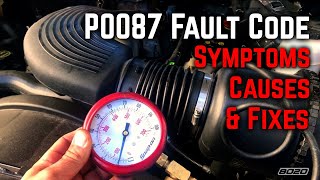
Used OEM Parts in Stock
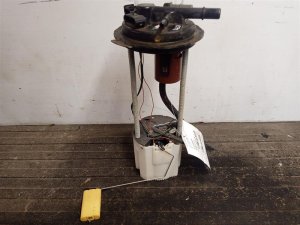
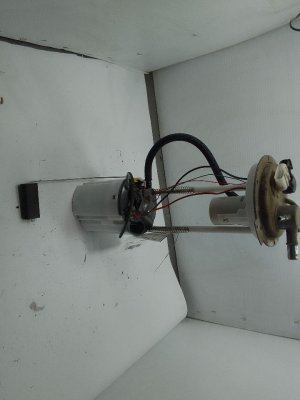
New Aftermarket Parts Available


The information in this article is provided for general reference and educational purposes only. Vehicle specifications, procedures, and part compatibility can vary by production date, trim level, and region. Always consult your vehicle's factory service manual and verify part numbers before purchasing or performing repairs. Safety-critical components such as airbags, seat belts, and braking systems should be installed by a qualified professional.
- Gmc SIERRA 1500:
- 🧭 Diagnostic Flowchart
- 🎬 Helpful Videos
- 🛍️ Shop This Part
- What's Unique About the 2010-2017 Gmc SIERRA 1500
- Symptoms You May Notice
- Most Likely Causes
- Rare But Worth Checking
- Diagnosis Steps
- Parts You'll Likely Need
- Related Codes That Often Appear With This One
- Technical Service Bulletins (TSBs) & Recalls
- Platform-Specific Known Issues
- Mechanic-Grade Diagnostic Values
- Scan Tool Commands That Help
- Wiring & Ground Locations
- Real Owner Repair Stories
- OEM Part Supersession History
- Model Year Variations Within This Range
- 🎟️ Get 5% Off