

P0087 on 2016-2018 GMC Sierra 3500: Low Fuel Pressure Causes & Fixes (Gas vs. Diesel)
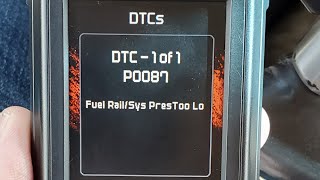
On a 2016-2018 Sierra 3500, P0087 means low fuel pressure, but the fix depends entirely on your engine. For the 6.6L Duramax Diesel (LML or L5P), always start by replacing the fuel filter. If that doesn't fix it, suspect a failing lift pump, collapsed fuel lines, or the high-pressure injection pump. For the 6.0L Gas V8, the cause is likely a failing in-tank fuel pump (especially in cold weather per TSB 18-NA-103) or the engine-mounted high-pressure fuel pump (HPFP).
- P0087 on a 2016-2018 Sierra 3500 requires you to know if you have the 6.0L Gas or 6.6L Duramax Diesel engine, as the fixes are completely different.
- For Duramax owners, the very first step should always be to replace the fuel filter and check the old one for metal shavings.
- For Gasoline V8 owners, the problem is most likely one of the two fuel pumps: the low-pressure pump in the tank (especially in cold weather) or the high-pressure pump on the engine (check oil for fuel smell).
- Do not continue to drive with this code. An engine stall is very likely and can be extremely dangerous. On a Duramax, you risk turning a small problem into a $10,000+ repair.
What's Unique About the 2016-2018 Gmc SIERRA 3500
The 2016-2018 Sierra 3500 platform is unique because it offers two completely different engine types with distinct fuel systems: the 6.0L Vortec gasoline V8 and the 6.6L Duramax turbo-diesel V8. This period also covers a critical engine change for the Duramax: the 2016 model year used the LML engine with the failure-prone Bosch CP4 injection pump, while the 2017-2018 models received the updated L5P engine with a more reliable Denso HP4 pump. While P0087 means low pressure on both, the common causes are worlds apart. On the LML Duramax, the code is notoriously linked to catastrophic failure of the CP4 high-pressure pump. On the newer L5P Duramax, while the pump is more robust, issues like faulty sensors, lift pumps, and fuel lines are still common. On the gasoline V8, the problem more commonly points to one of the two fuel pumps (low-pressure in-tank or high-pressure on-engine). Correct diagnosis requires identifying the engine first.
🎬 Watch: How to diagnose P0087 and limp mode on a Duramax.Diagnostic Flowchart
Tap your situation to follow the diagnostic path that matches what you're seeing on this vehicle.
Symptoms You May Notice
- Reduced engine power ('limp mode')
- Check Engine Light is on
- Engine is hard to start or will not start.
- Engine stalls, especially under load (towing, accelerating up a hill).
- Rough running or misfiring
- Sluggish acceleration or feeling 'gutless'.
- On Duramax models, a 'Change Fuel Filter' message may appear on the driver information center.
- Whining noise from the in-tank fuel pump, particularly in cold weather.
- Engine falls on its face at wide-open throttle, then recovers at idle.
- Replacing fuel injectors on a Duramax before confirming the health of the low-pressure and high-pressure pumps. Injectors are expensive and often contaminated by a failing pump, not the root cause.
- Replacing the high-pressure fuel pump (HPFP) on a gasoline engine when the cheaper in-tank low-pressure pump was the actual cause.
- On a 2016 LML Duramax, immediately assuming the high-pressure CP4 pump has failed without first changing the fuel filter and checking for metal shavings.
- On a Duramax, installing an aftermarket lift pump to 'fix' a P0087 code caused by worn-out injectors. A lift pump can help with fuel supply restrictions but cannot compensate for excessive fuel being returned by bad injectors.
Most Likely Causes
- Clogged Fuel Filter (6.6L Duramax Diesel) 🔴 High Probability → Shop Fuel Filter Diesel fuel systems are highly sensitive to contamination and water. The fuel filter is the first line of defense and the most common restriction point, leading to fuel starvation under load.
How to confirm: This is the first and most crucial diagnostic step for any P0087 code on a Duramax. Replace the fuel filter with a high-quality OEM replacement (e.g., ACDelco TP3018 for LML, ACDelco TP1015 for L5P). Cut open the old filter and inspect the media for metallic 'glitter'—its presence indicates a failing high-pressure pump, and the entire fuel system is likely contaminated.
Typical fix: Replace the fuel filter. This is a standard maintenance item and the cheapest potential fix. If metal is found, a full fuel system replacement is required.
Est. part cost: $30-$60 - Failing In-Tank Low-Pressure Fuel Pump (6.0L Gasoline) 🔴 High Probability → Shop Fuel Pump GM issued TSB #18-NA-103 specifically for this part failing in cold temperatures (below 20°F / -6°C), causing a P0087 code, whining noise, stalling, or no-start conditions.
How to confirm: A technician will perform a fuel pressure test on the low-pressure side. If the pump has power but pressure is below specification (typically 50-66 PSI), the pump is weak. The issue is often intermittent and temperature-dependent.
Typical fix: Replace the fuel pump module assembly, which is located inside the fuel tank.
Est. part cost: $250-$500 - Failing High-Pressure Fuel Pump (CP4/Injection Pump) (2016 6.6L LML Duramax) 🟡 Medium Probability → Shop Fuel Pump The Bosch CP4 pump used on 2011-2016 LML Duramax engines is notoriously prone to catastrophic failure, where it disintegrates internally and sends metal shards throughout the entire fuel system. This is the most feared cause of P0087 on these trucks.
How to confirm: The definitive sign is finding metallic shavings in the fuel filter or fuel pressure regulator. A technician can also monitor desired vs. actual fuel rail pressure with a scan tool; a large deviation under load points to the pump.
Typical fix: This is a catastrophic failure requiring replacement of the entire fuel system: high-pressure pump, fuel injectors, fuel rails, and all lines, plus flushing the tank. This can cost over $8,000-$10,000. A CP4 to CP3 conversion kit is a popular, more reliable upgrade for LML engines to prevent recurrence.
Est. part cost: $2,000-$10,000+ - Failing High-Pressure Fuel Pump (HPFP) (6.0L Gasoline) 🟡 Medium Probability → Shop Fuel Pump The mechanical, camshaft-driven HPFP is a common failure point on many GDI engines, including the 6.0L Vortec.
How to confirm: A critical diagnostic step is to check the engine oil for a strong smell of gasoline. An internal seal failure in the HPFP will leak fuel directly into the crankcase. A scan tool can also show actual fuel pressure failing to meet desired pressure under load.
Typical fix: Replace the high-pressure fuel pump, which is mounted on the engine. An example part number for this engine family is GM #12679090.
Est. part cost: $250-$700 - Collapsed or Restricted Fuel Lines (6.6L Duramax Diesel) ⚪ Low Probability → Shop Fuel Line A known issue covered by a GM service bulletin where the factory soft fuel lines can degrade from heat and collapse under the vacuum from the injection pump, restricting fuel flow.
How to confirm: Visually inspect the flexible fuel lines, particularly the section near the driver's side valve cover and the section near the transmission. Look for kinks or flattened sections. The issue often appears when the engine is hot and under heavy load, like towing uphill.
Typical fix: Replace the collapsed section of hose with an upgraded, more rigid hose (e.g., Parker hose) as recommended by the TSB. This often involves cutting off the factory crimp fittings. 🎬 See this guide on upgrading fuel lines and changing filters.
Est. part cost: $50-$100
Rare But Worth Checking
- Fuel System Contamination (Diesel & Gasoline): Mentioned in TSB #PIP5151F. If debris, water, or other fluids (like DEF) enter the tank, it can clog the entire system and damage components. The fix is not just one part, but a thorough cleaning of the tank, lines, and replacement of the pump and filter. GM states that damage from contaminated fuel is not covered by warranty.
- Failing Fuel Rail Pressure Sensor: → Shop Fuel Pressure Sensor Less common than pump or filter issues, but the sensor itself can fail and send incorrect low-pressure readings to the ECM, triggering the code even if the mechanical pressure is fine. On 2017-2020 L5P engines, TSB #20-NA-197 notes that corrosion on the sensor's electrical connector can also cause this code.
- Failing Fuel Pressure Relief Valve (Duramax): This mechanical valve on the fuel rail can weaken and open prematurely, bleeding off pressure and causing a P0087 code, especially under high load. It's a common failure point on older or high-mileage Duramax engines. Some owners replace it with a solid 'race plug' to eliminate it as a failure point.
- Air Leaks in Fuel System (Duramax): Since the factory Duramax system (without an aftermarket lift pump) pulls fuel under a vacuum, any small air leak can cause a loss of prime, hard starting, and P0087. Common leak points include cracked fuel filter housings or degraded O-rings on the filter head assembly.
Diagnosis Steps
- Identify the engine (6.0L Gas or 6.6L Diesel). The following steps are engine-dependent.
- For 6.6L Duramax Diesel:
- a. Replace the fuel filter. This is the most important first step. Use a quality OEM filter (ACDelco TP3018 for 2016 LML, TP1015 for 2017-18 L5P).
- b. Cut open the old filter and carefully inspect the pleats for metallic shavings. The presence of 'glitter' confirms a high-pressure pump failure (highly likely on 2016 LML), and diagnosis should stop to prevent further damage.
- c. If no metal is found, use a scan tool to monitor 'Desired Fuel Rail Pressure' vs. 'Actual Fuel Rail Pressure' while driving under load. A significant lag or drop in actual pressure indicates fuel starvation.
- d. Test the low-pressure lift pump to ensure it is supplying adequate pressure to the high-pressure pump. Check for a whining noise. On trucks without a lift pump, check the vacuum at the test port on the filter housing; it should not exceed 5-8 inches of vacuum under load.
- e. Inspect all soft fuel lines for kinks or signs of collapse, especially near the transmission and driver's side of the engine.
- f. Check for air leaks by priming the fuel filter head. If the primer button is soft and can be pumped up, there may be an air leak in the system, often from the filter head seals themselves.
- g. If other causes are ruled out, investigate the fuel pressure relief valve and the fuel rail pressure sensor/connector.
- For 6.0L Gasoline V8:
- a. Check the engine oil dipstick for a strong smell of gasoline. If present, the high-pressure fuel pump (HPFP) on the engine has likely failed internally and is leaking fuel into the crankcase. Stop the engine immediately to prevent damage.
- b. If no fuel is in the oil, connect a fuel pressure gauge to the low-pressure system. Verify the in-tank pump is producing adequate pressure (typically 50-66 PSI). Note that TSB #18-NA-103 indicates this failure is more common in cold weather.
- c. Use a scan tool to monitor desired vs. actual high-side fuel pressure. If low-side pressure is good but high-side pressure is low, the HPFP is the likely culprit.
- d. Inspect for any signs of fuel leaks throughout the system.
Parts You'll Likely Need
- Fuel Filter (Duramax Diesel) — This is the most common cause of fuel restriction and the first step in diagnosis for a P0087 on a Duramax.
Trusted brands: ACDelco, Donaldson, Wix
OEM price range: $40-$60
Aftermarket price range: $30-$50 - Fuel Pump Module (Gasoline)
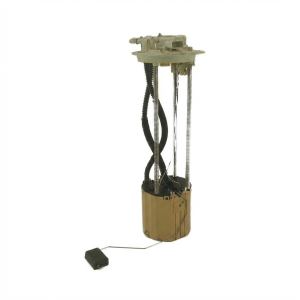
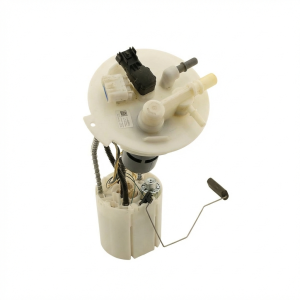
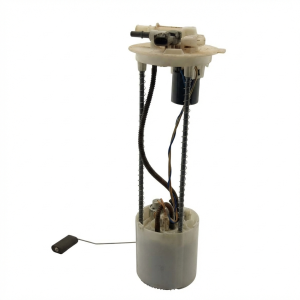
(OEM #19303293)— The in-tank low-pressure pump is a very common failure item on the 6.0L gas engine, especially in cold weather, as noted in TSB #18-NA-103.
Trusted brands: ACDelco, Delphi
OEM price range: $350-$500
Aftermarket price range: $250-$400 - High-Pressure Fuel Pump (HPFP) (Gasoline) — The engine-mounted mechanical pump can fail, often leaking fuel into the engine oil.
Trusted brands: ACDelco, Bosch
OEM price range: $400-$700
Aftermarket price range: $250-$500 - High-Pressure Injection Pump (Duramax Diesel) — This is the notorious failure point on LML Duramax engines (2016) that can cause P0087 and requires a full fuel system replacement if it sends metal through the lines.
Trusted brands: Bosch
OEM price range: $1500-$2500
Aftermarket price range: $1000-$1800
Related Codes That Often Appear With This One
- P0088 — Fuel Rail/System Pressure - Too High. This can appear with P0087 if the fuel pressure regulator is failing erratically, causing both spikes and drops in pressure. TSB #PIP5151F also lists it as a related code.
- P0191 — Fuel Rail Pressure Sensor Circuit Range/Performance. This code often accompanies P0087 as it indicates the sensor's readings are implausible or don't match what the ECM expects, which is a direct consequence of the low pressure event. TSB #PIP5151F and TSB #20-NA-197 both list this as a related code.
- P128E — Fuel Rail Pressure Performance. This is a GM-specific code that is often set in conjunction with P0087, indicating a performance issue within the fuel rail system. It is also mentioned in TSB #PIP5151F.
- P0089 — Fuel Pressure Regulator Performance. This code points to a problem with the regulator itself, which could be the root cause of the low pressure seen in P0087. TSB #20-NA-197 lists it as a related code.
Technical Service Bulletins (TSBs) & Recalls
- PIP5151F
- 18-NA-103
- 20-NA-197
- 16-NA-102
- 18-NA-361
Platform-Specific Known Issues
- For 6.6L Duramax: The 2016 model year uses the LML engine with the failure-prone Bosch CP4.2 high-pressure injection pump. Its failure is a well-documented, common, and extremely expensive repair.
- For 6.0L Gasoline: TSB #18-NA-103 notes that the in-tank fuel pump is prone to failure in ambient temperatures below 20°F (-6°C), leading to a no-start or stall with code P0087.
- For 6.6L Duramax: A GM service bulletin addresses an issue where soft fuel supply lines can collapse under suction and heat, causing a fuel restriction and triggering P0087. The fix is to replace the soft line with a more durable, rigid hose.
Mechanic-Grade Diagnostic Values
- 6.6L LML Duramax Fuel Rail Pressure (Scan Tool) — expected: Desired vs. Actual should match. Idle: ~4,000-5,000 PSI. Wide Open Throttle (WOT): Should command and hold ~26,000 PSI.. Failure: If Actual pressure falls more than 2,000 PSI below Desired pressure under load, it indicates a fuel delivery problem.
- 6.6L L5P Duramax Fuel Rail Pressure (Scan Tool) — expected: Idle: ~5,000-6,000 PSI. Wide Open Throttle (WOT): Can exceed 29,000 PSI.. Failure: A significant lag or inability for Actual pressure to meet Desired pressure under load.
- 6.6L L5P Duramax In-Tank Lift Pump Pressure — expected: Should hold a steady 58-72 PSI to supply the high-pressure pump.. Failure: Pressure dropping below 58 PSI, especially under load, indicates a weak lift pump.
- 6.0L Vortec Gas Low-Pressure Fuel Pump — expected: 50-66 PSI at the fuel rail service port (key on, engine off).. Failure: Pressure below 50 PSI indicates a weak in-tank pump or clogged filter.
- 6.0L Vortec Gas High-Pressure Fuel Pump (Scan Tool) — expected: Idle: ~290-725 PSI. Under Load: Can exceed 2,100 PSI.. Failure: Actual pressure fails to meet desired pressure, especially during acceleration.
- Duramax Fuel System Vacuum (Pre-HPFP) — expected: With a vacuum gauge on the test port, should be 5-8 inches of Mercury (inHg) at full load.. Failure: Vacuum greater than 8 inHg indicates a restriction, such as a clogged fuel filter or collapsed line.
Scan Tool Commands That Help
- GDS2 (GM Dealer Tool): Fuel Rail Pressure Control — To manually command the high-pressure pump and regulator to a specific pressure. This isolates the components and tests their ability to build and hold pressure without the engine being under a dynamic load.
- GDS2 (GM Dealer Tool): Fuel Pump On/Off — To test the low-pressure in-tank fuel pump (both gas and diesel L5P). This allows a technician to check for pump activation and measure low-side fuel pressure without cranking the engine.
- GDS2 (GM Dealer Tool): Fuel Injection Small Quantity Data Reset — After replacing injectors on an L5P Duramax, this function must be performed to reset learned values in the ECM, as noted in GM Service Update N182179090.
Wiring & Ground Locations
- Fuel Pump Control Module (FPCM) / Fuel Pump Driver Module (FPDM) — Typically mounted on the driver's side frame rail, near the fuel tank. It is exposed to road spray and debris.. This module controls the voltage to the in-tank fuel pump. Corrosion on the module, its connector, or its dedicated ground point on the frame can cause low voltage to the pump, resulting in low fuel pressure and a P0087 code.
- Fuel Rail Pressure Sensor Connector (L5P) — On the fuel rail, behind the alternator/generator. It is difficult to access.. TSB #20-NA-197 specifically identifies corrosion or damage at this connector as a cause for P0087 and related codes. The fix involves cleaning the terminals and applying dielectric grease.
Real Owner Repair Stories
- DuramaxDiesels.com forum user 'TxDmax88' (2011-2016 LML Duramax) — P0087 code after extensive work including injector and rail replacement.
❌ Tried (didn't work) Replaced CP4 pump, Replaced injectors, Replaced fuel rails, Cleaned fuel tank and all lines
✅ What actually fixed it The truck would not start, but after tapping on the Fuel Pressure Regulator Valve (FPRV), it started. Replacing the FPRV finally resolved the P0087 code. - YouTube channel 'Held The Flashlight For Dad' (LMM Duramax (similar fuel system principles to LML)) — Intermittent P0087 code, especially when towing in hot weather.
❌ Tried (didn't work) Replacing the fuel filter, Installing a fuel pressure relief valve 'race plug'
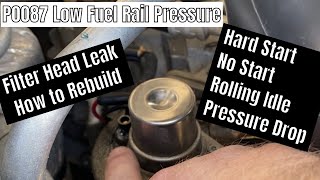
✅ What actually fixed it The owner discovered the soft fuel supply line on the driver's side of the engine was collapsing under heat and vacuum. He replaced the factory crimped hose with a more durable Parker hydraulic hose, which fixed the fuel starvation issue under load. - YouTube channel 'Cars and Joshee' (2006 Duramax (similar vacuum-side fuel system to 2016 LML)) — P0087, hard start/no start, rolling idle, limp mode.
❌ Tried (didn't work) Initially suspected fuel pressure regulator.
✅ What actually fixed it The fuel filter housing (filter head) was sucking in air at the primer button seal. Rebuilding the filter head with new O-rings and seals resolved the air leak, which in turn fixed the loss of prime and the P0087 code.
OEM Part Supersession History
12641847, 12658553, 12673410→12679090, which is now superseded by 12711668— Revisions to improve reliability and performance of the high-pressure fuel pump for the 6.0L gasoline engine.
Heads up: While older part numbers may physically fit, using the latest superseded part number (e.g., 12711668) is highly recommended to get the most updated design and prevent premature failure.12647909→12686809— Revision of the fuel rail pressure sensor for the 6.6L L5P Duramax engine.
Model Year Variations Within This Range
- 2017-2018: The 2017-2018 L5P Duramax uses an E41 ECM that can be upgraded for tuning via a specific process involving HP Tuners. This is different from the later 2024+ L5P engines which use an E42 ECM. Additionally, several software updates (calibrations) were released by GM to address performance and potential codes. Before replacing hardware for a P0087, a technician should ensure the ECM has the latest software installed.
- 2016: The 2016 LML Duramax features a unique fuel system with a CP4 high-pressure pump and a pressurized injector return system controlled by a special regulator. This return system is not present on the L5P and requires specific diagnostic steps if a no-start or P0087 code is present.
Helpful Videos

Used OEM Parts in Stock
New Aftermarket Parts Available



The information in this article is provided for general reference and educational purposes only. Vehicle specifications, procedures, and part compatibility can vary by production date, trim level, and region. Always consult your vehicle's factory service manual and verify part numbers before purchasing or performing repairs. Safety-critical components such as airbags, seat belts, and braking systems should be installed by a qualified professional.
- Gmc SIERRA 3500:
- 🧭 Diagnostic Flowchart
- 🎬 Helpful Videos
- 🛍️ Shop This Part
- What's Unique About the 2016-2018 Gmc SIERRA 3500
- Symptoms You May Notice
- Most Likely Causes
- Rare But Worth Checking
- Diagnosis Steps
- Parts You'll Likely Need
- Related Codes That Often Appear With This One
- Technical Service Bulletins (TSBs) & Recalls
- Platform-Specific Known Issues
- Mechanic-Grade Diagnostic Values
- Scan Tool Commands That Help
- Wiring & Ground Locations
- Real Owner Repair Stories
- OEM Part Supersession History
- Model Year Variations Within This Range
- 🎟️ Get 5% Off