

P0087 on 2010-2014 GMC Sierra Denali: Fuel Pressure Too Low Causes and Fixes
P0087 on a 2010-2014 Sierra Denali indicates low fuel pressure in the direct injection system. The most common causes are a failing high-pressure fuel pump (HPFP), a weak in-tank low-pressure fuel pump, or a faulty Fuel System Control Module (FSCM). Expect repair costs to range from $500 to over $1500, depending on which pump has failed.
- P0087 means fuel pressure is too low for the engine to run correctly.
- The most likely causes on your Sierra Denali are a failing high-pressure fuel pump (HPFP) or the in-tank low-pressure pump.
- Cold weather can trigger this code by affecting the in-tank pump's performance.
- Diagnosis is critical to avoid replacing the expensive HPFP when the cheaper in-tank pump is the real problem.
- This is not a DIY-friendly repair; the high-pressure fuel system requires professional service due to safety risks.
What's Unique About the 2010-2014 Gmc SIERRA DENALI
The GMC Sierra Denali of this era, particularly with the introduction of direct injection V8 engines (L94, L86), relies on a two-pump fuel system. The high-pressure fuel pump (HPFP) is mechanically driven by a dedicated three-lobe section on the camshaft and is a known failure point that can cause a P0087 code. Additionally, GM has issued technical service bulletins (TSBs) that point to issues with the low-pressure in-tank pump, especially in cold weather, and the Fuel System Control Module (FSCM) that commands it. Diagnosing which part of the system is failing is critical to avoid replacing the wrong, and often expensive, components.
Diagnostic Flowchart
Tap your situation to follow the diagnostic path that matches what you're seeing on this vehicle.
Generation note: This range covers two Sierra generations. The 2010-2013 models are part of the 2nd generation (GMT900) with the L94 V8, while the 2014 model year marks the beginning of the 3rd generation (K2XX) with the new EcoTec3 L86 V8. The K2XX trucks introduced significant fuel system updates, including a new HPFP design and a potentially non-serviceable in-tank fuel filter. While the causes are similar, part numbers and specific diagnostic procedures may differ between these generations.
Symptoms You May Notice
- Check Engine Light is on
- Loss of engine power and poor acceleration, especially under load
- Engine hesitation or sputtering, particularly between 2,000 and 4,000 RPM
- Hard starting or long crank times
- Rough idle
- Engine stalling, sometimes unexpectedly at idle or during acceleration
- Vehicle enters 'limp mode' with reduced power
- Loud rattling or metallic knocking from the top of the engine, indicating severe HPFP mechanical failure
- Replacing the high-pressure fuel pump when the actual fault is the low-pressure in-tank pump or the Fuel System Control Module (FSCM), especially in cold climates.
- Replacing fuel pumps when the issue is a simple clogged external fuel filter (on applicable models) or a faulty pressure sensor.
- Ignoring a worn camshaft lobe, which leads to the premature failure of a newly installed high-pressure fuel pump.
Most Likely Causes
- Failing High-Pressure Fuel Pump (HPFP) 🔴 High Probability → Shop Fuel Pump The mechanically driven HPFP is a common failure point on GM's direct injection engines. Wear on the pump's internal components or its drive lobe on the camshaft can reduce its ability to generate the required high pressure. Using incorrect engine oil can accelerate this wear.
How to confirm: A technician will use a scan tool to monitor desired vs. actual fuel rail pressure under various load conditions. A significant lag or inability for the actual pressure to meet the desired pressure, especially under load, points to a failing HPFP. Inspecting the old engine oil for metal shavings is also a key indicator.
Typical fix: Replacement of the high-pressure fuel pump and its associated gasket. The camshaft lobe should also be inspected for wear, as a worn lobe will damage the new pump.
Est. part cost: $280-$600 - Failing Low-Pressure In-Tank Fuel Pump or Fuel System Control Module (FSCM) 🟡 Medium Probability → Shop Fuel System Controller TSB #18NA103 specifically mentions the in-tank fuel pump failing to deliver adequate pressure in cold temperatures below 20°F (-6°C), leading to a P0087 code. The FSCM (also called a fuel pump driver module) which controls this pump is also a known failure point on these trucks, sometimes due to corrosion or wiring issues.
How to confirm: Perform a fuel pressure test on the low-pressure side of the system using a mechanical gauge. Pressure should meet manufacturer specifications (typically 50-70 PSI). If pressure is low, the in-tank pump or FSCM is likely at fault. A scan tool can check for FSCM-specific codes like P069E.
Typical fix: Replacement of the in-tank fuel pump module or the Fuel System Control Module. The FSCM may require programming after installation.
Est. part cost: $200-$450 - Clogged Fuel Filter 🟡 Medium Probability → Shop Fuel Filter While some earlier models in this range may have a serviceable, frame-mounted fuel filter, many later models integrate the filter into the in-tank fuel pump module, making it non-serviceable. Fuel system contamination, as noted in TSB #PIP5151B, can clog this filter/strainer, restricting flow.
How to confirm: A low-side fuel pressure test showing low volume or pressure can indicate a restriction. On models with an external filter, it's often replaced as a first step. For in-tank filters, debris found in the tank during pump replacement confirms the issue.
Typical fix: Replace the external fuel filter if equipped. If the filter is part of the in-tank module, the entire fuel pump module must be replaced.
Est. part cost: $20-$80 for external, $200-$400+ for module - Faulty Fuel Rail Pressure Sensor ⚪ Low Probability → Shop Fuel Pressure Sensor
How to confirm: Compare the fuel pressure reading from a scan tool's live data with the reading from a mechanical fuel pressure gauge connected to the high-pressure rail (requires special tools). If the readings differ significantly, the sensor is likely faulty. Also, inspect the sensor's electrical connector for corrosion.
Typical fix: Replacement of the fuel rail pressure sensor.
Est. part cost: $50-$150
Rare But Worth Checking
- Fuel System Contamination: TSB #PIP5151B warns that if contamination (water, rust, DEF) is found, the entire fuel system may need to be cleaned, which is a significant and costly repair. This is more common on diesel models but can happen with gasoline if contaminated fuel is used.
- Leaking Fuel Injectors: → Shop Fuel Injector A fuel injector stuck open can cause a drop in rail pressure. This would typically be accompanied by other symptoms like a rich running condition, fuel smell, or misfire codes (P0300-P0308) for a specific cylinder.
- Worn Camshaft Lobe: → Shop Engine Camshaft The lobe on the camshaft that drives the HPFP can wear down, especially if there are oiling issues. If this happens, the pump's plunger doesn't travel its full stroke, resulting in low pressure. This requires camshaft replacement, a very expensive repair.
Diagnosis Steps
- Connect an OBD-II scanner and confirm the P0087 code. Check for any other related codes, especially those related to the FSCM (P069E) or fuel sensors (P018B, P0191).
- Use the scanner's live data function to monitor 'Desired Fuel Rail Pressure' vs. 'Actual Fuel Rail Pressure'. Note any significant discrepancies, especially during acceleration or when putting the engine under load.
- Perform a fuel pressure test on the low-pressure system (the line from the in-tank pump). Pressure should be stable and within the manufacturer's specification (typically 50-70 PSI). A significant drop under load points to a weak in-tank pump or clogged filter.
- If low-pressure is weak, inspect the Fuel System Control Module (FSCM) and its wiring/fuses before condemning the pump. The FSCM is a common failure point.
- If low-pressure is good but rail pressure is still low, the problem is likely on the high-pressure side. Inspect the high-pressure fuel pump (HPFP) for any visible leaks or damage.
- Before replacing the HPFP, check the engine oil for fuel contamination or metallic debris, which can indicate a failed pump or worn cam lobe.
- When replacing the HPFP, it is critical to inspect the camshaft follower and the camshaft lobe for any signs of wear or damage. Failure to do so can cause a repeat failure.
- If all other components test correctly, the high-pressure fuel pump is the most likely culprit.
Parts You'll Likely Need
- High-Pressure Fuel Pump
(OEM #12641847 (Supersedes: 12639694, 12633423, 12608371))— This is a primary failure point for the P0087 code on GM direct injection engines.
Trusted brands: ACDelco (GM Genuine), Bosch
OEM price range: $400-$600
Aftermarket price range: $280-$450 - In-Tank Fuel Pump Module
(OEM #M100129)— The low-pressure pump can weaken over time or fail, especially in cold weather as noted by GM TSBs. The integrated fuel filter can also become clogged.
Trusted brands: ACDelco, Delphi
OEM price range: $300-$450
Aftermarket price range: $200-$350 - Fuel System Control Module (FSCM)
(OEM #20759945 (For GMT900))— This module controls the in-tank pump and is a very common failure item, often due to corrosion from its mounting location on the frame.
Trusted brands: ACDelco (GM Genuine), Dorman
OEM price range: $120-$200
Aftermarket price range: $80-$150
Related Codes That Often Appear With This One
- P018B — Fuel Pressure Sensor 'B' Circuit Range/Performance, often related to cold weather in-tank pump issues per TSB #18NA103.
- P228B — Fuel Pressure Regulator 2 Control Circuit Range/Performance, points to issues with pressure control, often seen with P0087 in cold weather.
- P0088 — Fuel Rail/System Pressure - Too High. This can appear alongside P0087 if the fuel pressure regulation is erratic, as mentioned in TSBs #PIP5151B and #PIP4949E.
- P0191 — Fuel Rail Pressure Sensor Circuit Range/Performance, indicating a potential issue with the sensor or its circuit, as seen in TSBs #PIP5151B and #PIP4949E.
- P069E — Fuel System Control Module Requested MIL Illumination. This code directly points to a fault logged within the FSCM, which controls the in-tank pump.
Technical Service Bulletins (TSBs) & Recalls
- 18-NA-103: Information on Fuel Gelling in Cold Temperatures Causing In-Tank Fuel Pump Whine and Driveability Concerns
- PIP5151B/D: Diagnostic Tip - Fuel System Contamination
- PIP4949E: Information on Hard Start or No Start Conditions
- 08-06-04-029A: MIL/SES Light with DTC P0087, Lack of Performance, No Start
Platform-Specific Known Issues
- TSB #18NA103 highlights that the in-tank fuel pump may struggle in temperatures below 20°F, causing a start-and-stall or no-start condition along with code P0087. The bulletin notes a whining noise from the pump may be present.
- TSB #PIP5151B points to fuel system contamination as a potential cause for low fuel pressure, which may require cleaning the entire fuel system if found. While the bulletin focuses on diesel, the principle applies to gasoline engines if bad fuel is used.
- A Reddit user with a newer Sierra reported P0087 and P228B codes specifically in cold weather (below 30°F), which persisted after multiple dealer visits, highlighting the difficulty in diagnosing cold-related fuel pressure issues.
- On gm-trucks.com forums, users frequently debate replacing the HPFP versus the FSCM, with many finding success by first replacing the less expensive FSCM, which is located on the frame rail and is a known weak point.
Mechanic-Grade Diagnostic Values
- Low-Pressure Fuel System Pressure (at idle) — expected: 50 - 70 PSI. Failure: Pressure below 50 PSI, or pressure that drops significantly under load, indicates a weak in-tank pump, clogged filter, or failing FSCM.
- FSCM Connector Voltage Test (GMT900) — expected: With key on, 12V+ at Pin 32 (Red/White wire) for battery power, and 12V+ signal at Pin 13 (Dark Green/White wire) from the PCM. This signal may be constant, appear for 3-6 seconds, or only show while cranking.. Failure: No voltage at Pin 32 indicates a fuse/power supply issue. No signal at Pin 13 points to a wiring break or a fault in the PCM (check PCM Pin 50).
- FSCM Ground Circuit Test (GMT900) — expected: Continuity to ground at Pin 1 (Black wire) of the FSCM connector.. Failure: A high resistance or open circuit indicates a bad ground connection, which can cause the module to malfunction.
Hidden / Shadow Codes Worth Checking
- P069E: Fuel System Control Module (FSCM) Requested MIL Illumination. This is not a generic P-code but a specific fault reported by the FSCM itself. It strongly indicates the problem originates with the low-pressure fuel pump's control system. (see via A professional-grade scan tool like the GM GDS2/Tech2 is typically required to see module-specific codes; basic OBD-II readers may only show the resulting P0087.)
Scan Tool Commands That Help
- GM GDS2 (Global Diagnostic System 2): Fuel System Tests / Bi-Directional Controls — Use this dealer-level software to command the low-pressure fuel pump on/off to verify its function and to monitor 'Desired' vs 'Actual' fuel rail pressure from the high-pressure system during guided diagnostic routines. This is critical for isolating whether the fault is in the low-pressure, high-pressure, or sensor circuits.
Wiring & Ground Locations
- Fuel System Control Module (FSCM) - GMT900 (2010-2013) — Mounted to the frame rail, typically above the spare tire on the driver's side.. This is the control unit for the low-pressure pump. Its exposed location makes it and its connector prone to corrosion and damage, which is a direct cause of low-pressure fuel delivery issues leading to P0087.
- FSCM Fuses - GMT900 (2010-2013) — In the under-hood fuse block. Specifically, check fuses #20, #21 (FSCM), and #56 (ECM).. A blown fuse will cut power to the FSCM, disabling the low-pressure fuel pump and causing an immediate P0087 code.
- FSCM Fuses/Relays - K2XX (2014) — In the under-hood fuse block. For 2014-2017 models, check fuses #18, #21, #41 and relays #60 and #70.. Loss of power or a failed relay for the fuel pump circuit will shut down the low-pressure system and trigger the code.
- Ground G218 - K2XX (2014) — Under the driver's side A-pillar kick panel/trim.. This is a known problematic ground location on 2014+ trucks. While not tied directly to P0087 in documentation, a poor ground can cause erratic behavior in various electronic modules, potentially including the FSCM or ECM, leading to phantom codes.
Real Owner Repair Stories
- Reddit user on r/gmcsierra (2020 GMC Sierra w/ 3.0L Diesel (Symptoms and codes are analogous to gas engine issues)) — Codes P228B and P0087, reduced power, especially in cold weather.
❌ Tried (didn't work) Dealer replacing fuel rail and sensors.
✅ What actually fixed it An independent shop diagnosed and replaced the Fuel Pump Control Module (FSCM). - YouTube video by 'Jeep solid' (2006 GMC Duramax (Diesel, but demonstrates a mechanical failure mode applicable to all fuel systems)) — P0087, hard start / no start, rolling idle.
❌ Tried (didn't work) Initial suspicion was the fuel pressure regulator.
✅ What actually fixed it The fuel filter head assembly was found to be sucking in air. Rebuilding the filter head with new seals resolved the air leak and the code.
"I Checked Everything" — The Actual Cause
- In one documented case on a Duramax with P0087, standard diagnostics did not pinpoint the cause. The owner discovered the root issue by manually pumping the fuel primer and noticing fuel bubbling out of the fuel filter head assembly. The system was sucking in air through bad seals, a problem that pressure or electrical tests would not find, but which directly caused low fuel pressure when the engine was running.
OEM Part Supersession History
12608371, 12633115, 12633423, 12639694→12641847— Design revisions and improvements by the manufacturer.
Heads up: When replacing the high-pressure fuel pump, it is critical to use the latest part number (12641847) to ensure you have the most updated design.
Model Year Variations Within This Range
- 2010-2013 (GMT900): The Fuel System Control Module (FSCM) is powered by fuses #20, #21, and #56 in the under-hood fuse block. The module is typically located on the driver's side frame rail near the spare tire.
- 2014 (K2XX): The fuel pump circuit uses fuses #18, #21, #41 and relays #60 and #70 in the under-hood fuse block. The engine is the updated L86 with a different HPFP design.
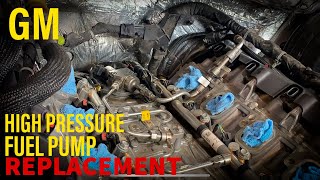
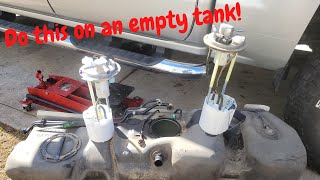
Helpful Videos
We Have This Part in Stock



The information in this article is provided for general reference and educational purposes only. Vehicle specifications, procedures, and part compatibility can vary by production date, trim level, and region. Always consult your vehicle's factory service manual and verify part numbers before purchasing or performing repairs. Safety-critical components such as airbags, seat belts, and braking systems should be installed by a qualified professional.
- Gmc SIERRA DENALI:
- 🧭 Diagnostic Flowchart
- 🎬 Helpful Videos
- 🛍️ Shop This Part
- What's Unique About the 2010-2014 Gmc SIERRA DENALI
- Symptoms You May Notice
- Most Likely Causes
- Rare But Worth Checking
- Diagnosis Steps
- Parts You'll Likely Need
- Related Codes That Often Appear With This One
- Technical Service Bulletins (TSBs) & Recalls
- Platform-Specific Known Issues
- Mechanic-Grade Diagnostic Values
- Hidden / Shadow Codes Worth Checking
- Scan Tool Commands That Help
- Wiring & Ground Locations
- Real Owner Repair Stories
- "I Checked Everything" — The Actual Cause
- OEM Part Supersession History
- Model Year Variations Within This Range
- 🎟️ Get 5% Off