

P0087 on 2018-2019 GMC Terrain: Fuel Rail Pressure Too Low Causes and Fixes
P0087 on a 2018-2019 GMC Terrain indicates that the fuel pressure is dangerously low. The most common causes are a failing high-pressure fuel pump (HPFP) or a weak in-tank low-pressure fuel pump. Diagnosis is critical to avoid replacing the wrong pump, but fuel in the engine oil is a strong indicator of a failed HPFP.
- P0087 is a serious code on your GMC Terrain that indicates insufficient fuel pressure and should be addressed immediately.
- Do not continue to drive the vehicle, as it may stall at any time, posing a safety risk.
- The most common causes are a failed high-pressure fuel pump (HPFP) or a failed low-pressure in-tank pump.
- A critical first diagnostic step is to check the engine oil for a fuel smell, which strongly points to a bad HPFP.
- Due to the complexity and safety risks of the high-pressure fuel system, professional diagnosis is highly recommended.
What's Unique About the 2018-2019 Gmc TERRAIN
For the 2018-2019 GMC Terrain, which features gasoline direct injection (GDI) engines like the 1.5L (LYX) and 2.0L (LTG), the fuel system is more complex than older port-injected designs. The dual-pump system (low and high pressure) means there are more potential failure points. A key concern, highlighted in GM service bulletins, is the high failure rate of the camshaft-driven high-pressure fuel pump (HPFP). Differentiating between a low-pressure and high-pressure side failure is the primary diagnostic challenge, though evidence often points to the HPFP.
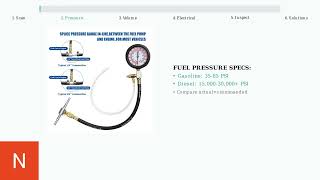
🎬 Watch: Expert guide on GM high pressure fuel pump diagnosis.Diagnostic Flowchart
Tap your situation to follow the diagnostic path that matches what you're seeing on this vehicle.
Symptoms You May Notice
- Check Engine Light is on
- Reduced engine power or 'limp mode'
- Engine hesitation or stumbling during acceleration, especially between 2,000 and 4,000 RPM
- Rough running or misfiring
- Difficulty starting the engine, or a no-start condition
- Engine stalling, sometimes unexpectedly during driving
- Decreased fuel economy
- Strong smell of gasoline from the engine oil on the dipstick
- Replacing the high-pressure fuel pump when the in-tank low-pressure pump or its control module (FPCM) is actually at fault.
- Replacing fuel injectors when the issue is fuel supply, not delivery into the cylinder.
- Overlooking a simple clogged fuel filter (which is part of the pump module on this vehicle).
Most Likely Causes
- Failing High-Pressure Fuel Pump (HPFP) 🔴 High Probability → Shop Fuel Pump The HPFP is a very common failure point on GM's GDI engines (1.5L LYX, 2.0L LTG). It is a mechanical pump driven by the camshaft, and its internal seals can fail, causing it to leak fuel directly into the engine crankcase or fail to generate adequate pressure.
How to confirm: The most definitive sign is smelling fuel in the engine oil on the dipstick; this confirms an internal pump seal has failed. A technician will use a scan tool to monitor desired vs. actual fuel rail pressure. If actual pressure cannot keep up with desired pressure under load (acceleration), the HPFP is the primary suspect.
Typical fix: Replace the high-pressure fuel pump. It is critical to also change the engine oil and filter to remove the fuel contamination. GM also issued Customer Satisfaction Program N182199610 for some 2019 Terrains for HPFPs that could crack and leak.
Est. part cost: $250-$700 - Failing Low-Pressure In-Tank Fuel Pump 🟡 Medium Probability → Shop Fuel Pump The in-tank pump supplies fuel to the HPFP. If its output is weak, the HPFP will be starved and cannot build sufficient high pressure, triggering P0087. While less common than HPFP failure on this platform, it is still a possibility.
How to confirm: A technician will test the low-pressure fuel system using a mechanical fuel pressure gauge to ensure it meets GM's specifications (typically 43-58 PSI at idle). This test is performed before condemning the more expensive HPFP.
Typical fix: Replace the in-tank fuel pump module.
Est. part cost: $200-$500 - Clogged or Dirty Fuel Filter 🟡 Medium Probability → Shop Fuel Filter The fuel filter can become restricted, impeding fuel flow. On the 2018-2019 Terrain, the primary fuel filter is integrated into the in-tank fuel pump module and is not serviced separately.
How to confirm: This is typically diagnosed by a low-pressure fuel test. If the pressure from the in-tank pump is below specification, the entire module (including the integrated filter) is suspect.
Typical fix: Replace the entire in-tank fuel pump module, as the filter is not a separate part.
Est. part cost: $200-$500 (for the complete module) - Faulty Fuel Rail Pressure Sensor ⚪ Low Probability → Shop Fuel Pressure Sensor The sensor can fail and send inaccurate low-pressure readings to the ECM, even if the actual pressure is normal. A GM service update for 2024 models mentions sensors built with output shifts, suggesting a history of sensor quality issues.
How to confirm: Compare the sensor's reading on a scan tool to a reading from a known-good mechanical pressure gauge connected to the system. If the readings differ significantly, the sensor is likely faulty. A healthy sensor should show approximately 1.5-1.8 volts on the signal wire with the key on and engine off.
Typical fix: Replace the fuel rail pressure sensor.
Est. part cost: $50-$150
Rare But Worth Checking
- Fuel System Contamination: As mentioned in GM TSB #PIP5151F, contamination from sources like water, debris, or incorrect fluids can cause P0087. The bulletin warns that if contamination is found, the entire fuel system may need to be flushed or replaced, which is an extensive and costly repair.
- Faulty Fuel Pump Control Module (FPCM): → Shop Fuel Pump The FPCM (sometimes called FSCM) regulates the voltage to the in-tank fuel pump. A failure in this module can cause the pump to run slow or not at all, leading to low pressure. This would typically be diagnosed after confirming the pump itself is functional and requires programming upon replacement.
- Worn Camshaft Lobe: → Shop Engine Camshaft The high-pressure fuel pump is driven by a specific lobe on the camshaft. If this lobe becomes excessively worn, it can no longer fully actuate the pump, resulting in low pressure. This is a rare but severe mechanical failure, usually seen on very high-mileage engines.
Diagnosis Steps
- Check the engine oil on the dipstick FIRST. If it smells strongly of gasoline, the high-pressure fuel pump has almost certainly failed internally. Stop diagnosis, replace the HPFP, and perform an oil and filter change.
- Check for other stored DTCs that could provide more clues (e.g., P0191 for a sensor fault, P0172 for a rich condition).
- Connect a scan tool to monitor live data. Observe the 'Desired Fuel Rail Pressure' vs. 'Actual Fuel Rail Pressure' at idle, and then during a brief, brisk acceleration (in park/neutral or on a test drive).
- If actual pressure drops significantly and cannot meet the desired pressure under load, the HPFP is the most likely cause.
- If pressure is low even at idle, the problem could be on the low-pressure side. Use a scan tool to command the 'Fuel Pump Enable ON' and connect a mechanical fuel pressure gauge to test the output of the in-tank fuel pump. It should meet manufacturer specifications (typically 43-58 PSI at idle).
- If low-side pressure is good, but high-side pressure is low, this further points to the HPFP.
- If both desired and actual pressure readings on the scan tool seem erratic or incorrect, test the fuel rail pressure sensor. With the key on and engine off, back-probe the sensor's signal wire; it should read between 1.5 and 1.8 volts.
- Inspect fuel lines for any visible kinks, damage, or leaks.
- If fuel contamination is suspected, a fuel sample should be taken and inspected for water, debris, or other fluids.
Parts You'll Likely Need
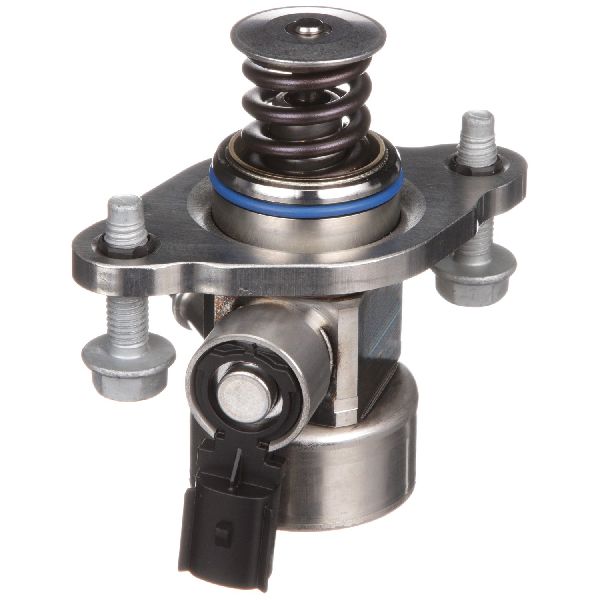
- High-Pressure Fuel Pump
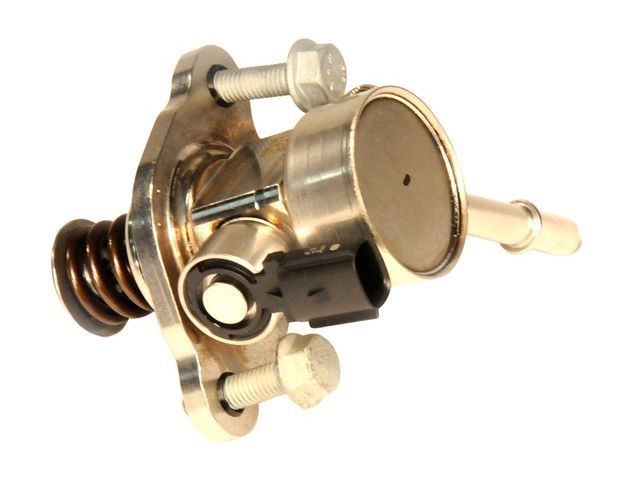
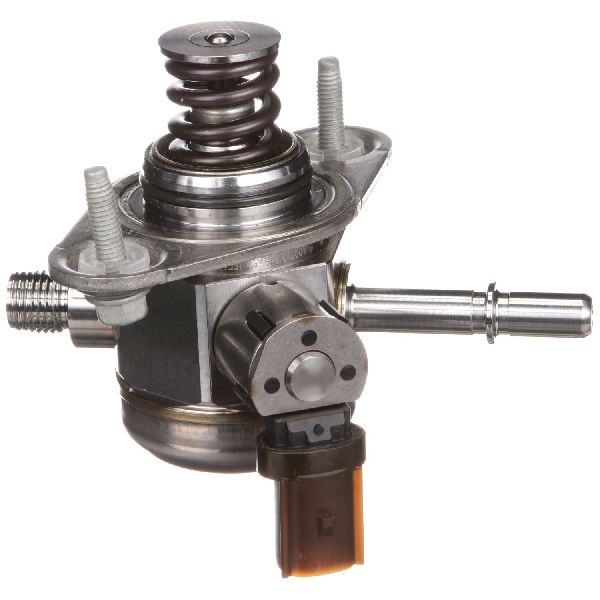
(OEM #12677329, 12697683, 12682079)— This is the most common failure point for code P0087 on the Terrain's GDI engines, responsible for generating the final high pressure for the injectors.
Trusted brands: ACDelco (HPM1010), Bosch, Delphi (HM10115)
OEM price range: $400-$700
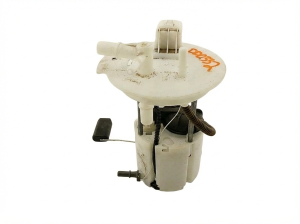
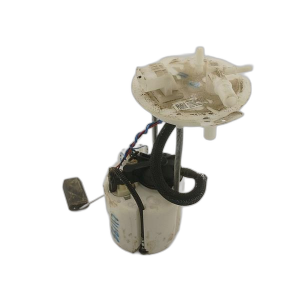
Aftermarket price range: $250-$500 - In-Tank Fuel Pump Module
(OEM #84961187)— This pump supplies fuel to the HPFP. If it is weak, it will starve the high-pressure side of the system. The fuel filter is integrated into this module.
Trusted brands: ACDelco (MU2405), Delphi (FG2678)
OEM price range: $300-$500
Aftermarket price range: $200-$350 - Fuel Rail Pressure Sensor
(OEM #12705503)— Though less common, a faulty sensor can send incorrect data to the ECM, causing a false P0087 code. Part number 12705503 supersedes 12672582.
Trusted brands: ACDelco, Standard Motor Products
OEM price range: $80-$150
Aftermarket price range: $50-$100
Related Codes That Often Appear With This One
- P0088 — This code for "Fuel Rail/System Pressure - Too High" can appear if a failing component is causing erratic pressure swings, both too high and too low.
- P0191 — Indicates a performance problem with the Fuel Rail Pressure Sensor circuit. This can be set along with P0087 if the sensor is failing or if the pressure is genuinely erratic.
- P128E — This is a GM-specific code. TSB #PIP5151F lists it alongside P0087, indicating it is related to fuel system faults on this platform.
- P0172 — Indicates "System Too Rich." This code can appear with P0087 if the high-pressure fuel pump is leaking fuel into the engine oil. The excess fuel vapors are pulled into the intake via the PCV system, creating a rich condition.
Technical Service Bulletins (TSBs) & Recalls
- PIP5151F: Mentions that vehicles with a hard start, no start, or rough running may have DTCs P0087, P0088, P0191, and P128E. It warns that fuel system contamination could be the cause, requiring extensive repairs.
- N182199610: A Customer Satisfaction Program for certain 2019 Terrains where the HPFP may crack and leak fuel, causing a fuel odor, no-start, or reduced power. The dealer correction is to replace the high-pressure fuel pump and insulator at no charge (program ended March 31, 2021).
Platform-Specific Known Issues
- GM Technical Service Bulletin #PIP5151F directly addresses P0087 on 2018 models. It notes that if fuel system contamination is found during inspection, a complete fuel system replacement may be necessary.
Mechanic-Grade Diagnostic Values
- Low-Pressure Fuel System (at pump) — expected: 345-690 kPa (50-100 psi) with pump commanded on, engine off.. Failure: Pressure below 345 kPa (50 psi) indicates a weak in-tank pump or restriction.
- Low-Pressure Fuel System (at idle) — expected: 300-400 kPa (43-58 psi) at normal operating temperature.. Failure: Pressure below 300 kPa (43 psi) at idle suggests a problem with the in-tank pump or FPCM.
- High-Pressure Fuel System (at idle) — expected: Approx. 500-600 PSI (3.4 - 4.1 MPa).. Failure: Significantly lower pressure at idle, or pressure that doesn't rise with RPM, points to a failing HPFP.
- Fuel Rail Pressure Sensor Signal Voltage — expected: 1.5 - 1.8 Volts with Key On, Engine Off (KOEO).. Failure: Voltage near 0V or close to 5V indicates a sensor or wiring fault. A reading of 0 PSI on a scan tool corresponds to an open circuit, while a maxed-out reading (e.g., 4,626 PSI) corresponds to a short to 5V.
Scan Tool Commands That Help
- GDS2 / Professional Scan Tool: Fuel Pump Enable — Use this bidirectional command to run the in-tank low-pressure fuel pump without starting the engine. This allows for safe and accurate pressure testing of the low-pressure side.
- GDS2 / Professional Scan Tool: Fuel Pump Control Module Programming — This function is required after replacing the Fuel Pump Control Module (FPCM) to configure the new module to the vehicle's specific parameters.
Wiring & Ground Locations
- Fuel Pump Control Module (FPCM) — Located in the rear of the vehicle, typically above the spare tire.. This module controls the in-tank fuel pump. Its location makes it susceptible to moisture and corrosion, and a poor connection or module failure will starve the high-pressure pump of fuel.
- Engine Compartment Fuse Block — Located on the driver's side of the engine compartment.. Contains critical fuses for the engine and transmission control modules (e.g., F04 for ECM, F06 for TCM), which are essential for fuel system operation.
- Instrument Panel Fuse Block — Under the instrument panel on the driver's side.. Contains circuit breakers and fuses related to auxiliary power that can sometimes share circuits with control modules.
Real Owner Repair Stories
- Synthesized from multiple technician diagnostic videos (GM vehicle with GDI engine (e.g., Chevy Malibu, similar system to Terrain)) — Vehicle would run fine for 20-30 minutes, then stall unexpectedly. Code P0087 was stored.
❌ Tried (didn't work) Initial diagnosis focused on the low-pressure system because the failure was intermittent.
✅ What actually fixed it A mechanical gauge on the low-pressure side showed a steady 55 PSI, even when the vehicle stalled, ruling out the in-tank pump. Monitoring desired vs. actual high pressure on a scan tool showed the actual pressure dropping off just before the stall. The root cause was an intermittently failing high-pressure fuel pump (HPFP) that would stop working correctly once it reached a certain temperature. Replacing the HPFP resolved the issue.
OEM Part Supersession History
12677329 (HPFP)→12691016— Part revision or manufacturer change. This indicates GM has updated the pump design since the vehicle was released.12672582 (Fuel Rail Pressure Sensor)→12705503— Part revision to improve reliability or change supplier.
Model Year Variations Within This Range
- 2018-2020: The 2.0L LTG turbo engine was an option during these years, which uses a similar but distinct fuel system architecture compared to the 1.5L.
- 2018-2022 vs 2023+: Starting in model year 2023, the Terrain received an updated 1.5L engine (RPO code LSD) which features a 'higher-pressure fuel system'. This means parts and diagnostic values for 2018-2022 models may not apply to later vehicles.
Helpful Videos

Used OEM Parts in Stock
New Aftermarket Parts Available

The information in this article is provided for general reference and educational purposes only. Vehicle specifications, procedures, and part compatibility can vary by production date, trim level, and region. Always consult your vehicle's factory service manual and verify part numbers before purchasing or performing repairs. Safety-critical components such as airbags, seat belts, and braking systems should be installed by a qualified professional.
- Gmc TERRAIN:
- 🧭 Diagnostic Flowchart
- 🎬 Helpful Videos
- 🛍️ Shop This Part
- What's Unique About the 2018-2019 Gmc TERRAIN
- Symptoms You May Notice
- Most Likely Causes
- Rare But Worth Checking
- Diagnosis Steps
- Parts You'll Likely Need
- Related Codes That Often Appear With This One
- Technical Service Bulletins (TSBs) & Recalls
- Platform-Specific Known Issues
- Mechanic-Grade Diagnostic Values
- Scan Tool Commands That Help
- Wiring & Ground Locations
- Real Owner Repair Stories
- OEM Part Supersession History
- Model Year Variations Within This Range
- 🎟️ Get 5% Off