

P0087 on 2019-2020 Honda Fit: Fuel Pressure Too Low Causes and Fixes
On a 2019-2020 Honda Fit, code P0087 is almost always caused by a failing in-tank low-pressure fuel pump, a known issue covered by a widespread safety recall (NHTSA 20V-314). The fix is a free replacement of the fuel pump module at a Honda dealership.
- P0087 on a 2019-2020 Fit is almost certainly due to a recalled in-tank fuel pump (NHTSA campaign 20V-314).
- Do not drive the vehicle, as it can stall at any time, creating a serious safety risk.
- Your first step must be to check your VIN on the NHTSA or Honda recall website to see if you are covered by the safety recall.
- If covered, a Honda dealer will replace the fuel pump module for free, and this must be done before any other repairs are attempted per Honda's TSB.
- If not covered by the recall, the issue could be a clogged filter, a bad high-pressure fuel pump, or a faulty sensor, which will require professional diagnosis.
What's Unique About the 2019-2020 Honda FIT
The 2019-2020 Honda Fit is subject to a major safety recall (NHTSA Campaign 20V-314 and its expansions) for the low-pressure fuel pump. The issue stems from impellers in Denso-made fuel pumps that were produced with a lower density plastic; these impellers can absorb fuel, swell, and interfere with the pump housing, causing the pump to seize. This failure starves the high-pressure fuel pump of fuel, leading directly to the P0087 code and creating a dangerous stalling condition. While other causes are possible, this specific manufacturing defect is the overwhelmingly common reason for this code on this vehicle.
Diagnostic Flowchart
Tap your situation to follow the diagnostic path that matches what you're seeing on this vehicle.
Symptoms You May Notice
- Check Engine Light is on
- Engine stalls while driving
- Engine is hard to start or will not start
- Engine hesitation, sputtering, or jolting under acceleration
- Reduced engine power or entering 'limp mode'
- Engine runs rough or idles poorly
- Replacing the high-pressure fuel pump (HPFP) when the issue is the recalled low-pressure pump.
- Replacing the fuel rail pressure sensor before verifying the actual fuel pressure with a mechanical gauge.
- A Reddit user reported a dealer replaced the recalled low-pressure pump for P0087, but then claimed all fuel injectors had also failed, leading to a high repair estimate. This highlights the importance of careful diagnosis after the recall work is done.
Most Likely Causes
- Failing Low-Pressure Fuel Pump 🔴 High Probability → Shop Fuel Pump A known manufacturing defect in the Denso fuel pump causes the impeller to swell and seize, leading to a widespread safety recall (NHTSA Campaign 20V-314 and subsequent expansions like 20-043).
How to confirm: Check your vehicle's VIN on the NHTSA or Honda recall website. A Honda dealer will diagnose and confirm the failure as part of the recall process, which is the mandatory first step if symptoms are present.
Typical fix: Replace the in-tank fuel pump module assembly. This is performed free of charge by a Honda dealer under the recall. The replacement part is a kit with an improved pump.
Est. part cost: $0 (if covered by recall)
Rare But Worth Checking
- Clogged Fuel Filter: → Shop Fuel Filter The fuel filter is integrated into the in-tank fuel pump module. If the pump is replaced under the recall, the filter is replaced with it. On a vehicle not under recall, a severely clogged filter could restrict flow to the high-pressure pump.
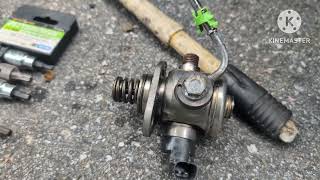
- Failing High-Pressure Fuel Pump (HPFP): → Shop Fuel Pump While far less common than the low-pressure pump failure on this model, the HPFP (mounted on the engine) can also fail and cause low rail pressure. Diagnosis requires confirming the low-pressure pump is supplying adequate pressure first.
- Faulty Fuel Rail Pressure Sensor: → Shop Fuel Pressure Sensor The sensor can fail and send an incorrect low-pressure reading to the computer, triggering the code even if the pressure is normal. This can be tested by comparing the sensor's live data reading to a mechanical gauge.
Diagnosis Steps
- Check for Recalls: The first and most important step is to check if your vehicle is covered by the fuel pump safety recall (NHTSA 20V-314) using your VIN on Honda's or the NHTSA's website.
- Contact a Honda Dealer: If your vehicle is part of the recall, schedule a service appointment. Per Honda TSB A21-023, the recall repair must be performed before any other troubleshooting for P0087.
- (If not under recall) Scan for Codes & Live Data: Use an OBD-II scanner to confirm P0087 is the primary code. 🎬 Watch: A detailed breakdown of P0087 on this Honda Fit generation. Monitor live data for 'Fuel Rail Pressure' vs. 'Desired Fuel Rail Pressure'. A significant discrepancy where actual pressure is much lower than desired points to a real pressure loss.
- Test Low-Pressure Fuel System: A mechanic will test the output pressure of the in-tank pump. Normal pressure should be around 47-54 psi at idle. If pressure is low, the pump is likely faulty.
- Inspect for Leaks: Visually inspect all fuel lines from the tank to the engine for any signs of fuel leaks, which can cause a loss of pressure.
- Test High-Pressure System: If the low-pressure side is confirmed to be working correctly, diagnosis would then move to the high-pressure fuel pump and the fuel rail pressure sensor.
Parts You'll Likely Need
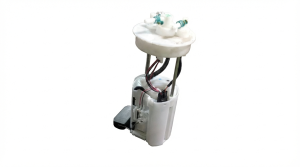
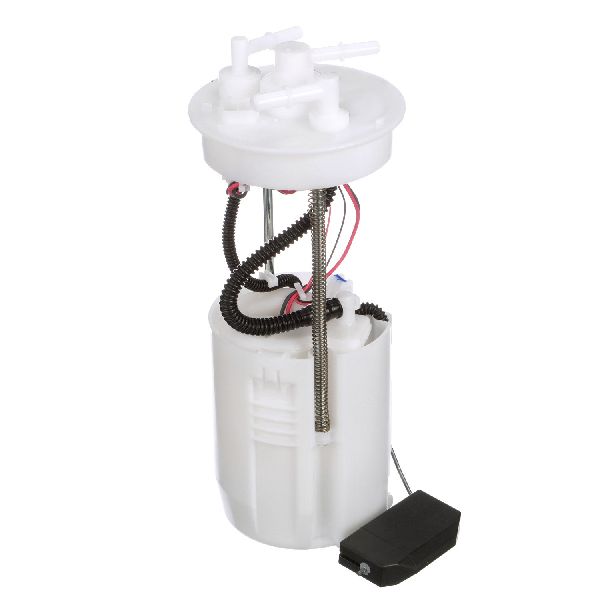
- Fuel Pump Module Assembly (In-tank)
(OEM #17045-T5R-A01)— This is the part that fails due to the defective impeller identified in Honda's safety recall. It contains the low-pressure pump, sending unit, and filter. This part number supersedes the original, faulty part 17045-T5R-A00.
Trusted brands: Honda (Genuine)
OEM price range: $440-$670
Aftermarket price range: $150-$300 - High Pressure Fuel Pump (HPFP)
(OEM #16790-5R1-J01)— A rare but possible cause of P0087 if the low-pressure system is confirmed to be working correctly.
Trusted brands: Honda (Genuine)
OEM price range: $390-$560
Aftermarket price range: $200-$400 - Fuel Rail Pressure Sensor
(OEM #37890-R07-A01)— A rare but possible cause if the sensor provides false low readings. Diagnosis should confirm the sensor is faulty before replacement.
Trusted brands: Honda (Genuine)
OEM price range: $80-$120
Aftermarket price range: $40-$80
Technical Service Bulletins (TSBs) & Recalls
- A21-023: Safety Recall TSB explicitly states that due to a swelling impeller, the fuel pump may seize, causing the check engine light with DTC P0087, a no-start condition, or a stall while driving.
- ATI&03282023902: Internal Honda communication confirming customer complaints of Check Engine Light with DTC P0087 on 2020 Fits, sometimes accompanied by a hard-to-start condition.
- ATI&01032023907: Repeats the information from the previous TSB regarding P0087 on 2020 Fits.
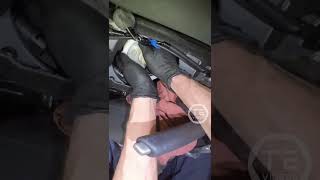
- 20-043: One of the service bulletins associated with the fuel pump recall campaign, providing instructions for the free replacement. 🎬 See a satisfying POV of the fuel pump recall being performed.
Platform-Specific Known Issues
- A major safety recall (NHTSA 20V-314) was issued for the low-pressure fuel pump in 2019-2020 Honda Fits. The impeller can deform and cause the pump to fail, leading to an engine stall while driving. This issue is documented in detail in Honda TSB A21-023.
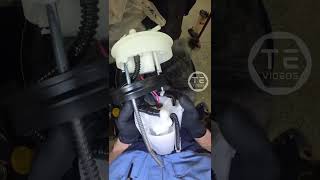
- Unlike many cars where the fuel pump is under the rear seat, the pump in the Honda Fit is located under the center console, making access more involved for DIY repair. 🎬 Watch: How to access and replace the in-tank fuel pump.
Mechanic-Grade Diagnostic Values
- Low-Pressure Fuel System Pressure at Idle — expected: 320-370 kPa (47-54 psi). Failure: Pressure below 47 psi indicates a problem with the in-tank fuel pump or a clogged filter.
- High-Pressure Fuel Rail Pressure at Idle — expected: Approximately 40 bar (580 psi). Failure: Significantly lower pressure, or pressure that matches the low-side pump (e.g., ~4.5 bar), indicates the high-pressure pump is not functioning.
- Fuel Rail Pressure Sensor Voltage (Key On, Engine Off) — expected: Approximately 0.5 V. Failure: Voltage significantly different from 0.5V may indicate a sensor or wiring issue.
Scan Tool Commands That Help
- Honda Diagnostic System (HDS): Direct Injection Fuel Pressure Test — This is a guided test within the HDS software used to check for DTCs after clearing them and running the engine at 3,000 RPM to stabilize the system. It's a primary step to verify if the P0087 fault is currently active.
- Honda Diagnostic System (HDS): Monitor Fuel Pressure (PF Sensor) vs. Direct Injection Fuel Pressure — Used during diagnostic test drives to compare the sensor's reported pressure against the target pressure under various loads. A large discrepancy helps confirm a real pressure loss versus a sensor fault.
Real Owner Repair Stories
- Reddit user ddrastic14 on r/hondafit (2015 Honda Fit LX, 62,000 miles) — Car entered limp mode with code P0087 when merging onto the highway. The user noted this problem only occurs when the fuel tank is low (around 1/4 tank) and during acceleration. With a full tank, the issue does not happen.
❌ Tried (didn't work) Took the car to a Honda dealer with a full tank of gas, but they could not reproduce the issue and therefore did not perform a repair.
✅ What actually fixed it The user did not post a final resolution, but the symptoms strongly point to a weak in-tank fuel pump that struggles to pick up fuel when the tank level is low, especially during maneuvers that cause fuel to slosh away from the pickup. - Reddit user ryqns on r/hondafit (2018 Honda Fit Sport M/T) — While driving, the car jolted and would not accelerate. P0087 appeared along with VSA and power steering warning lights.
❌ Tried (didn't work) The user had not yet performed the fuel pump recall.
✅ What actually fixed it A commenter explained that the other system warnings (VSA, steering) are a common side effect of a primary engine fault code like P0087 on the CAN network. The definitive fix is to have the fuel pump replaced under the recall, which should resolve all the warning lights.
OEM Part Supersession History
17045-T5R-A00→17045-T5R-A01— The original part is the fuel pump module containing the defective impeller subject to the safety recall. The new part number is for the updated, corrected module.
Heads up: The original part 17045-T5R-A00 should not be used; it is the defective unit. Always use the superseded part 17045-T5R-A01 for repairs.
Helpful Videos

Used OEM Parts in Stock
New Aftermarket Parts Available


The information in this article is provided for general reference and educational purposes only. Vehicle specifications, procedures, and part compatibility can vary by production date, trim level, and region. Always consult your vehicle's factory service manual and verify part numbers before purchasing or performing repairs. Safety-critical components such as airbags, seat belts, and braking systems should be installed by a qualified professional.
- Honda FIT:
- 🧭 Diagnostic Flowchart
- 🎬 Helpful Videos
- 🛍️ Shop This Part
- What's Unique About the 2019-2020 Honda FIT
- Symptoms You May Notice
- Most Likely Causes
- Rare But Worth Checking
- Diagnosis Steps
- Parts You'll Likely Need
- Technical Service Bulletins (TSBs) & Recalls
- Platform-Specific Known Issues
- Mechanic-Grade Diagnostic Values
- Scan Tool Commands That Help
- Real Owner Repair Stories
- OEM Part Supersession History
- 🎟️ Get 5% Off