

P0087 on 2020-2024 Hyundai Palisade 3.8L V6: Low Fuel Pressure Causes and Fixes
P0087 on a Hyundai Palisade almost always means the high-pressure fuel pump (HPFP) is failing. This is a common issue on Hyundai's GDI engines. Expect symptoms like sudden power loss, stalling, and hesitation. The fix involves replacing the HPFP and the mandatory one-time-use high-pressure fuel line, with OEM parts costing between $350 and $700.
- P0087 on a 2020-2024 Palisade is a critical code that makes the vehicle unsafe to drive.
- The cause is almost certainly a fuel delivery problem, with the high-pressure fuel pump (HPFP) being the most likely component to have failed.
- Diagnosis requires a scan tool that can read live fuel pressure data.
- Repair is not just the pump; the high-pressure fuel pipe (PN 35305-3L100) is a mandatory one-time-use part that must be replaced at the same time.
What's Unique About the 2020-2024 Hyundai Palisade
The 3.8L Lambda II GDI engine, like many direct-injection powerplants, relies on extremely high fuel pressures—sometimes over 2,000 PSI—generated by a mechanical high-pressure fuel pump. This pump is a known failure point across many Hyundai and Kia GDI engines, making it the most likely cause of a P0087 code, far more so than on a traditional port-injected engine. While no specific recall for P0087 on the Palisade exists, the pattern of HPFP failure on related Hyundai engines is well-documented in forums and by technicians. A Kia master technician on Reddit specifically calls out the HPFP as a common replacement item for this code.
Symptoms You May Notice
- Sudden and severe loss of engine power ('limp mode')
- Engine hesitation or stumbling during acceleration
- Engine stalling, sometimes while driving or idling for extended periods
- Difficulty starting the engine or long crank times
- Rough or uneven idle
- Illuminated Check Engine Light
- Inability to accelerate past a certain speed (e.g., 40 mph) 🎬 Watch: How a failing pump triggers sudden limp mode.
- Replacing only the low-pressure fuel pump without first confirming low-side pressure is actually the problem.
- Replacing the fuel rail pressure sensor when the high-pressure pump is the true cause of the low reading.
- Attributing the symptoms to bad gasoline, only to have the problem return.
Most Likely Causes
- Failing High-Pressure Fuel Pump (HPFP) 🔴 High Probability → Shop Fuel Pump The mechanical HPFP is a widely documented failure point on Hyundai/Kia GDI engines due to internal wear. Technicians and owners on forums frequently cite this as the primary culprit for P0087.
How to confirm: Use an OBD-II scan tool to monitor live data for 'Desired Fuel Rail Pressure' and 'Actual Fuel Rail Pressure'. If the actual pressure is very low (e.g., 50-100 PSI) while the desired pressure is high (e.g., 500+ PSI at idle), and does not rise with RPM, the HPFP has likely failed.
Typical fix: Replace the high-pressure fuel pump, the one-time-use high-pressure fuel line, and inspect the camshaft follower (tappet) that drives the pump.
Est. part cost: $300-$700 - Clogged In-Tank Fuel Filter / Weak Low-Pressure Fuel Pump 🟡 Medium Probability → Shop Fuel Filter The fuel filter is integrated into the low-pressure fuel pump assembly inside the fuel tank and is not a simple standalone part, making it less likely to be serviced preventatively.
How to confirm: Connect a fuel pressure gauge to the low-pressure fuel line feeding the HPFP. The pressure should be stable and within the manufacturer's specification (typically 50-75 PSI). If the pressure is low or erratic, the in-tank pump or filter is the issue.
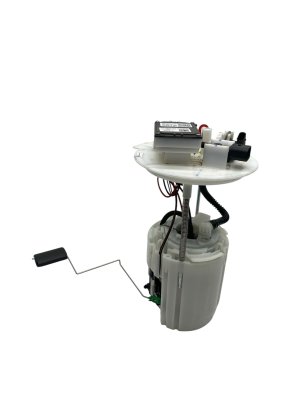
Typical fix: Replace the entire fuel pump and filter assembly located inside the fuel tank.
Est. part cost: $200-$450 - Faulty Fuel Rail Pressure Sensor ⚪ Low Probability → Shop Fuel Pressure Sensor
How to confirm: If both low and high fuel pressures test okay mechanically, but the scan tool shows erratic or fixed low-pressure readings that don't match a mechanical gauge, the sensor itself may be faulty. This is often a diagnosis of exclusion.
Typical fix: Replace the fuel rail pressure sensor.
Est. part cost: $100-$200
Rare But Worth Checking
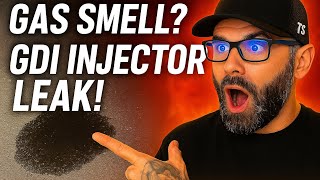
- Leaking Fuel Injector: → Shop Fuel Injector A fuel injector stuck open can cause a drop in rail pressure, often accompanied by a strong smell of fuel and misfire codes for a specific cylinder (e.g., P0300-P0306). 🎬 See how to diagnose leaking injectors and fuel smells. NHTSA ODI #11621721 describes a case where P0087 and P219E were present alongside a bad fuel injector and cylinder.
- Vapor Lock in Extreme Heat: A Kia Telluride owner with the same 3.8L engine reported recurrent P0087 issues only on days with ambient temperatures over 100°F, suspecting heat-soak was causing a vapor lock condition near the engine-mounted HPFP.
Diagnosis Steps
- Connect a professional OBD-II scan tool capable of reading live data.
- Observe the 'Desired Fuel Rail Pressure' and 'Actual Fuel Rail Pressure' PIDs (Parameter IDs).
- At idle, desired pressure should be several hundred PSI. If the actual pressure is drastically lower and does not increase when revving the engine, the HPFP is the primary suspect.
- If the scan tool data is inconclusive, the next step is to test the low-pressure fuel system. Connect a mechanical pressure gauge to the low-pressure line feeding the HPFP to ensure it's receiving adequate fuel supply (typically 50-75 PSI).
- If low-side pressure is good but high-side pressure is low, the HPFP has failed.
- If low-side pressure is weak, the in-tank fuel pump/filter assembly is at fault.
- Before replacing the HPFP, inspect the wiring and connector to the pump and the fuel rail pressure sensor for any visible damage.
- When replacing the HPFP, it is critical to also replace the single-use high-pressure fuel pipe and inspect the cam follower for wear. 🎬 Watch this step-by-step high-pressure fuel pump replacement guide.
Parts You'll Likely Need
- High-Pressure Fuel Pump (HPFP)
(OEM #35320-3L100)— This is the most common failure point for code P0087 on Hyundai GDI engines.
Trusted brands: Hyundai (OEM)
OEM price range: $400-$600
Aftermarket price range: $250-$450 - High-Pressure Fuel Pipe
(OEM #35305-3L100)— This is a one-time-use, 'torque-to-yield' part that must be replaced anytime it is disconnected to prevent dangerous, high-pressure fuel leaks.
Trusted brands: Hyundai (OEM)
OEM price range: $50-$100 - Low-Pressure Fuel Pump and Filter Assembly — If diagnosis points to a weak low-pressure system, this complete in-tank unit is what needs to be replaced.
Trusted brands: Hyundai (OEM)
OEM price range: $300-$450
Aftermarket price range: $200-$350
Related Codes That Often Appear With This One
- P0300-P0306 — Random or specific cylinder misfires can occur due to the severe lack of fuel caused by low rail pressure.
- P0191 — This code for 'Fuel Rail Pressure Sensor Circuit Range/Performance' can appear if the sensor itself is failing or if the pressure is so far out of range that the ECM flags the sensor's reading as implausible.
- P0088 — While less common, 'Fuel Rail/System Pressure - Too High' can appear if the HPFP is failing erratically, sometimes over-pressurizing the system before it fails completely.
- P2191 — System too Lean at Higher Load; NHTSA ODI #11456866 notes this code can appear in conjunction with P0087 on Hyundai GDI platforms during acceleration failure events.
Platform-Specific Known Issues
- Real-World Failure Experience: A user on the Kia Telluride Forum with the same 3.8L engine experienced P0087 twice under very specific conditions: idling for a long time in 100°F+ heat. The car would run rough, stall, and then run fine after cooling down, pointing towards a potential heat-related failure of a fuel system component like the HPFP or vapor lock.
- Technician Confirmation: A self-identified Kia Master Tech on Reddit stated that for a P0087 code, the fix is to replace the high-pressure fuel pump, its mounting bolts, and the fuel delivery pipe, noting 'I've replaced plenty'.
- Cross-Model Pattern: Manufacturer patterns across the Hyundai lineup show P0087 often results in sudden power loss on freeways, as described in NHTSA ODI #11582266, and may be accompanied by a tapping sound from the engine as noted in NHTSA ODI #11574809.
Mechanic-Grade Diagnostic Values
- Low-Pressure Fuel System Pressure (at idle) — expected: 50-75 PSI. Failure: Pressure is below 50 PSI or is erratic.
- Fuel Rail Pressure Sensor (FRPS) Voltage — expected: Approximately 0.5V at low pressure (key on, engine off) and up to 4.5V at maximum pressure.. Failure: Voltage is stuck low (near 0.5V) even when the engine is running and RPMs increase, or does not correlate with mechanically measured pressure.
- High-Pressure Fuel System (Live Data Comparison) — expected: Actual fuel rail pressure should closely track the desired fuel rail pressure value on a scan tool.. Failure: Actual pressure significantly lags behind desired pressure, especially under acceleration. For example, desired pressure is 1500 PSI but actual only reaches 400 PSI.
Scan Tool Commands That Help
- Hyundai GDS-M (or equivalent professional scanner): Fuel Pump System Test — This bidirectional command allows the technician to activate the low-pressure fuel pump independently to verify its operation and check for pressure delivery to the HPFP without the engine running.
- Hyundai GDS-M: ECM Update / ECU Update — While not specifically for the Palisade, Hyundai has issued TSBs for other models (like Sonata and Santa Fe) to update the ECM logic for P0087 to prevent false triggers. If all mechanical checks pass, checking for an available software update is a valid diagnostic step.
Wiring & Ground Locations
- HPFP Connector — On top of the high-pressure fuel pump, which is mounted on the cylinder head, typically visible after removing the engine cover.. A loose or corroded connector at the HPFP's integrated fuel pressure regulator solenoid can prevent the pump from building pressure correctly, mimicking a mechanical pump failure.
- Fuel Rail Pressure Sensor (FRPS) Connector — Screwed into the high-pressure fuel rail, which is located under the intake manifold on the 3.8L V6.. Damage or corrosion to this connector or its wiring can cause an incorrect low-pressure signal to be sent to the ECM, triggering P0087 even if the mechanical pressure is normal.
Model Year Variations Within This Range
- 2020-2022 vs 2023-2024: The Hyundai Palisade received a facelift for the 2023 model year. While the core 3.8L Lambda II GDI engine remained the same, it's possible that minor revisions to wiring harnesses or component suppliers occurred. TSB 22-AT-001H, for example, addresses potential wiring harness contact issues near the battery tray on 2020+ Palisades, which could affect various systems. Always verify part numbers against the vehicle's specific VIN.
Diagnostic Flowchart
Other Known Issues on This Vehicle
Issues unrelated to this code that are worth knowing about as an owner of this generation:
- Foul Interior Odor from Headrests 🟡 Low — Common on early 2020-2021 Limited and Calligraphy trims with Nappa leather. Described as a garlic, old socks, or chemical smell. (Ref: TSB 20-BD-018H describes a procedure to neutralize the odor with fabric cleaner; if unsuccessful, headrests may be replaced.)
- Wind/Whistling Noise from Driver's Door 🟡 Low — Widespread on 2020-2021 models, typically occurring at highway speeds. Caused by poor sealing around the door glass or side mirror. (Ref: Multiple TSBs exist, including 19-BD-010H and 21-01-003H, which outline procedures to add foam pads and replace moldings to fix the noise.)
- Trailer Hitch Wiring Harness Fire Risk 🔴 High — Affects 2020-2022 models equipped with the genuine Hyundai accessory tow hitch. Debris and moisture can short the module, causing a fire even when parked. (Ref: NHTSA Recall 22V-633 (Hyundai Recall 235). The remedy involves installing a new fuse and wire extension kit. Owners were advised to park outside until the fix was performed.)
- Knocking/Rattling from Rear Suspension 🟠 Medium — Reported on 2020-2021 models with 20-inch wheels and self-leveling rear shocks. Owners describe a knocking or rattling sound over bumps. (Ref: TSB 22-SS-001H addresses this issue, likely involving shock replacement.)
- Potential for Engine Oil Consumption 🟠 Medium — Some owners of earlier models have reported higher than normal oil consumption between changes, a known issue on other Hyundai GDI engines. (Ref: TSB 21-EM-003H provides guidelines for dealers to inspect and diagnose oil consumption concerns.)
Used vs. New Parts: Buying Guide for This Vehicle
When a used part is the smart pick: For this specific repair, using used parts is generally not recommended due to the high failure rate and precision nature of the components. A used HPFP carries a significant risk of having limited remaining life. The only potentially viable used part would be a low-mileage, in-tank low-pressure fuel pump assembly from a verified collision vehicle.
Donor-vehicle mileage cap: roughly under 40000 miles for the part to have meaningful remaining life.
What to inspect on the donor part:
- Verify the donor vehicle's mileage is low.
- Ensure there is no visible corrosion on electrical connectors.
- For an in-tank pump, check that the plastic housing is not brittle or cracked.
OEM-only on this vehicle (don't cheap out):
- High-Pressure Fuel Pump (HPFP)
- High-Pressure Fuel Pipe
Aftermarket brands forum-validated for this vehicle:
- Bosch (often the OEM supplier)
Brands owners have reported issues with on this vehicle:
- Unnamed, no-brand 'white box' parts from online marketplaces are frequently cited as failing quickly.
Real Owner Stories
Aggregated from forums and TSBs cited above. Mileages and costs reflect what owners reported in those sources.
2021 Hyundai Palisade
Symptoms: Engine light came on, engine started missing, and there was a rattling noise under the hood. The vehicle felt like it was going to die, especially during uphill downshifts which caused engine sputtering. NHTSA ODI #11621721 confirms this symptom pattern, noting the engine felt like it was going to die.
What fixed it: The dealer identified codes P0087 and P219E, finding a bad fuel injector and a bad cylinder.
Source hint: CarComplaints.com / NHTSA ODI #11621721
2020-2024 Kia Telluride 3.8L V6
Symptoms: The car would run rough and stall after idling for a long time in extreme heat (100°F+). It would run fine again only after cooling down.
What fixed it: The issue pointed toward a heat-related failure of a fuel system component like the HPFP or vapor lock.
Source hint: Kia Telluride Forum - 'Code P0087 - happened twice in two years - similar conditions'
2020-2024 Hyundai Palisade 3.8L V6
Symptoms: A cascading failure starting with P0087 that led to a blown coolant hose and general sluggishness.
What fixed it: Replacement of the entire fuel system.
Source hint: Reddit r/Hyundai - 'Code P0087'
2020-2024 Kia Telluride 3.8L V6
Symptoms: Standard P0087 symptoms including stalling and power loss on the identical 3.8L powertrain.
What fixed it: Replacement of the high-pressure fuel pump, mounting bolts, and fuel delivery pipe.
Source hint: Reddit r/MechanicAdvice - 'P0087 Code. Replaced Many Parts - Help!'
Documented NHTSA Reports
NHTSA ODI #11719980 describes an instance where a vehicle was taken to a dealership twice for code P0087; despite a knock sensor replacement and data clearing, the failure returned. Additionally, NHTSA ODI #11574809 reports a check engine light accompanied by a tapping sound on the passenger side of the engine with codes P0346, P0021, and P0087 present.
Related OBD-II Codes
Frequently Asked Questions
Is there a TSB for the high-pressure fuel pump (HPFP) failure on my 2020-2024 Palisade?
My Palisade has a P0087 code and a foul smell in the cabin; are they related?
Can a P0087 code cause my Palisade to go into 'limp mode'?
Is the P0087 code related to the trailer hitch fire recall?
What specific parts should be replaced alongside the high-pressure fuel pump to fix P0087?
Could the P0087 code be caused by the low-pressure pump in the tank?
Helpful Videos



We Have This Part in Stock

The information in this article is provided for general reference and educational purposes only. Vehicle specifications, procedures, and part compatibility can vary by production date, trim level, and region. Always consult your vehicle's factory service manual and verify part numbers before purchasing or performing repairs. Safety-critical components such as airbags, seat belts, and braking systems should be installed by a qualified professional.
- Hyundai Palisade:
- 🧭 Diagnostic Flowchart
- 🎬 Helpful Videos
- 🛍️ Shop This Part
- What's Unique About the 2020-2024 Hyundai Palisade
- Symptoms You May Notice
- Most Likely Causes
- Rare But Worth Checking
- Diagnosis Steps
- Parts You'll Likely Need
- Related Codes That Often Appear With This One
- Platform-Specific Known Issues
- Mechanic-Grade Diagnostic Values
- Scan Tool Commands That Help
- Wiring & Ground Locations
- Model Year Variations Within This Range
- Other Known Issues on This Vehicle
- Used vs. New Parts: Buying Guide for This Vehicle
- Real Owner Stories
- 2021 Hyundai Palisade
- 2020-2024 Kia Telluride 3.8L V6
- 2020-2024 Hyundai Palisade 3.8L V6
- 2020-2024 Kia Telluride 3.8L V6
- Documented NHTSA Reports
- Related OBD-II Codes
- Frequently Asked Questions
- 🎟️ Get 5% Off