

P0087 on 2016-2019 Infiniti Q50 3.0t: Low Fuel Pressure Causes & Fixes
On the Q50 3.0t, P0087 means low pressure in the high-pressure direct injection fuel system. It's often either a simple ECM software update outlined in a TSB to fix a false permanent code, or a more expensive failure of the high-pressure fuel pump (HPFP) or fuel rail pressure sensor. Always check for the software fix first before replacing any parts.
- For a P0087 code on a 2016-2019 Q50 3.0t, the very first step is to check if a dealer software update (TSB) applies. This can be a simple, inexpensive fix.
- Do not drive the vehicle. The risk of stalling in traffic is high and poses a serious safety hazard.
- If the software is not the issue, the most likely mechanical culprits are the high-pressure fuel pump (HPFP) or the fuel rail pressure sensor.
- Due to the high pressures and complexity of the direct injection fuel system, this is not a recommended DIY repair for beginners. Seek professional service.
What's Unique About the 2016-2019 Infiniti Q50

The Infiniti Q50 with the VR30DDTT engine presents a unique dual-pathway for the P0087 code. On one hand, Infiniti has issued multiple Technical Service Bulletins (TSBs) acknowledging a software glitch where the ECM can incorrectly store a permanent P0087 code, making a simple reprogram the first logical step. On the other hand, the mechanical components themselves, specifically the high-pressure fuel pump (HPFP) and the fuel rail pressure sensor, are known failure points on this platform, leading to genuine low-pressure situations that require hardware replacement.
Diagnostic Flowchart

Tap your situation to follow the diagnostic path that matches what you're seeing on this vehicle.
Symptoms You May Notice
- Check Engine Light is on
- Engine hesitates, sputters, or surges, especially under acceleration between 2000-4000 RPM
- Noticeable loss of power and sluggish performance
- Extended cranking time or hard starting
- Rough or unstable idle
- Engine stalling unexpectedly, sometimes at idle
- Reduced fuel economy
- Engine goes into "limp mode"
- Rattling or knocking noise from the top of the engine, indicating a mechanical HPFP failure
- Immediately replacing the expensive High-Pressure Fuel Pump without first checking if the ECM software update TSB (ITB19-027a) applies. The reprogram is a much cheaper and very common solution for a false permanent code.
- Replacing the HPFP when the actual fault is a cheaper, faulty fuel rail pressure sensor providing incorrect data to the ECM.
Most Likely Causes

- ECM Software Calibration Error 🔴 High Probability Infiniti issued TSBs ITB19-027a, ITB19-027, and campaign P9329/P9344 specifically for this issue, where the ECM improperly stores a permanent P0087 DTC that cannot be cleared without a reflash. This is a known software bug, not a mechanical fault.
How to confirm: A dealership or qualified shop with a CONSULT-III plus tool can check the current ECM software part number against the TSBs to see if an update is available. An owner with a 2016 Red Sport reported their P0087 and long-crank symptom was fixed with a dealer-performed 'chip update'.
Typical fix: Reprogramming the Engine Control Module (ECM) with the updated software. The TSB explicitly states this reprogram does not fix a mechanical issue but updates how the permanent DTC is stored and erased.
Est. part cost: $0 (if under warranty/campaign) or 1-hour labor charge for reprogramming. - Failing High-Pressure Fuel Pump (HPFP) 🔴 High Probability → Shop Fuel Pump The HPFP is a widely acknowledged mechanical weak point on the VR30DDTT engine. It is mechanically driven by a camshaft lobe, and the internal components or the cam follower can wear out, leading to an inability to generate the required pressure.
How to confirm: Monitor requested vs. actual fuel rail pressure with a professional scan tool. If the actual pressure consistently fails to meet the requested pressure under load (e.g., during acceleration) and the low-pressure side is confirmed to be working, the HPFP is the primary suspect. 🎬 See this video for a deep dive into low fuel pressure causes. A mechanic may also check the engine oil for the smell of gasoline, indicating a failed pump seal.
Typical fix: Replacement of the high-pressure fuel pump and potentially the cam follower/lifter.
Est. part cost: $400-$800 - Faulty Fuel Rail Pressure Sensor 🟡 Medium Probability → Shop Fuel Pressure Sensor The factory sensor is a known failure point, prone to both internal failure and connection issues from engine vibration. Aftermarket companies have developed more robust replacement sensors specifically to address the OEM unit's shortcomings.
How to confirm: Monitor the fuel pressure reading on a scan tool for erratic, illogical, or stuck values. A technician can also test the sensor's circuit and compare its readings to a manual pressure gauge. A Reddit user specifically recommended changing this sensor first as a common, less expensive fix.
Typical fix: Replacement of the fuel rail pressure sensor.
Est. part cost: $100-$250 - Failing Low-Pressure Fuel Pump (In-Tank) ⚪ Low Probability → Shop Fuel Pump While less common for this specific code, the in-tank pump can weaken and fail to supply adequate volume to the HPFP, causing it to be starved of fuel and unable to build high pressure. This is a more frequent issue on modified cars demanding higher fuel flow.
How to confirm: A technician can test the pressure and flow rate of the low-pressure pump at the feed line to the HPFP. It should be around 40-75 PSI. A distinct whining noise from the rear seat/fuel tank area is also a common symptom. The pump is located under the passenger side of the rear seat cushion.
Typical fix: Replacement of the in-tank fuel pump assembly.
Est. part cost: $250-$500
Rare But Worth Checking
- Clogged Fuel Injectors / Fuel Rail Contamination: → Shop Fuel Injector Infiniti TSB ITB17-035 notes that metallic particles can break loose from inside the high-pressure fuel rail, contaminating and destroying the fuel injectors. While this may cause misfire codes, it can also impact the fuel system's ability to hold pressure, potentially contributing to a P0087 code.
- Blocked Fuel Filter: → Shop Fuel Filter The fuel filter, which is integrated into the in-tank low-pressure fuel pump assembly, can become clogged over time, restricting flow to the entire system and starving the HPFP.
Diagnosis Steps
- Contact an Infiniti dealer or qualified shop with your VIN to check if TSBs ITB19-027a, ITB19-027, or campaign P9329/P9344 apply and if the ECM reprogram has been performed. This should always be the first step.
- If TSBs do not apply or have been completed, connect a high-quality scan tool to monitor live data. Graph the 'Requested Fuel Rail Pressure' vs. the 'Actual Fuel Rail Pressure' at idle, during steady cruising, and under hard acceleration.
- If actual pressure deviates significantly or drops while requested pressure stays high, suspect a mechanical issue. If the readings are erratic or nonsensical (e.g., stuck at one value), suspect the Fuel Rail Pressure Sensor.
- Test the low-pressure fuel system. Listen for a whine from the in-tank pump under the rear seat. A technician should measure the fuel pressure from the in-tank pump to ensure it's supplying a steady 40-75 PSI to the HPFP.
- If the low-pressure system is healthy and the sensor is deemed functional (or has been replaced as a precaution), the High-Pressure Fuel Pump (HPFP) is the most likely culprit.
- Before replacing the HPFP, inspect the engine oil for the smell of gasoline, which indicates a severe leak from the pump's seal into the crankcase. Also inspect the camshaft lobe and follower that drives the pump for wear upon removal.
Parts You'll Likely Need
- High-Pressure Fuel Pump (HPFP)
(OEM #16630-5CA1B)— This is a primary mechanical failure point for code P0087 on the VR30DDTT engine once the ECM software issue is ruled out.
Trusted brands: Hitachi, Bosch, AMS Performance (upgraded)
OEM price range: $500-$800
Aftermarket price range: $350-$600 - Fuel Rail Pressure Sensor
(OEM #22675-5CA0A)— This sensor is a known weak point and can send false readings, triggering the code. It's a common-sense part to check or replace before the much more expensive HPFP.
Trusted brands: Denso, AMS Performance, OEM
OEM price range: $150-$250
Aftermarket price range: $80-$250
Related Codes That Often Appear With This One
- P0300-P0306 — Misfire codes (P030x) can occur because low fuel pressure leads to a lean air/fuel mixture, preventing proper combustion in one or more cylinders.
- P0090 — This code for "Fuel Pressure Regulator 1 Control Circuit/Open" can appear alongside P0087, indicating a potential electrical issue with the HPFP's control solenoid or its wiring.
Technical Service Bulletins (TSBs) & Recalls

- ITB19-027a: MIL ON WITH DTC P0087... - Details the procedure for reprogramming the ECM for a permanent DTC bug. Crucially, it states the reprogram is NOT a fix for the DTC itself, but for the storage logic. The root cause must still be diagnosed.
- P9329/P9344/P9346/P9348/P9350: Voluntary Service Campaign to reprogram the ECM for improper storage of permanent DTC P0087, among others. This was targeted at California vehicles but the fix is available elsewhere via ITB19-027.
- ITB17-035: Addresses fuel injector failures caused by contamination from the fuel rail, indicating a related systemic weakness.
Platform-Specific Known Issues
- Infiniti has issued TSBs (ITB19-027a, ITB19-027, P9329_P9344_P934) indicating that the Engine Control Module can improperly store a permanent P0087 diagnostic trouble code due to a software error. The prescribed fix is an ECM reprogram.
- The VR30DDTT engine's high-pressure fuel pump and fuel rail pressure sensor are widely regarded in enthusiast communities as common failure points.
- Contamination from the fuel rails themselves has been identified in TSB ITB17-035 as a cause for fuel injector failure, which can affect the entire high-pressure system.
Mechanic-Grade Diagnostic Values
- High-Pressure Fuel System Pressure (Scan Tool) — expected: Approx. 500-600 PSI at idle, rising to 2,000-3,000 PSI under load.. Failure: Pressure fails to rise significantly under load or is consistently below requested values.
- Fuel Rail Pressure Sensor Signal Voltage (Key On, Engine Off) — expected: Approx. 0.5V with sensor connected. Some sources suggest a range of 1.0V to 2.0V.. Failure: Voltage is stuck at 0V, 5V, or is outside the expected range, indicating a sensor or wiring fault.
- Fuel Rail Pressure Sensor Signal Voltage (Engine at Idle) — expected: Approx. 1.3V to 2.2V.. Failure: Voltage is erratic, does not match scan tool pressure readings, or is significantly outside this range.
- Fuel Rail Pressure Sensor Signal Voltage (Under Acceleration) — expected: Rises with engine load, potentially reaching 3.4V to 4.5V.. Failure: Voltage does not increase with engine RPM and load, or drops out unexpectedly.
- Low-Pressure Fuel Pump (In-Tank) Pressure — expected: 40-75 PSI at the feed line to the HPFP.. Failure: Pressure is below 40 PSI, indicating a weak in-tank pump, clogged filter, or failing FPCM.
Scan Tool Commands That Help
- Infiniti CONSULT-III / CONSULT-III Plus: FUEL PRESSURE RELEASE — This is a work support function used to safely depressurize the fuel system before performing repairs on fuel lines, sensors, or pumps.
- Infiniti CONSULT-III Plus: POWER BALANCE — This active test helps determine if low fuel pressure is causing a misfire in a specific cylinder by individually cutting off cylinders and monitoring the drop in engine RPM.
Wiring & Ground Locations
- Fuel Pump Control Module (FPCM) — For the in-tank low-pressure pump. Often located under the rear seat or near the fuel tank. On the Q50, access to the in-tank pump assembly is under the passenger side of the rear seat cushion.. The FPCM regulates voltage to the low-pressure pump. A failure here can starve the high-pressure pump of fuel, leading to a P0087 code.
- E134, E135, E136, E137 — These are engine compartment ground points. E134/E136 are on the right rear of the engine compartment; E135/E137 are on the left rear.. The ECM and its sensors rely on clean grounds to function. A corroded or loose ground at one of these points could cause erratic sensor readings or control module behavior, potentially triggering a false P0087.
- ECM (Engine Control Module) — On earlier V37 models, it is located under the right end of the dashboard.. The ECM is the central component for diagnosis. It receives the signal from the fuel rail pressure sensor and controls the fuel pumps. Knowing its location is key for advanced wiring checks.
Real Owner Repair Stories
- CarKiller forum user (2016 Infiniti Q50 Red Sport (3.0t 400hp)) — Extended crank time (extra second or two to start), followed by Check Engine Light with code P0087.
❌ Tried (didn't work) Owner was skeptical of the proposed fix.
✅ What actually fixed it The Infiniti dealer performed a software update ('an update to the chip'). This resolved the issue, confirming the TSBs about false permanent codes are a valid and common fix. - Reddit user comment in r/q50 (2019 Infiniti Q50) — Owner posted about getting code P0087.
✅ What actually fixed it A commenter strongly advised, as a first mechanical step, to 'Change the fuel rail pressure sensor first, they are known to be faulty.' This reflects community knowledge that the sensor is a common failure point and a cheaper part to replace than the HPFP.
OEM Part Supersession History
16630-5CA0A / 16630-5CA0B→16630-5CA1B— The part for 2016-2017 models was discontinued and replaced by the pump for 2018+ models.
Heads up: When replacing the older pump (16630-5CA0A) with the newer 16630-5CA1B, new mounting bolts are required.22675-5CA0A (OEM Fuel Rail Pressure Sensor)→N/A (Robust Aftermarket Alternatives Exist)— The OEM sensor is a widely reported failure point, prone to issues from pressure fluctuations and connector pin problems due to engine vibration.
Heads up: Aftermarket companies like AMS Performance have engineered more durable replacement sensors to address the OEM part's reliability issues. While the OEM part is still available, considering an upgraded aftermarket version is a common recommendation.
Model Year Variations Within This Range
- 2016-2017 vs 2018-2019: The High-Pressure Fuel Pump (HPFP) part number was superseded for the 2018 model year. Early models use P/N 16630-5CA0A, which was replaced by 16630-5CA1B for later models. Early model year (2016-2017) VR30DDTT engines are also reported to have more frequent issues in general.
Helpful Videos
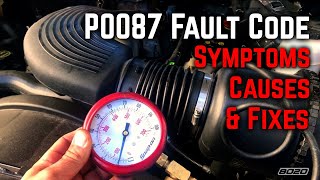

Used OEM Parts in Stock
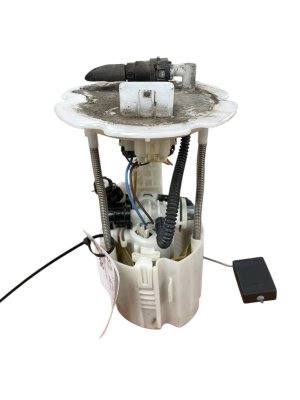
New Aftermarket Parts Available



The information in this article is provided for general reference and educational purposes only. Vehicle specifications, procedures, and part compatibility can vary by production date, trim level, and region. Always consult your vehicle's factory service manual and verify part numbers before purchasing or performing repairs. Safety-critical components such as airbags, seat belts, and braking systems should be installed by a qualified professional.
- Infiniti Q50:
- 🧭 Diagnostic Flowchart
- 🎬 Helpful Videos
- 🛍️ Shop This Part
- What's Unique About the 2016-2019 Infiniti Q50
- Symptoms You May Notice
- Most Likely Causes
- Rare But Worth Checking
- Diagnosis Steps
- Parts You'll Likely Need
- Related Codes That Often Appear With This One
- Technical Service Bulletins (TSBs) & Recalls
- Platform-Specific Known Issues
- Mechanic-Grade Diagnostic Values
- Scan Tool Commands That Help
- Wiring & Ground Locations
- Real Owner Repair Stories
- OEM Part Supersession History
- Model Year Variations Within This Range
- 🎟️ Get 5% Off