

P0087 on 2017-2019 Infiniti Q60: Low Fuel Pressure Causes and Fixes
On a 2017-2019 Infiniti Q60, code P0087 often points to an ECM calibration error that requires a dealer software update, as noted in TSB ITB19-027a. This should be the first check. If the software is current, the next most likely causes are a failing high-pressure fuel pump (HPFP), a faulty fuel rail pressure sensor, or a weak in-tank low-pressure fuel pump (LPFP).
- Before any repairs, have an Infiniti dealer check if your vehicle needs an ECM software update per TSB ITB19-027a; this could be a no-parts fix.
- P0087 indicates low pressure in the high-pressure side of the fuel system.
- If a part has failed, the most likely culprits are the high-pressure fuel pump (HPFP) or the fuel rail pressure sensor.
- Do not ignore this code, as it can lead to stalling, poor performance, and potential engine damage.
What's Unique About the 2017-2019 Infiniti Q60

The key issue for the 2017-2019 Q60 is not always a physical part failure. Infiniti has issued multiple Technical Service Bulletins (TSBs), including ITB19-027a, acknowledging that "calibration errors on the affected vehicles" can cause the ECM to improperly store a P0087 code. The TSB clarifies that the reprogram itself is not a 'fix' for a mechanical issue but an update to how the permanent DTC is stored and erased, making proper diagnosis of any underlying mechanical fault essential before applying the software update.
Diagnostic Flowchart

Tap your situation to follow the diagnostic path that matches what you're seeing on this vehicle.
Symptoms You May Notice

- Check Engine Light is on
- Reduced engine power or sluggish acceleration
- Engine hesitation or stumbling, especially under load
- Rough idle
- Engine stalling
- Increased fuel consumption
- Extended crank time or hard starting
- Replacing the high-pressure fuel pump (HPFP) when the actual problem is an ECM software calibration error that requires a reprogram.
- Replacing the HPFP when the in-tank low-pressure fuel pump (LPFP) is actually the weak link in the system, failing to supply the HPFP with adequate fuel volume.
Most Likely Causes

- Engine Control Module (ECM) Calibration Error 🔴 High Probability → Shop Engine Control Module (ECM) Infiniti issued TSBs ITB19-027a and a related campaign (P9329/P9344) specifically for this issue on this platform, stating the ECM may improperly store the code due to calibration errors. This is a widely acknowledged first step in diagnosis.
How to confirm: An Infiniti dealer or a shop with advanced scan tools (like CONSULT-III plus) can check the current ECM software part number against the numbers listed in TSB ITB19-027a. If it's an older version, it needs the update.
Typical fix: Reprogramming the Engine Control Module (ECM) with updated software. This service should take less than one hour.
Est. part cost: $0 (if under campaign) - Failing High-Pressure Fuel Pump (HPFP) 🟡 Medium Probability → Shop Fuel Pump The HPFP is a mechanically driven component that operates under extreme stress and is a known failure point in many direct-injection engines, including the VR30DDTT. It is responsible for compressing fuel to thousands of PSI.
How to confirm: After ruling out the ECM and LPFP issues, a technician will use a scan tool to monitor requested vs. actual fuel rail pressure. If actual pressure consistently drops under load while the low-pressure supply is steady, the HPFP is the likely culprit.
Typical fix: Replace the high-pressure fuel pump.
Est. part cost: $450-$700 - Failing Low-Pressure Fuel Pump (LPFP) 🟡 Medium Probability → Shop Fuel Pump If the in-tank low-pressure pump cannot supply enough volume and pressure (typically ~50 psi) to the HPFP, the high-side pressure will inevitably drop. Some forum users report that the LPFP was the actual cause after an HPFP was misdiagnosed.
How to confirm: Test the fuel pressure on the low-pressure side with a mechanical gauge. If it's below specification, the LPFP is weak or failing. According to one technician's forum post, the diagnostic procedure for P0087 should start with a leak-down test on the low-pressure system.
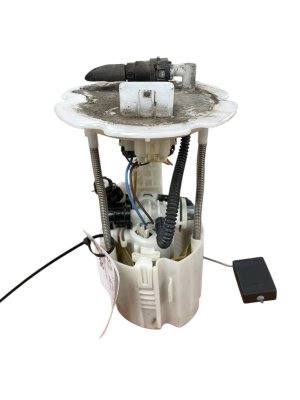
Typical fix: Replace the in-tank low-pressure fuel pump assembly.
Est. part cost: $200-$400 - Faulty Fuel Rail Pressure Sensor ⚪ Low Probability → Shop Fuel Pressure Sensor The OEM fuel pressure sensor on the VR30 engine is cited by aftermarket parts manufacturers as a common failure point, prone to issues from pressure fluctuations and connector pin vibrations. A bad sensor can send incorrect low-pressure readings to the ECM.
How to confirm: Compare the pressure reading from the sensor (via a scan tool) to a reading from a mechanical fuel pressure gauge connected to the rail. If the readings differ significantly, the sensor is likely faulty.
Typical fix: Replace the fuel rail pressure sensor.
Est. part cost: $80-$150
Rare But Worth Checking
- Clogged Fuel Filter: → Shop Fuel Filter The fuel filter is integrated into the in-tank low-pressure fuel pump assembly and is not typically serviced separately. A severe clog could restrict flow and cause this code.
- Leaking Fuel Injector: → Shop Fuel Injector A stuck-open fuel injector can cause a drop in rail pressure. This is a known issue on the VR30DDTT, sometimes caused by metallic debris puncturing the internal injector filter. This would likely be accompanied by misfire codes (like P0300-P0306) and more severe running issues.
- Worn HPFP Cam Lobe/Follower: The HPFP is driven by a lobe on the camshaft. Wear on this lobe or the pump's follower can reduce the pump's stroke, leading to lower pressure output. This may require inspecting the camshaft and changing the oil to check for metal shavings.
Diagnosis Steps
- First, check for applicable TSBs. Specifically, reference Infiniti TSB ITB19-027a. Have a dealer or qualified shop verify if the ECM software needs to be updated. This is the most critical and cost-effective first step.
- If the ECM is up-to-date, test the low-pressure fuel system. Connect a fuel pressure gauge to the low-pressure line to ensure the in-tank pump is supplying adequate pressure (around 50 PSI) to the HPFP. Perform a leak-down test as recommended by some technicians.
- If the low-pressure system is healthy, use a professional scan tool to monitor live data for 'Fuel Rail Pressure' and 'Desired Fuel Rail Pressure'.
- Observe the pressure at idle and during a test drive under load. If the actual pressure consistently fails to meet the desired pressure, a mechanical or sensor fault on the high-pressure side is likely.
- To test the fuel rail pressure sensor, compare its reading on the scan tool to a mechanical gauge. If the readings don't align, the sensor is likely faulty.
- If the low-pressure side is good, the sensor is accurate, but high-side pressure remains low under load, the HPFP is the primary suspect. Inspect the pump and its cam follower for wear if possible.
Parts You'll Likely Need
- High-Pressure Fuel Pump (HPFP)
(OEM #16630-5CA0B)— This is a common mechanical failure for P0087 after the ECM software and LPFP are ruled out. It is responsible for creating the high pressure required for direct injection.
Trusted brands: Infiniti OE (Denso), Hitachi, Bosch
OEM price range: $550-$700
Aftermarket price range: $350-$500 - Fuel Rail Pressure Sensor
(OEM #16638-5CA0A)— This sensor reports pressure to the ECM. A faulty sensor can send incorrect low-pressure readings, falsely triggering the P0087 code. Aftermarket sources note the OEM sensor can be a failure point.
Trusted brands: Infiniti OE, Bosch, AMS Performance
OEM price range: $120-$180
Aftermarket price range: $80-$130
Related Codes That Often Appear With This One
- P0101 — This Mass Air Flow (MAF) sensor code is listed in TSB ITB19-027a as potentially being set erroneously along with P0087 due to the same ECM calibration issue.
- P0448 — This EVAP system code is listed in TSB ITB19-027a as potentially being set erroneously along with P0087 due to the same ECM calibration issue.
- P2008 — This Intake Manifold Runner Control code is listed in TSB ITB19-027a as potentially being set erroneously along with P0087 due to the same ECM calibration issue.
- P0090 — This code for "Fuel Pressure Regulator 1 Control Circuit" can appear with P0087, pointing more specifically toward an electrical issue with the HPFP's control solenoid or its circuit.
Technical Service Bulletins (TSBs) & Recalls
- ITB19-027a: 'MIL ON WITH DTC P0087, P0101, P0448, OR P2008, VEHICLES REGISTERED OUTSIDE OF CALIFORNIA'. This TSB advises technicians to perform diagnostics and repair any mechanical faults *before* reprogramming the ECM, as the update mainly changes how permanent DTCs are stored.
- P9329_P9344_P934: A voluntary emissions service campaign that involves reprogramming the ECM for the same codes as ITB19-027a for vehicles registered in California. It notes the service should take less than an hour.
Platform-Specific Known Issues
- Infiniti TSB #ITB19-027a states that on some vehicles, the ECM may improperly store a P0087 code due to a calibration error. The official fix is to reprogram the ECM. This should be the first item checked by a dealer.
- The tuning community has noted that both the OEM fuel rail pressure sensor and fuel injectors can be failure points on the VR30DDTT, especially on modified vehicles.
Mechanic-Grade Diagnostic Values
- Low-Pressure Fuel Pump (LPFP) Output Pressure — expected: ~50 PSI (345 kPa). Failure: Pressure significantly below 50 PSI indicates a failing LPFP or clogged filter.
- High-Pressure Fuel Rail Pressure (at idle) — expected: 500 - 800 PSI. Failure: Pressure that is erratic or consistently below the scan tool's 'Desired Pressure' value.
- High-Pressure Fuel Rail Pressure (under load) — expected: Up to 2,500+ PSI. Failure: Actual pressure fails to rise and match the 'Desired Pressure' value during acceleration.
- Fuel Rail Pressure Sensor Voltage (Key On, Engine Off) — expected: Approximately 0.5 Volts. Failure: Voltage at 0V or 5V, or a value that doesn't correspond to near-zero pressure.
- Fuel Rail Pressure Sensor Voltage (Engine Idling) — expected: Approximately 1.3 Volts. Failure: Voltage is erratic, frozen, or does not correlate with scan tool pressure data.
Hidden / Shadow Codes Worth Checking
- Freeze Frame Data: 'Fuel Level': This is not a hidden code, but a critical data point stored with the P0087 fault. If the fuel level was at or near zero when the DTC was set, the root cause may have simply been running the vehicle out of fuel, which can trigger a low-pressure code. (see via Access the Freeze Frame data for the P0087 code using any professional OBD-II scan tool.)
Scan Tool Commands That Help
- Infiniti CONSULT-III plus (or advanced aftermarket scanner): Fuel Pump Active Test / Fuel Supply Pump Activation — This command in the 'Work Support' or 'Active Test' menu allows the technician to manually turn on the low-pressure in-tank fuel pump to verify it runs and to check for power and ground at the pump connector without starting the engine.
- Infiniti CONSULT-III plus (or advanced aftermarket scanner): Fuel System Priming — After replacing a fuel pump or opening the fuel system, this function runs the low-pressure pump to purge air from the lines and prime the high-pressure system before starting the engine to prevent damage.
Wiring & Ground Locations
- Fuel Pressure Sensor Connector — On the end of the driver's side fuel rail.. The pins within this connector are known to become loose due to engine vibration, causing an intermittent or false low-pressure signal. A 'pin fit' test is recommended before replacing the sensor itself.
- Fuel Pump Control Module (FPCM) — Typically accessed via a service panel under the rear passenger seat cushion, avoiding the need to drop the fuel tank.. The FPCM controls the voltage to the low-pressure fuel pump. A failure in the module, its wiring, or its ground can starve the HPFP of fuel, causing P0087 even if both pumps are mechanically sound.
- J/C F01 — Junction Connector located on the right side of the engine compartment.. This is a key junction for various engine control circuits. A wiring diagram shows it connects to the ECM ground circuit, and corrosion or damage here could potentially affect sensor readings.
Real Owner Repair Stories
- Reddit user on r/infiniti (2014 Infiniti QX80 (different engine, but same diagnostic principle)) — Check Engine Light with P0087, increased fuel consumption, slight start hesitation.
❌ Tried (didn't work) The dealership diagnosed and replaced the High-Pressure Fuel Pump (HPFP) for $1800.
✅ What actually fixed it The P0087 code returned less than a month later. The dealership then diagnosed a faulty Low-Pressure Fuel Pump (LPFP), suggesting the LPFP may have been the original issue all along. This highlights the common misdiagnosis of replacing the HPFP first. - Reddit user on r/q50 (2019 Infiniti Q50) — Check Engine Light with P0087.
❌ Tried (didn't work) Considering going to the dealership for a $200 diagnostic.
✅ What actually fixed it Another user in the thread advised to 'Change the fuel rail pressure sensor first, they are known to be faulty.' This reflects community knowledge that the sensor itself is a common and cheaper initial repair attempt compared to the pumps.
When the Usual Fixes Don't Work
- While the TSB for an ECM reprogram is the most common starting point, it is not a guaranteed fix. The TSB itself instructs dealers to confirm no underlying mechanical faults exist *before* reprogramming. In many real-world cases, the code returns after the software update because the root cause was a failing low-pressure pump, high-pressure pump, or sensor. One owner on a forum was told by the dealer to get the software update, but community feedback suggested the injectors or HPFP were more likely culprits, demonstrating that the software fix is sometimes prioritized incorrectly over mechanical diagnosis.
OEM Part Supersession History
16630-5CA0A / 16630-5CA0B (for 2017 models)→16630-5CA1B (for 2018+ models)— The original part for 2017 models has been discontinued by Infiniti.
Heads up: Infiniti recommends using the newer 16630-5CA1B pump on 2017 models. However, this may require purchasing new mounting bolts as they can differ. Always verify fitment with VIN.
Model Year Variations Within This Range
- 2017 vs 2018-2019: The High-Pressure Fuel Pump (HPFP) part number was superseded after the 2017 model year. The 2018+ pump (16630-5CA1B) is the current replacement for all years, but may require different mounting bolts when retrofitting to a 2017 vehicle.
- 2017-2019: The VR30DDTT engine debuted in the Q50 in 2016 and had some early issues (turbos, belts). By the 2017-2019 model years for the Q60, many of these initial problems were resolved, though the P0087 software glitch and fuel system component sensitivities remain.
Helpful Videos

Used OEM Parts in Stock
New Aftermarket Parts Available



The information in this article is provided for general reference and educational purposes only. Vehicle specifications, procedures, and part compatibility can vary by production date, trim level, and region. Always consult your vehicle's factory service manual and verify part numbers before purchasing or performing repairs. Safety-critical components such as airbags, seat belts, and braking systems should be installed by a qualified professional.
- Infiniti Q60:
- 🧭 Diagnostic Flowchart
- 🎬 Helpful Videos
- 🛍️ Shop This Part
- What's Unique About the 2017-2019 Infiniti Q60
- Symptoms You May Notice
- Most Likely Causes
- Rare But Worth Checking
- Diagnosis Steps
- Parts You'll Likely Need
- Related Codes That Often Appear With This One
- Technical Service Bulletins (TSBs) & Recalls
- Platform-Specific Known Issues
- Mechanic-Grade Diagnostic Values
- Hidden / Shadow Codes Worth Checking
- Scan Tool Commands That Help
- Wiring & Ground Locations
- Real Owner Repair Stories
- When the Usual Fixes Don't Work
- OEM Part Supersession History
- Model Year Variations Within This Range
- 🎟️ Get 5% Off