

P0087 on 2010-2019 Jaguar XJ: Fuel Rail Pressure Too Low Causes and Fixes
On the Jaguar XJ with the 3.0L V6 or 5.0L V8 engine, code P0087 is most often caused by the failure of one or both high-pressure fuel pumps (HPFPs). The typical fix involves replacing both HPFPs and their cam followers, costing between $600 and $1,200 for parts.
- P0087 on a 2010-2019 Jaguar XJ almost always indicates a problem with the fuel delivery system, most commonly the high-pressure fuel pumps.
- Your vehicle has TWO high-pressure fuel pumps; they should be diagnosed and replaced as a matched pair.
- Always replace the cam followers (tappets) when replacing the high-pressure pumps.
- Before replacing expensive high-pressure components, a mechanic must first verify that the low-pressure in-tank pump is supplying adequate fuel.
- Driving with this code is not recommended due to the risk of stalling and severe power loss.
What's Unique About the 2010-2019 Jaguar XJ
The 3.0L Supercharged V6 (AJ126) and 5.0L V8 (AJ133) engines used in the 2010-2019 Jaguar XJ are equipped with a sophisticated direct-injection system that utilizes two engine-mounted high-pressure fuel pumps (HPFPs), one for each cylinder bank. This twin-pump design is a key feature, and the failure of these pumps is a well-documented and common cause for the P0087 code on this platform. Unlike many other vehicles, a P0087 code on this specific Jaguar very frequently points directly to these HPFPs, which should always be replaced in pairs along with their driving tappets (cam followers).
Symptoms You May Notice
- Significant loss of power, especially during acceleration.
- Engine hesitation, stumbling, or bogging down.
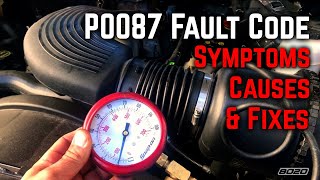
- Check Engine Light illuminated. 🎬 Watch: A quick breakdown of what the P0087 code means.
- "Restricted Performance" message displayed on the dash.
- Engine stalling, either at idle or while driving.
- Hard starting or extended cranking time, particularly on a hot restart.
- Rough idle.
- Misfire codes (e.g., P0300-P0308) may accompany P0087.
- Replacing only one of the two high-pressure fuel pumps. This often leads to a repeat failure or persistent issues, as the pumps wear at similar rates and should be replaced in pairs.
- Replacing the high-pressure fuel pumps when the actual fault is a weak in-tank low-pressure pump starving them of fuel.
- Condemning the fuel pumps when a simple clogged fuel filter is the root cause.
Most Likely Causes
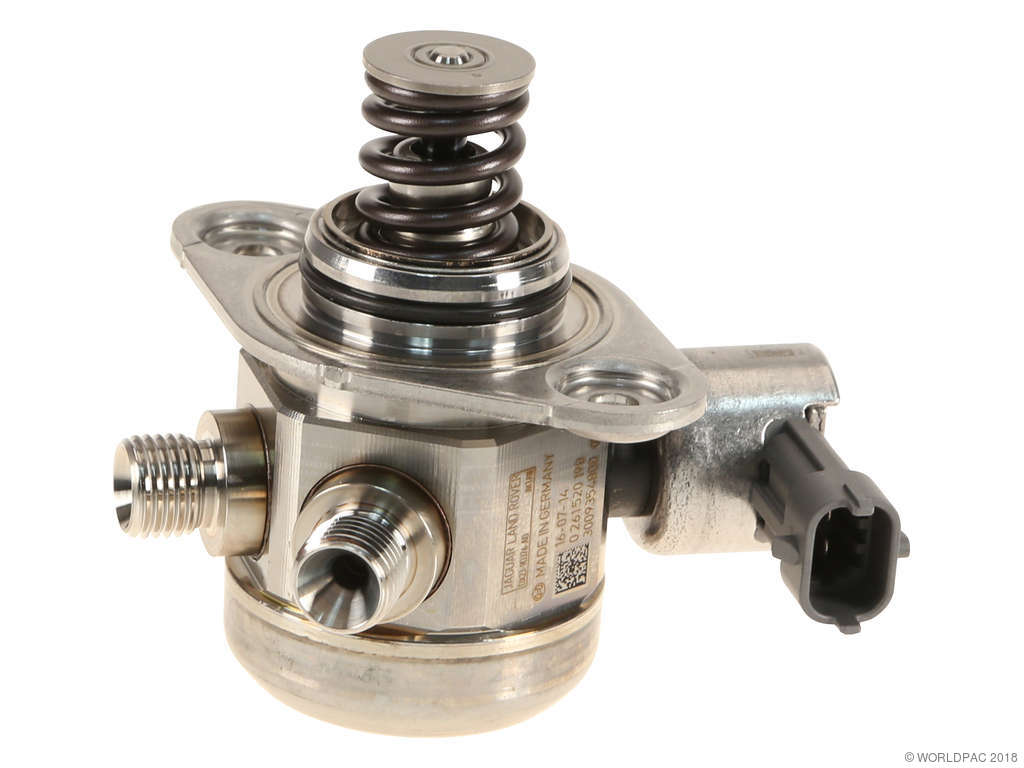
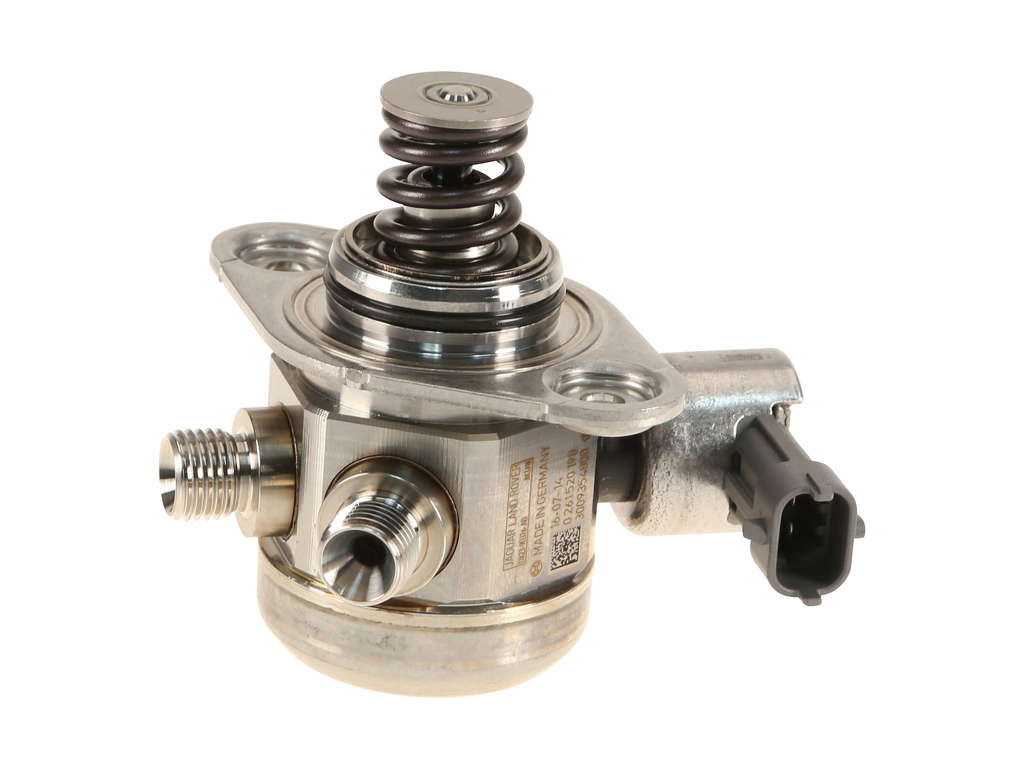
- High-Pressure Fuel Pump (HPFP) Failure 🔴 High Probability → Shop Fuel Pump The twin HPFPs on the 3.0L and 5.0L engines are a known failure point. They can wear out internally and fail to produce the required pressure under load, even if the car starts and idles normally. This is the most common cause of P0087 on these engines.
How to confirm: A technician will use a diagnostic scan tool to monitor 'Requested Fuel Rail Pressure' vs. 'Actual Fuel Rail Pressure' during a test drive. A significant drop in actual pressure (e.g., falling to 500-600 PSI when 2000+ PSI is commanded) under acceleration points to failing HPFPs, assuming the low-pressure supply is adequate.
Typical fix: Replace both high-pressure fuel pumps and their respective cam followers (tappets). They must be replaced as a pair to ensure balanced performance and longevity.
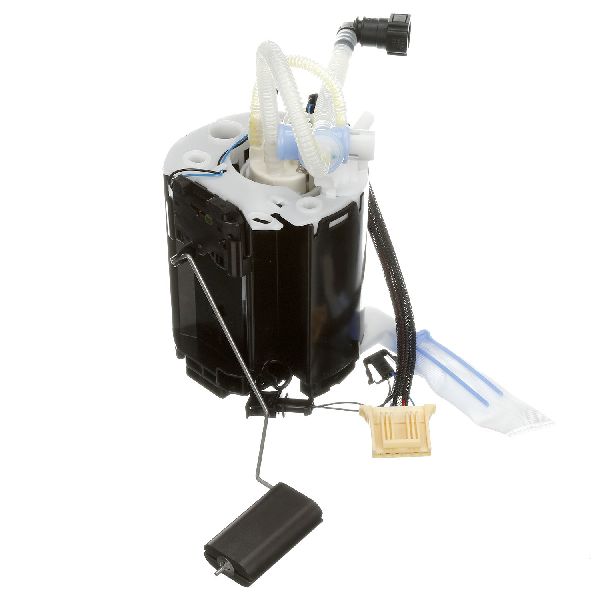
Est. part cost: $600-$1200 - Failing In-Tank Low-Pressure Fuel Pump 🟡 Medium Probability → Shop Fuel Pump The low-pressure pump can weaken over time, failing to supply the necessary volume of fuel to the HPFPs. This can mimic the symptoms of HPFP failure.
How to confirm: Connect a fuel pressure gauge to the low-pressure fuel system. The pressure should be stable and within the manufacturer's specification (typically 45-58 PSI or 3.1-4.0 bar) at idle. If the pressure is low or drops significantly under load, the in-tank pump is likely weak.
Typical fix: Replace the in-tank low-pressure fuel pump assembly.
Est. part cost: $250-$500 - Clogged Fuel Filter ⚪ Low Probability → Shop Fuel Filter The fuel filter is a maintenance item that is often overlooked. If not replaced at regular intervals, it can become restricted, starving the fuel pumps. This is a more common cause on the diesel engine variants but can still occur on petrol models.
How to confirm: This is often diagnosed by first confirming low fuel pressure and then replacing the filter as a relatively inexpensive first step 🎬 See how to change the fuel filter on this platform. before moving to the more costly pumps.
Typical fix: Replace the fuel filter.
Est. part cost: $50-$100 - Faulty Fuel Rail Pressure Sensor ⚪ Low Probability → Shop Fuel Pressure Sensor Jaguar Land Rover has issued a Technical Service Bulletin (TSB SSM74336) that addresses issues with the fuel rail pressure sensor, indicating it's a recognized potential failure point. A faulty sensor can report low pressure even when the pressure is normal.
How to confirm: Compare the pressure reading from the sensor on a scan tool with a reading from a mechanical pressure gauge (on the low-pressure side) and observe the sensor's behavior under load. If the readings are erratic or do not correlate with engine demand while pumps are verified to be working, the sensor is likely faulty.
Typical fix: Replace the fuel rail pressure sensor.
Est. part cost: $80-$150
Rare But Worth Checking
- Worn Cam Follower / Tappet: → Shop Engine Valve Tappet The HPFPs are driven by the camshaft via a small tappet or follower. If this component wears down or breaks, the pump will not actuate correctly, leading to low pressure. It is considered mandatory best practice to replace these whenever the HPFPs are replaced to prevent a repeat failure.
- Leaking Fuel Injector: → Shop Fuel Injector A fuel injector stuck open can cause a drop in rail pressure. This is usually accompanied by other symptoms like a strong fuel smell in the oil, smoke from the exhaust, and specific cylinder misfire codes (e.g., P0301-P0308).
- Intake Air System Leak: A significant vacuum leak, such as a torn intercooler hose or leaking intake manifold gasket, can cause a P2279 code ("Intake Air System Leak") to appear alongside P0087, as seen in some forum discussions. The engine's attempt to compensate for unmetered air can lead to fuel trim issues that may indirectly relate to fuel pressure warnings.
Diagnosis Steps
- Connect an OBD-II scanner and confirm P0087 is present, noting any other codes (e.g., misfires, sensor codes).
- Use a professional scan tool to monitor live data for 'Commanded Fuel Rail Pressure' and 'Actual Fuel Rail Pressure'.
- Perform a key-on, engine-off test to check the low-pressure fuel system. Connect a mechanical fuel pressure gauge to the low-pressure line to verify the in-tank pump is delivering adequate pressure (typically 45-58 PSI).
- If low-pressure is within spec, start the engine and observe the high-pressure rail readings at idle (should be around 800-1000 PSI).
- Safely test drive the vehicle while logging pressure data. Under moderate to heavy acceleration, observe if the 'Actual Fuel Rail Pressure' drops significantly while 'Commanded Fuel Rail Pressure' stays high (e.g., 2000+ PSI). A large discrepancy confirms a high-pressure side fault.
- If a low-pressure side issue is suspected, replace the fuel filter first as it is an inexpensive and common maintenance item.
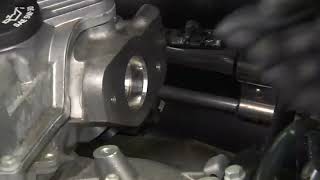
- If the high-pressure pumps are the suspected cause, inspect the driving cam lobes 🎬 Watch this walkthrough on removing and installing high pressure pumps. and followers for wear upon removal. It is critical to replace the followers with the pumps.
- Inspect all fuel lines for any visible leaks, kinks, or damage. Check for the smell of fuel in the engine oil, which could indicate a leaking injector or HPFP seal.
Parts You'll Likely Need
- High-Pressure Fuel Pump (HPFP)
(OEM #LR081595 (supersedes C2D2450, AJ812357, LR035527, LR011308))— This is the most common failure item for code P0087 on these Jaguar engines. The vehicle has two, and they must be replaced as a pair.
Trusted brands: Bosch (OEM supplier), Genuine Jaguar Land Rover
OEM price range: $400-$600 each
Aftermarket price range: $300-$450 each - HPFP Cam Follower / Tappet — This small part connects the camshaft to the fuel pump and is a critical wear item. It must be replaced with the high-pressure pumps to ensure proper function and prevent premature failure of the new pumps.
Trusted brands: Genuine Jaguar Land Rover
OEM price range: $20-$40 each - Low-Pressure Fuel Pump Assembly — If diagnosis points to a lack of fuel supply
Related Codes That Often Appear With This One
- P0300 — Random/Multiple Cylinder Misfire. Insufficient fuel pressure can cause a lean condition leading to misfires across multiple cylinders.
- P0301-P0308 — Cylinder-specific misfire codes. Low fuel pressure can lead to a lean condition that causes misfires in one or more specific cylinders.
- P228C / P228D — Fuel Pressure Regulator Control Circuit codes. These may appear alongside P0087, indicating a problem with the control side of the high-pressure pumps.
- P2279 — Intake Air System Leak. A large vacuum leak can throw off the engine's fueling calculations and has been reported on forums in conjunction with P0087.
Technical Service Bulletins (TSBs) & Recalls
- TSB SSM74336 - Fuel Rail Pressure Sensor Issues: → Shop Fuel Pressure Sensor Land Rover issued TSB SSM74336 which addresses variations of code P0087 and instructs technicians to investigate the fuel rail pressure sensor as a potential cause, among other items like fuel contamination.
- TSB Bulletin #SSM74337: A manufacturer service bulletin for related Jaguar models notes that variations of P0087 for the fuel rail pressure sensor are stored in the PCM.
- Unofficial TSB Reference for P0087: An NHTSA document references an internal investigation for P0087 on 3.0L TDV6 and 2.0L diesel engines, indicating a known issue with the fuel rail pressure sensor. While for different engines, it shows JLR's awareness of sensor-related P0087 faults.
Platform-Specific Known Issues
- Owner Experience: Intermittent P0087 and Hot Start Issues: A user on LandRoverForums with a 5.0L V8 experienced P0087 along with longer-than-usual cranking on hot starts. Data logging showed fuel pressure was slow to build on light throttle application after being in 'Restricted Performance' mode. This points to a classic HPFP failure where the pumps struggle to meet commanded pressure under load.
- Owner Experience: Multiple Repeat Failures Due to Timing: An owner on LandRoverForums detailed a long history of recurring P0087 codes on a 2010 LR4 (shared engine). After replacing HPFPs and sensors, the issue was ultimately traced to the fuel pump chain jumping time. This highlights that in rare cases, the drive mechanism for the pumps can be the root cause, not just the pumps themselves.
Mechanic-Grade Diagnostic Values
- Low-Pressure Fuel System (In-tank pump) — expected: 45-58 PSI (3.1-4.0 bar) with key on, engine off (KOEO) or at idle.. Failure: Pressure is below 45 PSI or drops significantly under load.
- High-Pressure Fuel System (HPFPs) at Idle — expected: Approximately 800-1000 PSI.. Failure: Pressure is significantly below this range at a stable idle.
- High-Pressure Fuel System (HPFPs) Under Load — expected: Commanded pressure can exceed 2,000 PSI; actual pressure should closely follow the commanded value.. Failure: Actual pressure fails to rise with commanded pressure or drops significantly during acceleration.
Scan Tool Commands That Help
- Jaguar SDD (Symptom Driven Diagnostics) or equivalent professional scanner: Live Data Monitoring: Fuel Rail Pressure (Actual vs. Commanded) — This is the primary diagnostic step. It's used to compare the ECM's requested fuel pressure with what the sensor is actually reading in real-time, especially under load, to confirm a high-pressure side shortfall.
- Jaguar SDD or equivalent professional scanner: Fuel System Tests / Fuel Pump Activation — Can be used to command the low-pressure fuel pump to run without the engine starting. This helps isolate the low-pressure pump and check its ability to build pressure independently of the high-pressure system.
Wiring & Ground Locations
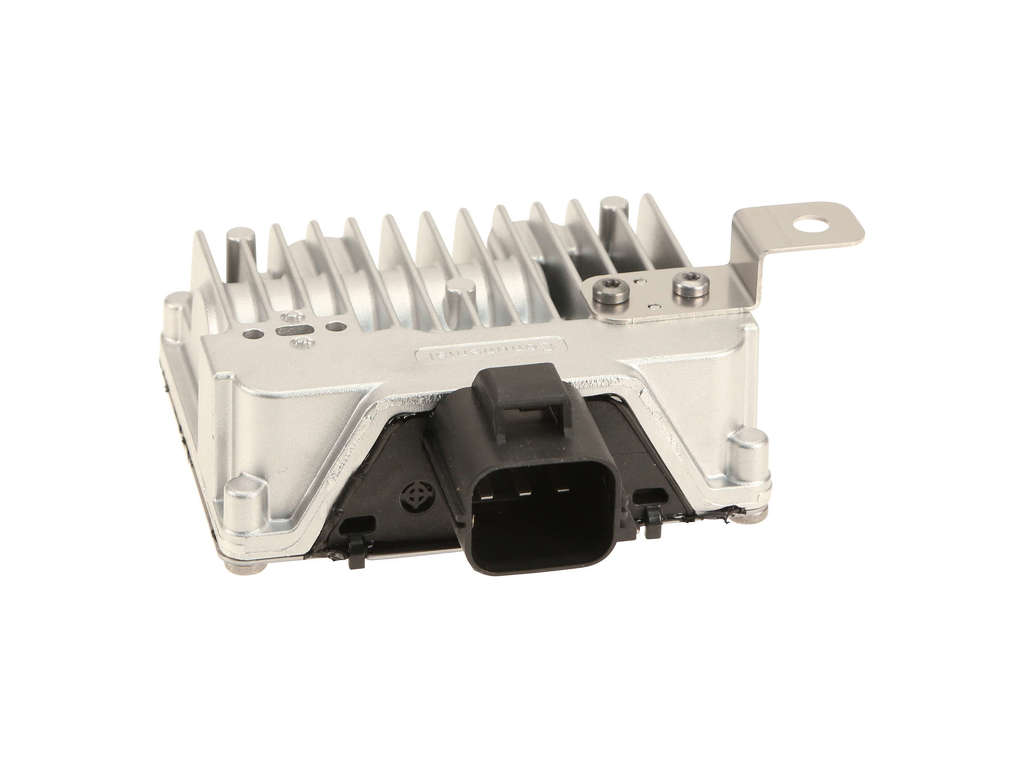
- Fuel Pump Driver Module (FPDM) — On some related models like the XK (X150), the FPDM is located on the right-hand end of the charcoal canister. While not specific to the XJ, this is a likely location to check. On earlier XJ models (X350), the function was integrated into the Rear Electronic Module (REM).. The FPDM controls the speed of the low-pressure fuel pump. A fault in the module or its wiring/ground can starve the high-pressure pumps, causing P0087.
- HPFP Connectors — The two high-pressure fuel pumps are located on the underside of the engine, one on each bank, driven by the camshafts. Access typically requires removing the alternator.. The electrical connectors to the HPFP solenoids are a potential point of failure. Loose or corroded connections can prevent the pumps from operating correctly.
Real Owner Repair Stories
- JaguarForums user 'XJSMike' (Jaguar XJ (year/engine not specified, but context implies AJ133/AJ126)) — P0087, hesitation at higher RPMs, "Restricted Performance" mode after full-throttle acceleration.
❌ Tried (didn't work) Replacing one fuel pump., Replacing the other fuel pump., Replacing the first pump again.
✅ What actually fixed it After replacing three fuel pumps in a confusing sequence, the final fix involved replacing both banks of fuel injectors. The user's final state was '3 fuel pumps and 8 injectors later'. This highlights that even after replacing the common-cause pumps, leaking injectors can also be a root cause or contributing factor. - JaguarForums user report (context from a P0307 article) (2011 Jaguar XJ 5.0L) — Sudden stall, strong fuel smell, misfires on all of Bank 2 (P0302, P0304, P0306, P0308), and P0087 (Fuel Rail Pressure Too Low).
❌ Tried (didn't work) Dealer incorrectly suggested all four injectors on the bank had failed simultaneously.
✅ What actually fixed it The high-pressure fuel rail itself had failed. Replacing the fuel rail resolved the issue. This is a rare failure but demonstrates that a physical leak in the high-pressure lines or rail can also cause this code. - NHTSA ODI #11683093: An owner reported that their vehicle stalled while driving; a shop later retrieved code P0087. Although the shop could not reproduce the problem, they cleared the code and added DEF.
OEM Part Supersession History
LR035527, C2D2450, AJ812357, LR011308, 8W93-9D376-AE→LR081595— Standard part evolution and revision by the manufacturer.
Heads up: While many numbers exist, LR081595 is the latest common service part number. It is critical to ensure the replacement part is specified for the 3.0L/5.0L GDI engine, as parts for other Jaguar engines are not compatible. The OEM is Bosch, and their part numbers (e.g., 0261520197, 0261520198) are also valid cross-references.
Model Year Variations Within This Range
- 2016-2019: The 2016 model year received a significant facelift which included a new, much-improved InControl Touch Pro infotainment system, full LED headlights, and minor exterior styling changes. While the core 3.0L and 5.0L powertrains remained the same, the diesel V6 received a power and torque increase. These changes do not affect the diagnosis or common causes of code P0087 on the gasoline engines.
Diagnostic Flowchart
Other Known Issues on This Vehicle
Issues unrelated to this code that are worth knowing about as an owner of this generation:
- Premature Timing Chain Tensioner & Guide Wear (5.0L V8) 🔴 High — Common on 2010-2014 models, typically manifesting as a metallic rattle on cold starts between 50,000 and 100,000 miles. Ignoring it can lead to catastrophic engine failure. (Ref: TSB LTB00474NAS3 was issued for a 'rattle noise on cold start' on 2010-2012 models.)
- Water Pump & Coolant Pipe Failure (3.0L V6 & 5.0L V8) 🔴 High — Very common. The plastic-bodied water pumps and various plastic coolant pipes/hoses are prone to cracking and leaking, sometimes with low mileage (<50,000 miles). Can cause rapid coolant loss and overheating.
- Sticky Interior Buttons 🟡 Low — Extremely common across all model years. The soft-touch coating on buttons on the center console, steering wheel, and door panels deteriorates, becoming sticky and gummy, especially in warm climates. (Ref: A TSB was reportedly issued for 2010-2015 models to replace affected buttons under warranty.)
- PCV Valve Diaphragm Failure 🟠 Medium — The rubber diaphragms in the two PCV valves (located on the valve covers) can tear with age, causing increased oil consumption, rough idle, and potential lean running codes.
- Leaking Valve Cover Gaskets 🟠 Medium — A common issue where the valve cover gaskets leak oil. On the passenger side (on LHD models), this oil leak can drip onto and destroy the alternator.
- Crankshaft Failure (3.0L V6 Diesel) 🔴 High — Less common than on the older 2.7L diesel, but the 3.0L diesel engine can still suffer from catastrophic crankshaft failure (snapping or spun bearings), requiring a complete engine replacement.
Used vs. New Parts: Buying Guide for This Vehicle
When a used part is the smart pick: For the high-pressure fuel pumps (HPFPs), a used OEM part from a low-mileage, verified running donor vehicle can be a cost-effective alternative to new, and is often considered more reliable than a cheap, non-OEM aftermarket part. Given two are required, the savings can be substantial.
Donor-vehicle mileage cap: roughly under 60000 miles for the part to have meaningful remaining life.
What to inspect on the donor part:
- Verify the OEM part number (e.g., Bosch, LR081595) matches exactly.
- Inspect the pump housing for any cracks or damage, especially around mounting points and fuel line fittings.
- Check the electrical connector pins for corrosion, melting, or discoloration.
- Whenever possible, source from a vehicle damaged in an accident rather than one scrapped for engine failure, to avoid parts that may have been compromised by internal debris.
OEM-only on this vehicle (don't cheap out):
- HPFP Cam Follower / Tappet: This is a low-cost, high-wear item that should always be replaced with a new OEM part whenever the HPFPs are serviced.
- Fuel Rail Pressure Sensor: Due to its critical role in engine management and the potential for chasing phantom issues, using a genuine or OEM sensor is highly recommended.
Aftermarket brands forum-validated for this vehicle:
- Bosch: As the Original Equipment Manufacturer for the high-pressure fuel pumps, Bosch-branded parts are equivalent to Genuine Jaguar Land Rover parts and are the most trusted option.
Brands owners have reported issues with on this vehicle:
- Unnamed, low-cost 'white box' pumps from online marketplaces. While tempting, these often have high failure rates and can be less reliable than a good, inspected used OEM pump.
Real Owner Stories
Aggregated from forums and TSBs cited above. Mileages and costs reflect what owners reported in those sources.
2011 Jaguar XJ L Supercharged
Symptoms: The vehicle experienced sputtering and stalling, accompanied by a P0087 code and a P2279 air leak code.
What fixed it: The owner sought help for a combination of fuel pressure issues and an air leak.
Source hint: https://www.jaguarforums.com/forum/xj-x351-53/help-please-xj-l-codes-p0087-p2279-215881/
2010 Land Rover LR4 5.0L V8
Symptoms: P0087 code along with longer-than-usual cranking on hot starts. Data logging showed fuel pressure was slow to build on light throttle application after being in 'Restricted Performance' mode.
What fixed it: Replacement of the High-Pressure Fuel Pumps (HPFP).
Source hint: LandRoverForums thread titled '2010 5.0 P0087 Fuel Rail System Pressure Too Low'
2010 Land Rover LR4 5.0L V8
Symptoms: Repeated P0087 codes that persisted even after replacing the high-pressure pumps and sensors.
What fixed it: The issue was traced back to the fuel pump's timing chain being out of time.
Source hint: LandRoverForums thread titled 'P0087 code'
Related OBD-II Codes
Frequently Asked Questions
Does Jaguar Land Rover have a TSB for the fuel rail pressure sensor on the XJ?
My 5.0L XJ has a 'Restricted Performance' message and P0087. What is the most likely cause?
Should I replace just one High-Pressure Fuel Pump if it's failing?
What should the fuel pressure be for the low-pressure supply on my XJ?
Can a clogged fuel filter cause the P0087 code on a Jaguar XJ?
I've replaced my pumps and sensors but P0087 keeps returning. What else could it be?
Helpful Videos


Used OEM Parts in Stock
New Aftermarket Parts Available

The information in this article is provided for general reference and educational purposes only. Vehicle specifications, procedures, and part compatibility can vary by production date, trim level, and region. Always consult your vehicle's factory service manual and verify part numbers before purchasing or performing repairs. Safety-critical components such as airbags, seat belts, and braking systems should be installed by a qualified professional.
- Jaguar XJ:
- 🧭 Diagnostic Flowchart
- 🎬 Helpful Videos
- 🛍️ Shop This Part
- What's Unique About the 2010-2019 Jaguar XJ
- Symptoms You May Notice
- Most Likely Causes
- Rare But Worth Checking
- Diagnosis Steps
- Parts You'll Likely Need
- Related Codes That Often Appear With This One
- Technical Service Bulletins (TSBs) & Recalls
- Platform-Specific Known Issues
- Mechanic-Grade Diagnostic Values
- Scan Tool Commands That Help
- Wiring & Ground Locations
- Real Owner Repair Stories
- OEM Part Supersession History
- Model Year Variations Within This Range
- Other Known Issues on This Vehicle
- Used vs. New Parts: Buying Guide for This Vehicle
- Real Owner Stories
- 2011 Jaguar XJ L Supercharged
- 2010 Land Rover LR4 5.0L V8
- 2010 Land Rover LR4 5.0L V8
- Related OBD-II Codes
- Frequently Asked Questions
- 🎟️ Get 5% Off