

P0087 on 2012-2017 Jeep Compass 2.0L CRD: Causes and Fixes for Low Fuel Rail Pressure
For a 2012-2017 Jeep Compass with the 2.0L CRD diesel engine, code P0087 is most often caused by a clogged fuel filter. Before replacing expensive parts, start by replacing the fuel filter, which is an inexpensive maintenance item. If that doesn't work, suspect a failing in-tank fuel pump or leaking fuel injectors. In some cases, the high-pressure fuel pump (HPFP) is at fault.
- This guide is ONLY for the 2012-2017 Jeep Compass (MK49) with the 2.0L CRD diesel engine.
- Always replace the fuel filter first when diagnosing P0087. It is the most likely and cheapest fix.
- Do not immediately assume the high-pressure fuel pump has failed. It is expensive and often misdiagnosed.
- If a new filter doesn't solve the issue, the next steps are to test the in-tank lift pump and perform an injector leak-off test.
- Driving with this code is a safety risk due to the potential for stalling and sudden power loss.
What's Unique About the 2012-2020 Jeep Compass
The 2012-2020 year range is misleading for this engine. This guide specifically covers the first-generation Jeep Compass (MK49), from 2012 up to 2017, which used a 2.0L CRD engine sourced from Volkswagen. Models from 2017 onwards belong to the second generation (MP) and use different Fiat-sourced diesel engines. For this VW-powered Compass, the P0087 code often traces back to basic fuel supply issues like a clogged filter or a weak lift pump, rather than an immediate failure of the high-pressure pump itself.
Generation note: The 2012-2020 range covers two generations of the Jeep Compass. This guide is only for the first generation (MK49), sold from 2012-2017, equipped with the 2.0L CRD (a VW-sourced engine). The second generation (MP), from 2017-2020, uses a different 2.0L MultiJet diesel engine from Fiat, and the causes and parts are not the same. TSBs found for P0087 on the Compass platform (like TSB 18-106-23) apply to newer models with different engines and are not relevant here.
Symptoms You May Notice
- Check Engine Light is on
- Engine enters 'limp mode' (limited to a low RPM, like 3000), often triggered by hard acceleration.
- Significant loss of power and sluggish acceleration
- Engine hesitation or stumbling, especially under load
- Difficulty starting the engine (long crank time).
- Rough or uneven idle
- Engine stalling, sometimes intermittently.
- Replacing the expensive High-Pressure Fuel Pump (HPFP) before checking the fuel filter, in-tank lift pump, or performing an injector leak-off test.
Most Likely Causes
- Clogged Fuel Filter 🔴 High Probability → Shop Fuel Filter Diesel fuel filters are a routine maintenance item designed to catch contaminants. Forgetting to change the filter on schedule is the most frequent cause of fuel flow restriction. Owners on forums often report P0087 after admitting the filter hasn't been changed in years.
How to confirm: The easiest and most cost-effective step is to replace the fuel filter as the first diagnostic step. If the symptoms disappear, the filter was the cause. Also, inspect the old filter and its housing for any signs of metal particles, which would point to a more serious HPFP failure.
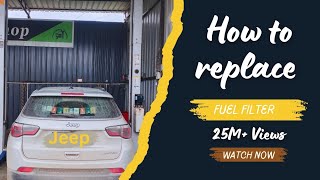
Typical fix: Replace the diesel fuel filter cartridge. 🎬 Watch this step-by-step guide to replacing your diesel fuel filter.
Est. part cost: $25-$60 - Failing In-Tank Fuel Lift Pump 🟡 Medium Probability → Shop Fuel Pump The low-pressure lift pump in the fuel tank is responsible for supplying fuel to the high-pressure pump. If it becomes weak, it cannot provide enough volume, starving the high-pressure side of the system under demand. This is a common failure point on the related VW TDI platform.
How to confirm: A technician can test the fuel pressure of the low-pressure circuit before the high-pressure pump. A pressure reading below specification (typically should be around 4-6 Bar or 58-87 PSI) indicates a failing lift pump. A loud whining from the fuel tank area can also be a symptom.
Typical fix: Replace the in-tank fuel pump assembly.
Est. part cost: $150-$300 - Leaking Fuel Injectors or Seals 🟡 Medium Probability → Shop Fuel Injector On a high-pressure common rail system, injectors can develop internal leaks (excessive return flow) or the seals can degrade, causing a loss of rail pressure. A video diagnosis of a Compass diesel with P0087 specifically identified two bad injectors as the cause of the pressure drop.
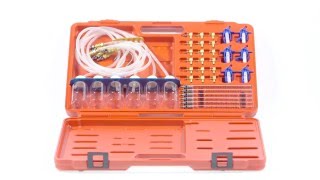
How to confirm: A diesel specialist can perform a fuel injector leak-off test (return flow test). This measures the amount of fuel bypassing each injector. 🎬 See how to perform a professional injector leak-off test. An injector that leaks back significantly more fuel than the others is faulty and must be replaced. For VW CRD engines, VCDS can be used to check injector adaptation values in measuring blocks 72-77; values more negative than -45ms (point 1) or -15ms (point 2) suggest a worn injector.
Typical fix: Replace the faulty fuel injector(s) and the associated seals. It is best practice to replace all injector seals when one or more injectors are replaced.
Est. part cost: $200-$500 per injector, $20-$40 for a seal kit - Faulty Fuel Rail Pressure Sensor ⚪ Low Probability → Shop Fuel Pressure Sensor The sensor provides the pressure reading to the ECU. If it sends an inaccurate, low reading, the ECU will set P0087 even if the mechanical pressure is fine. This is a possible but less common cause compared to mechanical fuel supply issues.
How to confirm: Compare the fuel rail pressure reading on a scan tool with a reading from a mechanical pressure gauge. If the readings differ significantly, the sensor is likely faulty. Another test is to check the sensor's voltage reading; with the key on and engine off, the signal wire should read approximately 0.5V.
Typical fix: Replace the fuel rail pressure sensor.
Est. part cost: $70-$150
Rare But Worth Checking
- High-Pressure Fuel Pump (HPFP) Failure: → Shop Fuel Pump While this is a major component that can cause P0087, it is often misdiagnosed. The fuel filter, lift pump, and injectors should be ruled out first. If the HPFP has failed catastrophically, it may send metal shavings throughout the fuel system, requiring a very expensive replacement of the pump, injectors, rail, and lines, plus a tank cleaning.
- Damaged Fuel Lines or Wiring: → Shop Fuel Line Check for any visible damage, kinks, or restrictions in the fuel lines between the tank and the engine. Also, inspect the wiring harness and connectors for the fuel rail pressure sensor and fuel pumps for any corrosion or damage, as suggested in Mitsubishi's troubleshooting guide for the same engine.
- Faulty Fuel Pump Control Module (J538): → Shop Fuel Pump On the related VW platform, a faulty fuel pump control module has been documented to cause P0087 after both the low and high-pressure pumps were replaced. The electronic module's failure can mimic a mechanical pump issue, making it a difficult-to-diagnose edge case.
Diagnosis Steps
- Check for other stored DTCs to see if they provide more clues (e.g., injector circuit codes, sensor codes).
- Replace the diesel fuel filter. This is a low-cost maintenance item and the most common cause. Inspect the old filter for metal debris.
- If the problem persists, connect a scan tool and monitor 'Desired' vs. 'Actual' fuel rail pressure. Does the pressure drop significantly during acceleration or under load?
- Test the low-pressure fuel system. Verify the in-tank lift pump is delivering adequate pressure and volume (spec is often 4-6 Bar or 58-87 PSI) to the high-pressure pump.
- If the low-pressure side is good, perform a fuel injector leak-off (return flow) test to check for faulty injectors. An injector leaking excessively will cause rail pressure to drop.
- Inspect the wiring and connector for the fuel rail pressure sensor for any signs of damage or corrosion.
- Check the fuel tank and filter housing for metal shavings. The presence of metal indicates a disintegrating HPFP, and the pump should be condemned.
- If all other components test good, the High-Pressure Fuel Pump (HPFP) may be at fault, but this should be the last component to be replaced due to its high cost.
Parts You'll Likely Need
- Diesel Fuel Filter
(OEM #5105987AF)— This is the most common cause of P0087 due to being a standard maintenance item that is often overlooked. It's the first, easiest, and cheapest part to replace. The OEM part number replaces previous versions 5105987AC, 5105987AB, and 5105987AE.
Trusted brands: Mopar, Bosch, Mahle, Mann-Filter
OEM price range: $40-$70
Aftermarket price range: $25-$50 - Fuel Injector Seal Kit
(OEM #1417010996)— If injectors are identified as leaking or need to be removed for testing, the seals must be replaced. These kits are essential for the repair.
Trusted brands: Bosch
OEM price range: $20-$40 (per injector)
Aftermarket price range: $15-$30 (per injector) - Fuel Rail Pressure Sensor
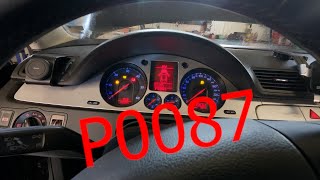
(OEM #0281006160)— Can fail and send incorrect readings to the ECU, falsely triggering the code 🎬 Watch this overview of common P0087 causes and potential fixes. or failing to report correct pressure. It's a Bosch part, consistent with the VW-sourced engine.
Trusted brands: Bosch
OEM price range: $100-$180
Aftermarket price range: $70-$120
Related Codes That Often Appear With This One
- P0300, P0301, etc. (Cylinder Misfire): Insufficient fuel pressure can cause a lean condition, leading to misfires.
- P0088 (Fuel Rail/System Pressure - Too High): Can appear intermittently if the pressure regulator or sensor is failing erratically, though less common than P0087 alone.
Technical Service Bulletins (TSBs) & Recalls
- No specific TSBs for P0087 on the 2012-2017 Compass 2.0L CRD were found in searches. TSBs for P0087 on the 'Compass' nameplate, such as TSB 18-106-23, apply to the second-generation (2017+) models with different engines and are not applicable to this vehicle.
Mechanic-Grade Diagnostic Values
- Low-Pressure Fuel System (In-tank lift pump) — expected: 4.0 to 6.0 Bar (58 to 87 PSI) at idle.. Failure: Pressure significantly below this range indicates a weak or failing lift pump.
- High-Pressure Fuel System (at idle) — expected: Minimum of 40 Bar (580 PSI). Actual pressure should closely track specified pressure, with a deviation of less than 5.0 bar.. Failure: Actual pressure failing to meet the specified minimum, or dropping significantly under load, points to an issue with the HPFP, injectors, or regulator.
- Fuel Rail Pressure Sensor (G247/G410) Signal Voltage — expected: Approx. 0.5V with Key On, Engine Off. Approx. 1.3-1.5V at idle.. Failure: Voltage that is stuck high (e.g., 5.0V) or does not respond to changes in engine speed/load suggests a faulty sensor or wiring issue.
- Fuel Pressure Regulator Valve (N276) Resistance — expected: 25 to 35 ohms at 20°C (68°F).. Failure: A resistance reading outside this range indicates the valve's internal coil is faulty and the valve needs replacement.
Scan Tool Commands That Help
- wiTECH (Chrysler/Jeep Dealer Tool): Fuel Pump Relay Control / Fuel Pump Control ON (100%) — This command forces the in-tank low-pressure fuel pump to run continuously. It is used to safely measure the maximum pressure and flow of the lift pump without the engine running, helping to isolate a weak pump.
- VCDS (VAG-COM, for VW engines): Basic Settings - Group 035: Fuel Supply Pump Activation — Used to activate the in-tank lift pump to test for power at the pump connector, listen for pump operation, and prime the fuel system after replacing a filter or pump. This is a key first step in diagnosing a no-start or low-pressure condition on the VW engine.
- VCDS (VAG-COM, for VW engines): Measuring Blocks 072-077 - Injector Calibration Points — To check for worn injectors without a physical leak-off test. These blocks show injector timing adaptations at different pressure levels (300, 600, 1000 bar). Values more negative than -45ms or -15ms indicate an injector is worn and likely has excessive return flow, causing a drop in rail pressure.
Wiring & Ground Locations
- Engine Block Ground Strap — Typically runs from the engine block or a motor mount to the chassis/frame rail. On some Jeeps, a key ground is located near the alternator, connecting to the motor mount.. A corroded or broken engine ground can cause a host of electrical issues, including erratic sensor readings and improper voltage to fuel pump control modules. The PCM and other modules rely on a solid ground reference to function correctly.
- PCM Ground — The Powertrain Control Module (PCM) case itself must be firmly bolted to a clean body ground. It also has dedicated ground pins in its main connector.. The PCM controls the entire fuel system. An improper ground can cause it to misinterpret sensor data or fail to properly command the fuel pumps and regulators, leading to false P0087 codes.
- Radiator Support Grounds — On the related Jeep Patriot platform, common ground points are located on the radiator support, near the headlights.. These grounds serve various components in the engine bay. Corrosion in this exposed area (especially in salt-belt regions) can disrupt circuits related to the fuel system.
Real Owner Repair Stories
- YouTube video 'How to Fix P0087: Low Fuel Rail Pressure | VW Passat 2.0 TDI' (2008 Volkswagen Passat 2.0 TDI (same engine family)) — P0087, random engine shutdowns, difficulty restarting.
❌ Tried (didn't work) Initial diagnosis with VCDS confirmed low pressure.
✅ What actually fixed it The in-tank fuel lift pump was confirmed dead after failing a direct 12V power test. Replacing the in-tank fuel pump resolved the issue. - Go-Parts article citing owner forums (2018 VW Passat (TDI)) — P0087, significant loss of power, limp mode.
❌ Tried (didn't work) Replaced the low-pressure fuel pump (LPFP)., Replaced the high-pressure fuel pump (HPFP).
✅ What actually fixed it The issue persisted until the Fuel Pump Control Module (J538) was replaced. The electronic controller failure was mimicking a mechanical pump failure. - Jeep Club UK Forum (Jeep Grand Cherokee CRD (similar Bosch diesel system)) — P0087 and limp mode triggered by hard acceleration.
❌ Tried (didn't work) Resetting the code, which would return under load.
✅ What actually fixed it The owner noted the fuel filter had not been changed in over 2 years and suspected it was the cause, which aligns with the most common fix for these symptoms. While the final outcome wasn't posted, the scenario is a textbook example of a filter-induced P0087.
OEM Part Supersession History
68092292AA→K68092292AA— Standard part number update/revision by Mopar.
Heads up: These parts are interchangeable. The part is originally a Bosch 0281006160, which is also a valid replacement number.
Model Year Variations Within This Range
- 2012-2017 vs 2017+: The most critical variation is the engine source. Models from 2012-2017 (MK49 generation) use a VW-sourced 2.0L CRD. Models from 2017+ (MP generation) use a Fiat-sourced 2.0L MultiJet diesel. Parts, diagnostic procedures, and common failure points are completely different between these two engines. This guide is only for the VW-powered models.
Diagnostic Flowchart
Other Known Issues on This Vehicle
Issues unrelated to this code that are worth knowing about as an owner of this generation:
- Front Lower Control Arm & Bushing Failure 🟠 Medium — Commonly reported between 50,000 and 60,000 miles. Symptoms include clunking noises over bumps, wandering steering, and uneven tire wear.
- DPF Clogging & Regeneration Failure 🟠 Medium — Frequent on vehicles used primarily for short city trips, which prevents the DPF from reaching temperatures needed for passive regeneration. Can lead to limp mode and P2463 DTC.
- Dual-Mass Flywheel (DMF) Failure 🔴 High — As with many VW-group manual diesel engines, the DMF can wear out, causing severe vibrations at idle, a rattling or clunking noise from the transmission area, and difficulty shifting gears.
- Turbocharger Failure 🔴 High — While not exceptionally common, failure is a high-cost repair. Symptoms include a loud siren-like whining noise that changes with engine RPM, blue/gray exhaust smoke, and significant power loss (often with code P0299).
- Cabin Water Leaks 🟡 Low — Some owners report water leaking into the cabin, often from clogged sunroof drains or poor seals around the doors or firewall.
Used vs. New Parts: Buying Guide for This Vehicle
When a used part is the smart pick: For this code, using used parts is generally not recommended for pumps or injectors due to the risk of contamination and wear. However, a used Fuel Pump Control Module from a low-mileage, verified-running donor vehicle could be a cost-effective option. A bare fuel rail (without sensors) is also a safe used part.
Donor-vehicle mileage cap: roughly under 80000 miles for the part to have meaningful remaining life.
What to inspect on the donor part:
- For any used fuel system component, meticulously inspect all ports and openings for any sign of metallic debris or shavings. The presence of even tiny flakes indicates a catastrophic failure upstream and the part is contaminated.
- Verify the donor vehicle's VIN to ensure it matches the correct year range (2012-2017) and engine (2.0L CRD).
- If possible, get history on the donor vehicle to see if it was running prior to being dismantled.
OEM-only on this vehicle (don't cheap out):
- High-Pressure Fuel Pump (HPFP): Due to the catastrophic damage a failed HPFP can cause by sending metal through the entire system, only a new OEM (Bosch) or a remanufactured unit from a highly reputable specialist should be used. Avoid cheap, unbranded aftermarket pumps.
- Fuel Injectors: While expensive, new Bosch injectors are the safest bet. Used injectors carry the risk of being the original point of failure, and cheap aftermarket versions often have poor spray patterns and short lifespans.
Aftermarket brands forum-validated for this vehicle:
- Bosch (for sensors, pumps, injectors, filters)
- Mahle (for filters)
- Mann-Filter (for filters)
Brands owners have reported issues with on this vehicle:
- Unbranded, 'no-name' fuel pumps and injectors from online marketplaces (e.g., eBay, Amazon) that are priced significantly below recognized brands.
Real Owner Stories
Aggregated from forums and TSBs cited above. Mileages and costs reflect what owners reported in those sources.
Jeep Compass 2.0L CRD
Symptoms: The car enters limp mode and is limited to 3000 RPM specifically when flooring the accelerator to join a road.
What fixed it: The owner suspected a fuel filter that hadn't been changed in over 2 years was the cause of the restriction.
Source hint: Jeep Club - P0087 (jeepclub.co.uk)
Jeep Compass 2.0L CRD
Symptoms: The motor loses power (perde força) and triggers the P0087 code.
What fixed it: A diagnostic confirmed two bad fuel injectors were causing the drop in rail pressure.
Source hint: YouTube - P0087 Jeep Compass diesel motor perde força...
Related OBD-II Codes
Frequently Asked Questions
Does TSB 18-106-23 apply to my 2012-2017 Jeep Compass 2.0L CRD regarding the P0087 code?
What is the most likely cause of P0087 if I haven't serviced my Jeep Compass diesel in a long time?
My Compass enters 'limp mode' and won't go over 3000 RPM when I accelerate hard. Is this related to P0087?
How can I tell if my in-tank lift pump is failing on my Compass CRD?
Can I use software to check for bad injectors on this VW-sourced engine?
What should I look for inside the fuel filter housing when I change it?
Helpful Videos


The information in this article is provided for general reference and educational purposes only. Vehicle specifications, procedures, and part compatibility can vary by production date, trim level, and region. Always consult your vehicle's factory service manual and verify part numbers before purchasing or performing repairs. Safety-critical components such as airbags, seat belts, and braking systems should be installed by a qualified professional.
- Jeep Compass:
- 🧭 Diagnostic Flowchart
- 🎬 Helpful Videos
- What's Unique About the 2012-2020 Jeep Compass
- Symptoms You May Notice
- Most Likely Causes
- Rare But Worth Checking
- Diagnosis Steps
- Parts You'll Likely Need
- Related Codes That Often Appear With This One
- Technical Service Bulletins (TSBs) & Recalls
- Mechanic-Grade Diagnostic Values
- Scan Tool Commands That Help
- Wiring & Ground Locations
- Real Owner Repair Stories
- OEM Part Supersession History
- Model Year Variations Within This Range
- Other Known Issues on This Vehicle
- Used vs. New Parts: Buying Guide for This Vehicle
- Real Owner Stories
- Jeep Compass 2.0L CRD
- Jeep Compass 2.0L CRD
- Related OBD-II Codes
- Frequently Asked Questions
- 🎟️ Get 5% Off