

P0087 on 2011-2013 Kia Optima: Low Fuel Pressure Causes and Fixes
P0087 on a 2011-2013 Kia Optima, equipped with the Theta II GDI engine, almost always points to a failing high-pressure fuel pump (HPFP), a very common issue. Before replacing the pump (which can cost $250-$600), you must check for Technical Service Bulletins (TSBs), as Kia released a mandatory ECM software update (SC114) to address this exact code. Also, always replace the cam follower when replacing the HPFP.
- P0087 on a 2011-2013 Optima is a serious code indicating low pressure in the high-pressure fuel system.
- Before replacing any parts, check with a Kia dealer to see if your vehicle's ECM software is up to date per TSB SC114. This could be a low-cost fix.
- The most common mechanical failure is the high-pressure fuel pump (HPFP).
- When replacing the HPFP, it is crucial to also replace the cam follower and the one-time-use high-pressure fuel pipe to ensure a complete and safe repair.
- This is not a beginner-friendly DIY job due to the extremely high fuel pressures involved. Professional service is strongly recommended.
What's Unique About the 2011-2013 Kia OPTIMA

The 2011-2013 Kia Optima uses the Theta II GDI engine, which is known for issues with its high-pressure fuel system components. Kia and Hyundai have issued multiple Technical Service Bulletins (TSBs) for the P0087 code, acknowledging the problem across several models sharing this engine, including the Optima, Sonata, and Sportage. TSB SC114R1 is a critical software update designed to change the ECM's control logic for the HPFP's internal Flow Control Valve (FCV), improving its durability and preventing the needle from wearing out and getting stuck. This makes checking for this software update a crucial first step before assuming a mechanical failure, as the update is designed to prevent the very wear that causes the pump to fail.
Diagnostic Flowchart

Tap your situation to follow the diagnostic path that matches what you're seeing on this vehicle.
Symptoms You May Notice
- Check Engine Light is on
- Loss of engine power and poor acceleration (limp mode)
- Engine hesitation or sputtering, especially under load or going uphill
- Rough or unstable idle
- Engine stalling unexpectedly, sometimes when coming to a stop
- Extended crank time (car takes 5-6 seconds longer to start) 🎬 Watch: Troubleshooting difficult starting and low fuel pressure symptoms
- Decreased fuel economy
- Strong smell of gasoline in the engine oil, indicating a leaking HPFP internal seal
- Replacing the in-tank (low-pressure) fuel pump without first confirming the low-side pressure is actually out of spec.
- Replacing fuel injectors when the issue is with fuel supply pressure.
- Replacing the HPFP without also replacing the worn cam follower underneath it, leading to a quick return of the code.
- Replacing the HPFP without first performing the mandatory ECM software update from TSB SC114.
Most Likely Causes

- Failing High-Pressure Fuel Pump (HPFP) 🔴 High Probability → Shop Fuel Pump The HPFP is the most widely documented failure point on the Theta II GDI engine. Internal wear, often on the Flow Control Valve (FCV) needle, prevents the pump from building sufficient pressure. In some cases, the internal seals fail, causing fuel to leak directly into the crankcase and mix with the engine oil.
How to confirm: Use a scan tool to monitor 'Desired Fuel Rail Pressure' vs. 'Actual Fuel Rail Pressure'. At idle, the pressure should be stable. During a test drive, command high pressure by accelerating. If the actual pressure cannot keep up with the desired pressure and drops significantly, the HPFP is failing. Also, check the engine oil for a strong fuel smell.
Typical fix: Replace the high-pressure fuel pump, its associated one-time-use fuel line, and the cam follower underneath it.
Est. part cost: $250-$600 - Outdated Engine Control Module (ECM) Software 🔴 High Probability → Shop Engine Control Module (ECM) Kia released Voluntary Service Campaign SC114 specifically to address P0087 by updating the ECM software. The update improves the control logic for the HPFP's Flow Control Valve (FCV) to improve its durability and prevent premature wear that leads to low pressure. This should always be checked first.
How to confirm: A Kia dealership or a qualified shop with access to the Kia Diagnostic System (KDS) can check the current software version (ROM ID) against the TSB to see if an update is available.
Typical fix: Reprogram the ECM with the latest software provided by Kia. This is a mandatory first step before replacing any hardware.
Est. part cost: $0-$150 - Worn Cam Follower (Tappet) 🟡 Medium Probability → Shop Engine Valve Tappet The HPFP is driven by a lobe on the camshaft via a small metal cap called a cam follower or tappet. This part is a known wear item and can collapse or wear down, creating excessive clearance and preventing the pump from achieving its full stroke to generate pressure.
How to confirm: Visually inspect the cam follower for wear, scoring, or a concave surface when the HPFP is removed. A new follower will have a flat surface.
Typical fix: Replace the cam follower. This is considered a mandatory and inexpensive part to replace whenever the HPFP is serviced.
Est. part cost: $25-$50 - Faulty Fuel Rail Pressure Sensor ⚪ Low Probability → Shop Fuel Pressure Sensor While not as common as pump failure, the sensor that reads the fuel pressure can fail and send incorrect data to the ECM. One owner reported replacing an aftermarket sensor with an OEM one to finally resolve the issue after replacing the HPFP.
How to confirm: Compare the sensor's readings on a scan tool with a manual pressure gauge reading on the low-pressure side. If the low-side pressure is good (e.g., 75 PSI) but the scan tool shows an illogical value at key-on, the sensor may be faulty. A faulty sensor can also sometimes throw a P0193 (Fuel Rail Pressure Sensor Circuit High) code along with P0087. 🎬 Watch: Diagnosing P0087 and P0193 codes on a Kia Optima
Typical fix: Replace the fuel rail pressure sensor. This often requires removing the intake manifold for access.
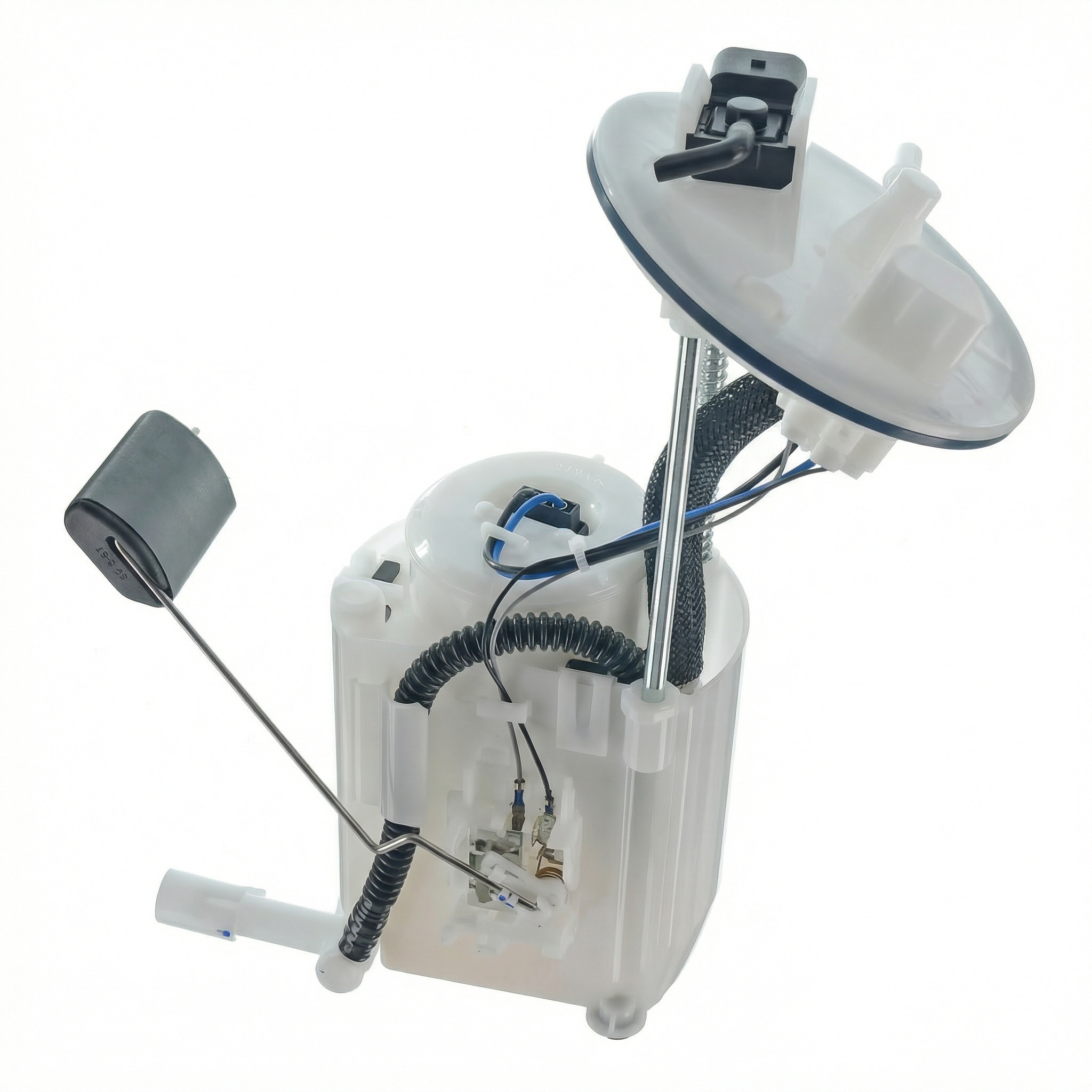
Est. part cost: $50-$120 - Clogged Fuel Filter or Weak In-Tank Fuel Pump ⚪ Low Probability → Shop Fuel Filter The HPFP relies on a steady supply of fuel from the low-pressure pump in the tank. If the in-tank pump is weak or the integrated filter is clogged, it can starve the HPFP. However, this is less common than HPFP failure itself.
How to confirm: Test the pressure of the low-pressure fuel system at the feed line to the HPFP. It should meet manufacturer specifications (typically 65-75 PSI under load). If low-side pressure is below spec, the in-tank pump or filter is the issue.
Typical fix: Replace the in-tank fuel pump assembly, which includes the filter.
Est. part cost: $150-$350
Diagnosis Steps
- Check for TSBs: First, verify with a dealer or capable shop if TSB SC114R1 (ECM software update) has been performed. If not, this is the first step.
- Scan Tool Live Data: Connect a scan tool and monitor 'Desired Fuel Rail Pressure' and 'Actual Fuel Rail Pressure'. At key-on engine-off, they should be low and similar. At idle, they should match. During a brief, sharp acceleration (in park or on a test drive), watch for the 'Actual' pressure to fall far behind the 'Desired' pressure.
- Check Low-Pressure System: If high pressure is low, verify the low-pressure side. Connect a fuel pressure gauge to the feed line for the HPFP. Cycle the key to prime the system and then start the engine. You should see a steady pressure of around 65-75 PSI.
- Inspect for Fuel in Oil: Remove the oil cap or dipstick and check for a strong smell of gasoline. This is a tell-tale sign of a failed internal seal on the HPFP.
- Inspect the HPFP and Cam Follower: If the low-pressure side is healthy and the software is updated, the HPFP is the primary suspect. Remove the HPFP and visually inspect the cam follower (tappet) it rests on. Look for scoring, a dished/concave surface, or complete failure.
- Critical Replacement Note: When replacing the HPFP, it is mandatory to also replace the one-time-use high-pressure fuel pipe (from the pump to the rail) and the cam follower to prevent leaks and ensure proper function. 🎬 See this walkthrough for replacing the HPFP and cam follower
Parts You'll Likely Need
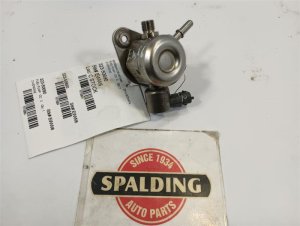
- High-Pressure Fuel Pump (HPFP)
(OEM #35320-2G720, 35320-2G730, 35320-2G740 (Verify by VIN))— This is the most frequent mechanical failure causing the P0087 code on these GDI engines.
Trusted brands: Bosch, Delphi, Hyundai/Kia Genuine
OEM price range: $400-$600
Aftermarket price range: $250-$450 - High-Pressure Fuel Pipe
(OEM #35305-2G700 (Verify by VIN))— Kia specifies this as a one-time-use part that must be replaced anytime it is disconnected to prevent extremely dangerous high-pressure fuel leaks.
Trusted brands: Hyundai/Kia Genuine
OEM price range: $40-$70
Aftermarket price range: $30-$50 - Cam Follower / Tappet / Roller
(OEM #35325-2G700 (Verify by VIN))— This part is a critical wear item that directly drives the HPFP. It is inexpensive and considered mandatory to replace along with the HPFP to ensure correct pump operation and longevity.
Trusted brands: Hyundai/Kia Genuine
OEM price range: $25-$40
Aftermarket price range: $15-$30
Related Codes That Often Appear With This One
- P0193 (Fuel Rail Pressure Sensor Circuit High) - Can indicate a failing sensor or wiring issue.
- P0300-P0304 (Random/Cylinder Misfire) - A direct result of the lean condition caused by low fuel pressure.
Technical Service Bulletins (TSBs) & Recalls
- TSBSC114R1 / SC114: Voluntary Service Campaign for an ECM software update. This TSB is critical as it reprograms the ECU to improve the durability and operation of the Flow Control Valve (FCV) needle inside the HPFP. It applies to 2012-13 Optima, 2012-14 Sorento, and 2012-13 Sportage with GDI engines.
- TSB-FUE026: Outlines the standard diagnosis and repair procedure for P0087, which culminates in replacing the HPFP, fuel delivery pipe, and mounting bolts if other causes are ruled out.
Platform-Specific Known Issues
- An owner of a 2013 Optima reported a P0087 code after experiencing engine issues, highlighting this as a real-world problem for this model year. [ODI #11325419, ODI #11322385]
- Kia issued a Voluntary Service Campaign (SC114) for an ECM software update to improve the durability and operation of the fuel system's Flow Control Valve (FCV) to address MIL illumination with DTC P0087 on 2012-2013 Optimas.
- A separate TSB (FUE026) from 2013 also outlines diagnosis and repair for P0087, recommending replacement of the high-pressure fuel pump and delivery pipe if diagnostics lead there.
Mechanic-Grade Diagnostic Values
- Low-Pressure Fuel Pump (in-tank) — expected: 65 PSI (4.5 bar).. Failure: Pressure is significantly below 65 PSI when measured at the feed line to the HPFP.
- High-Pressure Fuel Pump (HPFP) at Idle — expected: 580 PSI (40 bar).. Failure: Scan tool 'Actual' pressure is significantly lower than 'Desired' pressure, or does not rise from the low-pressure baseline.
- High-Pressure Fuel Pump (HPFP) Maximum — expected: Up to 1958 PSI (135 bar) under load.. Failure: Actual pressure fails to climb with RPM and engine load, while desired pressure increases.
- Fuel Rail Pressure Sensor Signal Voltage (Key On, Engine Off) — expected: Approximately 0.5V to 0.6V, corresponding to low-side pressure (around 75 PSI).. Failure: Voltage is stuck high (e.g., 1.7V) or does not correspond to pressure changes, which can be caused by a faulty aftermarket sensor.
- Fuel Rail Pressure Sensor 5V Reference — expected: Approximately 4.95V to 5.0V on the red wire of the sensor connector.. Failure: Voltage is missing or low, indicating a wiring or ECM issue.
- Fuel Rail Pressure Sensor Ground — expected: Less than 100 millivolts on the black wire of the sensor connector.. Failure: High voltage reading indicates a poor ground connection.
Scan Tool Commands That Help

- Kia GDS / XTOOL / LAUNCH: Live Data Stream (Fuel System) — Used to monitor 'Fuel Pressure Set Point' vs 'Actual Fuel Pressure'. A large discrepancy where the actual pressure cannot meet the set point (desired) pressure under load is the primary method for diagnosing a failing HPFP.
Wiring & Ground Locations
- Fuel Rail Pressure Sensor — On the end of the high-pressure fuel rail, located underneath the intake manifold on the 2.4L GDI engine.. This sensor provides the pressure reading to the ECM. A faulty sensor or bad wiring can send an incorrect low-pressure signal, triggering P0087 even if the pump is healthy. Access requires removing the intake manifold.
- Fuel Rail Pressure Sensor Connector — Connects to the fuel rail pressure sensor under the intake manifold.. Technicians must back-probe this connector to test for the 5V reference (Red wire), ground (Black wire), and signal voltage (middle wire, often white or tan) to diagnose a faulty sensor versus a wiring problem.
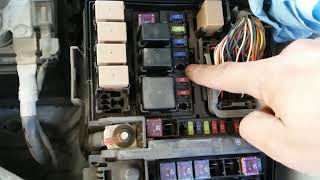
- Fuel Pump Fuse — Located in the under-hood fuse box, typically a 20A fuse.. This fuse must be removed and the engine started briefly to relieve fuel pressure before servicing any fuel system components like the HPFP, preventing fuel spray.
Real Owner Repair Stories
- Eli TheOBDTech on YouTube (2012 Kia Optima 2.4L GDI) — Intermittent crank no-start, long crank, P0087 and P0193 codes.
❌ Tried (didn't work) The vehicle had a new, aftermarket fuel rail pressure sensor installed along with a genuine Hyundai HPFP. The codes persisted.
✅ What actually fixed it The aftermarket fuel rail pressure sensor was faulty. It was sending an incorrect voltage signal (1.7V at KOEO instead of ~0.5V). Replacing the aftermarket sensor with the original OEM sensor that the customer had saved resolved the codes. - ADVANCED LEVEL AUTO on YouTube (2016 Kia Sportage 2.4L GDI (similar Theta II engine and system)) — Extended long crank, poor running, misfires, and immediate return of P0087.
❌ Tried (didn't work) In-tank fuel pump replaced., High-pressure fuel pump (HPFP) replaced., Fuel rail pressure sensor replaced.
✅ What actually fixed it The replacement HPFP was installed without its roller tappet (cam follower). The small roller that rides on the camshaft was missing from the pump assembly, so the pump was not being actuated. Installing the missing roller fixed the issue instantly. - Reddit user in r/MechanicAdvice (2013 Kia Optima LX 2.4L with 170k miles) — Long crank time, rough idle, misfires under slight load, P0087 code.
❌ Tried (didn't work) In-tank fuel pump assembly, Purge valve, PCV valve, MAP sensor, Gas cap
✅ What actually fixed it The thread was unresolved, but the user had replaced nearly all common causes except the two most likely ones for this platform: the high-pressure fuel pump (HPFP) and its associated cam follower, and checking for the ECM software update. This serves as a real-world example of misdiagnosis by overlooking the most probable causes.
When the Usual Fixes Don't Work
- While the high-pressure fuel pump (HPFP) is the most common cause, there are documented cases where P0087 was caused by other components. In one instance, a 2012 Optima with P0087 and P0193 had already received a new genuine HPFP, but the code persisted. The ultimate fix was replacing a faulty *aftermarket* fuel rail pressure sensor with the original OEM sensor, which immediately corrected the voltage readings and resolved the issue. In another case involving a similar engine, a shop replaced the HPFP, in-tank pump, and sensor, but the code returned instantly. The problem was discovered to be a missing roller tappet on the new HPFP, meaning the pump was never being actuated by the camshaft. These cases highlight the importance of using quality OEM sensors and verifying all mechanical interfaces during installation.
OEM Part Supersession History
35320-2G730→35320-2G720— Part number consolidation and potential design revision for the High-Pressure Fuel Pump (HPFP).
Heads up: The parts are generally interchangeable for the specified model years, but it is always best to verify by VIN.35320-2G720→35320-2G740— Further revision and update to the HPFP design, likely to improve durability and address known failure modes.
Heads up: 35320-2G740 is the latest common revision for this application. Always confirm fitment with the vehicle's VIN before ordering.
Model Year Variations Within This Range
- 2011-2013: Engine options included a 2.4L GDI engine producing around 200 hp and a 2.0L Turbo GDI engine with approximately 274 hp. Both engines use a similar GDI high-pressure fuel system and are susceptible to P0087 for the same reasons (HPFP, follower, software). A 2.4L Hybrid model was also available, which uses a different powertrain configuration.
Helpful Videos


Used OEM Parts in Stock
New Aftermarket Parts Available


The information in this article is provided for general reference and educational purposes only. Vehicle specifications, procedures, and part compatibility can vary by production date, trim level, and region. Always consult your vehicle's factory service manual and verify part numbers before purchasing or performing repairs. Safety-critical components such as airbags, seat belts, and braking systems should be installed by a qualified professional.
- Kia OPTIMA:
- 🧭 Diagnostic Flowchart
- 🎬 Helpful Videos
- 🛍️ Shop This Part
- What's Unique About the 2011-2013 Kia OPTIMA
- Symptoms You May Notice
- Most Likely Causes
- Diagnosis Steps
- Parts You'll Likely Need
- Related Codes That Often Appear With This One
- Technical Service Bulletins (TSBs) & Recalls
- Platform-Specific Known Issues
- Mechanic-Grade Diagnostic Values
- Scan Tool Commands That Help
- Wiring & Ground Locations
- Real Owner Repair Stories
- When the Usual Fixes Don't Work
- OEM Part Supersession History
- Model Year Variations Within This Range
- 🎟️ Get 5% Off