

P0087 on 2018-2023 Kia Stinger 3.3T: Fuel Pressure Too Low Causes and Fixes
On a 2018-2023 Kia Stinger 3.3T, the P0087 code is most commonly caused by a failing High-Pressure Fuel Pump (HPFP). A safety recall (SC281) was issued for the HPFP on 2018-2021 models, so checking with a Kia dealer is the essential first step. If not covered by recall, expect a repair cost of $800-$1900, with forum users confirming dealer replacement is often the only path.
- First, check if your Stinger is covered by Kia's safety recall SC281 for the high-pressure fuel pump (HPFP); this could result in a free repair.
- The most likely cause of P0087 on the 3.3T Stinger is a failing HPFP.
- Symptoms include serious power loss, engine hesitation, and stalling, making the vehicle potentially unsafe to drive.
- Diagnosis requires a scan tool that can read live fuel pressure data to compare commanded versus actual pressure under load.
- This is not a DIY-friendly repair due to the extreme pressures in the GDI fuel system; professional service is strongly recommended.
What's Unique About the 2018-2023 Kia Stinger
The Kia Stinger's 3.3T Lambda II GDI engine, like many modern direct-injection powerplants, uses both a low-pressure fuel pump (LPFP) in the tank and a high-pressure fuel pump (HPFP) on the engine. The HPFP is a known failure point on this platform and its platform mates like the Genesis G70. While a P0087 code can have several causes, the history of HPFP issues on this specific engine makes it the primary suspect. Note: A major recall for HPFP failure (SC281) was issued for the 2.0T Stinger, not the 3.3T. However, the failure mode is similar and the HPFP remains a widely reported weak point on the 3.3T among owners.
Symptoms You May Notice
- Check Engine Light is on
- Engine hesitation or stumbling during acceleration
- Significant loss of engine power, especially under load or at Wide Open Throttle (WOT)
- Engine entering 'limp mode' with reduced power
- Rough or unstable idle
- Engine stalling, potentially at highway speeds, increasing crash risk.
- Difficulty starting the engine or long crank times
- Car starts and then immediately stalls.
- Replacing the fuel rail pressure sensor first without verifying pump performance.
- Replacing the low-pressure fuel pump without first testing its output pressure.
- Assuming the issue is a simple clogged fuel filter when the filter is part of the in-tank pump assembly.
- Incorrectly assuming the vehicle is covered by the SC281 HPFP recall, which applies only to the 2.0T engine.
Most Likely Causes
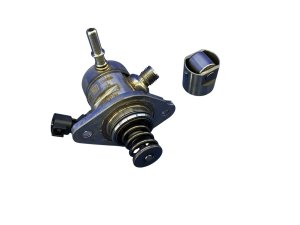
- Failing High-Pressure Fuel Pump (HPFP) 🔴 High Probability → Shop Fuel Pump A known weak point on this platform. While the official Kia recall SC281 for HPFP failure was for the 2.0T engine, the 3.3T is also widely reported by owners to suffer from premature HPFP failures with identical symptoms. The pump is mechanically driven by the camshaft and is responsible for generating rail pressures up to 2,900 PSI. Failure to meet pressure demand under load is the classic symptom.
How to confirm: Use a high-end OBD-II scanner to monitor live data for 'Fuel Rail Pressure' (actual vs. commanded). A significant lag or inability for the actual pressure to meet the commanded pressure under load is a strong indication. A technician can confirm by first verifying the low-pressure system is healthy (50-80 PSI) and that the rail pressure sensor is reading correctly.
Typical fix: Replace the High-Pressure Fuel Pump. The high-pressure fuel line is a one-time-use part and must be replaced simultaneously to prevent dangerous leaks. The mounting bolts for the HPFP should be tightened carefully in a sequence to 10 ft-lbs.
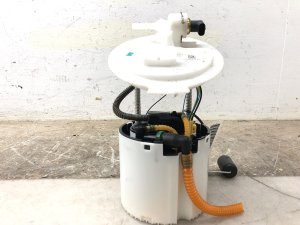
Est. part cost: $600-$900 - Failing Low-Pressure Fuel Pump (LPFP) or Clogged Fuel Filter 🟡 Medium Probability → Shop Fuel Filter The LPFP, located in the fuel tank, must supply the HPFP with a steady volume of fuel at around 50-80 PSI. If it weakens or the integrated fuel filter becomes clogged, it can starve the HPFP, leading to low high-side pressure. The ECU will begin making corrections if low-side pressure drops below approximately 62 PSI.
How to confirm: A technician can test the low-pressure fuel system with a pressure gauge connected to the low-pressure line. The pressure should meet manufacturer specifications (typically 50-80 PSI) before the HPFP. If low-side pressure is weak, the LPFP is the likely cause.
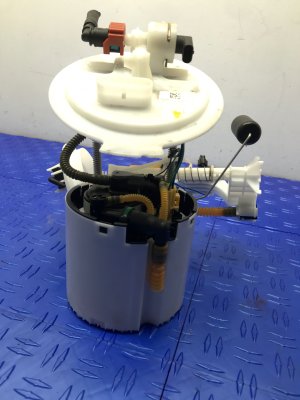
Typical fix: Replace the in-tank low-pressure fuel pump assembly, which includes the fuel filter.
Est. part cost: $200-$400 - Faulty Fuel Rail Pressure Sensor ⚪ Low Probability → Shop Fuel Pressure Sensor While less common than pump failure, the sensor that reads the pressure can fail and send incorrect, low readings to the ECM, triggering the code even if the pressure is normal. This is a common point of misdiagnosis. The sensor is a 3-pin design.
How to confirm: This is diagnosed by exclusion. If both the high and low-pressure pumps are confirmed to be working correctly and pressure readings from a mechanical gauge do not match the sensor's output on a scan tool, the sensor is likely faulty. A technician can also test the sensor's voltage output; it should typically read around 0.5V at low pressure and rise towards 4.5V at full pressure.
Typical fix: Replace the fuel rail pressure sensor.
Est. part cost: $80-$150
Rare But Worth Checking
- Leaking Fuel Injector: → Shop Fuel Injector A fuel injector stuck open can cause a drop in rail pressure. This would typically be accompanied by other codes like a cylinder misfire (P030x) and a strong smell of fuel from the exhaust.
- ECU Software Issue: For the 2018 Stinger 2.0T, Kia issued a service action (SA352) to replace the ECU for P0087. While this TSB is for the 2.0T, it highlights that software can sometimes be a factor. The remedy for recall SC281 also includes a mandatory ECU software update to change the limp-home logic. Always ensure your vehicle's software is up to date.
Diagnosis Steps
- Check for Recalls: Contact a Kia dealership with your VIN to check for any open recalls. While the major HPFP recall (SC281) is for the 2.0T engine, it is still wise to check for any other applicable service actions for your specific 3.3T vehicle.
- Scan for Codes: Use an OBD-II scanner to confirm P0087 and check for any other related codes, such as P0088 or misfire codes.
- Monitor Live Fuel Pressure Data: Use a scan tool capable of reading live data. Observe 'Commanded Fuel Rail Pressure' and 'Actual Fuel Rail Pressure'. At idle, actual pressure should be around 580 PSI (40 bar). While driving under load (e.g., hard acceleration), watch for a significant drop or lag in the actual pressure compared to the commanded pressure, which can exceed 2,500 PSI. This is a key sign of a failing HPFP.
- Test Low-Pressure System: A technician should test the pressure from the in-tank (low-pressure) fuel pump to ensure it is supplying adequate fuel to the HPFP. Expected pressure is around 50-80 PSI. This rules out the LPFP as the cause.
- Inspect for Leaks: Visually inspect the high-pressure fuel pump, fuel rail, and lines for any signs of fuel leaks. A fuel smell is also an indicator.
- Diagnose HPFP: If the low-pressure side is healthy but the high-pressure side cannot meet demand under load, the HPFP is the primary suspect and should be replaced.
- Sensor Diagnosis: If all mechanical parts check out and pressure seems fine, the fuel rail pressure sensor itself may be faulty, though this is the least likely cause.
Parts You'll Likely Need
- High-Pressure Fuel Pump (HPFP)
(OEM #35320-3L100 (or superseded part 35320-3L110, check with dealer for exact VIN-specific part))— This is the most common failure point for P0087 on the Stinger 3.3T, despite the official recall being for the 2.0T model.
Trusted brands: Hyundai/Kia Genuine
OEM price range: $600-$900
Aftermarket price range: Not Recommended - High-Pressure Fuel Pipe
(OEM #35305-3L100 (or superseded part 35305-3L110, check with dealer))— This pipe connects the HPFP to the fuel rail. It uses one-time-use fittings and must be replaced anytime the HPFP is replaced to prevent dangerous leaks.
Trusted brands: Hyundai/Kia Genuine
OEM price range: $50-$80
Aftermarket price range: Not Recommended
Related Codes That Often Appear With This One
- P0300-P0306 — If low fuel pressure leads to a lean condition, it can cause random or specific cylinder misfires.
- P0088 — Fuel Rail/System Pressure - Too High. This code is also related to the faulty HPFP issue seen on the Stinger platform, where the pump's internal valve can stick in a way that causes over-pressurization. Seeing either P0087 or P0088 strongly points to the HPFP.
- P053F — Cold Start Fuel Pressure Performance. This code can appear alongside P0088/P0087, indicating the pressure deviation is happening during the engine's warm-up phase.
Technical Service Bulletins (TSBs) & Recalls
- SC281 / 23V634000: Recall for High-Pressure Fuel Pump plunger sticking on 2018-2021 models.
- SC198 / 20V542000: Recall for blocked fuel pump jet nozzle on 2020-2021 models.
- SA352: Service Action for 2018 Stinger 2.0T models involving ECU replacement for P0087, not directly applicable to 3.3T but shows a history of ECU-related fuel pressure issues. Bulletin #TSBENG191_R2 and #TSBENG191_R1 provide the procedure to replace the Electronic Control Unit (ECU) on 2018MY Stinger 2.0T vehicles for DTC P053F and/or P0087.
- SC270 / 23V239000: Recall for left turbocharger oil feed pipe deterioration on 2018-2023 3.3T models.
Platform-Specific Known Issues
- Recall SC281 (NHTSA ID 23V634000): Affects 2018-2021 Kia Stingers with the 2.0T ENGINE ONLY. The fuel control valve plunger in the HPFP may stick, causing pressure issues (P0087 or P0088) and potential loss of power. While not for the 3.3T, it highlights a platform-level weakness in HPFP design from this era.
- Recall SC198 (NHTSA ID 20V542000): Affects some 2020-2021 Stingers. A plastic burr in the fuel pump's jet nozzle could block fuel flow, causing insufficient supply to the HPFP.
Mechanic-Grade Diagnostic Values
- High-Pressure Fuel Pump (HPFP) Pressure at Idle — expected: ~580 PSI (40 bar). Failure: Pressure is significantly lower than commanded or is erratic.
- High-Pressure Fuel Pump (HPFP) Pressure Under Load — expected: Increases up to 2,500 - 2,900 PSI (170 - 200 bar). Failure: Actual pressure fails to meet commanded pressure, lagging significantly during acceleration.
- Low-Pressure Fuel Pump (LPFP) Outlet Pressure — expected: 50 - 80 PSI. Failure: Pressure is below 50 PSI. The ECU may begin corrective action if pressure drops below ~62 PSI.
- Low-Pressure Fuel Level Sender Resistance — expected: Full: 13-17 Ω; Half: 154.5-160.5 Ω; Empty: 296-304 Ω. Failure: Readings are outside of these ranges or do not change smoothly as the float moves.
- High-Pressure Fuel Pump (HPFP) Mounting Bolt Torque — expected: 10 ft-lbs. Failure: Over or under-torquing can lead to pump damage or leaks.
Scan Tool Commands That Help
- Kia GDS (or equivalent professional scanner): ECU Software Update — After replacing a major component like the HPFP, it is critical to ensure the ECU has the latest logic. The recall for the 2.0T engine mandated a software update to change the limp-home logic, indicating its importance.
- Professional OBD-II Scanner: Fuel Pump Driver Circuit Bidirectional Test — If fuel pressure is low but both pumps are suspected to be mechanically sound, this command tests the ECM's ability to control the pump driver. A 'failed' response points to a rare internal ECM or wiring fault.
Wiring & Ground Locations
- Fuel Pump Relay — Located in the Rear Sub Junction Block, in the trunk.. A faulty relay will prevent the low-pressure fuel pump from receiving power, starving the entire system and causing a P0087 code.
- FUEL PUMP Fuse — A 20A fuse located in the Rear Sub Junction Block in the trunk.. This fuse protects the low-pressure fuel pump circuit. If it's blown, the LPFP will not operate. A repeatedly blowing fuse indicates a short in the wiring or a failing pump drawing too much current.
- Low-Pressure Fuel Pump Connector — On top of the fuel pump assembly, accessible by removing the rear seat cushion and the metal service cover.. This is the primary connection point for testing power/ground to the LPFP and the resistance of the fuel level sender. The service manual provides a full pinout for this connector.
Real Owner Repair Stories
- Reddit user @milkdud657 (2018 Kia Stinger (2.0T model)) — Not specified, but resulted in a bad HPFP diagnosis.
✅ What actually fixed it The user reported that the High-Pressure Fuel Pump (HPFP) went bad shortly after they bought the car used. The dealer covered the cost of the repair, which resolved the issue. This supports the HPFP being a known failure point on the platform, even on the 2.0T engine which had the official recall. - NHTSA ODI #11728277 — An owner reported a significant risk of a rear-end collision when the vehicle lost power. Diagnostic scans confirmed code P0087 for Low Fuel Rail Pressure, and a secondary diagnosis confirmed the HPFP had failed.
When the Usual Fixes Don't Work
- While the symptoms of P0087 on the 3.3T Stinger strongly point to the High-Pressure Fuel Pump (HPFP), it is critical to note that the widely-cited Safety Recall SC281 for HPFP failure was issued for the 2.0L T-GDI engine, not the 3.3T V6. Therefore, owners of a 3.3T model with P0087 should not expect a free repair under this specific recall campaign. The diagnosis remains focused on the HPFP as the most likely culprit due to platform-wide issues, but the repair will be a customer-pay job unless covered by a warranty.
Model Year Variations Within This Range
- 2022-2023: The 2022 model year Stinger is equipped with a different high-pressure fuel pump assembly supplier than the 2018-2021 models. This may influence the failure rate for this component on later models.
Diagnostic Flowchart
Other Known Issues on This Vehicle
Issues unrelated to this code that are worth knowing about as an owner of this generation:
- Intake Valve Carbon Buildup 🟠 Medium — Common to all GDI engines. Becomes noticeable after 30,000-50,000 miles. Can cause hesitation, misfires, and reduced performance if not addressed.
- Interior Rattles (Hatch/Sunroof) 🟡 Low — Very common owner complaint. Rattles from the rear hatch area and sunroof are frequently reported. Fixes often involve simple adjustments or adding foam/washers. (Ref: SA322 (Service Action for Tailgate Rattle))
- Premature Brake Rotor Warping/Pulsation 🟠 Medium — Common complaint, especially on early models (2018-2019). Stock rotors can cause brake pedal pulsation. Many owners upgrade to aftermarket rotors and pads.
- Turbocharger Wastegate Rattle 🟡 Low — Some owners report a metallic rattle from the electronic wastegate actuators, especially when turning the engine off. Dealers often consider this normal operational noise.
- Oil Pressure Sensor Failure 🟡 Low — Some owners have reported failure of the oil pressure sensor, which is a common issue on the wider Lambda engine family.
Used vs. New Parts: Buying Guide for This Vehicle
When a used part is the smart pick: For this specific repair, using a used part is not recommended for any component of the high-pressure fuel system. For other related parts like a Fuel Pump Control Module, a used OEM part from a low-mileage donor could be a viable option.
Donor-vehicle mileage cap: roughly under 50000 miles for the part to have meaningful remaining life.
What to inspect on the donor part:
- Verify the donor vehicle was not in a major collision.
- Check for any signs of corrosion or water damage on electrical connectors.
- If possible, confirm the part comes from a vehicle that was running prior to being dismantled.
OEM-only on this vehicle (don't cheap out):
- High-Pressure Fuel Pump (HPFP)
- High-Pressure Fuel Pipe (one-time use)
- Fuel Rail Pressure Sensor
Aftermarket brands forum-validated for this vehicle:
- For performance upgrades (not standard repair): Burger Motorsports and Fuel-It! are known brands in the Stinger community for upgraded fuel pumps.
Brands owners have reported issues with on this vehicle:
- Unbranded or generic 'cheap Chinese' parts from marketplaces like eBay or AliExpress, especially for critical components like the HPFP or its internal parts.
Real Owner Stories
Aggregated from forums and TSBs cited above. Mileages and costs reflect what owners reported in those sources.
2018-2023 Kia Stinger 3.3T
Symptoms: The vehicle experienced a start and stall condition, which is a known symptom when the fuel rail pressure is incorrect.
What fixed it: The high-pressure fuel pump (HPFP) was identified as the cause after testing the low-pressure system and rail sensor.
Source hint: youtube.com - 'Genesis G70 start and stall - P0088- fuel rail pressure too high'
2018-2021 Kia Stinger 3.3T
Symptoms: Owner reported issues with fuel pressure and received codes P0088 and P053F.
What fixed it: The dealer replaced the fuel pump under warranty due to a known issue.
Source hint: reddit.com/r/kiastinger - Thread 'Issues with my fuel pressure. Please help!'
2018 Kia Stinger 2.0T
Symptoms: The vehicle threw a P0088 code and the owner faced diagnostic charges despite a previous recall.
What fixed it: The context discusses diagnostic friction regarding the HPFP recall for the 2.0T engine.
Source hint: reddit.com/r/kiastinger - Thread '2018 Kia Stinger (base model) is throwing code P0088...'
Related OBD-II Codes
Frequently Asked Questions
Does the HPFP recall SC281 apply to my 3.3T Kia Stinger?
I have a 2020 Stinger and I'm losing power; could it be the fuel pump jet nozzle?
What should the fuel rail pressure be at idle for the 3.3T engine?
Can I just replace the high-pressure fuel pump (HPFP) myself?
Is there a service action for P0087 related to the ECU?
What is the expected pressure from the low-pressure fuel pump (LPFP)?
Helpful Videos


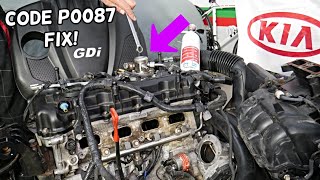
We Have This Part in Stock

The information in this article is provided for general reference and educational purposes only. Vehicle specifications, procedures, and part compatibility can vary by production date, trim level, and region. Always consult your vehicle's factory service manual and verify part numbers before purchasing or performing repairs. Safety-critical components such as airbags, seat belts, and braking systems should be installed by a qualified professional.
- Kia Stinger:
- 🧭 Diagnostic Flowchart
- 🎬 Helpful Videos
- 🛍️ Shop This Part
- What's Unique About the 2018-2023 Kia Stinger
- Symptoms You May Notice
- Most Likely Causes
- Rare But Worth Checking
- Diagnosis Steps
- Parts You'll Likely Need
- Related Codes That Often Appear With This One
- Technical Service Bulletins (TSBs) & Recalls
- Platform-Specific Known Issues
- Mechanic-Grade Diagnostic Values
- Scan Tool Commands That Help
- Wiring & Ground Locations
- Real Owner Repair Stories
- When the Usual Fixes Don't Work
- Model Year Variations Within This Range
- Other Known Issues on This Vehicle
- Used vs. New Parts: Buying Guide for This Vehicle
- Real Owner Stories
- 2018-2023 Kia Stinger 3.3T
- 2018-2021 Kia Stinger 3.3T
- 2018 Kia Stinger 2.0T
- Related OBD-II Codes
- Frequently Asked Questions
- 🎟️ Get 5% Off