

P0087 on 2017-2019 Land Rover Discovery: Causes for Low Fuel Rail Pressure
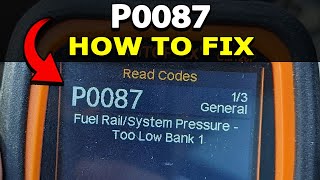
P0087 on a 2017-2019 Land Rover Discovery indicates fuel pressure is too low. The most common causes are failing high-pressure fuel pumps (HPFPs) on gasoline engines or a clogged fuel filter on diesel models. Always check the inexpensive fuel filter (Part No. LR041978 for diesel) first before suspecting the costly HPFPs, especially on the TDV6.
- P0087 means the fuel pressure is too low, which will cause a 'Restricted Performance' warning and significant power loss.
- For diesel engines, always replace the fuel filter first. It is a cheap and very common cause of this code.
- For gasoline engines, the dual high-pressure fuel pumps (HPFPs) are the most likely cause, but the low-pressure system should still be tested first to avoid a costly misdiagnosis.
- A faulty fuel rail pressure sensor can also trigger this code and is a known issue referenced in a TSB.
- This is a serious code that requires prompt attention. Due to the high pressures and complexity, professional diagnosis and repair are strongly recommended.
What's Unique About the 2017-2019 Land Rover DISCOVERY
For the Land Rover Discovery (and related JLR platforms), the P0087 code is a well-documented issue with distinct patterns based on the engine. On the supercharged gasoline V6 engines (AJ126), the dual high-pressure fuel pumps (HPFPs) are a frequent failure point and should be replaced in pairs. For the 3.0L TDV6 diesel engine, while the HPFP can fail, a clogged fuel filter is a very common and much less expensive culprit that should be investigated first. A Land Rover Technical Service Bulletin (SSM74336) specifically addresses this code on diesels, 🎬 See how to diagnose restricted performance on TDV6 diesel engines. noting its relation to fuel contamination. Furthermore, replacing the HPFP on the diesel model is a major 'body-off' job, making accurate initial diagnosis crucial to avoid unnecessary, costly labor.
Diagnostic Flowchart

Tap your situation to follow the diagnostic path that matches what you're seeing on this vehicle.
Symptoms You May Notice

- Check Engine Light is on
- 'Restricted Performance' message displayed
- Significant loss of engine power and acceleration, especially under load or full throttle.
- Engine hesitation or stumbling
- Engine stalls, especially under load or when coming to a stop
- Difficulty starting the engine or long crank times.
- Engine runs rough at idle
- Replacing the high-pressure fuel pump on a diesel model without first replacing the clogged fuel filter. This is a very costly mistake due to the 'body-off' labor involved.
- Replacing fuel pumps when the actual issue is a faulty fuel rail pressure sensor providing incorrect data.
- Replacing only one of the two high-pressure fuel pumps on the gasoline V6 engine, leading to a repeat failure of the older pump shortly after.
Most Likely Causes

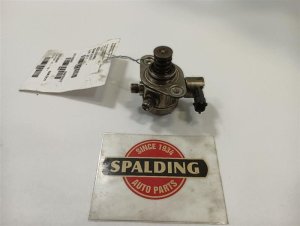
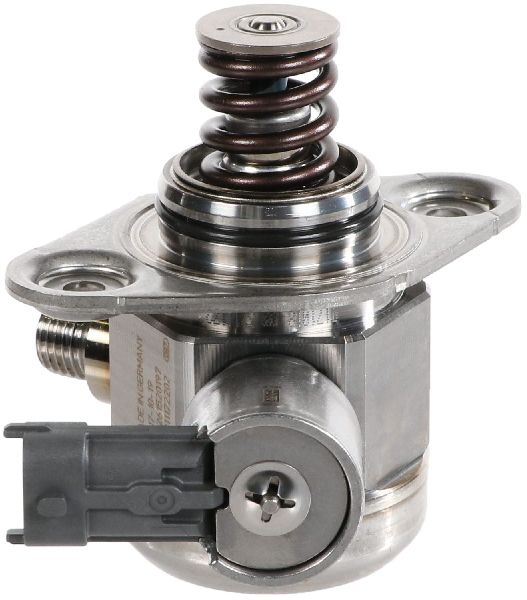
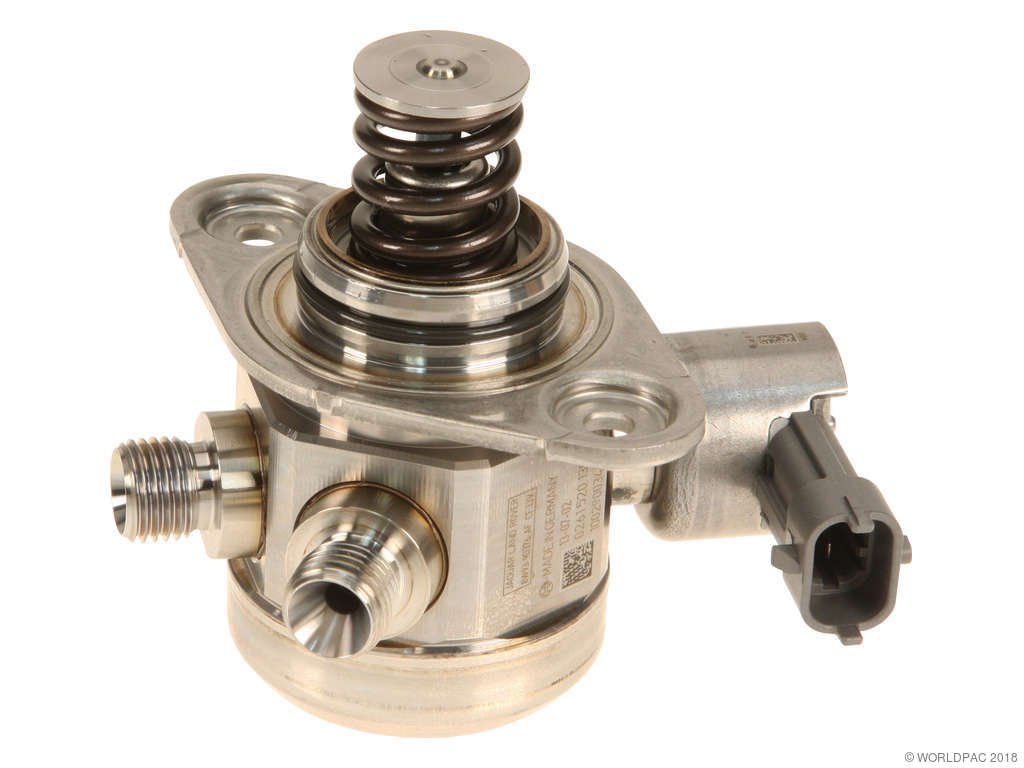
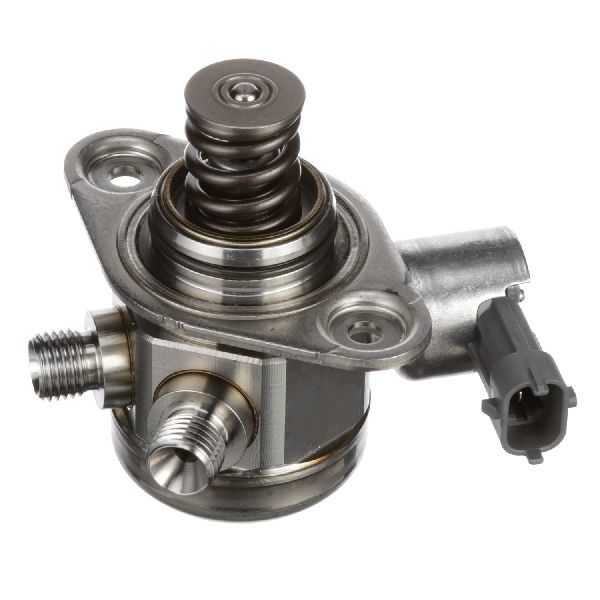
- Failing High-Pressure Fuel Pumps (HPFP) 🔴 High Probability → Shop Fuel Pump This is the most common failure point for code P0087 on the V6 supercharged gasoline engines. The vehicle uses two pumps (one per bank), and they are known to wear out. It is strongly recommended to replace them in pairs along with their followers (tappets).
How to confirm: Monitor fuel rail pressure with a diagnostic scan tool (like a GAP IIDTool or JLR SDD). Under load (e.g., hard acceleration), the 'Actual' pressure will fail to keep up with the 'Desired' pressure, often triggering limp mode. At idle, pressure may appear normal.
Typical fix: Replace both high-pressure fuel pumps and their followers/tappets.
Est. part cost: $400-$950 - Clogged Fuel Filter 🔴 High Probability → Shop Fuel Filter This is a very frequent cause for P0087 on diesel (TDV6) models and a common maintenance item that is often overlooked. It restricts fuel flow from the tank, starving the high-pressure pump and causing a pressure drop under load.
How to confirm: Test the pressure of the low-pressure fuel system; it should be stable (typically 60-75 PSI). Given the low cost of the filter (OEM part LR041978) compared to other components, it is often the best first step in diagnosis, especially if its service history is unknown.
Typical fix: Replace the fuel filter.
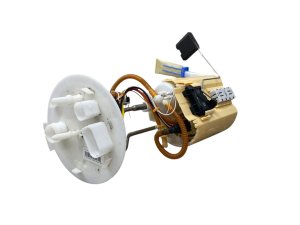
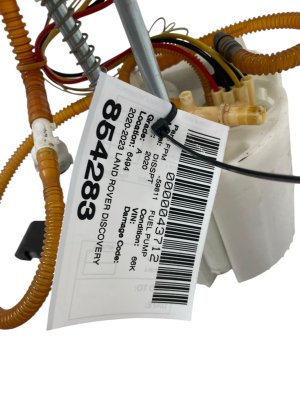
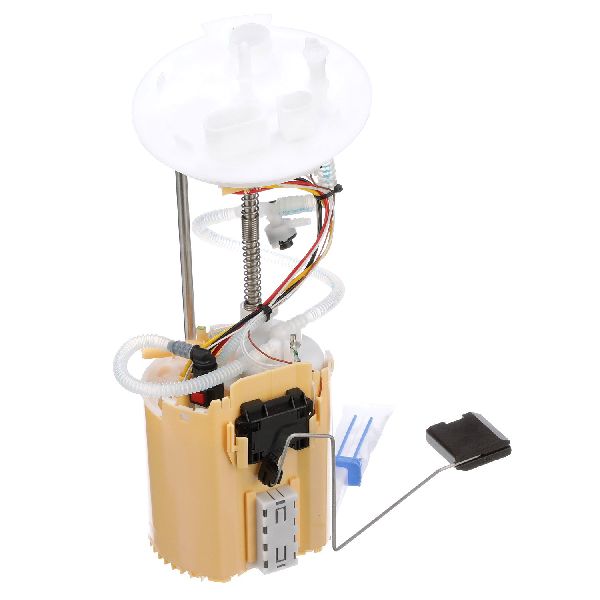
Est. part cost: $50-$150 - Failing Low-Pressure Fuel Pump (In-Tank) 🟡 Medium Probability → Shop Fuel Pump The in-tank pump supplies the high-pressure pump(s). If it becomes weak, it cannot provide enough volume, leading to a drop in high-side pressure, especially under load.
How to confirm: Test the fuel pressure from the in-tank pump before it reaches the HPFP(s). The pressure should be stable and within the 60-75 PSI range. A significant drop under load indicates a failing pump.
Typical fix: Replace the in-tank low-pressure fuel pump assembly.
Est. part cost: $300-$600 - Faulty Fuel Rail Pressure Sensor 🟡 Medium Probability → Shop Fuel Pressure Sensor As noted in TSB SSM74336, the sensor itself can fail and send incorrect low-pressure readings to the PCM, triggering the code even if the pressure is normal. One owner on a forum noted their scan tool reported 0.068 PSI, an impossibly low value for a running engine, correctly pointing to a bad sensor.
How to confirm: Compare the live sensor data on a scan tool to a manual pressure reading from a gauge. If the readings differ significantly or the sensor reading is illogical (e.g., near zero with the engine running), the sensor is likely faulty.
Typical fix: Replace the fuel rail pressure sensor.
Est. part cost: $100-$250
Rare But Worth Checking
- Leaking Fuel Injectors: → Shop Fuel Injector A leaking injector can cause a drop in rail pressure. This would often be accompanied by misfire codes (e.g., P0300-P0308) for a specific cylinder and potentially a smell of fuel in the oil.
- Contaminated Fuel / System Deposits: As per TSB SSM74336, water or gasoline in diesel fuel can cause P0087. In some cases on gasoline engines, deposits in the fuel system have caused similar symptoms, which were resolved by using a potent fuel system cleaner like BG 44K.
- Incorrect HPFP Timing (Gasoline V6): The high-pressure fuel pumps are driven by the engine's timing chains. If the fuel pump camshaft timing is incorrect, even by a small amount, it can lead to low pressure output. This is a complex issue usually found after major engine work or timing chain service.
- Low System Voltage / Failing Alternator: Several owners in forums have reported that an intermittent charging fault or a failing battery can cause P0087. The fuel pumps are voltage-sensitive, and a drop below 12V can reduce their output and trigger the code.
Diagnosis Steps

- Connect a diagnostic scan tool and check for any other stored codes, such as P0089, P00C6, or misfire codes, which can help pinpoint the issue.
- Monitor live data for 'Desired Fuel Rail Pressure' and 'Actual Fuel Rail Pressure'. Note the discrepancy, especially under hard acceleration.
- For Diesel (TDV6) models: Start with the simplest and cheapest potential cause. Inspect and replace the fuel filter (OEM Part LR041978). 🎬 Watch: Step-by-step guide to changing the TD6 fuel filter.
- For Diesel models: Following TSB SSM74336, check the fuel for contamination (water, gasoline). Drain the water separator.
- Check the engine oil for a strong smell of fuel (indicating a leaking injector or HPFP internal leak) or metal shavings.
- Test the low-pressure fuel system. Use a fuel pressure gauge to ensure the in-tank pump is delivering adequate and stable pressure (typically 60-75 PSI) to the high-pressure pump(s).
- Monitor battery voltage while driving. If voltage drops intermittently, investigate the alternator and battery health as a potential cause.
- If low-pressure is good, test the high-pressure system. This is best done by observing scan tool data under load. If actual pressure cannot meet desired pressure, suspect the HPFP(s) or the rail pressure sensor.
- Test the fuel rail pressure sensor by comparing its reading on the scan tool to a known good sensor or a manual gauge if possible. Look for illogical readings.
- If all else fails, investigate more complex causes like leaking injectors or mechanical timing issues with the HPFP drive, especially if recent engine work has been performed.
Parts You'll Likely Need
- High-Pressure Fuel Pump (Gasoline)
(OEM #LR081595 (supersedes LR035527))— This is the most common failure point for P0087 on the V6 supercharged gasoline engines. The vehicle uses two, and they should be replaced as a pair.
Trusted brands: Bosch (OEM manufacturer, P/N 0261520197), Land Rover (Genuine)
OEM price range: $400-$600 each
Aftermarket price range: $200-$400 each - Fuel Filter (Diesel)
(OEM #LR041978)— A clogged filter is a primary cause of low fuel pressure on TDV6 models. It's an inexpensive part that should be the first step in diagnosis.
Trusted brands: Mahle (OEM Supplier), Delphi (OEM Supplier), Land Rover (Genuine)
OEM price range: $80-$150
Aftermarket price range: $40-$80 - Fuel Rail Pressure Sensor
(OEM #LR044707)— This sensor can fail and send incorrect readings, triggering the code. It is specifically mentioned in a TSB for this issue.
Trusted brands: Bosch, Land Rover (Genuine)
OEM price range: $100-$200
Aftermarket price range: $50-$120
Related Codes That Often Appear With This One
- P0089 — P0089 ('Fuel Pressure Regulator 1 Performance') often appears with P0087 as they both relate to the performance and control of the fuel delivery system.
- P0300-P0308 — Cylinder-specific misfire codes can occur if low fuel pressure leads to a lean condition, preventing proper combustion in one or more cylinders.
- P00C6 — P00C6 ('Fuel Rail Pressure Too Low - Engine Cranking') can appear alongside P0087, specifically indicating that the pressure is insufficient even during engine startup.
Technical Service Bulletins (TSBs) & Recalls
- Land Rover issued this bulletin for P0087 on the 3.0L TDV6 engine. It specifically advises checking for fuel contamination (e.g., water or gasoline in the diesel) and draining the fuel filter water separator before replacing expensive components like the HPFP or fuel rail pressure sensor.
- A JLR technical document notes that when diagnosing P0087 on diesel models, care must be taken when installing the high-pressure fuel pump gear. If installed or torqued incorrectly, the gear can break and cause further engine damage, emphasizing the need to follow official TOPIx repair instructions.
Platform-Specific Known Issues
- TSB SSM74336 was issued by Land Rover for DTC P0087 on diesel engines, pointing to checking for fuel contamination before part replacement.
- On the 3.0L diesel engine, replacing the high-pressure fuel pump is a very labor-intensive 'body-off' job, making it critical to rule out the fuel filter and low-pressure pump first to avoid extreme labor costs.
- On the 3.0L V6 gasoline engine, the use of two HPFPs is a design choice that increases the likelihood of failure. It is standard practice to replace both simultaneously to prevent a recurring issue.
Mechanic-Grade Diagnostic Values
- Gasoline (AJ126) High-Pressure Rail at Idle — expected: 500 - 580 PSIG (approx. 34 - 40 bar). Failure: Pressure is significantly below this range at a stable idle.
- Gasoline (AJ126) High-Pressure Rail Under Load — expected: 1,900 - 2,000 PSIG (approx. 131 - 138 bar). Failure: Actual pressure fails to reach or sustain this level during moderate to heavy acceleration, often flatlining or dropping significantly.
- Diesel (TDV6) High-Pressure Rail at Cranking — expected: Minimum of 120 bar (1,740 lbf/in²). Failure: If pressure does not reach this minimum threshold during startup, the injectors will not operate, and the engine will not start.
- Diesel (TDV6) High-Pressure Rail Under Heavy Load — expected: >1,600 bar (23,200 PSI). Failure: When placing the engine under significant load (e.g., accelerating hard uphill), the rail pressure should climb to very high levels. Failure to do so indicates a fuel delivery problem.
- Low-Pressure Fuel Pump Sensor (Gasoline) — expected: 2.0V - 3.1V. Failure: Voltage reading is outside of this range, indicating a potential issue with the low-pressure pump or its sensor.
Hidden / Shadow Codes Worth Checking
- P0087 with P0089: While not a hidden code itself, the combination of P0087 (Fuel Rail Pressure Too Low) and P0089 (Fuel Pressure Regulator Performance) often points to a specific diagnostic path outlined in manufacturer technical bulletins (like TB1276 for diesel models). Dealer-level tools like JLR SDD may provide more specific symptom codes or sub-codes when this combination is present. (see via JLR SDD (Symptom Driven Diagnostics) or other advanced diagnostic tools capable of reading manufacturer-specific data.)
Scan Tool Commands That Help
- GAP IIDTool or similar advanced scanner: Fuel Priming Function — This function, often found in a 'Service/Test' menu, activates the in-tank low-pressure fuel pump. It can be used to audibly check if the pump is running and to prime the system after a filter change or if you've run out of fuel.
Wiring & Ground Locations
- Fuel Pump Control Module (FPCM) — The specific location on the L462 chassis is not detailed in general literature, but it is a standalone module (Part # HPLA-9D370-BA) that controls the in-tank fuel pump.. The FPCM is a critical link between the PCM and the low-pressure fuel pump. A fault in the module itself, its wiring, or its ground connection can prevent the in-tank pump from delivering the proper volume of fuel to the high-pressure pumps, directly causing a P0087 code.
- In-Tank Low-Pressure Fuel Pump — Located inside the fuel tank, accessible by removing the driver's side rear seat and an access cover on the floor.. Physical access is required to test the pump directly or to replace it. Knowing that seat removal is necessary is critical for estimating labor time and complexity.
Real Owner Repair Stories
- Land Rover Forums user (2013 LR4 5.0L V8 (similar HPFP system)) — P0087, 'Restricted Performance', hard starting.
❌ Tried (didn't work) A dealer diagnosed a failed High-Pressure Fuel Pump and quoted $3,200 for replacement.
✅ What actually fixed it The owner declined the repair, added a can of BG 44K fuel system cleaner to the tank, and drove the vehicle. After a couple of days, all symptoms and codes cleared, and the vehicle ran perfectly without any parts being replaced. - Land Rover Forums user (2010 LR4 5.0L V8 (similar HPFP system)) — P0087, 'Restricted Performance', high-pressure PSI much lower than normal at 3000 RPM.
❌ Tried (didn't work) Replaced both high-pressure fuel pumps and their tappets. Replaced the high-pressure sensor. The problem persisted after these common fixes.
✅ What actually fixed it An independent shop discovered the fuel pump camshaft was out of time. The timing was corrected, which resolved the low-pressure issue. - Land Rover Forums user reply (LR4 (unspecified year/engine)) — P0087 code and associated performance issues.
❌ Tried (didn't work) Initial diagnosis pointed towards fuel pump issues.
✅ What actually fixed it The root cause was a failing battery and alternator. The low-pressure fuel pump's output is sensitive to system voltage, and the electrical fault was causing reduced pump performance, which in turn triggered the low-pressure code.
"I Checked Everything" — The Actual Cause
- In one documented case, after replacing both high-pressure fuel pumps and the fuel rail pressure sensor, the P0087 code remained. The issue was not a leak or a standard component failure that would be found in a typical diagnostic procedure. The actual root cause was the mechanical timing of the fuel pump camshaft being incorrect, a purely mechanical fault that was only found after all common hydraulic and electronic parts were replaced without success.
When the Usual Fixes Don't Work
- While failing high-pressure fuel pumps are a primary cause of P0087 on gasoline models, owners have spent thousands replacing them only for the code to persist. In one detailed account, replacing both HPFPs, their tappets, and the pressure sensor failed to resolve the issue. The ultimate fix was correcting the mechanical timing of the fuel pump's camshaft, which had jumped. In another case, a user replaced the HPFPs, the in-tank pump, the filter, and both low and high-pressure sensors, yet the intermittent code remained, highlighting that this can be an extremely difficult code to diagnose and may have complex root causes beyond simple component failure.
OEM Part Supersession History
LR035527→LR081595— Updated part for the high-pressure fuel pump on V6 gasoline engines.LR041978 (Diesel Fuel Filter)→N/A— This is the current OEM part number. However, several OEM suppliers manufacture compatible versions.
Heads up: Known high-quality OEM supplier alternatives include Mahle (KL 1044), Delphi (HDF965), Bosch (F 026 402 224), Mann-Filter (WK 8078), and Hengst Filter (H603WK).
Model Year Variations Within This Range
- 2017-2019: Within the 2017-2019 model years, the Discovery 5 (L462) was in its first iteration before the major 2021 facelift. The primary engine options (3.0L V6 Supercharged gasoline and 3.0L TDV6 diesel) remained consistent. Therefore, the causes and diagnostic procedures for code P0087 are not known to differ significantly between these specific years.
Helpful Videos

Used OEM Parts in Stock
New Aftermarket Parts Available

The information in this article is provided for general reference and educational purposes only. Vehicle specifications, procedures, and part compatibility can vary by production date, trim level, and region. Always consult your vehicle's factory service manual and verify part numbers before purchasing or performing repairs. Safety-critical components such as airbags, seat belts, and braking systems should be installed by a qualified professional.
- Land Rover DISCOVERY:
- 🧭 Diagnostic Flowchart
- 🎬 Helpful Videos
- 🛍️ Shop This Part
- What's Unique About the 2017-2019 Land Rover DISCOVERY
- Symptoms You May Notice
- Most Likely Causes
- Rare But Worth Checking
- Diagnosis Steps
- Parts You'll Likely Need
- Related Codes That Often Appear With This One
- Technical Service Bulletins (TSBs) & Recalls
- Platform-Specific Known Issues
- Mechanic-Grade Diagnostic Values
- Hidden / Shadow Codes Worth Checking
- Scan Tool Commands That Help
- Wiring & Ground Locations
- Real Owner Repair Stories
- "I Checked Everything" — The Actual Cause
- When the Usual Fixes Don't Work
- OEM Part Supersession History
- Model Year Variations Within This Range
- 🎟️ Get 5% Off