

P0087 on 2018-2020 Lexus ES350: Fuel Pressure Too Low Causes and Fixes
On 2018-2020 Lexus ES350s, P0087 indicates low fuel pressure. For 2019-2020 models with direct injection, the high-pressure fuel pump (HPFP) is a primary suspect. For the 2018 model, the in-tank low-pressure pump is more common. A clogged fuel filter is also a possible cause for all years. Critically, many of these vehicles are covered by Lexus recall 20LA01 for a faulty low-pressure pump.
- P0087 means fuel pressure is critically low, which can cause stalling and is a serious issue.
- First, determine your engine: The 2018 model has a port-injection system, while 2019-2020 models have a more complex direct-injection system with two fuel pumps.
- For 2019-2020 models, the engine-mounted high-pressure fuel pump (HPFP) is a very common cause.
- For all years, check if your vehicle is part of the major Denso low-pressure fuel pump safety recall, as this is a known cause of stalling and low fuel pressure.
- Look for accompanying codes like P0171/P0174 (lean condition), as they strongly support a fuel delivery problem.
What's Unique About the 2018-2020 Lexus ES350
This year range covers two different fuel systems. The 2018 ES350 uses a standard port-injected 2GR-FE engine. The 2019-2020 ES350 uses the newer 2GR-FKS engine with Toyota's D-4S system, which combines both port and direct injection. This D-4S system adds a second, engine-driven high-pressure fuel pump (HPFP) to the standard in-tank low-pressure pump. P0087 on these later models often points to a problem with the high-pressure side of the system, which is not present on the 2018 model.
Diagnostic Flowchart
Tap your situation to follow the diagnostic path that matches what you're seeing on this vehicle.
Generation note: The 2018 model year is the last of the XV60 generation and has a 2GR-FE V6 engine with sequential multi-port fuel injection. The 2019-2020 model years are the beginning of the XV70 generation, featuring a more powerful 2GR-FKS V6 engine with D-4S (direct and port) fuel injection. This difference in fuel systems is critical for diagnosing P0087.
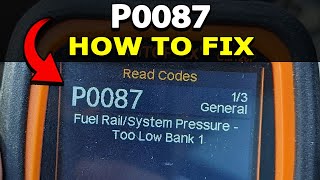
🎬 Watch: Expert advice on fixing the P0087 engine codeSymptoms You May Notice
- Check Engine Light is on
- Engine hesitation or stumbling on acceleration
- Significant loss of engine power
- Engine stalling, especially under load
- Difficulty starting the engine or hard starting
- Rough idling
- Car enters limp mode, limiting RPMs above ~2500.
- Replacing the low-pressure fuel pump on a 2019-2020 model when the high-pressure pump is the actual cause.
- Replacing fuel injectors when the issue is fuel supply (pump or filter).
- Overlooking the massive low-pressure fuel pump recall (20LA01) and paying for a repair that would have been covered by the dealer. 🎬 See why you shouldn't ignore the Lexus fuel pump recall
Most Likely Causes
- Failing High-Pressure Fuel Pump (HPFP) 🔴 High Probability → Shop Fuel Pump Applies to 2019-2020 models with the 2GR-FKS direct injection engine. The HPFP is a mechanical pump driven by the camshaft that can wear out over time, leading to insufficient pressure for the direct injectors. Internal failure or wear on the cam follower can cause a significant drop in pressure under load.
How to confirm: Use a diagnostic scan tool to monitor both low and high-pressure fuel system PIDs. The high-pressure reading ('Fuel Rail Pressure (High)') will be significantly below the target pressure under load or during acceleration, while the low-pressure reading remains stable.
Typical fix: Replace the high-pressure fuel pump and its associated gaskets. 🎬 Watch this walkthrough for replacing the high-pressure fuel pump It's also wise to inspect the camshaft follower for wear or damage. One owner found the code was caused by a missing HPFP gasket, which allowed the cam lobe to destroy the follower.
Est. part cost: $300-$600 - Failing Low-Pressure In-Tank Fuel Pump 🟡 Medium Probability → Shop Fuel Pump This is a primary cause for all models in this range due to a massive safety recall (Lexus campaign 20LA01, NHTSA 20V-012). The Denso-made pump impeller can absorb fuel, swell, and seize, causing the pump to stop working entirely. This can lead to a stall while driving. It is critical to check if the vehicle's VIN is part of this recall.
How to confirm: First, check the vehicle's VIN for recall 20LA01 on the Lexus or NHTSA websites. Diagnostically, connect a fuel pressure gauge to the low-pressure line or monitor the low-pressure sensor data on a scan tool. The pressure will be below specification (typically 44-50 psi for 2018 models). You may also hear a loud whining from the fuel tank area, or no sound at all if it has failed completely.
Typical fix: Replace the in-tank fuel pump assembly. If related to recall 20LA01, this will be done by a Lexus dealer free of charge.
Est. part cost: $250-$500 - Clogged Fuel Filter 🟡 Medium Probability → Shop Fuel Filter The fuel filter is part of the in-tank fuel pump module. Over time, it can become restricted with debris, starving the engine of fuel. This is a common cause for low fuel pressure codes on many vehicles.
How to confirm: Diagnosis is often by exclusion. If the low-pressure fuel pump is confirmed to be working (e.g., it makes noise and has voltage) but pressure is still low when tested at the rail, a clogged filter is the next logical cause. There is no direct way to test just the filter.
Typical fix: The filter is integrated into the fuel pump assembly, so the entire module is usually replaced.
Est. part cost: $250-$500 (as part of pump assembly) - Faulty Fuel Pressure Sensor ⚪ Low Probability → Shop Fuel Pressure Sensor Sensors can fail and send incorrect low-pressure readings to the ECM, triggering the code even if the pressure is normal.
How to confirm: Compare the sensor's reading on a scan tool to a reading from a mechanical fuel pressure gauge connected to the system. If the readings differ significantly, the sensor is likely faulty.
Typical fix: Replace the faulty fuel pressure sensor. On the 2GR-FKS, there are sensors for both the high and low-pressure sides.
Est. part cost: $50-$150
Rare But Worth Checking
- Leaking Fuel Injector: → Shop Fuel Injector A direct injector stuck open can cause a drop in rail pressure, but this would typically be accompanied by other codes like a rich condition or misfire on a specific cylinder.
- Damaged Cam Lobe or Follower: On 2019-2020 models, the HPFP is driven by a camshaft lobe. Wear or damage to the lobe or the pump's follower can prevent the pump from generating pressure. This is rare but possible, especially at high mileage or if oil changes are neglected. A ClubLexus user reported this exact failure after a shop installed the HPFP without a gasket.
- Incorrectly Installed High-Pressure Fuel Pump: → Shop Fuel Pump A real-world example from a ClubLexus forum member showed that a P0087 code was ultimately traced to a passenger side HPFP that had been installed without its gasket. This led to the destruction of the cam follower and a loss of pressure.
Diagnosis Steps
- First, enter the vehicle's VIN on the Lexus or NHTSA recall website to check for open safety recalls, specifically campaign 20LA01 for the low-pressure fuel pump.
- Check for any other stored DTCs that could provide more clues (e.g., P0171/P0174, misfire codes).
- Use a capable OBD-II scanner to view live data. For 2019-2020 models, monitor 'Fuel Rail Pressure (High)' and 'Fuel Pressure (Low)'. For 2018 models, monitor the low-pressure PID.
- Compare the actual pressure readings to the desired/target pressure readings specified by the scan tool, both at idle and under load.
- For all models, check the low-pressure system. If pressure is below spec (around 44-50 psi for 2018 models), suspect the in-tank fuel pump or a clogged filter.
- For 2019-2020 models, if low pressure is good but high pressure is below target (especially under acceleration), the high-pressure fuel pump (HPFP) is the primary suspect.
- Inspect for any visible fuel leaks along the fuel lines and at the injector seals.
- If a sensor is suspected, compare its electronic reading to a mechanical gauge to verify its accuracy.
- If the HPFP is being replaced, inspect the camshaft follower and lobe for any signs of wear or damage. Also check the engine oil for the smell of gasoline, which could indicate a leaking pump seal.
Parts You'll Likely Need
- High-Pressure Fuel Pump
(OEM #23101-31080 (or superseded 23101-0P010))— This is the most likely failure point for the P0087 code on the 2019-2020 ES350 with the 2GR-FKS engine, after the LPFP recall is ruled out.
Trusted brands: Denso, Aisin, Lexus (OEM)
OEM price range: $400-$700
Aftermarket price range: $250-$500 - Low-Pressure Fuel Pump Assembly
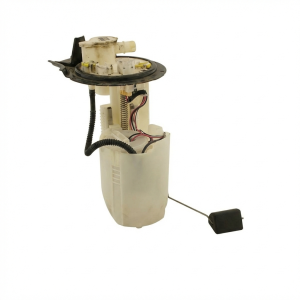
(OEM #23220-F0060 (for 2019-2020 models, check EPC for 2018))— This is the primary suspect for all years, especially if the vehicle is part of the Denso recall (20LA01). It contains the pump motor and filter.
Trusted brands: Denso, Lexus (OEM)
OEM price range: $350-$550
Aftermarket price range: $200-$400
Related Codes That Often Appear With This One
- P0171 — System Too Lean (Bank 1) - Low fuel pressure means not enough fuel is being injected, leading to a lean air-fuel mixture. This is mentioned in TSB L-SB-0005-23.
- P0174 — System Too Lean (Bank 2) - Same as P0171, but for the second bank of cylinders on the V6 engine. This is also mentioned in the TSB.
- P0300-P0306 — Misfire codes - A lean condition from lack of fuel can cause the engine to misfire.
Technical Service Bulletins (TSBs) & Recalls
- LSB000523 (superseded by L-SB-0005-23): MIL ON condition with DTCs P0171, P0174, and/or P0087, indicating a potential fuel pressure issue.
Platform-Specific Known Issues
- A Technical Service Bulletin (TSB L-SB-0005-23, which supersedes LSB000523) was issued for many 2013-2020 Lexus models that exhibit a hard start and/or MIL ON condition with DTC P0087, often accompanied by lean codes P0171 and/or P0174.
- Many 2018-2020 Lexus ES350 models are included in a massive safety recall (Lexus campaign 20LA01) for a faulty Denso low-pressure fuel pump that can fail and cause the engine to stall while driving. The cause is an impeller that can deform and seize. It is critical to check if this vehicle's VIN is affected, as the repair is free at a dealer.
Mechanic-Grade Diagnostic Values
- Low-Pressure Fuel System (2018 2GR-FE) — expected: 304 to 343 kPa (44 to 50 psi). Failure: Pressure below 44 psi indicates a weak pump, clogged filter, or leak.
- Low-Pressure Fuel System (2019-2020 2GR-FKS) — expected: 196 to 833 kPa (28 to 121 psi). Failure: Pressure below 28 psi points to an issue with the in-tank pump or its supply line.
- High-Pressure Fuel System (2019-2020 2GR-FKS) — expected: 2,400 to 19,500 kPa (348 to 2,828 psi) at 3000 rpm (warmed up, A/C off). Failure: Pressure significantly below 348 psi at 3000 rpm strongly suggests a failing HPFP, assuming the low-pressure side is healthy.
- Fuel Pressure Sensor Signal Voltage — expected: Approximately 0.5V to 4.5V, varying with engine load.. Failure: Voltage is stuck at 0V, 5V, or fluctuates erratically without relation to engine behavior.
- Fuel Pump Resistor (2018 2GR-FE) — expected: 0.53 to 0.57 Ω at 20°C (68°F). Failure: Resistance outside this range indicates a faulty resistor, which can affect fuel pump speed and pressure.
Hidden / Shadow Codes Worth Checking
- P107A2A: Fuel Rail Pressure Sensor (Low) Signal Stuck in Range (see via This code may be stored alongside P0087 in specific conditions, such as high altitude and high temperature, and is visible with a standard scanner like Techstream. A TSB (T-SB-0058-22) addresses this combination.)
Scan Tool Commands That Help
- Techstream: Active Test: Control the Fuel Pump / Speed — This command allows a technician to directly operate the low-pressure in-tank fuel pump with the engine off. It is crucial for verifying the functionality of the low-pressure pump, its relay, and wiring before suspecting a more expensive high-pressure pump failure.
Wiring & Ground Locations
- Fuel Pump Control Module / Resistor — For many Lexus models, the Fuel Pump Control Module (or Fuel Pump Resistor on older systems) is located in the rear of the vehicle, often under the rear seat or near the fuel tank. On some models, a 'fuel pump resistor' may be found in the engine bay under a plastic cover near the master cylinder.. This module controls the voltage and speed of the in-tank fuel pump. A failure in the module or its wiring/ground can prevent the pump from delivering adequate pressure, directly causing a P0087 code.
- EFI Fuses — In the engine compartment fuse box. Look for fuses labeled 'EFI-MAIN NO. 1', 'EFI-MAIN NO. 2', 'D INJ', etc.. These fuses supply power to critical components of the Engine Control and Fuel systems. A blown fuse will cut power to the fuel pumps or their control circuits, leading to a no/low pressure condition.
Real Owner Repair Stories
- ClubLexus Forum User (2010 Lexus GS450h (with similar 2GR dual-injection engine)) — Hesitation, then complete power cut under throttle, reverting to battery power. P0087 code stored.
❌ Tried (didn't work) The user suspected the low-pressure pump, high-pressure pump, and fuel pressure sensor but did not report replacing them initially.
✅ What actually fixed it The final resolution posted by the user was the replacement of the high-pressure fuel pump.
OEM Part Supersession History
23101-31080→23101-0P010— Part has been updated or replaced by the manufacturer. This is common for parts that have known failure patterns or design improvements.
Model Year Variations Within This Range
- 2018 vs 2019-2020: The 2018 model uses the 2GR-FE engine with only a low-pressure port fuel injection system. The 2019-2020 models use the 2GR-FKS engine with the D-4S system, which adds a cam-driven high-pressure fuel pump and direct injection. This is the most critical difference for diagnosing P0087, as the high-pressure pump is a primary suspect on the newer models.
Helpful Videos

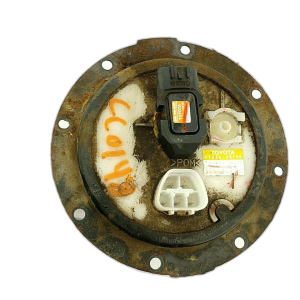
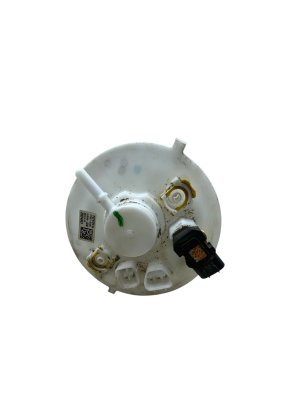
We Have This Part in Stock

The information in this article is provided for general reference and educational purposes only. Vehicle specifications, procedures, and part compatibility can vary by production date, trim level, and region. Always consult your vehicle's factory service manual and verify part numbers before purchasing or performing repairs. Safety-critical components such as airbags, seat belts, and braking systems should be installed by a qualified professional.
- Lexus ES350:
- 🧭 Diagnostic Flowchart
- 🎬 Helpful Videos
- 🛍️ Shop This Part
- What's Unique About the 2018-2020 Lexus ES350
- Symptoms You May Notice
- Most Likely Causes
- Rare But Worth Checking
- Diagnosis Steps
- Parts You'll Likely Need
- Related Codes That Often Appear With This One
- Technical Service Bulletins (TSBs) & Recalls
- Platform-Specific Known Issues
- Mechanic-Grade Diagnostic Values
- Hidden / Shadow Codes Worth Checking
- Scan Tool Commands That Help
- Wiring & Ground Locations
- Real Owner Repair Stories
- OEM Part Supersession History
- Model Year Variations Within This Range
- 🎟️ Get 5% Off