

P0087 on 2013-2017 Lexus GS 350: Fuel Pressure Too Low Causes and Fixes
P0087 on a 2013-2017 GS 350 almost always points to a problem with fuel delivery, most commonly a failing high-pressure fuel pump (HPFP). It can also be caused by a weak in-tank low-pressure pump or a clogged fuel filter. Expect a repair cost of $800-$2000+ depending on which pump has failed.
- P0087 on your GS 350 indicates dangerously low pressure in the high-pressure fuel system.
- Do not drive the vehicle if possible, as sudden stalling is a common and serious risk.
- The most likely cause is a failed high-pressure fuel pump (HPFP), followed by the in-tank low-pressure pump.
- Diagnosis requires a professional scan tool to read live fuel pressure data and compare it to the target pressure.
- This is not a cheap or easy DIY fix; professional service is strongly recommended due to the complexity and safety risks.
What's Unique About the 2013-2017 Lexus GS 350
The Lexus GS 350's 2GR-FSE and 2GR-FKS engines feature a sophisticated D-4S direct and port injection fuel system. This dual-pump system can make diagnosis tricky. While a low-pressure pump failure can starve the high-pressure pump, the HPFP itself is a known wear item on this platform and a frequent cause of the P0087 code. The symptoms often appear suddenly as severe hesitation under acceleration or a complete stall.
🎬 See a breakdown of common causes for the P0087 codeDiagnostic Flowchart
Tap your situation to follow the diagnostic path that matches what you're seeing on this vehicle.
Symptoms You May Notice
- Check Engine Light is on
- Engine hesitation or stumbling, especially under acceleration
- Sudden loss of engine power
- Engine stalling, sometimes without warning, and may not restart
- Rough or uneven idle
- Vehicle enters 'limp mode' with reduced power, often limiting RPMs
- Inability to start the engine
- Symptoms are worse in warm weather or after a long drive
- Replacing the in-tank fuel pump when the high-pressure fuel pump was the actual cause.
- Replacing the high-pressure fuel pump when the in-tank low-pressure pump was the actual cause.
- Replacing the fuel pressure sensor without verifying that the fuel pressure is actually correct.
Most Likely Causes
- Failing High-Pressure Fuel Pump (HPFP) 🔴 High Probability → Shop Fuel Pump The mechanically-driven HPFP is a common failure point on the 2GR series engines after significant mileage. Forum discussions are filled with owners who resolved P0087 by replacing the HPFP.
How to confirm: A technician will use a scan tool like Techstream to monitor 'Fuel Rail Pressure' live data. If the pressure fails to meet the ECM's target pressure under load (e.g., drops from a target of 40 MPa to under 200 kPa), and the low-pressure system is confirmed to be working, the HPFP is faulty.
Typical fix: Replacement of the high-pressure fuel pump.
Est. part cost: $400-$1800 - Failing In-Tank Low-Pressure Fuel Pump 🟡 Medium Probability → Shop Fuel Pump While less common than HPFP failure for this specific code, the low-pressure pump can weaken over time, starving the HPFP of fuel. Many Toyota and Lexus models of this era were subject to a recall for faulty low-pressure pumps, which can cause confusion during diagnosis.
How to confirm: A fuel pressure gauge is connected to the low-pressure fuel line. If the pressure is below specification (typically ~45-65 PSI or ~2 bar), the pump is weak or failing. Some owners misdiagnose the HPFP when the LPFP is the root cause.
Typical fix: Replacement of the in-tank fuel pump assembly, which includes the fuel filter.
Est. part cost: $200-$550 - Clogged Fuel Filter 🟡 Medium Probability → Shop Fuel Filter The fuel filter is integrated into the in-tank fuel pump assembly and is not a separate serviceable part. Over time, it can become restricted, impeding fuel flow.
How to confirm: This is diagnosed by confirming low pressure from the in-tank pump. Since the filter is part of the assembly, a restriction points to replacing the entire unit.
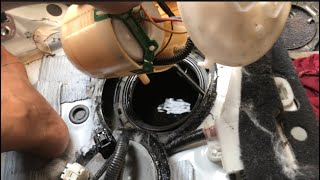
Typical fix: Replacement of the in-tank fuel pump assembly. 🎬 Watch: Step-by-step walkthrough for removing the in-tank fuel pump
Est. part cost: $200-$550 - Faulty Fuel Rail Pressure Sensor ⚪ Low Probability → Shop Fuel Pressure Sensor
How to confirm: If the scan tool shows erratic or impossibly low fuel pressure readings (like 0 PSI) that don't align with symptoms, the sensor may be at fault. One forum user suggested a diagnostic trick: unplugging the low-pressure sensor near the firewall. If the engine then starts (though it will run in limp mode), it points to a bad sensor. Confirming requires comparing the sensor's electronic reading to a mechanical gauge, which is difficult on the high-pressure side. It's often diagnosed by elimination.
Typical fix: Replacement of the fuel rail pressure sensor. 🎬 Watch: How to diagnose and change a faulty pressure sensor
Est. part cost: $70-$200
Rare But Worth Checking
- Leaking Fuel Injector(s): → Shop Fuel Injector A direct injector stuck open can cause a drop in rail pressure, but this would typically be accompanied by other codes like a rich condition or misfire on a specific cylinder.
- Damaged Cam Lobe or Follower: The HPFP is driven by a specific lobe on the camshaft. Extreme wear on this lobe or the pump's follower can prevent the pump from generating pressure. One owner on ClubLexus found the cam lobe had eaten the follower after a gasket was omitted during a previous repair. This is a rare and more severe mechanical failure.
- Faulty Low-Pressure Fuel Sensor: → Shop Fuel Pressure Sensor A ClubLexus user with a 2015 GS 350 F-Sport experiencing a no-start P0087 condition traced the issue to a faulty low-pressure fuel sensor located on the fuel delivery pipe near the firewall. Disconnecting the sensor allowed the car to start, confirming the sensor was the issue.
- Wiring Issue: A damaged wire or poor connection to either the fuel pumps or the pressure sensor could cause this code, but it's less common than component failure.
Diagnosis Steps
- Connect a professional OBD-II scanner (like Toyota Techstream) to verify code P0087 and check for related codes like P0171/P0174.
- Monitor live data for 'Fuel Rail Pressure' and 'Target Fuel Pressure'. Note the conditions under which the code was set using freeze frame data.
- Observe pressure at idle, then safely increase engine RPM while parked to see if the actual pressure follows the target. A significant lag or failure to reach the target points to a fuel delivery issue.
- Test the low-pressure fuel system. Connect a fuel pressure gauge to the low-pressure line to ensure the in-tank pump is delivering adequate pressure to the HPFP (should be ~2 bar or higher).
- If low-pressure system tests are normal, the suspicion shifts heavily to the high-pressure fuel pump (HPFP).
- As a quick test for a faulty low-pressure sensor, try disconnecting the sensor located on the fuel pipe near the firewall. If the car starts, the sensor is likely bad.
- Visually inspect the wiring and connectors for the fuel pumps and the rail pressure sensor for any signs of damage or corrosion.
- If the HPFP is removed, inspect the camshaft follower and camshaft lobe for any signs of unusual wear or damage.
- Based on the test results, replace the faulty component (most often the HPFP or the in-tank pump assembly).
Parts You'll Likely Need
- Direct Injection High Pressure Fuel Pump
(OEM #23101-31011 (For 2GR-FSE, verify by VIN))— This is the most common component to fail and directly cause the P0087 code on the GS 350.
Trusted brands: Lexus (Genuine OEM), Denso
OEM price range: $1000-$1600
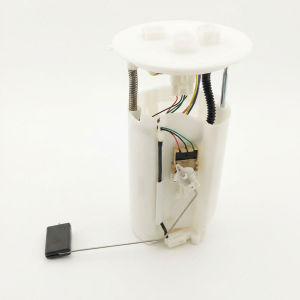
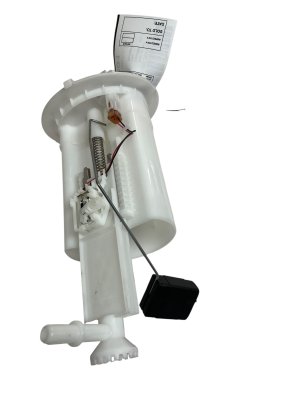
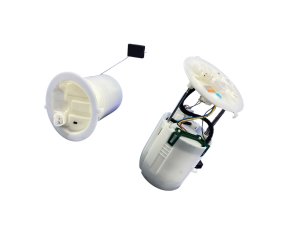
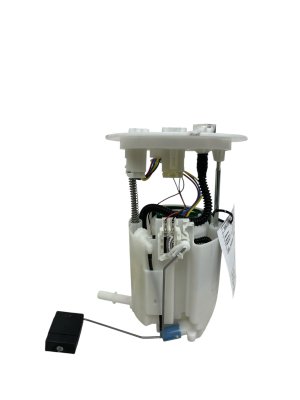
Aftermarket price range: $400-$900 - Fuel Pump and Filter Assembly (In-Tank)
(OEM #23220-31340 (Verify by VIN))— If the low-pressure side is found to be at fault, this entire assembly is replaced as it contains the pump and integrated filter.
Trusted brands: Lexus (Genuine OEM), Denso, Aisan
OEM price range: $400-$600
Aftermarket price range: $150-$450
Related Codes That Often Appear With This One
- P0171 — System Too Lean (Bank 1) - Low fuel pressure causes less fuel to be injected than commanded, resulting in a lean air/fuel mixture. This is cited in a Lexus TSB.
- P0174 — System Too Lean (Bank 2) - Same as P0171, but for the opposite cylinder bank. This is also cited in the Lexus TSB.
Technical Service Bulletins (TSBs) & Recalls
- LSB000523 / T-SB-0009-23: Notes a potential MIL ON condition with DTC P0087, P0171, and/or P0174 related to the fuel pump. It instructs technicians on how to diagnose a loss of fuel pressure.
Platform-Specific Known Issues
- Lexus issued Technical Service Bulletin #LSB000523, which directly acknowledges that a MIL ON condition with DTC P0087 can occur, often alongside lean codes P0171 and P0174, and points towards a fuel pump issue. It's important to note that a TSB is not a recall; it is a guide for technicians to diagnose a known issue, and repairs are typically not covered by the manufacturer unless the vehicle is under warranty.
Mechanic-Grade Diagnostic Values
- Low-Pressure Fuel System Pressure at Idle — expected: 300 to 500 kPa (3.1 to 5.1 kgf/cm2, 44 to 73 psi). Failure: Pressure below 300 kPa (44 psi) indicates a problem with the in-tank fuel pump, filter, or lines.
- Fuel Pressure Sensor Output Voltage (Key On, Engine Off) — expected: Approximately 0.5 V to 1.32 V. Failure: Voltage stuck at 0V, 5V, or a value that doesn't correspond to pressure indicates a faulty sensor or wiring issue.
- Fuel Pressure Sensor Output Voltage (Snap Acceleration) — expected: Increases to approximately 3.77 V. Failure: Voltage does not increase with engine load, indicating the sensor is not reading the pressure change from the HPFP.
Hidden / Shadow Codes Worth Checking
- P008700: This is the manufacturer-specific format for the generic P0087 code. The extra '00' suffix may be displayed on dealer-level scan tools like Techstream and is referenced in official Lexus Technical Service Bulletins. (see via Toyota Techstream or other advanced, professional-grade diagnostic scanner.)
Scan Tool Commands That Help
- Techstream: Active Test: Fuel Pump / SPD — This command manually turns on the in-tank low-pressure fuel pump. It is used to verify if the pump is operational (by listening for its sound) and to build pressure for a low-side fuel pressure test without starting the engine.
- Techstream: Active Test: Control the Injection Way (Port/Direct) — This test allows a technician to switch between port injection and direct injection. While monitoring fuel trims (Short FT and Long FT), this can help isolate whether a fuel delivery problem is specific to the high-pressure or low-pressure side of the system.
Wiring & Ground Locations
- Fuel Pump Driver Module / ECU — Typically located in the rear of the vehicle, often under the rear seat or near the fuel tank on the frame. On some GS models, it is located in the trunk on the driver's side, behind the trunk liner.. This module controls the voltage sent to the low-pressure fuel pump. A failure in this module can prevent the pump from running or cause it to run at insufficient speed, starving the high-pressure pump of fuel and triggering P0087.
- F/PMP Relay — Located in the engine room relay block (No. 2 R/B).. This relay, controlled by the ECM, provides power to the fuel pump. A faulty relay will result in a no-start condition and can be a cause for a complete loss of fuel pressure.
Real Owner Repair Stories
- ClubLexus Forum User (2015 Lexus GS 350 F-Sport) — Sudden stall while driving, followed by a crank-no-start condition. P0087 code present.
❌ Tried (didn't work) Checked fuses and relays, which were all good., Attempted to measure power at the low-pressure fuel pump connector but saw no voltage with a test light.
✅ What actually fixed it The issue was a faulty low-pressure fuel sensor located on the fuel delivery pipe near the firewall. The user confirmed this by unplugging the sensor, which allowed the engine to start (though it ran in limp mode with RPM limited to 2000). The user replaced the sensor (Part No. 89459-30010, sourced from an older GS model with the same 2GR-FSE engine) to resolve the problem.
Model Year Variations Within This Range
- 2013-2015: These model years use the 2GR-FSE engine. The high-pressure fuel pump part number is commonly cited as 23101-31011. The low-pressure fuel sensor that can cause a no-start is part number 89458-30010.
- 2016-2017: These model years use the updated 2GR-FKS engine. While the dual-pump D-4S architecture is similar, some part numbers for fuel system components may differ from the earlier 2GR-FSE. Always verify part numbers by VIN when ordering.
Helpful Videos

Used OEM Parts in Stock
New Aftermarket Parts Available

The information in this article is provided for general reference and educational purposes only. Vehicle specifications, procedures, and part compatibility can vary by production date, trim level, and region. Always consult your vehicle's factory service manual and verify part numbers before purchasing or performing repairs. Safety-critical components such as airbags, seat belts, and braking systems should be installed by a qualified professional.
- Lexus GS 350:
- 🧭 Diagnostic Flowchart
- 🎬 Helpful Videos
- 🛍️ Shop This Part
- What's Unique About the 2013-2017 Lexus GS 350
- Symptoms You May Notice
- Most Likely Causes
- Rare But Worth Checking
- Diagnosis Steps
- Parts You'll Likely Need
- Related Codes That Often Appear With This One
- Technical Service Bulletins (TSBs) & Recalls
- Platform-Specific Known Issues
- Mechanic-Grade Diagnostic Values
- Hidden / Shadow Codes Worth Checking
- Scan Tool Commands That Help
- Wiring & Ground Locations
- Real Owner Repair Stories
- Model Year Variations Within This Range
- 🎟️ Get 5% Off