

P0087 on 2018-2020 Lexus LS500: Fuel Pressure Too Low Causes and Fixes
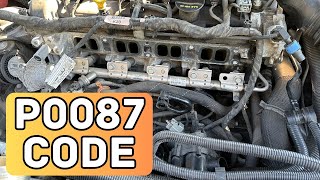
P0087 on the Lexus LS500 most often points to a failing low-pressure (in-tank) or high-pressure fuel pump. A widespread recall for the low-pressure pump (Lexus campaigns 20LA01, 21LC01) affects these models, so checking for recall completion is the first step. If the recall was done or doesn't apply, the high-pressure fuel pump (HPFP) is the next likely culprit, followed by the fuel pressure sensor.
- P0087 on a 2018-2020 LS500 is a serious code indicating dangerously low fuel pressure.
- The first step is to check if your vehicle has an open safety recall for the low-pressure fuel pump (NHTSA 20V-012).
- Symptoms include engine stalling, hesitation, and loss of power. Do not drive the vehicle if you experience these issues.
- If the recall is not the cause, the issue is most likely the high-pressure fuel pump (HPFP) or, less commonly, a faulty fuel pressure sensor.
- Diagnosis requires professional tools to measure fuel pressure accurately; this is not a simple DIY fix.
What's Unique About the 2018-2020 Lexus LS500
The 2018-2020 LS500 uses the V35A-FTS twin-turbo V6, a direct-injection engine that relies on both a low-pressure and a high-pressure fuel pump to operate. This model is specifically included in a massive safety recall for faulty Denso low-pressure fuel pumps that can fail unexpectedly, making this a primary concern when P0087 appears. The recall is identified by NHTSA campaign 20V-012 and Lexus campaigns 20LA01 and 21LC01. 🎬 Watch: Learn more about the massive Toyota and Lexus fuel pump recalls. Furthermore, Technical Service Bulletin L-SB-0005-23 officially links P0087 with lean condition codes (P0171/P0174) on this platform, confirming that the low pressure directly causes an improper air-fuel mixture.
Diagnostic Flowchart
Tap your situation to follow the diagnostic path that matches what you're seeing on this vehicle.
Symptoms You May Notice
- Check Engine Light is on
- Engine stalling, potentially while driving at high speeds
- Hesitation, jerking, or sputtering during acceleration, especially under load
- Reduced engine power and performance (limp mode)
- Rough or unstable idle
- Difficulty starting the engine or extended cranking time
- Decreased fuel efficiency
- Replacing the high-pressure fuel pump when the recalled low-pressure pump is the actual cause.
- Replacing fuel injectors when the issue is fuel delivery from the pump.
- Replacing the fuel pressure sensor without first verifying its readings against a mechanical gauge.
Most Likely Causes
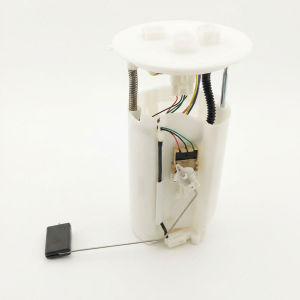
- Failing Low-Pressure Fuel Pump (In-Tank) 🔴 High Probability → Shop Fuel Pump These models were part of a major safety recall (NHTSA 20V-012; Lexus 20LA01/21LC01) for defective Denso low-pressure fuel pumps. The pump's impeller was made of a lower density material that could deform, causing the pump to stop working entirely.
How to confirm: First, check the vehicle's VIN on the NHTSA or Lexus recall website to see if the recall is open or was completed. A technician can perform a fuel pressure test on the low-pressure side to confirm it's supplying adequate pressure to the high-pressure pump. Using Techstream, the "Control the Fuel Pump / Speed" active 🎬 See this walkthrough of the fuel pump test and replacement procedure. test can be used to operate the pump and check for pressure.
Typical fix: If the recall is open, a Lexus dealer will replace the fuel pump assembly with an improved part free of charge. If the recall was performed but the pump has failed again, it must be replaced at cost.
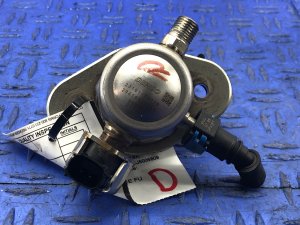
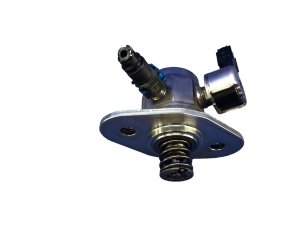
Est. part cost: $200-$400 - Failing High-Pressure Fuel Pump (HPFP) 🟡 Medium Probability → Shop Fuel Pump The V35A-FTS engine has two high-pressure fuel pumps, one for each cylinder bank, driven by the exhaust camshafts. Wear on the pump's internal components or its drive follower can lead to a loss of pressure, a common failure point on direct-injection engines. If the low-pressure pump is weak, the HPFP can be starved of fuel, causing extra wear.
How to confirm: This requires a scan tool (like Toyota's Techstream) to monitor the desired vs. actual fuel rail pressure under various loads. If the low-pressure pump is confirmed to be working, but the high-pressure side doesn't build or maintain pressure under load, the HPFP is the likely culprit. Visual inspection for leaks around the pump is also recommended.
Typical fix: Replacement of the high-pressure fuel pump assembly. It is critical to also inspect the camshaft follower for wear or damage.
Est. part cost: $500-$900 - Faulty Fuel Pressure Sensor ⚪ Low Probability → Shop Fuel Pressure Sensor While not as common as pump failure, a sensor can fail and send incorrect low-pressure readings to the ECM, falsely triggering the P0087 code. This can lead to misdiagnosis of a perfectly good fuel pump.
How to confirm: A technician can compare the pressure reading from the scan tool with a reading from a mechanical fuel pressure gauge. If the readings differ significantly, the sensor is likely faulty. One user on a forum noted that unplugging the sensor allowed the car to start (though in limp mode), pointing to a bad sensor.
Typical fix: Replacement of the fuel rail pressure sensor.
Est. part cost: $70-$150 - Clogged Fuel Filter ⚪ Low Probability → Shop Fuel Filter The fuel filter is integrated with the low-pressure fuel pump assembly in the tank. While not a common failure point on its own, it can become restricted over time, especially with poor fuel quality, starving the HPFP of fuel.
How to confirm: Diagnosed by conducting a fuel pressure and volume test from the in-tank pump. Low volume or pressure points to a restriction or a weak pump.
Typical fix: The filter is typically replaced along with the entire low-pressure fuel pump module. It is not usually serviced separately.
Est. part cost: $200-$400 (as part of the pump assembly)
Rare But Worth Checking
- Leaking Fuel Injector: → Shop Fuel Injector A fuel injector stuck open can cause a drop in rail pressure, but this would typically be accompanied by other codes like a rich condition (P0172/P0175) or a misfire on a specific cylinder (P030X).
- Damaged Fuel Lines: → Shop Fuel Line A physical restriction or kink in a fuel line could reduce flow, but this is unlikely without evidence of physical damage to the vehicle's underside.
- Worn HPFP Cam Follower/Roller: → Shop Fuel Pump The mechanical interface between the camshaft and the HPFP can wear down or break. This prevents the camshaft lobe from properly actuating the pump, leading to low pressure. When replacing the HPFP, this component should always be inspected and often replaced as a precaution.
- Faulty Fuel Pump Control Module: → Shop Fuel Pump This module regulates the voltage sent to the low-pressure fuel pump. A failure can prevent the pump from running at the correct speed or at all, mimicking a failed pump. Diagnosis involves checking for power and ground at the module and verifying its output voltage.
Diagnosis Steps
- Check the vehicle's VIN for open safety recalls on the low-pressure fuel pump (NHTSA 20V-012, Lexus 20LA01/21LC01). Address this first if applicable.
- Connect a professional scan tool (ideally Toyota Techstream) to read the P0087 code and check for any other accompanying codes, such as P0171, P0174, or misfire codes.
- Use the scan tool to monitor live data for both low-pressure and high-pressure fuel systems. Compare the 'Fuel Pressure (High)' or 'Fuel Rail Pressure' PID with the 'Target Fuel Pressure' PID at idle, during steady cruising, and under heavy acceleration.
- Review fuel trim data (Short Term and Long Term). High positive fuel trims (e.g., +20% or more) indicate the ECM is trying to compensate for a lean condition, supporting the low fuel pressure diagnosis.
- If low-pressure readings are below specification, diagnose the in-tank fuel pump, its wiring, and the fuel pump control module. Use the Techstream Active Test "Control the Fuel Pump / Speed" to command the pump on and verify operation.
- If low-pressure readings are normal but high-pressure readings are low (especially under load), the high-pressure fuel pump (HPFP) is the primary suspect.
- Before replacing the HPFP, inspect for fuel leaks around the pump and its connections. Also, remove the pump to inspect its mechanical drive (cam follower/roller) for wear, as damage here will prevent the pump from operating correctly.
- If both pumps seem to function but the pressure reading is erratic or incorrect, test the fuel rail pressure sensor by comparing its output on the scan tool to a mechanical gauge connected to the system.
- Inspect for any visible fuel leaks in the engine bay or along the fuel lines underneath the vehicle.
Parts You'll Likely Need
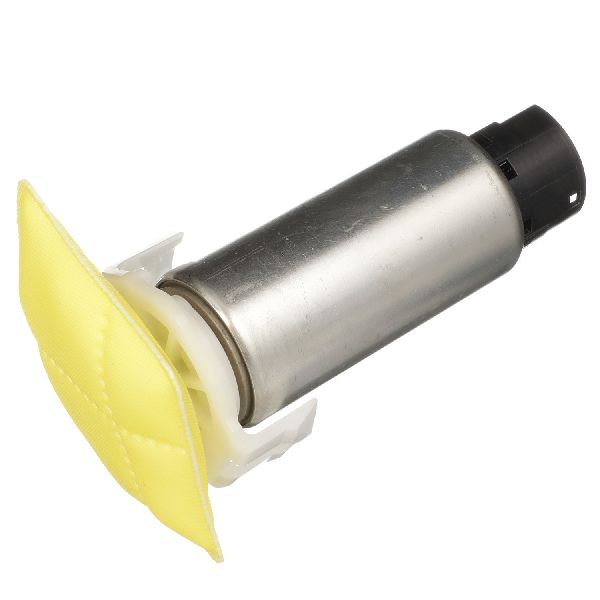
- Low-Pressure Fuel Pump Assembly
(OEM #23221-31521 (Note: Part number may vary, confirm with VIN))— This is the subject of a major safety recall for these vehicles and a very common failure point leading to P0087.
Trusted brands: Denso (OEM)
OEM price range: $300-$500
Aftermarket price range: $200-$400 - High-Pressure Fuel Pump
(OEM #23101-38011 (Note: Part number may vary, confirm with VIN))— The second most likely cause, especially if the low-pressure pump is working correctly. It is responsible for creating the final high pressure for direct injection.
Trusted brands: Denso (OEM), Bosch
OEM price range: $700-$900
Aftermarket price range: $500-$750 - Fuel Rail Pressure Sensor — A less common but possible failure that can cause an incorrect pressure reading, leading to a misdiagnosis of the pumps.
Related Codes That Often Appear With This One
- P0171 — System Too Lean (Bank 1) - Insufficient fuel pressure leads to less fuel being injected than commanded, causing a lean air/fuel mixture. This is explicitly cited in TSB L-SB-0005-23 for this vehicle.
- P0174 — System Too Lean (Bank 2) - Same reason as P0171, but for the opposite cylinder bank. This is also explicitly cited in TSB L-SB-0005-23.
- P0300-P0306 — Random or specific cylinder misfire codes can occur because the lean condition caused by low fuel pressure prevents proper combustion.
Technical Service Bulletins (TSBs) & Recalls
- LSB000523: Notes that a MIL ON condition with P0087 may be seen in conjunction with lean codes P0171 and/or P0174.
Platform-Specific Known Issues
- This vehicle is covered under NHTSA recall 20V-012 and Lexus campaigns 20LA01/21LC01 for a faulty Denso low-pressure fuel pump that can cause the engine to stall while driving. This is a critical safety issue and should be the first thing checked when a P0087 code appears.
- Technical Service Bulletin L-SB-0005-23 explicitly connects P0087 with lean codes P0171/P0174 and hard starting, confirming the diagnostic path for technicians.
- Some owners on forums report experiencing the P0087 code with hesitation under acceleration, which was resolved by replacing either the low or high-pressure pump.
Mechanic-Grade Diagnostic Values
- Low-Pressure Fuel System (at HPFP inlet) — expected: 330 to 380 kPa (48 to 55 psi). Failure: Pressure below this range indicates a problem with the in-tank pump, filter, or fuel pump control module.
- High-Pressure Fuel System (Live Data on Scan Tool) — expected: Target pressure of 40-41 MPa (approx. 5800-5950 psi) under load.. Failure: Actual pressure significantly lower than target pressure (e.g., reading in kPa instead of MPa) points to a failed HPFP, assuming the low-pressure feed is good.
- Battery Voltage — expected: 11 to 14 V. Failure: Low voltage can affect fuel pump control module operation.
Scan Tool Commands That Help
- Toyota Techstream: Active Test: Control the Fuel Pump / Speed — This command directly operates the low-pressure in-tank fuel pump. It is used to verify if the pump runs and to check for fuel flow and pressure from the tank without the engine running. It helps isolate a failed low-pressure pump or control module from the rest of the system.
- Toyota Techstream: Active Test: Control the Injection Mode — While not a direct fuel pressure test, this allows a technician to switch between direct injection and port injection. Problems that appear only in direct injection mode can help point towards an issue with the high-pressure side of the fuel system.
Wiring & Ground Locations
- Fuel Pump Control Module — On many modern Lexus vehicles, this module is moved from an exposed position near the tank to a more protected area, such as under the rear seat or behind interior trim panels near the rear of the vehicle.. The Fuel Pump Control Module is a dedicated computer that regulates voltage to the low-pressure pump based on commands from the ECM. A failure in this module, its wiring, or its ground can cause low fuel pressure, mimicking a bad fuel pump.
- Fuel Pump Relay — Typically located in the main fuse box in the engine bay. The underside of the fuse box cover usually has a diagram indicating its position.. The ECU grounds the coil of the fuel pump relay to energize it and send power to the fuel pump circuit. A faulty relay or a problem in the ECU's grounding circuit for the relay will prevent the pump from running.
Real Owner Repair Stories
- ClubLexus user on an IS250 (similar D-4S system) (2011 Lexus IS250 F-Sport, 80k miles) — Check engine light with P0087 and lean codes. Engine starts but sounds like it's starving for fuel.
❌ Tried (didn't work) Cleaned the fuel tank pump's metal mesh., Replaced the in-tank fuel filter.
✅ What actually fixed it The user's diagnostic data showed the core problem: live data revealed an actual fuel pressure of under 200 kPa while the target pressure was 40-41 MPa (a difference of over 200x). This massive discrepancy, with the low-pressure side confirmed to be delivering 2 bar (200 kPa), definitively pointed to a failure in the high-pressure fuel pump. The final fix was swapping the HPFP.
Helpful Videos
Used OEM Parts in Stock
New Aftermarket Parts Available


The information in this article is provided for general reference and educational purposes only. Vehicle specifications, procedures, and part compatibility can vary by production date, trim level, and region. Always consult your vehicle's factory service manual and verify part numbers before purchasing or performing repairs. Safety-critical components such as airbags, seat belts, and braking systems should be installed by a qualified professional.
- Lexus LS500:
- 🧭 Diagnostic Flowchart
- 🎬 Helpful Videos
- 🛍️ Shop This Part
- What's Unique About the 2018-2020 Lexus LS500
- Symptoms You May Notice
- Most Likely Causes
- Rare But Worth Checking
- Diagnosis Steps
- Parts You'll Likely Need
- Related Codes That Often Appear With This One
- Technical Service Bulletins (TSBs) & Recalls
- Platform-Specific Known Issues
- Mechanic-Grade Diagnostic Values
- Scan Tool Commands That Help
- Wiring & Ground Locations
- Real Owner Repair Stories
- 🎟️ Get 5% Off