

P0087 on 2013-2015 Lexus LS600H: Fuel Pressure Too Low Causes and Fixes
P0087 on a Lexus LS600H indicates dangerously low fuel pressure. The most common causes are a failing high-pressure fuel pump (HPFP) or a clogged in-tank fuel filter. This is a serious issue that requires immediate diagnosis, as the engine can stall unexpectedly.
- P0087 on a 2013-2015 LS600H is a serious code indicating critically low fuel pressure.
- Do not drive the vehicle. Stalling is likely and can be dangerous.
- The most probable causes are a failed high-pressure fuel pump (HPFP) or a clogged in-tank fuel filter.
- Diagnosis and repair should be performed by a professional due to the complexity and high pressures of the D-4S fuel system.
- Expect to see lean codes (P0171/P0174) alongside P0087; they are symptoms of the fuel pressure problem.
What's Unique About the 2013-2015 Lexus LS600H
The Lexus LS600H is not a typical vehicle. It uses the complex 2UR-FSE V8 engine with a D-4S direct and port injection system, plus a hybrid drivetrain. This means it has two high-pressure fuel pumps (one for each cylinder bank, Bank 1 and Bank 2) driven by the intake camshafts, in addition to the conventional low-pressure pump in the fuel tank. The complexity and high-pressure nature of this system make diagnosis more challenging than on a standard port-injected engine. A failure in either the low-pressure or high-pressure circuits can trigger this code.
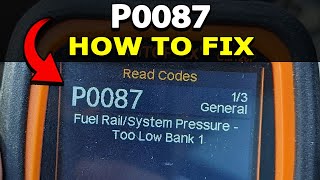
🎬 Watch: Expert advice on diagnosing and fixing the P0087 codeDiagnostic Flowchart
Tap your situation to follow the diagnostic path that matches what you're seeing on this vehicle.
Symptoms You May Notice
- Check Engine Light is on
- Engine hesitates or stumbles on acceleration, especially above 2,500 RPM.
- Significant loss of engine power
- Engine stalls, especially under load or when applying more than light throttle.
- On hybrid models, the car may revert to battery power and refuse to restart the gasoline engine until the vehicle is shut off and turned back on.
- Rough or unstable idle
- Difficulty starting the engine
- Vehicle enters 'limp mode,' limiting RPMs
- Replacing oxygen sensors due to lean codes (P0171/P0174) without addressing the underlying low fuel pressure issue.
- Replacing one or both expensive high-pressure fuel pumps when the actual fault is a much cheaper clogged in-tank filter or failing low-pressure pump.
Most Likely Causes
- Failing High-Pressure Fuel Pump (HPFP) 🔴 High Probability → Shop Fuel Pump The 2UR-FSE engine uses two mechanically driven high-pressure pumps. These are complex components that can wear out over time, leading to a loss of pressure. A failure in the pump's internal components or the cam follower that drives it can cause this code. Forum discussions for similar Lexus V8s frequently point to one of the HPFPs as the culprit.
How to confirm: Monitor high-pressure fuel rail data with a professional scan tool like Techstream. The actual pressure ('Fuel Press') will be significantly lower than the desired pressure ('Target Fuel P'), often falling below 200 kPa when the target is over 4000 kPa (4 MPa). A user on ClubLexus confirmed the diagnosis by swapping a known good HPFP from another vehicle, which resolved the issue.
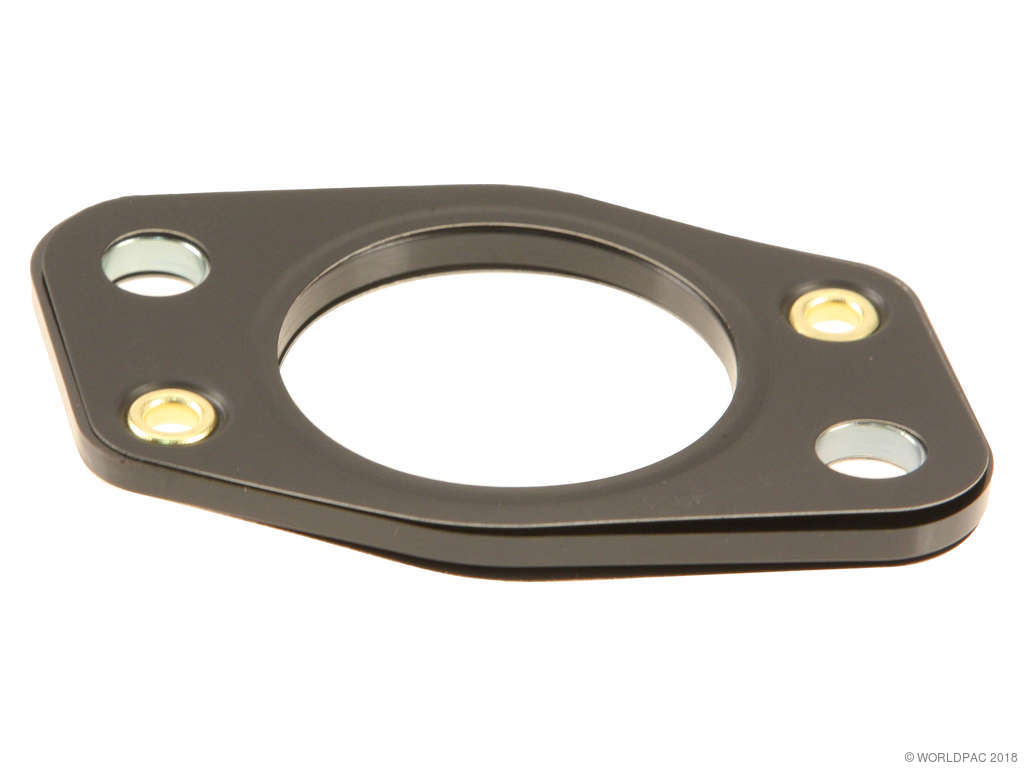
Typical fix: Replacement of the failed high-pressure fuel pump and its associated cam follower. 🎬 Watch: How to replace the direct injection fuel pump gaskets Diagnosis is needed to determine which bank is failing, though some owners replace both as a preventative measure.
Est. part cost: $400-$800 per pump (OEM) - Clogged In-Tank Fuel Filter / Failing Low-Pressure Fuel Pump 🟡 Medium Probability → Shop Fuel Filter The high-pressure pumps can only work if they receive adequate fuel supply from the low-pressure pump in the tank. A clogged fuel filter (which is part of the pump assembly) restricts this flow, starving the HPFPs. Additionally, a massive recall was issued for failing Denso low-pressure pumps used across many Toyota/Lexus models from 2013-2020, which could cause stalling.
How to confirm: Test the low-pressure fuel system's pressure and volume before it enters the HPFPs. The pressure should be stable, typically around 40-65 PSI (281 to 448 kPa). If it's low or erratic, the in-tank pump assembly is the likely culprit. 🎬 See this walkthrough for testing and replacing the in-tank pump This step is crucial to avoid misdiagnosing a bad HPFP.
Typical fix: Replace the in-tank fuel pump and filter assembly. Accessing the pump may be complicated by the hybrid battery components in the rear of the LS600H.
Est. part cost: $250-$450 for an OEM assembly - Faulty Fuel Pressure Sensor ⚪ Low Probability → Shop Fuel Pressure Sensor The sensor on the high-pressure fuel rail can fail and send incorrect low-pressure readings to the ECM, even if the actual pressure is normal. A Reddit user with a similar engine noted their issue was heat-related, suspecting the sensor would fail after a long drive.
How to confirm: Compare the scan tool's pressure reading with a mechanical gauge (if a port is available). If the scan tool shows 0 or an erratic reading while the engine is running rough, and all wiring is intact, the sensor is a likely suspect. On some Lexus models, a separate low-pressure sensor near the intake manifold has also been known to fail and cause this code.
Typical fix: Replace the fuel pressure sensor on the fuel rail.
Est. part cost: $150-$260 (OEM)
Rare But Worth Checking
- Worn Camshaft Lobe or HPFP Follower: → Shop Engine Camshaft The high-pressure fuel pumps are driven by lobes on the intake camshafts. If a lobe or the pump's 'follower' (bucket) becomes worn down, it can no longer fully actuate the pump. A ClubLexus IS F owner found their P0087 was caused by a technician forgetting to install the HPFP gasket, causing the cam lobe to destroy the follower. This is a major and expensive repair.
- Fuel Leak: A leak in any of the high-pressure fuel lines, connections, or from an injector seal would cause a rapid loss of pressure and a strong smell of gasoline. This is a critical fire hazard and should be addressed immediately.
- Wiring Issue: A damaged wire or poor connection in the circuit for the fuel pressure sensor or the fuel pump driver module could cause intermittent signals and trigger the code. Corrosion on connectors is a possible cause.
- ECM/PCM Software or Hardware Fault: While rare, a fault within the Engine Control Module's driver circuit for the fuel pump can cause P0087. In other Lexus models like the NX200t, a TSB was issued to reprogram the ECM to prevent false P0087 codes, indicating software logic can be a factor.
Diagnosis Steps
- Verify the code P0087 and check for any other codes (especially P0171/P0174) using an OBD-II scanner.
- Check for the strong smell of fuel, indicating a potential leak. Address any leaks immediately.
- Using a professional scan tool (like Techstream), monitor live data for 'Fuel Press' (actual) and 'Target Fuel P' (desired). At idle, pressure should be around 4 MPa. Under load, it should increase. A significant deviation where actual pressure is far below desired confirms the low-pressure condition.
- Crucially, test the low-pressure fuel system first. Verify pressure and flow from the in-tank pump to rule it out as the cause before proceeding to the high-pressure side. Expected pressure is typically 40-65 PSI.
- If the low-pressure system is healthy, the diagnosis should focus on the high-pressure circuit.
- Inspect the wiring and connectors for the fuel pressure sensor and both high-pressure pumps for any visible damage or corrosion.
- If a high-pressure pump is suspected, diagnosis is required to isolate which bank is at fault. This may involve advanced diagnostics or swapping components if a known-good part is available.
- If a pump is removed, inspect its cam follower bucket and the camshaft lobe for any scoring or abnormal wear.
- Based on the findings, replace the faulty component (sensor, low-pressure pump, or high-pressure pump).
Parts You'll Likely Need
- High Pressure Fuel Pump (Bank 1, RH)
(OEM #23100-38041)— This is one of the two most common points of failure for code P0087 on the 2UR-FSE engine due to its mechanical nature and the high pressures it generates.
Trusted brands: Lexus (OEM), Denso
OEM price range: $400-$800
Aftermarket price range: $250-$450 - High Pressure Fuel Pump (Bank 2, LH)
(OEM #23100-38051)— The second of two high-pressure pumps. Failure is just as likely as Bank 1. The pumps are not interchangeable.
Trusted brands: Lexus (OEM), Denso
OEM price range: $400-$800
Aftermarket price range: $250-$450 - Fuel Pump and Filter Assembly (In-tank)
(OEM #77020-50111)— A clogged filter or weak low-pressure pump will starve the high-pressure pumps. This is a critical diagnostic step before replacing the more expensive HPFPs. Also subject to a major recall.
Trusted brands: Denso, Aisin
OEM price range: $250-$450
Aftermarket price range: $100-$220 - Fuel Pressure Sensor
(OEM #89458-22010)— Though less common, a failed sensor can send false low-pressure readings to the ECM. It's crucial to test this before replacing expensive pumps.
Trusted brands: Lexus (OEM), Denso
OEM price range: $150-$260
Aftermarket price range: $50-$120
Related Codes That Often Appear With This One
- P0171 — System Too Lean (Bank 1) - Low fuel pressure causes a lean air/fuel mixture.
- P0174 — System Too Lean (Bank 2) - Low fuel pressure causes a lean air/fuel mixture.
- P0088 — Fuel Rail / System Pressure – Too High - Can sometimes appear if the system overcompensates or if the pressure sensor is failing erratically.
Technical Service Bulletins (TSBs) & Recalls
- LSB000523: MIL ON condition with one or more of the following Diagnostic Trouble Codes (DTCs): ?DTC P0171 and/or P0174 (System Too Lean Bank 1/Bank 2) ?DTC P0087 Fuel Rail / System Pressure – Too Low
Platform-Specific Known Issues
- Lexus Technical Service Bulletin LSB000523 notes that DTC P0087 may be present along with lean codes P0171 and P0174, confirming the link between low fuel pressure and a lean running condition on this platform.
- The 2UR-FSE uses two distinct high-pressure fuel pumps, one for each cylinder bank, with different part numbers. They are not interchangeable.
- Many Lexus vehicles of this era were part of a massive safety recall (NHTSA 20V-012, expanded later) for failing Denso low-pressure fuel pumps that could cause the engine to stall while driving. This should be checked first, as the repair may be covered by the manufacturer.
Mechanic-Grade Diagnostic Values
- High-Pressure Fuel Rail (Techstream 'Fuel Press' PID) — expected: Approx. 4,000 kPa (4 MPa) at idle, increasing under load.. Failure: Actual pressure is significantly below target pressure. For example, reading under 200 kPa when the target is 4,000+ kPa indicates a severe failure.
- Low-Pressure Fuel Pump (at feed line to HPFP) — expected: 281 to 448 kPa (40.8 to 65 psi).. Failure: Pressure is below 281 kPa (40 psi) or is erratic, indicating a failing in-tank pump or clogged filter.
- Fuel Pressure Sensor Signal Wire Voltage — expected: 0.5V to 4.5V range. At idle, voltage is typically around 2.2V. Voltage increases with pressure/engine load.. Failure: Voltage is stuck at 0V, 5V, or does not change with engine RPM. A reading of 0.5V corresponds to near-zero pressure.
Hidden / Shadow Codes Worth Checking
- P008700: This is the manufacturer-specific format for the generic P0087 code. The extra '00' provides no additional information but confirms the code is being read by a compatible, advanced scanner. (see via Toyota Techstream or other professional-grade diagnostic scanner.)
- P125D71: Fuel Flow Control Valve Performance Actuator Stuck. This code points to a specific valve within the high-pressure fuel pump assembly and can cause identical symptoms to P0087. (see via Toyota Techstream or other advanced diagnostic scanner.)
Scan Tool Commands That Help
- Techstream: Control the Fuel Pump / Speed — Found under 'Powertrain / Engine / Active Test'. This command manually activates the in-tank low-pressure fuel pump with the engine off. It is essential for testing the low-pressure side of the system for pressure and leaks before moving to the more complex high-pressure side.
- Techstream: Control the Injection Mode — Found under 'Powertrain / Engine / Active Test'. This allows a technician to manually switch between direct injection, port injection, or both. This can help isolate whether a fuel delivery issue is related to a specific set of injectors or the overall system pressure.
Real Owner Repair Stories
- ClubLexus user on an IS F forum (2008 Lexus IS F (2UR-GSE engine, similar HPFP design)) — Car jerks and hesitates above 2,500 RPM, P0087 code thrown.
❌ Tried (didn't work) Initial suspicion was a failed low-pressure or high-pressure fuel pump.
✅ What actually fixed it The passenger side High-Pressure Fuel Pump (HPFP) had been installed without its gasket. This incorrect installation caused the camshaft lobe to destroy the pump's follower, resulting in no pump actuation and zero pressure. - ClubLexus user on an IS250 forum (2011 Lexus IS250, 80k miles) — P0087 with lean codes, engine starving for fuel. Live data showed actual pressure at <200 kPa while target was ~40,000 kPa.
❌ Tried (didn't work) Cleaned the in-tank fuel pump mesh and replaced the filter. Low-side pressure tested okay at 2 bar (~29 psi).
✅ What actually fixed it The high-pressure fuel pump was faulty and was not building pressure. Replacing the HPFP resolved the issue.
Helpful Videos

We Have This Part in Stock


The information in this article is provided for general reference and educational purposes only. Vehicle specifications, procedures, and part compatibility can vary by production date, trim level, and region. Always consult your vehicle's factory service manual and verify part numbers before purchasing or performing repairs. Safety-critical components such as airbags, seat belts, and braking systems should be installed by a qualified professional.
- Lexus LS600H:
- 🧭 Diagnostic Flowchart
- 🎬 Helpful Videos
- 🛍️ Shop This Part
- What's Unique About the 2013-2015 Lexus LS600H
- Symptoms You May Notice
- Most Likely Causes
- Rare But Worth Checking
- Diagnosis Steps
- Parts You'll Likely Need
- Related Codes That Often Appear With This One
- Technical Service Bulletins (TSBs) & Recalls
- Platform-Specific Known Issues
- Mechanic-Grade Diagnostic Values
- Hidden / Shadow Codes Worth Checking
- Scan Tool Commands That Help
- Real Owner Repair Stories
- 🎟️ Get 5% Off