

P0087 on 2014-2016 Lexus LX570: Fuel Pressure Too Low Causes and Fixes
On a 2014-2016 Lexus LX570, code P0087 almost always points to a failing in-tank fuel pump or a clogged fuel filter. This is a well-documented issue on the 3UR-FE engine platform. Expect a repair cost of $1,600 to $2,100 at a shop, as the fuel pump is a costly part and located inside the fuel tank.
- P0087 on the LX570 indicates dangerously low fuel pressure that can cause stalling.
- The most likely cause is a failing in-tank fuel pump or clogged fuel filter.
- Do not automatically replace O2 sensors for lean codes (P0171/P0174); test fuel pressure first.
- The issue is common across the Toyota/Lexus 5.7L V8 (3UR-FE) platform, including the Tundra and Sequoia.
- Repair involves replacing the fuel pump module, which can be accessed from inside the vehicle under the rear seats.
What's Unique About the 2014-2016 Lexus LX570
The Lexus LX570 uses a robust 5.7L 3UR-FE V8 engine with a conventional (non-direct injection) sequential fuel injection system. This means it has a single, in-tank electric fuel pump rather than a more complex dual-pump (low and high pressure) system found on other Lexus engines. This simplifies diagnosis, as the issue is almost certainly within the low-pressure fuel system. A specific Lexus TSB for this platform directly links P0087 with lean codes (P0171/P0174), highlighting that low fuel pressure is a known cause for these related issues, which can prevent misdiagnosis of the oxygen sensors. [⭐ MANUFACTURER TSB — highest authority] This same failure pattern is common on platform mates like the Toyota Tundra and Sequoia with the same 5.7L engine.
Diagnostic Flowchart
Tap your situation to follow the diagnostic path that matches what you're seeing on this vehicle.
Symptoms You May Notice
- Check Engine Light is on
- Engine hesitation or stumbling, especially under acceleration
- Significant loss of engine power
- Rough idling or engine stumbling at idle
- Difficulty starting the engine, including long crank times
- Engine stalling unexpectedly, sometimes during driving
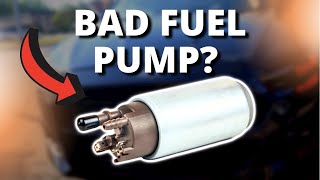
- Strong fuel smell from the exhaust, indicating an inefficient burn 🎬 See a video guide on common bad fuel pump symptoms.
- Replacing oxygen (O2) or Air/Fuel ratio sensors due to lean codes (P0171/P0174) without first checking fuel pressure. The TSB for this vehicle explicitly warns that P0087 is a primary cause for these lean codes. [⭐ MANUFACTURER TSB — highest authority]
Most Likely Causes
- Failing Fuel Pump 🔴 High Probability → Shop Fuel Pump The in-tank fuel pump is a primary failure point for the P0087 code on the 3UR-FE engine platform. The electric motor inside the pump wears out over time, failing to generate the required pressure. This issue is common enough that it led to recalls on similar Toyota/Lexus models, though not this specific year range.
How to confirm: A technician will perform a fuel pressure test with a mechanical gauge to verify the pressure is below specification (typically 196 to 588 kPa or 28 to 85 psi for this system). Live data on a scan tool showing highly positive long-term fuel trims (+15% or more) also points to the ECM compensating for low pressure.
Typical fix: Replace the in-tank fuel pump module assembly. The fuel filter is integrated into this assembly and should be replaced with it. Access is under the second-row passenger-side seat, but can be difficult.
Est. part cost: $320-$1250 - Clogged Fuel Filter 🟡 Medium Probability → Shop Fuel Filter The fuel filter's job is to trap debris. Over time, it can become saturated and restrict fuel flow, causing a pressure drop. On the LX570, the filter is part of the fuel pump module, so it is typically replaced as a single unit with the pump.
How to confirm: Diagnosis is typically done by testing fuel pressure. If pressure is low, the pump and filter are the primary suspects. Since they are a single assembly, they are replaced together.
Typical fix: Replace the fuel filter as part of the complete fuel pump assembly replacement.
Est. part cost: $65-$350 - Faulty Fuel Pressure Sensor ⚪ Low Probability → Shop Fuel Pressure Sensor While not as common as a pump failure, the sensor that reads the fuel pressure can fail and send incorrect low-pressure signals to the ECM.
How to confirm: Compare the sensor's reading on a scan tool with a direct measurement from a mechanical fuel pressure gauge. If the readings differ significantly, the sensor is likely faulty. The sensor's voltage should be between 0.5V and 4.5V and change with engine load.
Typical fix: Replace the fuel pressure sensor.
Est. part cost: $50-$150
Rare But Worth Checking
- Leaking Fuel Injector: → Shop Fuel Injector A fuel injector stuck open can cause a drop in rail pressure. This would typically be accompanied by a rich condition in one cylinder and possibly misfire codes like P0301, P0302, etc.
- Restricted Fuel Line: → Shop Fuel Line Physical damage (kinking) or an internal blockage in a fuel line can restrict flow and cause a pressure drop.
- Fuel Pump Control Module Issue: → Shop Fuel Pump An electrical problem with the module that controls the fuel pump's speed and voltage can lead to insufficient pump operation. On some Land Cruiser 200s (the LX570's twin), this ECU has been known to fail, causing a no-start condition.
Diagnosis Steps
- Read all fault codes with an OBD-II scanner.
- Note if P0171 or P0174 are present with P0087, as this strongly suggests a fuel delivery issue. [⭐ MANUFACTURER TSB — highest authority]
- Use the scanner's live data function to monitor fuel rail pressure readings and Long Term Fuel Trims (LTFT) at idle and under load. High positive LTFTs (e.g., >+15%) indicate the engine is compensating for a lack of fuel.
- Connect a mechanical fuel pressure gauge to the fuel system to verify the actual pressure. Compare this reading to the scanner's data and the manufacturer's specifications (28-85 psi).
- If pressure is confirmed to be low, inspect the fuel pump fuse and relay.
- Test the fuel pump's voltage supply and ground connection. Consider testing the Fuel Pump Control Module if power to the pump seems incorrect.
- If power to the pump is good but pressure is low, the fuel pump assembly (including the integrated filter) is the most likely culprit.
- If the mechanical gauge shows good pressure but the scanner shows low pressure, the fuel pressure sensor is likely faulty.
Parts You'll Likely Need
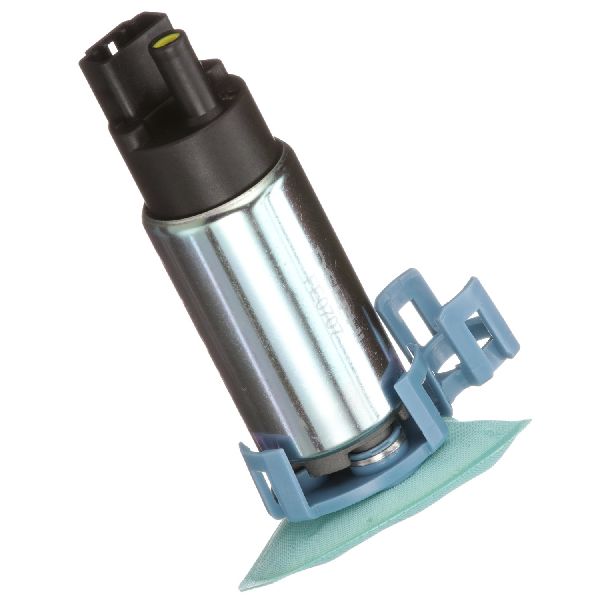
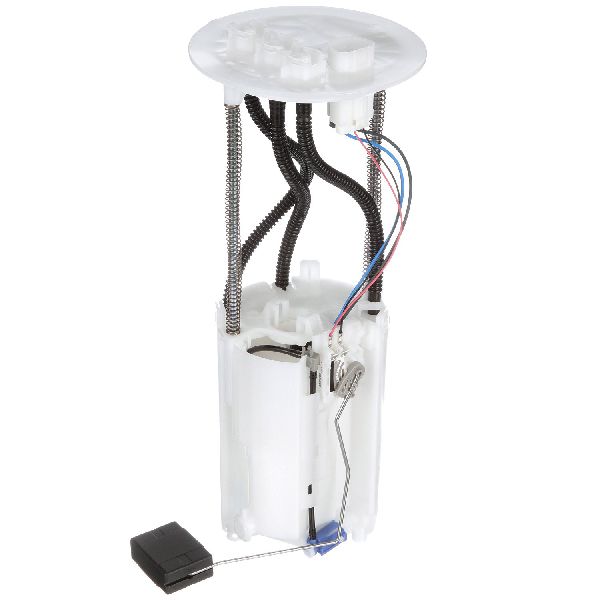
- Fuel Pump Assembly
(OEM #23220-50271)— This is the most common failure point for P0087. The assembly includes the electric pump motor and the fuel filter, addressing the two most probable causes in one replacement. This part number supersedes 23220-50270.
Trusted brands: Lexus (OEM), Denso, Aisin
OEM price range: $320-$450
Aftermarket price range: $150-$300
Related Codes That Often Appear With This One
- P0171 — This code means 'System Too Lean (Bank 1)'. It appears because the low fuel pressure from P0087 causes an incorrect air/fuel mixture (too much air, not enough fuel). [⭐ MANUFACTURER TSB — highest authority, 2]
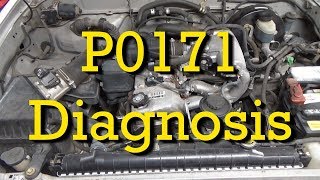
- P0174 — This code means 'System Too Lean (Bank 2)'. It is the same as P0171 but for the opposite cylinder bank 🎬 Watch: How to diagnose P0171 and P0174 lean codes., and it is triggered for the same reason. [⭐ MANUFACTURER TSB — highest authority, 2]
- P0300 — Random/Multiple Cylinder Misfire. A severe lack of fuel can cause misfires across multiple cylinders.
Technical Service Bulletins (TSBs) & Recalls
- LSB000523: States that DTC P0087 (Fuel Rail / System Pressure – Too Low) can occur with lean codes P0171/P0174, confirming the link between low fuel pressure and lean conditions for this specific vehicle. [⭐ MANUFACTURER TSB — highest authority]
Platform-Specific Known Issues
- Lexus issued Technical Service Bulletin #LSB000523 🎬 Watch: Breakdown of the Lexus TSB for low fuel pressure. which notes that a MIL ON condition with DTC P0087 may be seen in conjunction with lean codes P0171 and/or P0174, indicating a no-pressure or low-pressure condition in the fuel system. [⭐ MANUFACTURER TSB — highest authority]
- Real Repair Story: Stalling on an incline: An owner of a 2009 LX570 on IH8MUD reported experiencing P0171 (lean code) and P0300 (misfire) after idling for an extended period on a steep incline. The engine stumbled badly and had almost no power. The issue was ultimately traced to a failing fuel pump that could not provide adequate pressure under load and heat soak conditions.
- Accessing the Fuel Pump: → Shop Fuel Pump Unlike some vehicles that require dropping the entire fuel tank, the LX570 has a service access port under the second-row passenger-side (RH) seat. However, accessing it requires removing the seats and carpeting. Forum users on IH8MUD note that the retaining ring holding the pump can be extremely tight, often requiring a special tool to remove without breaking it.
Mechanic-Grade Diagnostic Values
- Fuel Pressure Sensor Reference Voltage — expected: ~5.0V. Failure: A reading of 0V or significantly less than 5V indicates a wiring or ECM issue, not necessarily a bad sensor.
- Fuel Pressure Sensor Signal Voltage — expected: Varies between ~0.5V and ~4.5V with fuel pressure changes.. Failure: Voltage is stuck at 0V, 5V, or does not change when the engine is revved. This points to a faulty sensor or wiring.
- Fuel Pressure Sensor Ground Circuit Voltage — expected: Should not be above 500mV (0.5V).. Failure: Higher voltage indicates a poor ground connection, which can cause inaccurate sensor readings.
Hidden / Shadow Codes Worth Checking
- P008700: This is a more detailed variant of the P0087 code that may be displayed on professional scan tools like Toyota's Techstream. It does not represent a different failure but is the manufacturer-specific format of the generic P0087 code. (see via Toyota Techstream or other advanced, dealer-level diagnostic scanners.)
Scan Tool Commands That Help
- Techstream: Active Test: Control the Fuel Pump / Speed — This command allows a technician to manually turn the in-tank fuel pump on and off without the engine running. It is essential for verifying if the pump motor, relay, and wiring are functional, and for checking for audible pump operation.
Wiring & Ground Locations
- Fuel Pump Control ECU Connectors C31, C32 — The Fuel Pump Control ECU is a separate module that controls the fuel pump. While its exact location can vary, it is typically found in the rear of the vehicle, sometimes near the fuel tank or under trim panels.. These connectors are the primary interface for testing the electrical signals being sent to the fuel pump. A wiring diagram shows that testing for power, ground, and control signals at these connectors can isolate a problem between the main ECM, the control module, and the pump itself.
- Fuel Pump Connector C33 — This connector is located on the top of the fuel pump assembly, inside the fuel tank. It is accessible via the service port under the second-row passenger seat.. This is the final point to test for voltage and ground directly at the fuel pump motor. If proper voltage is present here but the pump does not run or pressure is low, the pump assembly has failed.
OEM Part Supersession History
23220-50270→23220-50271— Standard part revision by the manufacturer for improvements or supplier changes.
Model Year Variations Within This Range
- 2016: The 2016 model year marked a significant facelift, which included replacing the 6-speed automatic transmission with a new 8-speed unit. While the 5.7L 3UR-FE engine and its port fuel injection system remained the same, the change in transmission and control logic could alter when and how the ECM demands fuel pressure under various loads. However, the root causes and parts for a P0087 code are not documented to be different from the 2014-2015 models.
Helpful Videos

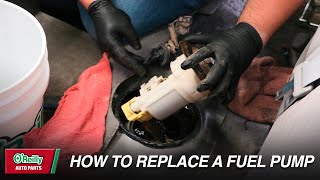
We Have This Part in Stock



The information in this article is provided for general reference and educational purposes only. Vehicle specifications, procedures, and part compatibility can vary by production date, trim level, and region. Always consult your vehicle's factory service manual and verify part numbers before purchasing or performing repairs. Safety-critical components such as airbags, seat belts, and braking systems should be installed by a qualified professional.
- Lexus LX570:
- 🧭 Diagnostic Flowchart
- 🎬 Helpful Videos
- 🛍️ Shop This Part
- What's Unique About the 2014-2016 Lexus LX570
- Symptoms You May Notice
- Most Likely Causes
- Rare But Worth Checking
- Diagnosis Steps
- Parts You'll Likely Need
- Related Codes That Often Appear With This One
- Technical Service Bulletins (TSBs) & Recalls
- Platform-Specific Known Issues
- Mechanic-Grade Diagnostic Values
- Hidden / Shadow Codes Worth Checking
- Scan Tool Commands That Help
- Wiring & Ground Locations
- OEM Part Supersession History
- Model Year Variations Within This Range
- 🎟️ Get 5% Off