

P0087 on 2015-2017 Lexus NX200T: Fuel Pressure Too Low Causes and Fixes
On a 2015-2017 Lexus NX200T, code P0087 is often caused by a faulty high-pressure fuel pump or, for 2015 models specifically, an outdated Engine Control Module (ECM) software. An ECM reflash at a dealer may be the only fix needed for 2015 models, while a pump replacement can cost over $1,000. For all years, a failing in-tank low-pressure pump is also a possible, though less frequent, cause.
- For 2015 models, the first step is ALWAYS to check if TSB L-SB-0050-15 (ECM reflash) has been performed before replacing any parts.
- P0087 indicates a serious issue that can cause stalling and engine damage; it should be addressed promptly.
- The problem is either a software glitch (2015 models) or a hardware failure in the fuel system (all years).
- The most common hardware failure is the engine-mounted high-pressure fuel pump (HPFP), which is an expensive part.
- Diagnosis requires a scan tool capable of reading live fuel pressure data to determine if the fault is in the low-pressure or high-pressure side of the system.
What's Unique About the 2015-2017 Lexus NX200T

For the 2015 model year NX200T, Lexus issued a Technical Service Bulletin (TSB L-SB-0050-15 🎬 Watch: A breakdown of the factory TSB software fix) acknowledging that P0087 could be falsely triggered by overly sensitive software logic in the Engine Control Module (ECM), not an actual mechanical failure. In these cases, the fix is a simple software update (reflash) performed by a dealer. This TSB applies to 2015 models built before a specific VIN range. For 2016-2017 models, or 2015s that already have the updated software or a higher VIN, the cause is more likely a mechanical component like the high-pressure fuel pump (HPFP) or the in-tank low-pressure fuel pump (LPFP).
Diagnostic Flowchart

Tap your situation to follow the diagnostic path that matches what you're seeing on this vehicle.
Symptoms You May Notice
- Check Engine Light (MIL) is on
- Message on the multi-information display like "Reduced engine power"
- Engine hesitation or stumbling, especially under acceleration or load between 2,000-4,000 RPM.
- Rough or fluctuating idle.
- Stalling or difficulty starting, including long crank times.
- Noticeable loss of power.
- A louder than usual whining or humming sound from the rear of the vehicle, indicating a struggling in-tank fuel pump.
- Replacing the high-pressure fuel pump on a 2015 model without first checking if the required ECM software update (TSB L-SB-0050-15) has been performed.
- Replacing the high-pressure fuel pump (HPFP) when the in-tank low-pressure fuel pump (LPFP) is the actual cause of the fuel starvation.
Most Likely Causes

- Outdated Engine Control Module (ECM) Software 🔴 High Probability → Shop Engine Control Module (ECM) Specifically affects 2015 models produced before VINs JTJYARBZ#F2021027 (FWD) and JTJBARBZ#F2043919 (AWD). Lexus issued TSB L-SB-0050-15 to address this exact issue where the ECM logic was too sensitive and would incorrectly flag a P0087 code.
How to confirm: A Lexus dealer or qualified shop can check the current calibration ID of your ECM against the TSB to see if an update is available. If the calibration has not been updated, this is the likely cause. The repair is covered under the Lexus Federal Emissions Warranty for 96 months or 80,000 miles.
Typical fix: Reprogram (reflash) the ECM with the updated software provided by Lexus. The ECM should not be replaced for this issue.
Est. part cost: $0 (if under warranty) - Failing High-Pressure Fuel Pump (HPFP) 🟡 Medium Probability → Shop Fuel Pump The HPFP is a mechanical pump driven by a lobe on the camshaft and is subject to wear and tear, especially on the internal plunger or follower. It is a common failure point in many direct-injection engines when fuel pressure issues arise after ruling out software or low-pressure side problems.
How to confirm: Use a scan tool to monitor requested vs. actual fuel rail pressure. If the low-pressure system is supplying adequate pressure to the HPFP, but the high-pressure side is still low (especially under load), the HPFP is suspect. A worn cam follower can also be a cause, which may produce a rattling noise.
Typical fix: Replace the high-pressure fuel pump and sometimes the cam follower. An oil change is often recommended to check for metal debris from a failed pump.
Est. part cost: $800-$1200 - Failing In-Tank (Low-Pressure) Fuel Pump ⚪ Low Probability → Shop Fuel Pump The in-tank pump, often made by Denso, can fail due to a defective impeller that swells and stops the pump, which was the subject of a massive recall affecting many Toyota/Lexus models. While the NX200T was part of a fuel pump recall, it's crucial to verify if a specific vehicle was included and if the repair was performed.
How to confirm: Test the fuel pressure from the in-tank pump before it reaches the HPFP. This can be done with a mechanical gauge. If the pressure is below specification (e.g., under 40-60 PSI), the low-pressure pump is likely at fault.
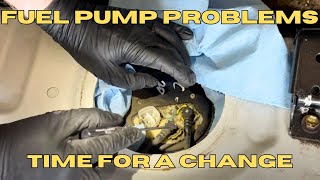
Typical fix: Replace the in-tank fuel pump assembly. 🎬 See this walkthrough for testing and replacing the fuel pump
Est. part cost: $150-$400 - Clogged Fuel Filter ⚪ Low Probability → Shop Fuel Filter
How to confirm: The fuel filter is typically integrated into the in-tank fuel pump module. If low-pressure fuel delivery is weak and the pump motor is confirmed to be working, the filter may be clogged. It's often replaced as part of the entire pump assembly.
Typical fix: Replace the fuel pump assembly which includes the filter/sock.
Est. part cost: $150-$400
Rare But Worth Checking
- Faulty Fuel Rail Pressure Sensor: → Shop Fuel Pressure Sensor While less common, the sensor that reads the pressure can fail and send incorrect low-pressure signals to the ECM, triggering the code even if the pressure is normal. Comparing scan tool live data to a mechanical gauge reading can help diagnose a bad sensor. The OEM part number for the sensor is 89458-78020.
- Leaking Fuel Injector: → Shop Fuel Injector A fuel injector stuck open can cause a drop in rail pressure, often accompanied by other symptoms like a strong fuel smell, black smoke from the exhaust, or specific cylinder misfire codes.
- Worn Camshaft Lobe: → Shop Engine Camshaft The HPFP is driven by a specific lobe on the camshaft. If this lobe becomes excessively worn, it can no longer properly actuate the pump, leading to low pressure. This is a more severe mechanical issue and requires inspection of the camshaft when the HPFP is removed.
Diagnosis Steps

- Check for Technical Service Bulletins (TSBs). For a 2015 model, immediately check if TSB L-SB-0050-15 has been performed by checking dealer records or the ECM calibration ID. If not, this is the first and most likely fix.
- Connect a diagnostic scan tool (like Toyota Techstream) to read live data. Monitor 'Requested Fuel Rail Pressure' and 'Actual Fuel Rail Pressure' at idle, during steady cruising, and under hard acceleration.
- A significant and consistent lag or difference between requested and actual pressure points to a fuel delivery problem.
- Test the low-pressure fuel system. The in-tank pump should deliver a steady pressure (typically 40-70 PSI, spec varies) to the high-pressure pump. This may require a mechanical fuel pressure gauge connected with a T-adapter, as Toyota/Lexus vehicles often lack a test port.
- If low-pressure is weak or drops out, the problem lies with the in-tank pump, its integrated filter, or a blockage in the line.
- If low-pressure is adequate but high-pressure is low, the issue is likely with the high-pressure fuel pump (HPFP), its follower, the camshaft lobe, or the fuel rail pressure sensor.
- Inspect for any visible fuel leaks in the engine bay or along the fuel lines under the vehicle.
- If fuel pressure readings are erratic or implausible (e.g., reading 0 when the car is running), test the fuel rail pressure sensor and its wiring.
Parts You'll Likely Need
- High-Pressure Fuel Pump
(OEM #23101-36080)— This is the most common mechanical failure for P0087 after the ECM software issue on 2015 models has been ruled out.
Trusted brands: Lexus (OEM), Denso
OEM price range: $1150-$1600
Aftermarket price range: $180-$1200 - In-Tank Fuel Pump Assembly
(OEM #23221-36030)— If the low-pressure side of the system is failing, it will starve the high-pressure pump, causing the code. This is a known failure point on many Toyota/Lexus vehicles from this era due to a Denso pump defect.
Trusted brands: Lexus (OEM), Delphi, Denso
OEM price range: $130-$175
Aftermarket price range: $45-$350 - Fuel Rail Pressure Sensor
(OEM #89458-78020)— A rare but possible cause where the sensor itself fails, sending incorrect data to the ECM.
Trusted brands: Lexus (OEM), Standard Motor Products
OEM price range: $100-$150
Aftermarket price range: $50-$100
Related Codes That Often Appear With This One
- P0171 — System Too Lean (Bank 1) - Low fuel pressure causes an incorrect air-to-fuel ratio with too much air, which is detected as a lean condition. This is mentioned in Lexus TSB L-SB-0005-23 as a common companion code.
- P0174 — System Too Lean (Bank 2) - Same reason as P0171. The 8AR-FTS is an inline 4-cylinder (one bank), but some generic scan tools may show this code. The principle is the same: insufficient fuel leads to a lean mixture.
- P0300-P0304 — Random or specific cylinder misfire codes can occur because low fuel pressure prevents proper atomization and combustion, leading to misfires.
Technical Service Bulletins (TSBs) & Recalls
- L-SB-0050-15_Rev / L-SB-0050-15: Addresses 2015 NX200T models exhibiting P0087 due to incorrect ECM logic, and provides the repair procedure which is to reprogram the ECM. It specifies the VIN ranges of affected vehicles.
- L-SB-0005-23: A broader TSB for many Lexus models (including the NX200T) that notes P0087 can appear alongside lean codes like P0171/P0174 due to a faulty fuel pump causing insufficient fuel delivery.
Platform-Specific Known Issues
- A primary issue for the 2015 model year is faulty ECM logic that incorrectly triggers P0087; this is resolved with a software update per TSB L-SB-0050-15.
Mechanic-Grade Diagnostic Values
- Low-pressure fuel pump resistance — expected: 0.2 to 3.0 Ω at 20°C (68°F). Failure: Resistance outside of this range indicates a likely fault in the pump motor.
- Low-pressure fuel pump pressure at idle — expected: 40-70 PSI (General specification, verify for specific vehicle). Failure: Pressure below this range at idle suggests a failing in-tank pump or clogged filter.
- Pressure Discharge Valve Active Test — expected: Fuel pressure must change by at least 4 PSI. Failure: If pressure does not change, the valve is stuck or malfunctioning. This test is from a TSB for a related code (P125D71) but is relevant for diagnosing the fuel pump assembly.
Hidden / Shadow Codes Worth Checking
- P008700: This is the manufacturer-specific format for the generic P0087 code, as documented in Lexus Technical Service Bulletins. The extra '00' may be displayed on dealer-level scan tools like Techstream. (see via Toyota Techstream or other advanced diagnostic scanner.)
- P125D71: Fuel Flow Control Valve Performance Actuator Stuck. This code is for a pressure discharge valve on the fuel pump assembly. It can cause identical symptoms to P0087, including limp mode and reduced power, and may be the root cause even if P0087 is also present. (see via Toyota Techstream or other advanced diagnostic scanner.)
Scan Tool Commands That Help
- Techstream: Health Check / Read DTCs — Initial step to confirm P0087/P008700 is present, as required by TSB L-SB-0050-15.
- Techstream: ECU Calibration ID Check — For 2015 models, this is used to verify if the ECM software is outdated and needs the update specified in TSB L-SB-0050-15.
- Techstream: Active Test: Fuel Pump / SPD — To manually command the low-pressure fuel pump on. This allows a technician to listen for the pump's operating sound to quickly verify if it's completely dead.
- Techstream: Active Test: Pressure Discharge Valve — To command the fuel flow control valve on the pump assembly. While monitoring fuel pressure, this test can confirm if the valve is stuck, which is a known issue under TSB L-SB-0031-20.
Wiring & Ground Locations
- Fuel Pump Control Module — Location varies, but typically installed near the rear of the vehicle, close to the fuel tank. On some vehicles, it is located inside the cabin to protect it from the elements.. The FPCM regulates voltage to the in-tank fuel pump. A corroded or failed module can cut power to the pump, leading to low fuel pressure.
- Fuel Pump Connector S1 — At the in-tank fuel pump assembly.. This is the primary electrical connector for the low-pressure fuel pump. Checking for voltage here during an active test, and checking resistance to ground, can diagnose wiring or pump motor issues.
Real Owner Repair Stories
- ClubLexus Forum Discussion (Lexus IS-F (V8 engine, but also uses a high-pressure direct injection system similar in principle)) — Car started jerking and threw code P0087. It would idle fine but jerk and lose power above ~2,500 RPM.
❌ Tried (didn't work) Initial diagnosis pointed to a bad fuel pump.
✅ What actually fixed it The high-pressure fuel pump (HPFP) on one bank had been previously installed without its gasket. This caused the cam follower to be destroyed by the camshaft lobe, resulting in no actuation of the pump. The final fix was replacing the damaged HPFP and follower. - Reddit user comment in r/LexusNX (Toyota Camry (similar symptoms and diagnosis path)) — Hesitation and stalling that was difficult to diagnose.
❌ Tried (didn't work) Initial checks did not pinpoint the cause.
✅ What actually fixed it A Toyota dealer let the car run until the fault occurred and found the electric in-tank fuel pump would overheat and stop working. Replacing the low-pressure fuel pump resolved the issue.
OEM Part Supersession History
23101-36080→23101-36110— Part update or revision by the manufacturer.
Heads up: 23101-36110 is the newer part number for the high-pressure fuel pump.89458-78010→89458-78020— Part update or revision for the fuel rail pressure sensor.
Heads up: Part number 89458-78020 is noted by some suppliers as discontinued, but it is the correct replacement for the older -78010 part.
Model Year Variations Within This Range
- 2015 only: Vehicles produced before VINs JTJYARBZ#F2021027 (FWD) and JTJBARBZ#F2043919 (AWD) are subject to TSB L-SB-0050-15. The cause is overly sensitive ECM logic, and the fix is a software reflash, not a part replacement.
Helpful Videos
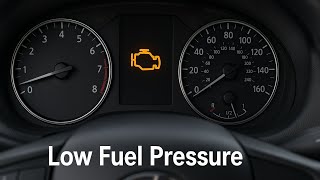
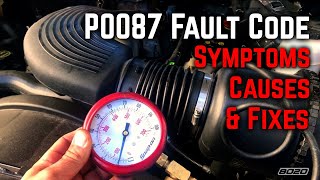

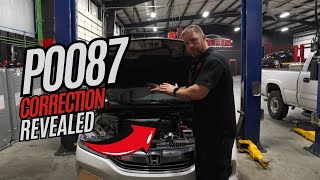
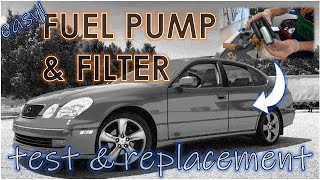
We Have This Part in Stock


The information in this article is provided for general reference and educational purposes only. Vehicle specifications, procedures, and part compatibility can vary by production date, trim level, and region. Always consult your vehicle's factory service manual and verify part numbers before purchasing or performing repairs. Safety-critical components such as airbags, seat belts, and braking systems should be installed by a qualified professional.
- Lexus NX200T:
- 🧭 Diagnostic Flowchart
- 🎬 Helpful Videos
- 🛍️ Shop This Part
- What's Unique About the 2015-2017 Lexus NX200T
- Symptoms You May Notice
- Most Likely Causes
- Rare But Worth Checking
- Diagnosis Steps
- Parts You'll Likely Need
- Related Codes That Often Appear With This One
- Technical Service Bulletins (TSBs) & Recalls
- Platform-Specific Known Issues
- Mechanic-Grade Diagnostic Values
- Hidden / Shadow Codes Worth Checking
- Scan Tool Commands That Help
- Wiring & Ground Locations
- Real Owner Repair Stories
- OEM Part Supersession History
- Model Year Variations Within This Range
- 🎟️ Get 5% Off