

P0087 on 2015-2019 Lexus RC 350: Fuel Pressure Too Low Causes and Fixes
On a 2015-2019 Lexus RC 350, code P0087 is most often caused by a failing in-tank low-pressure fuel pump, which was subject to a major safety recall (NHTSA Campaign 20V-012). The defective Denso pump impeller can swell and cause the pump to fail. Before replacing any parts, check if your vehicle's VIN is covered by Lexus recall 20LA01 for a free repair.
- First, immediately check if your RC 350 is part of the fuel pump safety recall (20LA01, 20LB01). A free replacement of the in-tank pump will likely fix the P0087 code.
- P0087 indicates low pressure in the high-pressure direct injection system.
- Symptoms include significant power loss, stalling, and a check engine light.
- If not covered by the recall, diagnosis should start by testing the low-pressure fuel pump before assuming the more expensive high-pressure pump has failed.
- This code is often accompanied by lean codes P0171 and P0174.
What's Unique About the 2015-2019 Lexus RC 350
The most significant factor for the 2015-2019 RC 350 is the widespread Toyota/Lexus fuel pump recall, identified by NHTSA campaign number 20V-012 and Lexus campaign codes 20LA01 and 20LB01. This recall targeted the low-pressure in-tank fuel pump, manufactured by Denso, whose impeller was made of a resin that could swell, causing the pump to seize. A weak or failed low-pressure pump cannot supply enough fuel to the engine-driven high-pressure pump, causing it to be starved and unable to build pressure, directly triggering P0087. This makes the low-pressure pump the primary suspect due to a known, widespread manufacturing defect.
Diagnostic Flowchart
Tap your situation to follow the diagnostic path that matches what you're seeing on this vehicle.
Generation note: The 2015-2019 year range covers two engine versions: the 2GR-FSE (2015-2017) and the updated 2GR-FKS (2018-2019). While both are 3.5L V6 engines with D-4S fuel injection, their high-pressure fuel pumps and some related components have different part numbers. However, both are affected by the low-pressure fuel pump recall, and the diagnostic approach for P0087 is virtually identical for both.
Symptoms You May Notice
- Check Engine Light is on
- Reduced engine power, especially during acceleration
- Engine hesitation or stumbling under load
- Rough idle
- Engine stalling, sometimes while driving at speed, and difficulty restarting
- Decreased fuel economy
- Loud whining or humming noise from the fuel tank area
- Replacing the expensive high-pressure fuel pump (HPFP) when the actual fault is the recalled low-pressure in-tank pump. Always verify the low-pressure system and recall status first.
Most Likely Causes
- Failing Low-Pressure In-Tank Fuel Pump 🔴 High Probability → Shop Fuel Pump This component was the subject of a massive safety recall (Lexus 20LA01 / NHTSA 20V-012) for these model years. The Denso-made pump impeller can absorb fuel, swell, and cause the pump to seize and stop operating, starving the high-pressure system.
How to confirm: First, check your VIN with a Lexus dealer or on the NHTSA website for open recalls. A technician can perform a low-pressure fuel system test to measure the output pressure from the in-tank pump. If it's below specification (typically should be 28 to 121 psi), the pump is faulty. Using a scan tool like Techstream to command the pump on can also aid diagnosis.
Typical fix: Replace the in-tank fuel pump assembly. If covered by the recall, this is done free of charge at a dealership with an improved part. If not covered, TSB L-SB-0005-23 may cover the repair under the powertrain warranty (72 months/70,000 miles).
Est. part cost: $250-$500 - Failing High-Pressure Fuel Pump (HPFP) 🟡 Medium Probability → Shop Fuel Pump The HPFP is a mechanical pump driven by the camshaft. Over time, internal wear or wear on the camshaft lobe that drives it can prevent it from generating the required pressure (often over 2000 PSI). This is a common failure point on many direct-injection engines after higher mileage.
How to confirm: Use an advanced scan tool (like Toyota Techstream) to monitor 'desired' vs 'actual' fuel rail pressure. If the low-pressure system is confirmed to be working correctly but the actual high pressure consistently fails to meet the desired value under load (target can be 348 to 2828 psi), the HPFP is the likely cause.
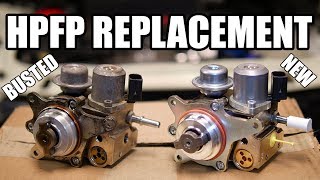
Typical fix: Replace the high-pressure fuel pump. This pump is located on the engine and is more labor-intensive to replace than 🎬 See this walkthrough on how to replace a high-pressure pump the in-tank pump.
Est. part cost: $400-$800 - Clogged Fuel Filter ⚪ Low Probability → Shop Fuel Filter The primary fuel filter is integrated with the in-tank fuel pump assembly as a 'sock' filter. While not a common failure point on its own, it can become clogged from contaminated fuel, restricting flow to the HPFP.
How to confirm: The filter is not typically serviced separately. Diagnosis involves a low-side fuel pressure test; low pressure would point to a restriction or a weak pump.
Typical fix: Replace the in-tank fuel pump assembly which includes the integrated filter. This is the same fix as a failed low-pressure pump.
Est. part cost: $250-$500
Rare But Worth Checking
- Faulty Fuel Rail Pressure Sensor: → Shop Fuel Pressure Sensor While uncommon, the sensor that reads the high pressure can fail. It might send an inaccurate low-pressure signal to the ECM, triggering the P0087 code even if the mechanical pumps are working correctly. Comparing the scan tool reading to a mechanical gauge can help diagnose a faulty sensor.
- Fuel Pump Control Module Failure: → Shop Fuel Pump The fuel pump control module regulates the voltage to the low-pressure pump. A failure in this module can mimic a failed pump by not providing enough power, leading to low fuel volume and pressure.
Diagnosis Steps
- Check for any open safety recalls for the fuel pump using your vehicle's VIN on the NHTSA or Lexus owner website. The primary recall is Lexus campaign 20LA01 / NHTSA 20V-012. Address this first, as the repair may be free.
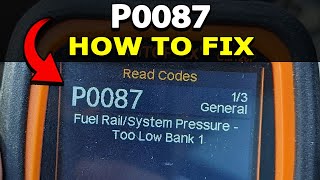
- Use a high-quality OBD-II scanner to confirm the presence of P0087 and check for 🎬 Watch: Expert advice on diagnosing and fixing the P0087 code any other related codes, such as P0171 or P0174.
- Monitor live data from the fuel rail pressure sensor. Compare the 'desired' fuel pressure to the 'actual' fuel pressure at idle and under load. A significant lag or inability to meet the target is a key symptom.
- Perform a fuel pressure test on the low-pressure side to ensure the in-tank pump is delivering adequate pressure (28 to 121 psi) to the high-pressure pump.
- If low-side pressure is good but high-side pressure is low, inspect the high-pressure fuel pump (HPFP), its electrical connector, and drive mechanism (cam lobe).
- If the low-pressure pump is weak or fails the pressure test, replace the in-tank fuel pump assembly. Check if the repair is covered by recall or TSB L-SB-0005-23.
- If both low and high pressure readings seem incorrect or erratic, inspect the wiring and connector for the fuel rail pressure sensor.
- If the low-pressure pump is strong but the high pressure is still low, the high-pressure fuel pump is the primary suspect and likely needs replacement.
Parts You'll Likely Need
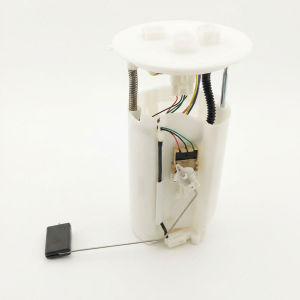
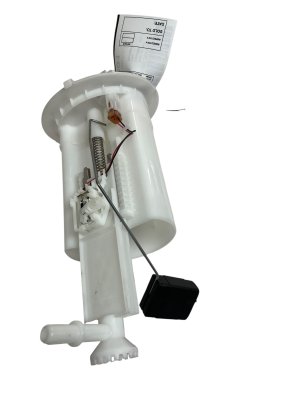
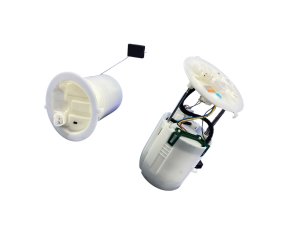
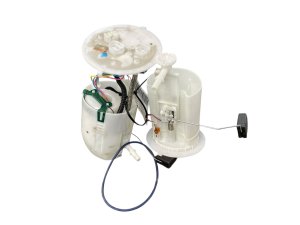
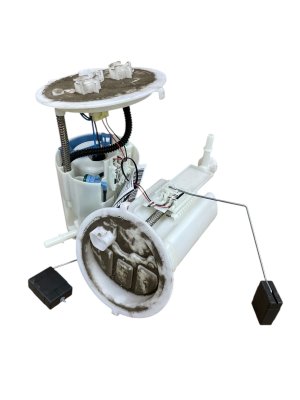
- Low-Pressure Fuel Pump Assembly
(OEM #Part number varies; confirm with VIN. Recall involves an 'improved' part.)— This is the most common failure point and was subject to a major safety recall (NHTSA 20V-012) for this exact problem.
Trusted brands: Denso (OEM Supplier)
OEM price range: $400-$600
Aftermarket price range: $250-$400 - High-Pressure Fuel Pump
(OEM #2GR-FSE (15-17): ~23100-39646; 2GR-FKS (18-19): ~23101-0P020 (Verify with VIN))— The second most likely cause if the low-pressure pump is confirmed to be working correctly. It is a mechanical pump that is subject to wear.
Trusted brands: Denso, Bosch, Delphi
OEM price range: $600-$900
Aftermarket price range: $400-$700
Related Codes That Often Appear With This One
- P0171 — System Too Lean (Bank 1) - Low fuel pressure prevents the correct amount of fuel from being injected, leading to a lean air/fuel mixture. TSB L-SB-0005-23 explicitly links these codes.
- P0174 — System Too Lean (Bank 2) - Same as P0171, but for the second bank of cylinders on the V6 engine. TSB L-SB-0005-23 confirms this link.
Technical Service Bulletins (TSBs) & Recalls
- L-SB-0005-23: Links P0087 with lean codes (P0171/P0174) and a hard start/no pressure condition. Authorizes replacement of the fuel pump under the powertrain warranty for applicable vehicles.
Platform-Specific Known Issues
- A major safety recall (Lexus 20LA01 / NHTSA 20V-012) was issued for the low-pressure fuel pump on 2015-2019 Lexus RC 350 models. The recall addresses a Denso pump with an impeller that can swell and cause the pump to fail, which is a primary cause of P0087.
- Technical Service Bulletin L-SB-0005-23 provides a clear diagnostic and repair path for vehicles exhibiting P0087 (often with P0171/P0174) that may be outside the recall's scope. It authorizes fuel pump replacement under the powertrain warranty (72 months/70,000 miles).
Mechanic-Grade Diagnostic Values
- Low-Pressure Fuel System — expected: 196 to 833 kPa (28 to 121 psi). Failure: Pressure below 28 psi indicates a weak low-pressure pump or restriction.
- High-Pressure Fuel System (at 3000 rpm, warmed up) — expected: 2400 to 19500 kPa (348 to 2828 psi). Failure: Actual pressure failing to meet desired pressure under load, especially if low-side pressure is good.
- Fuel Rail Pressure Sensor Voltage (Key On, Engine Off) — expected: ~1.5V to 1.8V. Failure: Voltage stuck at 0V, 5V, or providing an erratic signal.
- Fuel Rail Pressure Sensor Voltage (Engine Idling) — expected: ~1.32V. Failure: Significant deviation from this value at idle.
- Fuel Rail Pressure Sensor Voltage (Snap Acceleration) — expected: ~3.77V. Failure: Voltage does not increase accordingly with engine load.
Hidden / Shadow Codes Worth Checking
- P008700: This is an extended version of the P0087 code, often seen on Toyota/Lexus vehicles with Techstream software. It doesn't typically provide different information but confirms the 'Fuel Rail/System Pressure – Too Low' fault. (see via Toyota Techstream diagnostic software.)
Scan Tool Commands That Help
- Techstream: Active Test: Control the Fuel Pump Speed — This function allows a technician to command the low-pressure fuel pump to run at different speeds to verify its functionality and check for pressure drops, helping to isolate a weak pump without having to remove it from the tank initially.
- Techstream: Data List: Fuel Pressure vs. Target Fuel Pressure — This is the primary diagnostic screen for P0087. It allows for real-time comparison of the ECM's requested fuel pressure against the actual pressure reported by the sensor. A large discrepancy where actual pressure lags behind the target points directly to a delivery issue.
Wiring & Ground Locations
- Fuel Pump Control Module — Commonly located under the rear seat or in the trunk area, near the fuel tank access panel.. A faulty module or poor connection/ground at this location can prevent the low-pressure pump from receiving the correct voltage, mimicking a failed pump and causing P0087.
- Fuel Pump Assembly Ground — The low-pressure fuel pump is grounded through the Fuel Pump Control Module via a dedicated ground wire (often L-W, Blue-White).. A fault in this ground wire or the module's ground connection can lead to intermittent or total failure of the low-pressure pump.
Real Owner Repair Stories
- ClubLexus user 'griz', 2011 IS250 (2011 Lexus IS250 F-Sport (similar 2GR-FSE D-4S system), 80k miles) — Check engine light with P0087 and lean codes. Engine starts but sounds like it's starving for fuel. Live data showed actual pressure at ~200 kPa while target was 40-41 MPa.
❌ Tried (didn't work) Cleaned the low-pressure fuel pump's metal mesh filter., Replaced the low-pressure fuel pump's in-tank filter., Swapped the entire low-pressure fuel pump assembly with a known-good unit from another car.
✅ What actually fixed it The High-Pressure Fuel Pump (HPFP) was faulty. After swapping the HPFP from a known-good vehicle, the fault code disappeared and proper fuel pressure was restored. - ClubLexus user 'IslandFSport', 2015 GS350 F-Sport (2015 Lexus GS350 F-Sport (similar 2GR-FSE D-4S system)) — Car suddenly stalled while driving, threw P0087, and would not restart (crank-no-start).
❌ Tried (didn't work) Checking fuses and relays for the fuel pump (all were good)., Testing for power at the fuel pump connector (no power detected, even during crank).
✅ What actually fixed it The low-pressure fuel sensor located on the intake manifold near the firewall was faulty. Disconnecting the sensor allowed the engine to start (though it ran in a limp mode limited to 2000 RPM). Replacing the sensor resolved the issue.
OEM Part Supersession History
23101-31090→23101-0P020— Standard part revision and update by the manufacturer.
Heads up: This applies to the High-Pressure Fuel Pump (HPFP) for the 2GR-FKS engine (2018-2019 RC 350). While physically similar, using the wrong revision may lead to performance issues. Always verify the part number with the vehicle's VIN.
Model Year Variations Within This Range
- 2015-2017 vs 2018-2019: The engine changed from the 2GR-FSE to the 2GR-FKS in 2018. This resulted in different part numbers for the high-pressure fuel pump (HPFP). The 2015-2017 models use a different HPFP than the 2018-2019 models. The low-pressure pump recall, however, affects both engine variants within this year range.
Helpful Videos
Used OEM Parts in Stock
New Aftermarket Parts Available

The information in this article is provided for general reference and educational purposes only. Vehicle specifications, procedures, and part compatibility can vary by production date, trim level, and region. Always consult your vehicle's factory service manual and verify part numbers before purchasing or performing repairs. Safety-critical components such as airbags, seat belts, and braking systems should be installed by a qualified professional.
- Lexus RC 350:
- 🧭 Diagnostic Flowchart
- 🎬 Helpful Videos
- 🛍️ Shop This Part
- What's Unique About the 2015-2019 Lexus RC 350
- Symptoms You May Notice
- Most Likely Causes
- Rare But Worth Checking
- Diagnosis Steps
- Parts You'll Likely Need
- Related Codes That Often Appear With This One
- Technical Service Bulletins (TSBs) & Recalls
- Platform-Specific Known Issues
- Mechanic-Grade Diagnostic Values
- Hidden / Shadow Codes Worth Checking
- Scan Tool Commands That Help
- Wiring & Ground Locations
- Real Owner Repair Stories
- OEM Part Supersession History
- Model Year Variations Within This Range
- 🎟️ Get 5% Off