

P0087 on 2017-2020 Lexus RX Hybrid: Fuel Pressure Too Low Causes and Fixes
Code P0087 on a 2017-2020 Lexus RX Hybrid indicates fuel pressure is critically low. This is most often caused by a failing in-tank low-pressure fuel pump, which was subject to a massive safety recall (NHTSA 20V-012 and its expansions like 20LA01/21LC01). A failing high-pressure fuel pump (HPFP) is the next likely cause. Always check for open recalls or customer support programs first, as the repair may be free.
- First, check for open recalls. Your vehicle is highly likely to be covered by a safety recall for the low-pressure fuel pump, which would result in a free repair at a Lexus dealer.
- Do not drive the vehicle. P0087 indicates a severe fuel delivery problem that can cause the engine to stall in traffic, creating a dangerous situation.
- This code is almost always caused by one of the two fuel pumps: the recalled low-pressure pump in the tank or the high-pressure pump on the engine.
- Diagnosis requires special tools to measure fuel pressure accurately and differentiate between a low-pressure and high-pressure side failure.
- Look for accompanying codes P0171 and P0174 (System Too Lean), as they are strong indicators that the low fuel pressure from P0087 is causing the engine to run lean.
What's Unique About the 2017-2020 Lexus RX HYBRID
The Lexus RX Hybrid's 2GR-FXS engine has a dual fuel injection system (port and direct injection), which complicates diagnosis. It uses both a low-pressure in-tank pump and a high-pressure engine-mounted pump. Significantly, the low-pressure fuel pump in these vehicles, made by Denso, was part of a massive safety recall because its impeller could deform and cause the pump to fail suddenly, leading to a stall while driving. This recall was expanded multiple times (e.g., under campaigns 20LA01, 21LC01) and eventually led to a class-action settlement and a Customer Support Program (23LE01) extending coverage. Additionally, Lexus issued a Technical Service Bulletin (LSB000523, also listed as T-SB-0009-23 for Toyota) for this exact issue, linking P0087 to lean codes (P0171/P0174) and pointing toward a fuel pump-related problem.
Diagnostic Flowchart
Tap your situation to follow the diagnostic path that matches what you're seeing on this vehicle.
Symptoms You May Notice
- Check Engine Light is on
- Engine sputtering or hesitating, especially under acceleration
- Sudden loss of power, particularly when climbing hills or under load
- Engine stalling, sometimes without warning
- Difficulty starting the engine or long crank times
- Rough or uneven idle
- Reduced fuel economy
- Loud whining or humming noise from the fuel tank area
- Multiple warning lights on the dash (e.g., Check Engine, Skid Control, EPB System)
- Replacing the high-pressure fuel pump when the recalled low-pressure pump is the actual cause.
- Replacing fuel pressure sensors without verifying their readings against a mechanical gauge.
- Assuming the issue is with the hybrid battery system due to stalling or power loss symptoms. A ClubLexus user specifically asked if their issue was the fuel pump or battery, with the consensus pointing to the fuel system.
Most Likely Causes
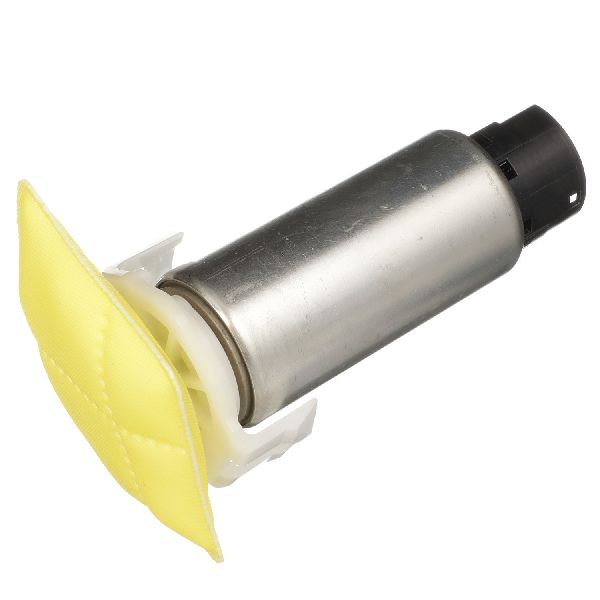
- Failing Low-Pressure Fuel Pump (In-Tank) 🔴 High Probability → Shop Fuel Pump A massive safety recall (NHTSA campaign 20V-012 and subsequent expansions like 20LA01/21LC01) was issued for a defective Denso low-pressure fuel pump impeller that can deform and stop working without warning. This is the most common point of failure for this vehicle range. A subsequent Customer Support Program (23LE01) extended warranty coverage for this part to 150,000 miles or until July 2036.
How to confirm: First, check the vehicle's VIN on the NHTSA or Lexus recall website to see if it's part of the recall or covered by CSP 23LE01. A technician can perform a fuel pressure test on the low-pressure side. One forum user noted the target pressure should be around 60+ PSI (420 kPa). If it's significantly below specification, the in-tank pump/filter assembly is the likely culprit.
Typical fix: If covered by the recall or customer support program, the dealer will replace the fuel pump assembly free of charge. If not, the in-tank fuel pump module must be replaced.
Est. part cost: $0 (if recall applies) - $400 - Failing High-Pressure Fuel Pump (HPFP) 🟡 Medium Probability → Shop Fuel Pump The HPFP is a complex mechanical component that can wear out over time. Lexus also issued a customer support program (23LE03) for some models due to potential fuel seepage from the HPFP, though this may present with a fuel odor first.
How to confirm: A diagnostic scan tool (like Toyota's Techstream) is needed to monitor the desired versus actual fuel pressure at the high-pressure rail. One user with a similar system noted their actual pressure was under 200 kPa while the target was 40-41 MPa (a massive difference). If the actual pressure doesn't meet the target under load while the low-pressure side is healthy, the HPFP is suspect.
Typical fix: Replacement of the engine-mounted high-pressure fuel pump.
Est. part cost: $400-$1000+ - Clogged Fuel Filter ⚪ Low Probability → Shop Fuel Filter The fuel filter is integrated into the low-pressure fuel pump module in the tank. While it can clog, it's more common for the pump motor itself to fail, especially given the recall history.
How to confirm: This is typically diagnosed by confirming low fuel pressure from the tank pump when the pump motor itself is receiving proper voltage. The filter is not usually serviced separately.
Typical fix: The entire fuel pump module, which includes the filter, must be replaced.
Est. part cost: $250-$400 - Faulty Fuel Pressure Sensor ⚪ Low Probability → Shop Fuel Pressure Sensor
How to confirm: Compare the pressure reading from the sensor (viewed on a scan tool) to a reading from a mechanical fuel pressure gauge. If the readings differ significantly, the sensor is likely faulty. This is an unlikely failure compared to the fuel pumps.
Typical fix: Replace the fuel pressure sensor on the fuel rail.
Est. part cost: $50-$150
Rare But Worth Checking
- Leaking Fuel Injector: → Shop Fuel Injector A stuck-open fuel injector can cause a drop in rail pressure, but this would typically be accompanied by other codes like a rich condition or misfire on a specific cylinder.
- Damaged Fuel Lines: → Shop Fuel Line A physical restriction or kink in a fuel line can impede flow and cause low pressure. This is rare but possible if the vehicle has sustained underbody damage.
Diagnosis Steps
- Check for Recalls: Enter the vehicle's VIN on the Lexus or NHTSA recall website to check for the open fuel pump safety recall (NHTSA 20V-012, 20LA01, 21LC01) or any customer support programs (23LE01, 23LE03).
- Scan for Codes: Use an OBD-II scanner to confirm P0087 and check for other related codes like P0171, P0174, or P3190.
- Monitor Live Data: Use an advanced scan tool (like Techstream) to observe live fuel pressure data. Compare the 'desired' fuel rail pressure with the 'actual' reading at idle and under load. A significant discrepancy where actual pressure is far below desired points to a fuel delivery issue.
- Test Low-Pressure System: If possible, connect a mechanical fuel pressure gauge to the low-pressure line to verify the in-tank pump's output. If it's below specification (e.g., under 40-60 PSI), the in-tank pump/filter assembly is the likely culprit.
- Test High-Pressure System: If the low-pressure system tests fine, but the high-pressure rail does not meet the desired pressure under load, the high-pressure fuel pump (HPFP) is the primary suspect.
- Inspect for Leaks: Visually inspect all fuel lines, the HPFP, and the fuel rail for any signs of fuel leakage. A fuel smell is a strong indicator of a leak, which could be related to Customer Support Program 23LE03 for the HPFP.
Parts You'll Likely Need
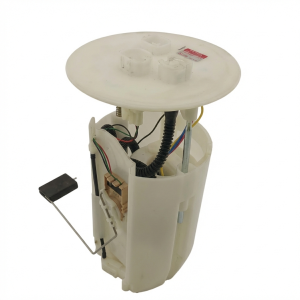
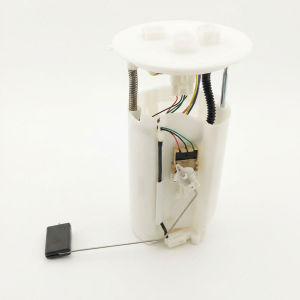
- Fuel Pump and Housing Assembly (Low-Pressure)
(OEM #23220-31600)— This is the most common failure point due to the widespread Denso recall. It contains the pump motor, filter, and sending unit.
Trusted brands: Denso (OEM), Aisin
OEM price range: $300-$500
Aftermarket price range: $150-$300 - High-Pressure Fuel Pump
(OEM #23101-31100)— The second most likely cause if the low-pressure pump is working correctly. This mechanical pump is driven by the camshaft.
Trusted brands: Denso (OEM), Bosch
OEM price range: $600-$1000+
Aftermarket price range: $400-$700 - Fuel Rail Pressure Sensor — A less common cause, this sensor can fail and send incorrect low-pressure readings to the ECM.
Trusted brands: Denso (OEM)
OEM price range: $100-$200
Aftermarket price range: $50-$120
Related Codes That Often Appear With This One
- P0171 — System Too Lean (Bank 1) - Insufficient fuel pressure leads to a lean air/fuel mixture, which this code detects. This is explicitly mentioned in TSB LSB000523 and its Toyota equivalent, T-SB-0009-23.
- P0174 — System Too Lean (Bank 2) - Same reason as P0171, but for the second cylinder bank. Also mentioned in TSB LSB000523/T-SB-0009-23.
- P3190 — Poor Engine Power - This is a common Toyota/Lexus hybrid code that sets when the gasoline engine fails to start or produce power as requested by the hybrid control system. A ClubLexus user reported this code alongside P0087.
Technical Service Bulletins (TSBs) & Recalls
- LSB000523: Addresses a MIL ON condition with DTC P0087, P0171, and/or P0174, pointing to a fuel pressure issue requiring pump replacement.
- T-SB-0009-23: The Toyota equivalent of LSB000523, covering the same P0087 and lean code conditions.
Platform-Specific Known Issues
- NHTSA Recall 20V-012 (and expansions 20LA01, 21LC01): Affects millions of Toyota/Lexus vehicles, including the 2017-2020 RX models. The low-pressure fuel pump can fail suddenly, causing an engine stall.
- Customer Support Program 23LE01: A result of a class-action settlement, this extends the warranty on the low-pressure fuel pump to 15 years or 150,000 miles for vehicles repaired under the initial recall.
- TSB LSB000523 / T-SB-0009-23: Issued by Lexus/Toyota for a MIL ON condition with DTC P0087, often accompanied by P0171/P0174. The bulletin guides technicians to diagnose a no-pressure condition and replace the fuel pump.
- Customer Support Program 23LE03: Lexus initiated this program for some models (including 2018-2022 RX350/450hL and 2016-2022 RX350/450h) to address potential fuel seepage from the high-pressure fuel pump.
Used OEM Parts in Stock
New Aftermarket Parts Available


The information in this article is provided for general reference and educational purposes only. Vehicle specifications, procedures, and part compatibility can vary by production date, trim level, and region. Always consult your vehicle's factory service manual and verify part numbers before purchasing or performing repairs. Safety-critical components such as airbags, seat belts, and braking systems should be installed by a qualified professional.
- Lexus RX HYBRID:
- 🧭 Diagnostic Flowchart
- 🛍️ Shop This Part
- What's Unique About the 2017-2020 Lexus RX HYBRID
- Symptoms You May Notice
- Most Likely Causes
- Rare But Worth Checking
- Diagnosis Steps
- Parts You'll Likely Need
- Related Codes That Often Appear With This One
- Technical Service Bulletins (TSBs) & Recalls
- Platform-Specific Known Issues
- 🎟️ Get 5% Off