

P0087 on 2015-2020 Lincoln Navigator: Low Fuel Pressure Causes & Fixes
P0087 on a Lincoln Navigator indicates low fuel pressure, most often caused by a failing high-pressure fuel pump (HPFP). Before replacing the HPFP, check for an incorrectly installed fuel jumper line (TSB SSM 50089), especially after recent repairs. Also, inspect the frame-mounted fuel pump driver module (FPDM) on 2015-2017 models for corrosion.
- P0087 on a Navigator means the high-pressure fuel system is not providing enough fuel to the engine.
- The most common culprit is a failing High-Pressure Fuel Pump (HPFP), but always check the Fuel Pump Driver Module (FPDM) first, as it's a cheaper and easier fix.
- If the Check Engine Light appeared right after another engine repair, the fuel jumper line may have been installed backward—a zero-cost fix.
- Driving with this code can lead to dangerous stalling and should be addressed quickly to prevent further damage.
- Early 2015 models have a specific TSB (16-0010) related to this code, indicating a known issue with original parts.
What's Unique About the 2015-2020 Lincoln NAVIGATOR
The 3.5L EcoBoost engine's direct injection system operates at extremely high pressures, making the high-pressure fuel pump (HPFP) a critical and common failure point for this code. Ford has issued several Technical Service Bulletins (TSBs) for this platform. One key issue is the appearance of code P0087 after a repair that involved removing a specific fuel line, which can be accidentally reinstalled backward, blocking fuel flow. Another TSB points to a known issue on early 2015 models requiring an updated part to resolve the low pressure condition. A major distinction exists between generations: 2015-2017 models have an accessible, frame-mounted Fuel Pump Driver Module (FPDM) that is prone to corrosion, while 2018-2020 models integrate this module into the in-tank fuel pump assembly, making it much harder to service.
Diagnostic Flowchart
Tap your situation to follow the diagnostic path that matches what you're seeing on this vehicle.
Generation note: This range covers the end of the third generation (2015-2017) and the start of the fourth generation (2018-2020). Both generations use a 3.5L EcoBoost V6 and can experience this code, but some TSBs and part numbers are year-specific. TSB 16-0010, for instance, applies only to Navigators built on or before July 17, 2015. A critical difference is the Fuel Pump Driver Module (FPDM): on 2015-2017 models, it's a separate module on the frame, while on 2018-2020 models, it's part of the in-tank fuel pump assembly.
Symptoms You May Notice
- Check Engine Light is on
- Lack of power, especially under acceleration or load
- Engine hesitation or stumbling
- Engine stalling, sometimes unexpectedly
- Rough or unstable idle
- Hard starting or long crank times
- Reduced fuel economy
- Replacing the in-tank fuel pump when the actual fault is with the high-pressure fuel pump (HPFP) or the Fuel Pump Driver Module (FPDM).
- Replacing fuel pumps or sensors when the code appeared after a recent repair, without first checking for the incorrectly installed fuel jumper line as described in TSB SSM 50089. 🎬 Watch: How to identify the backward fuel jumper line issue.
- Replacing a failed HPFP without inspecting the cam follower and camshaft lobe, leading to a repeat failure of the new pump.
Most Likely Causes
- Failing High-Pressure Fuel Pump (HPFP) 🔴 High Probability → Shop Fuel Pump The HPFP is a mechanically driven pump that is a well-documented failure point on the 3.5L EcoBoost engine.
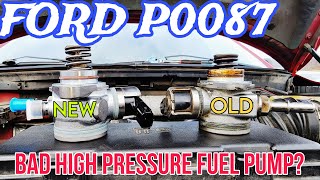
How to confirm: Use a diagnostic scan tool to monitor desired versus actual fuel rail pressure. 🎬 See how to monitor fuel pressure data on a scan tool. If actual pressure consistently fails to meet the desired pressure under load, and the low-pressure system is confirmed to be working, the HPFP is the likely culprit. A common sign of internal failure is that the pump's internal piston gets stuck in a compressed position; a visual comparison of the old pump to a new one will show the new pump's piston is much more extended.
Typical fix: Replacement of the high-pressure fuel pump. It is critical to also inspect the cam follower and camshaft lobe for wear when replacing the pump.
Est. part cost: $400-$800 - Incorrectly Installed Fuel Jumper Line 🔴 High Probability Per TSBs SSM 50089 and SSM 48807, this code frequently appears after a repair where the fuel line between the HPFP and the port injection rail was removed. The line has a one-way check valve and can be installed backward, restricting fuel flow.
How to confirm: Visually inspect the black fuel jumper line connecting the HPFP to the port injection rail. The line has a stainless steel Oetiker clamp around it. This clamp MUST be positioned on the end of the line closest to the port injection rail. If it is closest to the HPFP, the line is installed backward.
Typical fix: Correctly orient and reinstall the fuel jumper line. No parts are typically required.
Est. part cost: $0 - Failing Fuel Pump Driver Module (FPDM) (2015-2017 models) 🟡 Medium Probability → Shop Fuel Pump On 2015-2017 models, the FPDM is mounted to the frame crossmember above the spare tire, where it is highly susceptible to corrosion from road salt and moisture. A failing FPDM can't supply the proper voltage to the in-tank pump, starving the HPFP of fuel.
How to confirm: Lower the spare tire and visually inspect the module for heavy corrosion or a cracked case. A scan tool may show FPDM-related codes. Note: This does not apply to 2018+ models where the module is in the fuel tank.
Typical fix: Replace the Fuel Pump Driver Module. It is critical to install the new module with spacers (often included with aftermarket parts like Dorman's) to create an air gap and prevent future corrosion. 🎬 Watch: Quick walkthrough for replacing the fuel pump driver module.
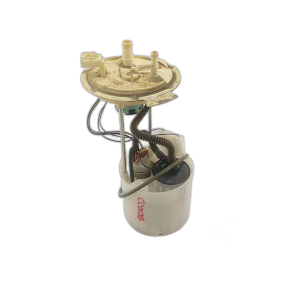
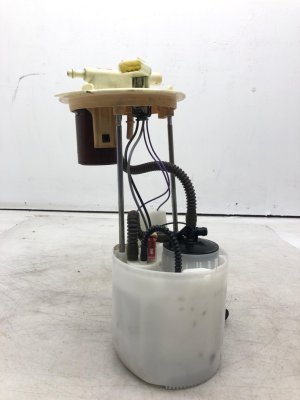
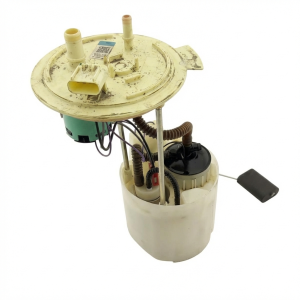
Est. part cost: $50-$100 - Failing In-Tank Low-Pressure Fuel Pump 🟡 Medium Probability → Shop Fuel Pump The in-tank pump supplies fuel to the HPFP. If it weakens or fails, the entire system will be starved of fuel. On 2018+ models, this assembly also contains the FPDM.
How to confirm: Test the fuel pressure on the low-pressure side (before the HPFP). It should maintain a steady pressure of around 50-65 PSI under load. A whining noise from the fuel tank area is a common symptom.
Typical fix: Replace the in-tank fuel pump module.
Est. part cost: $250-$500 - Faulty Fuel Rail Pressure Sensor ⚪ Low Probability → Shop Fuel Pressure Sensor
How to confirm: Monitor the fuel rail pressure reading on a scan tool. If the reading is erratic, stuck at a low value, or doesn't change with engine RPM, the sensor may be faulty. Comparing the scan tool reading to a mechanical gauge can help confirm a bad sensor.
Typical fix: Replace the fuel rail pressure sensor.
Est. part cost: $50-$150
Rare But Worth Checking
- Worn Cam Lobe or HPFP Follower: The HPFP is driven by a lobe on the camshaft via a small bucket tappet or 'follower'. Severe wear on the follower or the cam lobe itself will reduce the pump's stroke, causing low pressure. This can be caused by oil starvation or a seized HPFP. It is CRITICAL to inspect these components when replacing the HPFP; installing a new pump on a damaged cam lobe will cause the new pump to fail quickly.
- Clogged Fuel Filter: → Shop Fuel Filter The fuel filter is integrated into the in-tank fuel pump module and considered a 'lifetime' part, but it can still become clogged, especially with contaminated fuel, restricting flow to the HPFP.
- Leaking Fuel Injector: → Shop Fuel Injector A fuel injector that is stuck open can cause a drop in rail pressure, triggering P0087. This is often accompanied by a specific cylinder misfire code (P030X) and a strong smell of fuel in the oil.
Diagnosis Steps
- Check for any other stored DTCs that could point to a specific component, like a sensor or driver module.
- If the code appeared immediately after an engine or fuel system repair, FIRST inspect the fuel jumper line orientation per TSB SSM 50089. Look at the Oetiker clamp position.
- Connect a scan tool and monitor live data for 'Desired Fuel Rail Pressure' and 'Actual Fuel Rail Pressure'.
- Observe the pressure readings at idle, during a steady cruise, and under hard acceleration. If the actual pressure drops significantly below the desired pressure, there is a confirmed fuel delivery issue.
- For 2015-2017 models, physically inspect the Fuel Pump Driver Module (FPDM) on the rear frame rail for signs of heavy corrosion or damage.
- Test the low-pressure fuel system to ensure the HPFP is receiving an adequate supply of fuel (approx. 50-65 PSI) from the in-tank pump.
- If the low-pressure system is healthy but high-side pressure is still low, the High-Pressure Fuel Pump (HPFP) is the most likely cause.
- When replacing the HPFP, it is mandatory to remove and inspect the cam follower (tappet) and the camshaft lobe for any scoring, pitting, or wear. Failure to do so can result in the immediate destruction of the new pump.
Parts You'll Likely Need
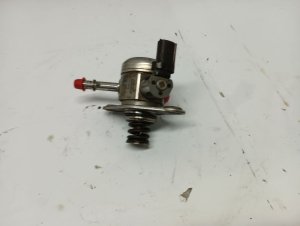
- High-Pressure Fuel Pump (HPFP)
(OEM #BL3Z-9350-C (for early 2015 models per TSB 16-0010), BL3Z-9350-D (common for 2015-2017). Always verify with VIN.)— This is the most common mechanical failure point for code P0087 on the 3.5L EcoBoost engine.
Trusted brands: Motorcraft, Bosch
OEM price range: $500-$800
Aftermarket price range: $350-$600
Related Codes That Often Appear With This One
- P008A — This code means 'Fuel Rail/System Pressure - Too Low - Bank 2'. It is often seen with P0087 and is mentioned in the same TSBs, indicating a system-wide pressure problem. [TSB SSM 50089]
- P0191 — This code indicates a 'Fuel Rail Pressure Sensor Circuit Range/Performance' issue. It can be triggered if the sensor readings are erratic or do not match what the PCM expects, which can happen alongside a P0087 code.
- P053F — This code for 'Cold Start Fuel Pressure Performance' is often seen with P0087 on EcoBoost engines, pointing towards a weak HPFP that cannot build sufficient pressure during a cold start.
Technical Service Bulletins (TSBs) & Recalls
- SSM 50089: Addresses stalling/lack of power and DTC P0087/P008A after a repair due to an incorrectly installed fuel jumper line.
- TSB160010: Supersedes a previous TSB to update the part list for fixing P0087 on early 2015 models.
- SSM 48807: An earlier version of SSM 50089, covering the same issue of P0087 after a fuel line was removed during a repair.
Platform-Specific Known Issues
- TSB SSM 50089: Incorrect Fuel Jumper Line Installation: If P0087 appears after any engine repair, this is the first thing to check. A fuel line connecting the HPFP to the port injection rail contains a one-way check valve. If installed backward, it restricts flow. The fix is to ensure the Oetiker clamp on the line is positioned closer to the port injection rail, not the HPFP.
- TSB 16-0010: Early 2015 Model HPFP Failure: For Navigators built on or before July 17, 2015, this TSB addresses P0087. If P0087 is the only code present, the official Ford procedure is to replace the high-pressure fuel pump (HPFP) with part number BL3Z-9350-C.
- FPDM Location Varies by Generation: On 3rd generation Navigators (2015-2017), the FPDM is a separate, replaceable module mounted on the frame above the spare tire, prone to corrosion. On 4th generation models (2018-2020), it is integrated into the in-tank fuel pump assembly and is not a simple standalone replacement.
Mechanic-Grade Diagnostic Values
- Low-Pressure Fuel System Pressure (at HPFP inlet) — expected: 50-65 PSI, steady under load.. Failure: Pressure drops below 50 PSI, especially during acceleration.
- High-Pressure Fuel System Pressure (at idle) — expected: Varies, but typically 250-900 PSI. The key is that 'Actual' pressure should closely match 'Desired' pressure on a scan tool.. Failure: Actual pressure is significantly lower than desired pressure, or is erratic and drops to low-side pressure (under 100 PSI) while running.
- High-Pressure Fuel System Pressure (under load) — expected: Can exceed 2,000 PSI. 'Actual' pressure must follow 'Desired' pressure.. Failure: When accelerating, desired pressure spikes but actual pressure fails to rise, causing hesitation.
- Fuel Pressure Sensor Voltage — expected: Typically 0.5V at low pressure and rises to 4.5V at maximum pressure.. Failure: Voltage is stuck low, high, or does not correlate with pressure changes.
- Low-Pressure Fuel Pump Current Draw — expected: 4-8 Amperes.. Failure: Significantly higher draw may indicate a failing pump motor; lower draw may indicate a wiring or FPDM issue.
Scan Tool Commands That Help
- Ford IDS, FORScan, or equivalent professional scanner: Fuel Pump Command (On/Off) — To verify that the PCM and FPDM can control the low-pressure fuel pump. Activating the command should cause the pump to run, confirming the integrity of the control circuit.
- Any OBD-II scanner with live data capability: Live Data Monitoring: FRP_DES (Desired Fuel Rail Pressure) vs FRP (Actual Fuel Rail Pressure) — This is the primary diagnostic method for P0087. Graphing these two parameters during idle, cruise, and wide-open throttle will quickly show if the high-pressure system is failing to meet the PCM's request.
Wiring & Ground Locations
- Fuel Pump Driver Module (FPDM) — On 2015-2017 models, it is mounted to a frame crossmember, typically above the spare tire on the driver's side.. This location makes it extremely vulnerable to corrosion, which can cause it to fail and stop powering the low-pressure fuel pump, starving the HPFP.
- Inertia Fuel Shut-Off Switch — Located behind an access panel in the left rear quarter trim panel, near the liftgate.. If this safety switch is accidentally tripped, it will cut all power to the fuel pump, causing a no-start and potentially this code. It should be checked to ensure it is pressed down.
- Fuse #27 (Engine Compartment Fuse Box) — In the power distribution box in the engine bay.. This fuse provides power to the Powertrain Control Module (PCM). A fault with this fuse can cause various engine management issues, including fuel pressure control problems.
Real Owner Repair Stories
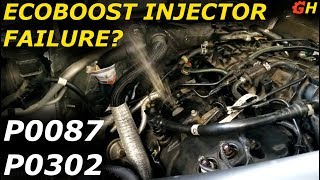
- GearHeads YouTube Channel (2011 Ford F-150 3.5L EcoBoost (same engine and fuel system design)) — P0087 (Fuel Rail Pressure Too Low), P0302 (Cylinder 2 Misfire), long crank, heavy white smoke from exhaust.
❌ Tried (didn't work) Initial diagnosis focused on the fuel pumps.
✅ What actually fixed it The root cause was a physically broken fuel injector on cylinder #2 that was stuck wide open. This dumped so much fuel into the cylinder that the entire fuel rail lost pressure. The fix was replacing the faulty fuel injector. Key diagnostic clues were the accompanying single-cylinder misfire code and the oil level being high and smelling strongly of gasoline.
When the Usual Fixes Don't Work
- While the most common causes for P0087 are the high-pressure fuel pump (HPFP) or the fuel pump driver module (FPDM), there are documented cases where neither was the fault. In one instance involving a 3.5L EcoBoost, a stuck-open fuel injector was dumping so much fuel into one cylinder that it caused the pressure for the entire fuel rail to drop below the minimum threshold. The diagnostic clue was the presence of a single-cylinder misfire code (P030X) alongside P0087. This highlights the need to analyze all accompanying codes before assuming the fault lies with a pump.
OEM Part Supersession History
BL3Z-9350-C→BL3Z-9350-D— Updated part to address failures on earlier models, as referenced in TSB 16-0010.
Heads up: The newer part (D) is the correct replacement for the older part (C).
Model Year Variations Within This Range
- 2015-2017: The Fuel Pump Driver Module (FPDM) is a separate module located on the frame crossmember above the spare tire. It is known to fail from corrosion.
- 2018-2020: The Fuel Pump Driver Module (FPDM) is integrated into the low-pressure fuel pump assembly inside the fuel tank. This makes diagnosis of the module itself more difficult and replacement a much larger job requiring the fuel tank to be dropped.
- 2015 (built on or before 07/17/2015): These early models are specifically called out in TSB 16-0010 for P0087 issues, often requiring an updated High-Pressure Fuel Pump (HPFP). [TSB160010]
Helpful Videos

Used OEM Parts in Stock
New Aftermarket Parts Available


The information in this article is provided for general reference and educational purposes only. Vehicle specifications, procedures, and part compatibility can vary by production date, trim level, and region. Always consult your vehicle's factory service manual and verify part numbers before purchasing or performing repairs. Safety-critical components such as airbags, seat belts, and braking systems should be installed by a qualified professional.
- Lincoln NAVIGATOR:
- 🧭 Diagnostic Flowchart
- 🎬 Helpful Videos
- 🛍️ Shop This Part
- What's Unique About the 2015-2020 Lincoln NAVIGATOR
- Symptoms You May Notice
- Most Likely Causes
- Rare But Worth Checking
- Diagnosis Steps
- Parts You'll Likely Need
- Related Codes That Often Appear With This One
- Technical Service Bulletins (TSBs) & Recalls
- Platform-Specific Known Issues
- Mechanic-Grade Diagnostic Values
- Scan Tool Commands That Help
- Wiring & Ground Locations
- Real Owner Repair Stories
- When the Usual Fixes Don't Work
- OEM Part Supersession History
- Model Year Variations Within This Range
- 🎟️ Get 5% Off