

P0087 on 2015-2020 Lincoln Navigator 3.5L EcoBoost: Low Fuel Pressure Causes and Fixes
P0087 on a 2015-2020 Navigator almost always indicates a failing high-pressure fuel pump (HPFP). Before replacing this expensive part, check for a corroded Fuel Pump Driver Module (2015-2017 models) or an incorrectly installed fuel line if recent repairs were performed. An OEM HPFP can cost $400-$800.
- P0087 on the 3.5L EcoBoost Navigator indicates low pressure in the high-pressure fuel system.
- The most likely cause is a failing high-pressure fuel pump (HPFP), but do not replace it without proper diagnosis.
- Before replacing parts, check for simple fixes: an incorrectly installed fuel line (if recently repaired) or a corroded Fuel Pump Driver Module (2015-2017 models).
- Driving with this code is unsafe due to the high risk of the engine stalling in traffic.
- Check for open recalls, especially Recall 18S17 for 2018 models, which involves a free replacement of a potentially defective HPFP.
What's Unique About the 2015-2020 Lincoln Navigator
The 3.5L EcoBoost engine's gasoline direct injection (GDI) system is known for stressing its high-pressure fuel pump (HPFP), making it a primary failure point for the P0087 code. Ford has issued several service bulletins for this platform. One critical issue, covered in SSM 50089, is the code appearing after engine repairs because a specific fuel jumper line was reinstalled backward, blocking flow. Additionally, 2015-2017 models have a frame-mounted fuel pump driver module that is prone to corrosion, while 2018 models were subject to a recall (18S17) for defective welds on the HPFP itself. Early 2015 models are also covered by TSB 16-0010, which points to a known issue with the original HPFP.
Generation note: This range covers two Navigator generations. The 2015-2017 models (Third Generation) are noted for having a frame-mounted Fuel Pump Driver Module (FPDM) susceptible to corrosion, located on a crossmember above the spare tire. The 2018-2020 models (Fourth Generation) have a different fuel system layout where the FPDM is integrated into the in-tank fuel pump assembly, and were part of a specific recall (18S17) for the high-pressure fuel pump. TSB SSM 50089 regarding an incorrectly installed fuel line applies mainly to 2017 and newer models with the dual (port and direct) injection system.
Symptoms You May Notice
- Significant loss of engine power, especially under acceleration.
- Engine hesitation or stumbling.
- Rough or unstable idle.
- Engine stalling, sometimes unexpectedly.
- Check Engine Light is on.
- Extended cranking or difficulty starting.
- Reduced fuel economy.
- Replacing the in-tank low-pressure fuel pump when the high-pressure fuel pump (HPFP) is the actual cause.
- Replacing the fuel rail pressure sensor without verifying its readings against a mechanical gauge.
- Replacing the HPFP without first checking for the simple, no-cost issue of a backward fuel jumper line, especially if the code appeared after other engine work.
Most Likely Causes
- Failing High-Pressure Fuel Pump (HPFP) 🔴 High Probability → Shop Fuel Pump The HPFP is a mechanically driven pump that is a well-documented, common failure point on the 3.5L EcoBoost engine due to the high stress of the direct injection system. TSB 16-0010 was issued for early 2015 models specifically for this issue.
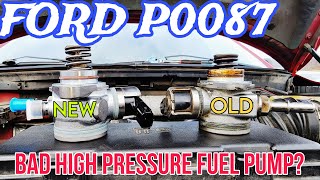
How to confirm: A technician will use a scan tool to monitor desired vs. actual fuel rail pressure. If the actual pressure 🎬 See how to diagnose a failing HPFP using a scan tool. cannot keep up with the desired pressure under load, and the low-pressure system is confirmed to be working correctly, the HPFP is likely faulty. A visual sign of failure upon removal is a compressed or collapsed internal piston compared to a new pump. You can also listen for an audible clicking from the pump while the engine is running; if it's clicking but pressure doesn't build, the pump has likely failed internally.
Typical fix: Replace the high-pressure fuel pump and the cam follower (tappet) that drives it. It is also highly recommended to change the engine oil and filter to remove any metal debris or leaked fuel from the failing pump.
Est. part cost: $400-$800 - Incorrectly Installed Fuel Jumper Line 🟡 Medium Probability Per TSB SSM 50089, this code frequently appears after a repair where the fuel line between the HPFP and the port injection rail was removed. The line has a one-way check valve and can be accidentally reinstalled backward, blocking fuel flow.
How to confirm: Visually inspect the fuel jumper line. The Oetiker clamp (a stainless steel band) on the line should be positioned closest to the end connected to the port injection fuel rail. If it's at the other end (closest to the HPFP), the line is backward.
Typical fix: Remove the fuel line and reinstall it in the correct orientation. This is a no-cost fix if done DIY and only requires labor.
Est. part cost: $0 - Failing Fuel Pump Driver Module (FPDM) 🟡 Medium Probability → Shop Fuel Pump On 2015-2017 models, the FPDM is mounted on a frame crossmember above the spare tire, where it is highly susceptible 🎬 Watch: How to replace a corroded fuel pump driver module. to corrosion from road salt and moisture, leading to intermittent or total failure of the low-pressure pump.
How to confirm: Lower the spare tire and visually inspect the module and its electrical connector for corrosion or damage. A scan tool can also check for communication codes with the module, such as U0109.
Typical fix: Replace the Fuel Pump Driver Module and clean or repair its electrical connector.
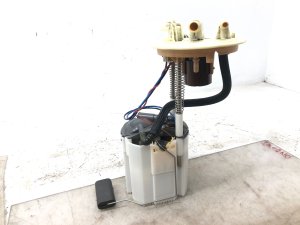
Est. part cost: $50-$150 - Failing In-Tank Low-Pressure Fuel Pump ⚪ Low Probability → Shop Fuel Pump While less common than the HPFP, the in-tank pump can fail. If it doesn't supply the HPFP with adequate base pressure (typically 50-65 PSI), the high-pressure system will be starved of fuel.
How to confirm: Connect a mechanical fuel pressure gauge to the low-pressure system's service port. The pressure should be stable and within the manufacturer's specification (around 64 PSI) at idle and under load.
Typical fix: Replace the in-tank fuel pump assembly.
Est. part cost: $250-$500
Rare But Worth Checking
- Stuck-Open Fuel Injector: → Shop Fuel Injector A fuel injector stuck in the open position can dump so much fuel into one cylinder that it causes the pressure for the entire fuel rail to drop, triggering P0087. This is often accompanied by a single-cylinder misfire code (e.g., P0302) and excessive black or white smoke from the exhaust.
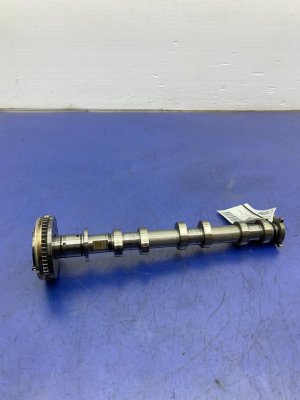
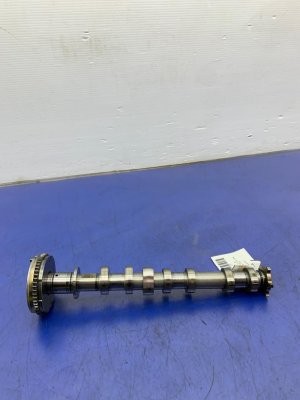
- Worn Camshaft Lobe: → Shop Engine Camshaft The HPFP is driven by a specific lobe on the camshaft. In rare cases, especially with poor lubrication or high mileage, this lobe can wear down, preventing it from fully actuating the pump. This should be inspected whenever the HPFP is replaced; installing a new pump on a worn lobe will cause the new pump to fail quickly.
Diagnosis Steps
- Check for any Technical Service Bulletins (TSBs) or recalls. Note recall 18S17 (2018 models), TSB SSM 50089 (post-repair issues on 2017+ models), and TSB 16-0010 (early 2015 models).
- Use a scan tool to read desired vs. actual fuel rail pressure. Observe the values at idle and during a test drive under load.
- If the code appeared after recent engine repairs, immediately inspect the fuel jumper line for correct orientation per TSB SSM 50089. Check that the Oetiker clamp is closest to the port injection rail. 🎬 Watch: How to check if your fuel jumper line is backward.
- For 2015-2017 models, lower the spare tire and inspect the Fuel Pump Driver Module (FPDM) and its connector for corrosion or damage.
- Connect a mechanical pressure gauge to test the low-pressure fuel system. Confirm it supplies steady pressure (around 64-65 PSI) to the HPFP.
- If the low-pressure system is healthy and the fuel line orientation is correct, the high-pressure fuel pump (HPFP) is the primary suspect. Listen for an audible click from the pump.
- If replacing the HPFP, inspect the old pump for a collapsed piston. CRITICAL: Inspect the camshaft lobe and the pump's follower for wear or damage before installing the new pump.
- If misfire codes are present, test the corresponding fuel injector to ensure it is not stuck open, which can be confirmed by heavy fuel smell and smoke.
Parts You'll Likely Need
- High-Pressure Fuel Pump (HPFP)
(OEM #BL3Z-9350-D (or superseding part number, fits 2015-2017 models))— This is the most common failure point on the 3.5L EcoBoost engine that causes code P0087 due to the high mechanical stress it endures.
Trusted brands: Motorcraft, Bosch
OEM price range: $400-$800 - Camshaft Follower (Tappet) — This small component sits between the camshaft lobe and the HPFP piston. It is a wear item and should always be inspected and likely replaced with the HPFP to prevent premature failure of the new pump.
Trusted brands: Motorcraft, Ford Genuine Parts
OEM price range: $20-$40 - Fuel Pump Driver Module (FPDM) — On 2015-2017 models, this module is prone to failure from corrosion due to its mounting location, which is on the frame rail above the spare tire.
Related Codes That Often Appear With This One
- P008A — This code for 'Low Pressure Fuel System Pressure - Too Low' often appears with P0087, and is mentioned in the same TSB (SSM 50089), indicating a system-wide pressure issue that could stem from the backward jumper line.
- U0109 — 'Lost Communication With Fuel Pump Control Module' can appear alongside P0087 on 2015-2017 models, pointing directly to a faulty FPDM or its wiring.
- P030x (e.g., P0301, P0302) — A misfire code for a specific cylinder can indicate a stuck-open injector is the root cause of the low rail pressure.
- P00C6 — This code for 'Fuel Rail Pressure Too Low - Engine Cranking' is often seen with P0087 and points to an issue preventing pressure from building during startup, commonly caused by a weak HPFP or LPFP.
Technical Service Bulletins (TSBs) & Recalls
- SSM 50089: Stalling, Lack Of Power, And/Or Low Fuel Rail Pressure - Fuel Jumper Line Incorrect Installation During Service.
- Recall 18S17: Addresses potentially defective welds on the high-pressure fuel pump for some 2018 models.
- TSB 16-0010: Addresses P0087 on Navigators built on or before July 17, 2015, often requiring an updated HPFP.
Platform-Specific Known Issues
- Recall 18S17: Affects some 2018 Navigator models. The high-pressure fuel pump welds could fracture, causing a fuel or oil leak and increasing fire risk. The fix is a replacement of the HPFP.
- TSB SSM 50089: Affects 2017-2021 models. A fuel jumper line installed backward after a repair can cause P0087. The fix is to orient the line correctly.
- FPDM Corrosion: On 2015-2017 models, the frame-mounted fuel pump driver module is exposed to the elements and can fail due to corrosion.
Mechanic-Grade Diagnostic Values
- Low-Pressure Fuel System Pressure (at HPFP inlet) — expected: Approximately 64-65 PSI (441-448 kPa) with engine running.. Failure: Pressure below 50 PSI indicates a problem with the in-tank pump or FPDM.
- High-Pressure Fuel System Pressure (Scan Tool PID: FRP) — expected: ~2,175 PSI (15,000 kPa) under load/WOT. At idle, it should closely match the desired pressure, often around 500-600 PSI.. Failure: If the actual pressure (FRP) consistently lags more than 200 PSI behind the desired pressure (FRP_DS) under load, it points to a failing HPFP, a leak, or a restriction.
- Fuel Rail Pressure Sensor Voltage — expected: Approximately 0.54V at idle (corresponding to low-side pressure if HPFP is not working).. Failure: An erratic or out-of-range voltage can indicate a faulty sensor, not necessarily a pressure problem. Compare with a mechanical gauge if possible.
- FPDM Duty Cycle (Ford-specific) — expected: Ford's system often doubles the duty cycle input from the PCM. A 30% input command should result in a 60% output signal to the low-pressure pump.. Failure: An incorrect input vs. output duty cycle ratio points to a failing FPDM.
Scan Tool Commands That Help
- Ford IDS or equivalent (Autel, Snap-on): HPFP Electrical Connector Disconnect/Reconnect Test — With the engine running, unplugging the HPFP's electrical connector should cause the audible clicking to stop. Plugging it back in should make the clicking resume immediately. This is a quick, informal bidirectional test to confirm the PCM is commanding the pump to operate and the pump's internal solenoid is responding. If it clicks but pressure doesn't build, the pump's mechanical section has likely failed.
Wiring & Ground Locations
- FPDM Ground (2015-2017) — The Fuel Pump Driver Module is located on the frame crossmember, typically above the spare tire on the driver's side. The ground is usually secured via one of the module's mounting bolts to the frame itself.. A corroded or loose ground at this location can cause intermittent or total failure of the low-pressure fuel pump, starving the HPFP and triggering a P0087 code. This is a critical check on salt-belt vehicles.
- HPFP Connector — A two-wire connector on the top of the high-pressure fuel pump, located at the rear of the passenger-side valve cover.. This is the connection for the fuel volume solenoid. Checking for power and signal here confirms the PCM is commanding the pump. A loose or corroded connector can cause the HPFP to stop working.
Real Owner Repair Stories
- Ford F150 Forum (Ford Escape 2.0L EcoBoost (similar GDI fuel system)) — P0087, engine stumbling and stalling in traffic.
❌ Tried (didn't work) Initial suspicion was on the high-pressure fuel pump (HPFP).
✅ What actually fixed it The root cause was a faulty low-pressure fuel sensor located before the HPFP. The sensor was sending an incorrect low reading (around 50 PSI) to the PCM, which then commanded the wrong fuel rate, causing the engine to run rich and stall. Replacing the low-pressure sensor resolved the issue. - GearHeads YouTube Channel (2011 Ford F-150 3.5L EcoBoost) — P0087 (Fuel Rail Pressure Too Low) and P0302 (Cylinder 2 Misfire), heavy smoke from exhaust, strong fuel smell in oil.
❌ Tried (didn't work) Initial diagnosis focused on fuel pumps before correlating the misfire code.
✅ What actually fixed it A stuck-open fuel injector on cylinder 2 was dumping fuel, causing the entire rail's pressure to drop and triggering P0087. The fix was confirmed by performing a 'clear flood crank' with the spark plug removed, which showed raw fuel spraying out of the cylinder. Replacing the faulty injector fixed both codes.
OEM Part Supersession History
BL3Z-9350-C→BL3Z-9350-D— Standard part revision and update by Ford.
Heads up: BL3Z-9350-D is the widely available and correct replacement part for many 3.5L EcoBoost applications in this year range.
Model Year Variations Within This Range
- 2017-2020: The introduction of the Gen 2 3.5L EcoBoost in 2017 brought a dual-injection system (both direct and port injection). This added a second set of injectors and the fuel jumper line mentioned in TSB SSM 50089, which can be installed backward after repairs, creating a new potential cause for P0087 not present on 2015-2016 models.
- 2018-2020: The separate, frame-mounted Fuel Pump Driver Module (FPDM) used in 2015-2017 models was eliminated. For 2018 and newer, the fuel pump control function is integrated into the in-tank fuel pump assembly, making it a more complex and expensive repair if it fails.
Diagnostic Flowchart
Real Owner Stories
Aggregated from forums and TSBs cited above. Mileages and costs reflect what owners reported in those sources.
2015 Ford Expedition 3.5L EcoBoost — 135000 miles
Symptoms: Sudden and complete loss of throttle response while towing a travel trailer, resulting in codes P0627, P0087, and P00C6.
What fixed it: Dealership replaced the Fuel Pump Driver Module (FPDM) and the high-pressure fuel pump, though the owner noted the problem returned 150 miles later.
Cost: $1200-$1200
Source hint: Ford Expedition Forum
2015 Lincoln Navigator 3.5L EcoBoost
Symptoms: Rising engine oil level and high fuel content mixed into the oil.
What fixed it: Replacing the failing high-pressure fuel pump (HPFP) that was leaking fuel into the crankcase.
Source hint: Reddit r/MechanicAdvice
2015 Ford F-150 2.7L EcoBoost
Symptoms: Intermittent stalling and starting issues accompanied by the P0087 code.
What fixed it: Diagnosed as a failing high-pressure fuel pump (HPFP) or Fuel Pump Driver Module (FPDM).
Source hint: f150forum.com
Related OBD-II Codes
Frequently Asked Questions
Does TSB SSM 50089 apply to my 2015 Lincoln Navigator?
My 2018 Navigator has code P0087 and smells like fuel. Is there a recall for this?
Where is the Fuel Pump Driver Module (FPDM) located on my 2016 Navigator?
I just had engine work done on my 2017 Navigator and now I have a P0087 code. What happened?
My oil level is rising and smells like gas. Could this be related to the P0087 code?
Helpful Videos

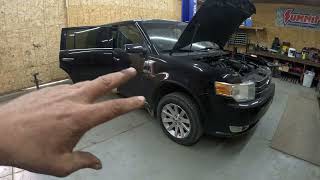
Used OEM Parts in Stock
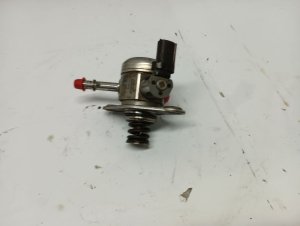
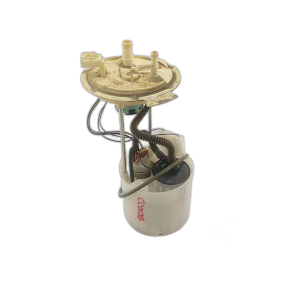
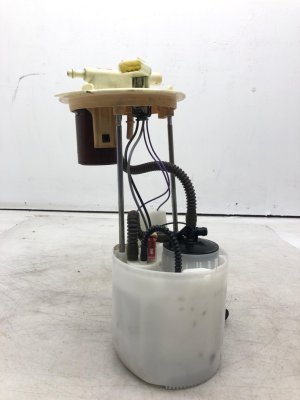
New Aftermarket Parts Available


The information in this article is provided for general reference and educational purposes only. Vehicle specifications, procedures, and part compatibility can vary by production date, trim level, and region. Always consult your vehicle's factory service manual and verify part numbers before purchasing or performing repairs. Safety-critical components such as airbags, seat belts, and braking systems should be installed by a qualified professional.
- Lincoln Navigator:
- 🧭 Diagnostic Flowchart
- 🎬 Helpful Videos
- 🛍️ Shop This Part
- What's Unique About the 2015-2020 Lincoln Navigator
- Symptoms You May Notice
- Most Likely Causes
- Rare But Worth Checking
- Diagnosis Steps
- Parts You'll Likely Need
- Related Codes That Often Appear With This One
- Technical Service Bulletins (TSBs) & Recalls
- Platform-Specific Known Issues
- Mechanic-Grade Diagnostic Values
- Scan Tool Commands That Help
- Wiring & Ground Locations
- Real Owner Repair Stories
- OEM Part Supersession History
- Model Year Variations Within This Range
- Real Owner Stories
- 2015 Ford Expedition 3.5L EcoBoost — 135000 miles
- 2015 Lincoln Navigator 3.5L EcoBoost
- 2015 Ford F-150 2.7L EcoBoost
- Related OBD-II Codes
- Frequently Asked Questions
- 🎟️ Get 5% Off