

P0087 on 2016-2018 Mazda CX-9: Fuel Pressure Too Low Causes and Fixes
For a 2016-2018 Mazda CX-9, code P0087 most often points to a failing high-pressure fuel pump (HPFP) or the in-tank low-pressure fuel pump (LPFP). A specific Mazda TSB recommends testing the low-pressure pump first after a PCM update. Note that a critical recall for the LPFP exists for 2018 models. Expect a repair cost of $400-$1600 depending on which pump has failed.
- P0087 on your CX-9 means the engine is starving for fuel due to low pressure in the high-pressure rail.
- While the high-pressure fuel pump (HPFP) is a likely culprit, a Mazda TSB advises testing the in-tank low-pressure fuel pump (LPFP) first.
- Before replacing parts, physically inspect the HPFP on the engine for fuel leaks and loose mounting bolts, as this has been a confirmed cause.
- This is not a DIY-friendly repair for beginners due to the extreme pressures and fire hazard involved with the direct-injection fuel system.
- Driving with this code can lead to stalling and further engine damage, so it should be addressed promptly.
What's Unique About the 2016-2018 Mazda CX-9
What's unique to this CX-9 is Mazda's official guidance in Technical Service Bulletin #01-003-18-3421. Originally, vehicles with a weak low-pressure pump would experience a lack of power without a check engine light, as the PCM would limit engine output to protect it. The TSB introduced a PCM software update; after the update, instead of limiting power, the PCM will store DTC P0087 or P0192 when fuel delivery is insufficient. This is why the TSB directs technicians to inspect the *low-pressure* in-tank fuel pump first, as a weak LPFP can starve the high-pressure pump (HPFP), causing the code, particularly when fuel temperatures are high.
Diagnostic Flowchart
Tap your situation to follow the diagnostic path that matches what you're seeing on this vehicle.
Symptoms You May Notice
- Significant loss of engine power, especially when accelerating or going uphill.
- Engine hesitation, stumbling, or shuttering, particularly at highway speeds when trying to accelerate.
- Engine stalling, possibly requiring a long crank to restart.
- Rough idling, with RPMs that may jump and fall by several hundred.
- Check Engine Light is on.
- Replacing the high-pressure fuel pump (HPFP) without first testing the low-pressure fuel pump (LPFP), as recommended by Mazda's TSB #01-003-18-3421.
Most Likely Causes
- Failing High-Pressure Fuel Pump (HPFP) 🔴 High Probability → Shop Fuel Pump The HPFP is a common failure point on many direct-injection engines, including the Skyactiv-G 2.5T. An owner of a 2017 CX-9 reported a failure at 54,000 miles, with symptoms like shuttering on acceleration and erratic idle. Wear over time can reduce its ability to generate the required pressure.
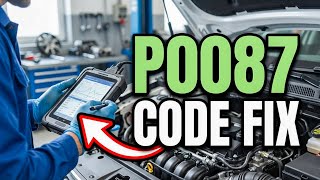
How to confirm: Monitor desired vs. actual fuel rail pressure 🎬 Watch: How to diagnose and fix a P0087 code with a capable scan tool. If actual pressure consistently fails to meet desired pressure under load, and the low-pressure system is confirmed to be working, the HPFP is the likely culprit.
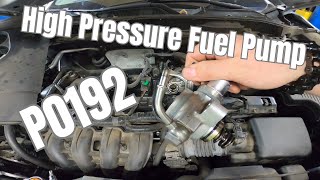
Typical fix: Replace the high-pressure fuel pump and its associated one-time-use fuel line. 🎬 See this walkthrough for replacing the high-pressure fuel pump
Est. part cost: $350-$600 - Failing Low-Pressure Fuel Pump (LPFP) 🟡 Medium Probability → Shop Fuel Pump Mazda TSB #01-003-18-3421 specifically identifies a poorly performing low-pressure pump as a primary cause for this code on vehicles built before November 2017. Furthermore, a safety recall (NHTSA #21V875000) was issued for 2018 CX-9s for LPFP impellers that could crack and cause the pump to fail, leading to stalling.
How to confirm: Follow the diagnostic procedure in TSB #01-003-18-3421, which involves using the Mazda M-MDS tool to check the pump's performance PID data after a PCM reprogram. A physical fuel pressure test at the low-pressure line can also confirm its output.
Typical fix: Replace the in-tank low-pressure fuel pump module.
Est. part cost: $250-$500 - Loose High-Pressure Fuel Pump Mounting Bolts ⚪ Low Probability → Shop Fuel Pump A documented case on a 2016 CX-9 with 122k miles on the Mazdas247.com forum showed P0087 was caused by the HPFP becoming physically loose. The owner found the lower mounting bolt missing and the upper bolt broken, resulting in a significant fuel leak at the rear of the engine.
How to confirm: Visually inspect the high-pressure fuel pump on the engine. Check for any signs of fuel leakage around the pump (a strong smell of gas is a key indicator) and physically check if the mounting bolts are tight.
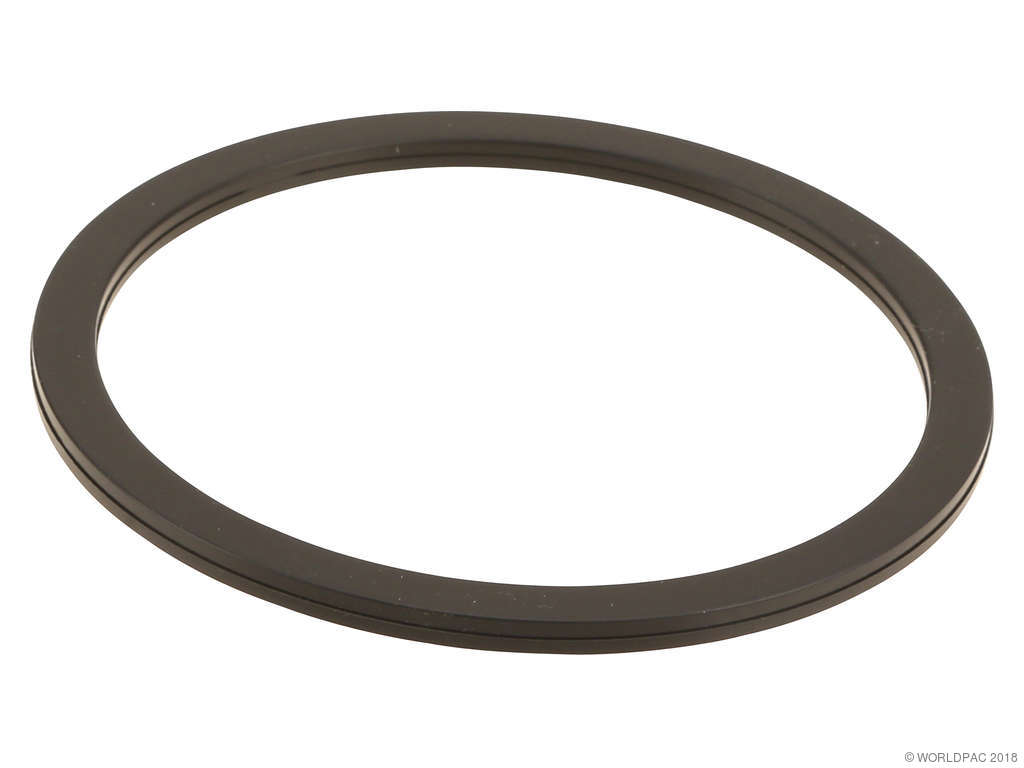
Typical fix: Secure the pump by replacing any missing or broken bolts (M8x45mm) and the associated gasket and O-ring. This is often discovered during diagnosis for a failed pump or external leak.
Est. part cost: $10-$30 - Clogged In-Tank Fuel Filter/Strainer ⚪ Low Probability → Shop Fuel Filter The fuel filter is part of the low-pressure pump assembly in the tank. While not a primary failure point, debris from the fuel tank or poor quality fuel can restrict flow over time, starving the HPFP.
How to confirm: This is typically diagnosed by observing low fuel pressure from the in-tank pump during a pressure test. The filter itself is usually replaced with the pump assembly.
Typical fix: Replace the low-pressure fuel pump assembly, which includes a new filter.
Est. part cost: $250-$500
Rare But Worth Checking
- Faulty Fuel Rail Pressure Sensor: → Shop Fuel Pressure Sensor While less common than pump failure, a faulty sensor can send incorrect low-pressure readings to the PCM, triggering the code even if the pressure is normal. Replacement cost is estimated around $309.
- Restricted or Kinked Fuel Line: → Shop Fuel Line Physical damage to a fuel line between the tank and the engine can restrict flow and cause a pressure drop.
Diagnosis Steps
- Check for any visible fuel leaks, paying close attention to the high-pressure fuel pump and the lines connected to it. A fuel smell is a strong indicator.
- Physically inspect the high-pressure fuel pump on the engine to ensure its mounting bolts are secure.
- Connect a scan tool and check for any other stored trouble codes, such as P0192 or P064A.
- If your vehicle falls within the range of TSB #01-003-18-3421 (VINs lower than JM3TC**216875), the first step is to reprogram the PCM. After reprogramming, follow the TSB's procedure to test the low-pressure fuel pump's performance via scan tool data.
- Using the scan tool, monitor both 'Desired Fuel Rail Pressure' and 'Actual Fuel Rail Pressure' PIDs. Perform a test drive with sharp acceleration (if safe to do so).
- If Actual pressure cannot keep up with Desired pressure, it confirms a fuel delivery problem.
- If the low-pressure pump tests good (per the TSB or a mechanical gauge) but the high pressure is still low, the high-pressure fuel pump (HPFP) is the primary suspect.
- If the scan tool shows low pressure but the engine runs fine, consider testing the fuel rail pressure sensor by comparing its reading to a mechanical gauge (professional assistance recommended).
Parts You'll Likely Need
- High-Pressure Fuel Pump
(OEM #PY01-13-3S0)— This is a probable cause of a significant pressure drop in the high-pressure side of the fuel system on a GDI engine, with documented failures on this platform.
Trusted brands: Mazda (OEM), Bosch
OEM price range: $450-$600
Aftermarket price range: $350-$500 - Low-Pressure Fuel Pump Assembly
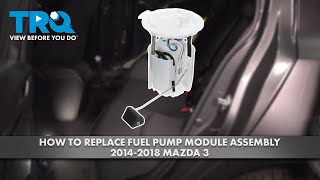
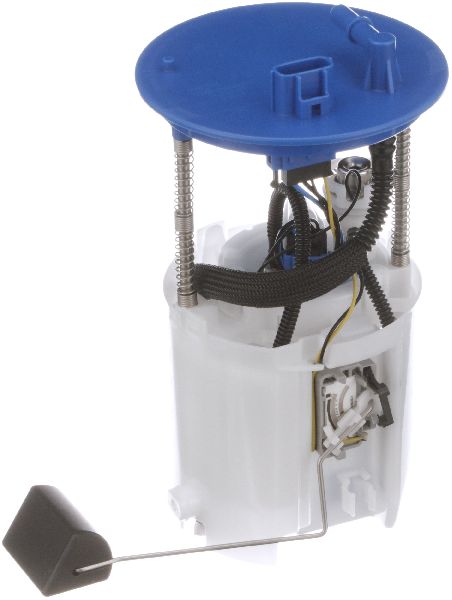
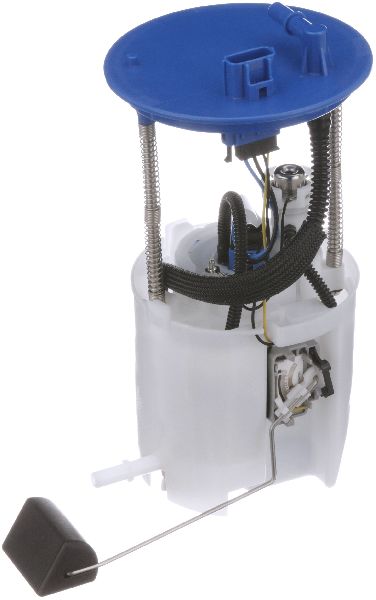
(OEM #PYFL-13-35X)— Mazda's TSB specifically points to this part as a potential cause that must be diagnosed early. It includes the in-tank pump, filter, and sending unit. A recall for 2018 models also targets this part. The original part number PYFL-13-35X has been superseded by PYFL-13-35XA. 🎬 Watch: How to replace the in-tank fuel pump module
Trusted brands: Mazda (OEM), Delphi, Denso
OEM price range: $400-$550
Aftermarket price range: $180-$400
Related Codes That Often Appear With This One
- P0192 — This code for 'Fuel Rail Pressure Sensor Circuit Low Input' is mentioned in the same TSB as P0087 and can be set under the same conditions of insufficient fuel injection.
- P064A — A separate TSB (#01-010/17) addresses a false P064A 'Fuel Pump Control Module Error' code. The procedure advises technicians to check if P0087 is also present, as that would indicate a real drivability concern, not just a software logic issue.
Technical Service Bulletins (TSBs) & Recalls
- 01-003-18-3421: Addresses a lack of power and the subsequent setting of P0087 or P0192, providing a diagnostic path that prioritizes checking the low-pressure fuel pump after a PCM update.
- 01-010/17: Addresses a potentially false P064A code and instructs technicians to verify if other fuel-related DTCs like P0087 are also present.
Platform-Specific Known Issues
- TSB #01-003-18-3421: For 2016-2018 CX-9s with VINs lower than JM3TC**216875, Mazda released a bulletin to address a lack of power. The fix involves a PCM update and a specific diagnostic procedure for P0087 that starts with testing the low-pressure fuel pump.
Mechanic-Grade Diagnostic Values
- DTC P0087 Trigger Condition — expected: Actual fuel pressure is less than target pressure by less than 1.2 MPa (174 psi).. Failure: Actual fuel pressure is lower than target pressure by 1.2 MPa (174 psi) or more for 5 seconds.
- High Fuel Pressure Sensor Voltage (Idle, Engine Warm) — expected: 0.98–1.05 V. Failure: Voltage is significantly outside this range at idle.
- High Fuel Pressure (Idle, Engine Warm) — expected: 3.44–3.95 MPa (499–572 psi). Failure: Pressure is significantly below this range at idle.
- Low-Pressure Fuel System Test (HPFP disabled via M-MDS) — expected: 545–695 kPa (79.1–100.0 psi). Failure: Pressure is below this range, indicating a fault in the low-pressure pump or lines.
Hidden / Shadow Codes Worth Checking
- P064A: Fuel Pump Control Module Error. This code can be stored in PCM memory without illuminating the Check Engine Light or storing freeze frame data. (see via A capable scan tool like the Mazda M-MDS. TSB #01-010/17 notes that if this code is present *with* P0087, it points to a real drivability concern that needs diagnosis, not just a software glitch.)
Scan Tool Commands That Help
- Mazda M-MDS: PCM Datalogger for PIDs: FP_DUTY and FUEL_LO_T — Per TSB #01-003-18-3421, these PIDs are plotted against a graph provided in the TSB to determine if the low-pressure fuel pump is underperforming, especially when fuel temperature is high.
- Mazda M-MDS: Turn off High-Pressure Fuel Pump — This function is used to isolate the low-pressure fuel system. By commanding the HPFP off, you can measure the pressure supplied solely by the in-tank low-pressure pump to verify it meets the 545–695 kPa specification.
Real Owner Repair Stories
- Mazdas247.com user 'AutoDesignR' (2016 Mazda CX-9 with 122,893 miles) — P0087 code, loss of power, and a visible puddle of gasoline under the rear of the engine.
❌ Tried (didn't work) Replacing the in-tank fuel filter/strainer.
✅ What actually fixed it The high-pressure fuel pump (HPFP) was found to be physically loose. The lower mounting bolt was missing entirely, and the upper bolt had broken off. The fix was to extract the broken bolt and properly secure the HPFP with new bolts.
OEM Part Supersession History
PYFL-13-35X→PYFL-13-35XA— Part revision or update by the manufacturer.
Model Year Variations Within This Range
- 2016-2018 (before Nov. 10, 2017): Vehicles with VINs lower than JM3TC**216875 are subject to TSB #01-003-18-3421. This TSB updates the PCM logic to set code P0087 for a weak low-pressure pump, whereas previously it would just limit power without a code. Diagnosis must start with the LPFP test procedure in the TSB.
- 2016-2017 (before March 7, 2017): Vehicles with VINs lower than JM3TC**140178 are subject to TSB #01-010/17 regarding a false P064A code. The fix is a PCM reprogram to disable the faulty detection logic.
Helpful Videos

Used OEM Parts in Stock
New Aftermarket Parts Available


The information in this article is provided for general reference and educational purposes only. Vehicle specifications, procedures, and part compatibility can vary by production date, trim level, and region. Always consult your vehicle's factory service manual and verify part numbers before purchasing or performing repairs. Safety-critical components such as airbags, seat belts, and braking systems should be installed by a qualified professional.
- Mazda CX-9:
- 🧭 Diagnostic Flowchart
- 🎬 Helpful Videos
- 🛍️ Shop This Part
- What's Unique About the 2016-2018 Mazda CX-9
- Symptoms You May Notice
- Most Likely Causes
- Rare But Worth Checking
- Diagnosis Steps
- Parts You'll Likely Need
- Related Codes That Often Appear With This One
- Technical Service Bulletins (TSBs) & Recalls
- Platform-Specific Known Issues
- Mechanic-Grade Diagnostic Values
- Hidden / Shadow Codes Worth Checking
- Scan Tool Commands That Help
- Real Owner Repair Stories
- OEM Part Supersession History
- Model Year Variations Within This Range
- 🎟️ Get 5% Off