

P0087 on 2016-2018 Mazda CX-9 2.5L Turbo: Low Fuel Pressure Causes and Fixes
P0087 on a 2016-2018 CX-9 indicates low pressure in the high-pressure fuel rail. The most common causes are a failing high-pressure fuel pump (HPFP) or a weak in-tank low-pressure fuel pump (LPFP). A Mazda TSB advises testing the low-pressure pump first after a PCM software update. A recall for the LPFP also affects 2018 models due to a defective impeller. Repairs can range from $400 to over $1,600, depending on the failed component.
- P0087 means the high-pressure fuel system is not getting enough fuel.
- For this specific Mazda, start by investigating the low-pressure fuel pump in the tank, as directed by a TSB and a recall on 2018 models.
- If the low-pressure side is healthy, the high-pressure fuel pump (HPFP) on the engine is the next most likely cause.
- Before replacing any parts, perform a visual inspection for fuel leaks, especially around the high-pressure pump.
- This is not a beginner-friendly DIY repair due to the high fuel pressures and fire risk; professional service is recommended.
What's Unique About the 2016-2018 Mazda CX-9
The 2.5L Skyactiv-G Turbo engine uses a direct-injection fuel system with both a low and high-pressure pump. Mazda issued a Technical Service Bulletin (TSB #01-003/18) for 2016-2018 models because a weak low-pressure fuel pump could cause a lack of power without setting a code. The TSB involves a software update so the PCM will correctly trigger code P0087 or P0192 when this issue occurs, making the low-pressure pump a primary suspect. Additionally, 2018 models were subject to a safety recall (Mazda #5321K / NHTSA #21V875000) for the low-pressure fuel pump, which could fail suddenly due to a cracking and deforming impeller. Manufacturer TSB Bulletin #01-003-18-3421 further clarifies that the PCM control logic was specifically modified to ensure that P0087:00 (High fuel pressure sensor circuit low) is stored when the fuel injection amount is insufficient, rather than simply limiting engine power without a diagnostic trail.
Symptoms You May Notice
- Lack of engine power, especially during acceleration or under load.
- Engine hesitation or shuttering.
- Engine stalling, sometimes unexpectedly, especially at low speeds.
- Rough or erratic idle.
- Check Engine Light is on
- Difficulty starting the engine
- Engine misfires, potentially with codes like P0300
- Replacing the high-pressure fuel pump (HPFP) without first testing the low-pressure fuel pump (LPFP), which is the starting point recommended by Mazda's own TSB #01-003/18.
- Replacing either fuel pump without first checking for a fuel leak, especially around the HPFP mounting area, which could be caused by loose bolts.
Most Likely Causes
- Failing Low-Pressure Fuel Pump (LPFP) 🔴 High Probability → Shop Fuel Pump A Mazda TSB (#01-003/18) specifically identifies a weak LPFP as a primary cause for this code on vehicles built before November 2017. A safety recall (NHTSA #21V875000, Mazda #5321K) was also issued for 2018 models due to defective LPFP impellers that could crack, deform, and cause pump failure.
How to confirm: Follow the diagnostic procedure in TSB #01-003/18, which uses the Mazda M-MDS scan tool to check the pump's performance data after a PCM update. A physical fuel pressure test on the low-pressure line can also confirm its output. At idle, pressure should be around 79-100 psi.
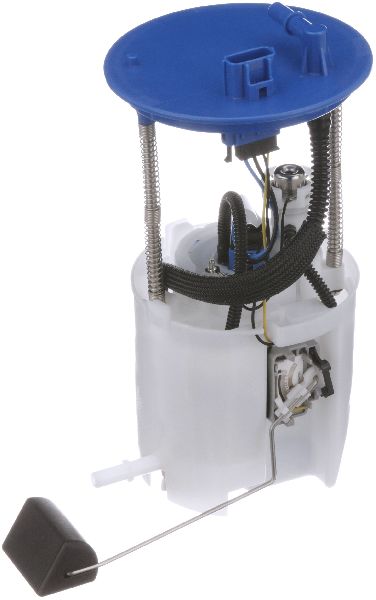
Typical fix: Replace the in-tank low-pressure fuel pump module. The recall remedy involves replacing the affected fuel pump with an improved part with higher density resin for the impeller.
Est. part cost: $250-$500 - Failing High-Pressure Fuel Pump (HPFP) 🔴 High Probability → Shop Fuel Pump The HPFP is a common failure point on many direct-injection engines. It is a mechanical pump driven by the camshaft and is subject to wear over time, especially from the cam follower.
How to confirm: Use a scan tool to monitor desired vs. actual fuel rail pressure. If the low-pressure system is confirmed to be working correctly, but the actual high-side pressure consistently fails to meet the desired pressure under load, the HPFP is the likely culprit. At a warm idle, pressure should be 499–572 psi.
Typical fix: Replace the high-pressure fuel pump and the associated one-time-use high-pressure fuel line. It is also recommended to inspect the cam follower for wear.
Est. part cost: $350-$600 - Clogged Fuel Filter 🟡 Medium Probability → Shop Fuel Filter The fuel filter is integrated into the low-pressure fuel pump assembly in the tank. If it becomes clogged with sediment, it will restrict fuel flow to the high-pressure pump, causing low pressure. This is not a separately serviceable part.
How to confirm: A low-pressure fuel system test will show pressure below specification. The filter itself is not typically tested but is replaced along with the entire fuel pump module.
Typical fix: Replace the in-tank low-pressure fuel pump module, which includes a new filter.
Est. part cost: $250-$500 - Loose High-Pressure Fuel Pump Mounting Bolts ⚪ Low Probability → Shop Fuel Pump Vibrations can potentially cause the HPFP mounting bolts to loosen or break over time. A forum member with a 2016 CX-9 at 122k miles reported this exact issue, which resulted in a P0087 code and a visible fuel leak at the rear of the engine. The lower bolt was missing and the upper bolt was broken.
How to confirm: Visually inspect the high-pressure fuel pump on the engine for any signs of fuel leakage around its base or physical looseness. Check for missing or broken M8x45mm mounting bolts.
Typical fix: Tighten or replace the mounting bolts to the correct torque specification. If a leak occurred, the pump O-ring and gasket should also be replaced.
Est. part cost: $5-$20
Rare But Worth Checking
- Faulty Fuel Rail Pressure Sensor: → Shop Fuel Pressure Sensor While less common than a pump failure, the sensor that reads the fuel pressure can fail and send incorrect low-pressure readings to the PCM, triggering the code even if the pressure is normal. A replacement can cost around $309. A quick diagnostic is to unplug the sensor; if the engine runs better, the sensor is a likely culprit.
- Leaking Fuel Injector: → Shop Fuel Injector A fuel injector stuck open can cause a drop in rail pressure, leading to a P0087 code. This would likely be accompanied by other codes like a misfire (P030x) or a rich fuel trim code (P0172).
- Worn Camshaft Lobe: → Shop Engine Camshaft The HPFP is driven by a lobe on the camshaft. If this lobe wears down, the pump's plunger won't travel its full stroke, resulting in insufficient pressure generation. This is an often-overlooked cause.
Diagnosis Steps
- Verify the code with an OBD-II scanner.
- Check for any applicable TSBs or recalls for your vehicle's VIN. Specifically, check for TSB #01-003/18 and recall #21V875000 (Mazda #5321K).
- If TSB #01-003/18 applies (VINs lower than JM3TC**216875), have a dealer perform the PCM software update before proceeding with diagnosis.
- Using a scan tool with live data, monitor both low-pressure and high-pressure fuel system desired vs. actual pressures.
- Test the low-pressure fuel pump first, as per the TSB. If low-side pressure is below specification (target is 79-100 psi), the in-tank pump or its integrated filter is the likely cause.
- If low-pressure is adequate, visually and physically inspect the high-pressure pump area on the engine for any visible fuel leaks or loose mounting bolts.
- Test the high-pressure system. Monitor the fuel rail pressure while increasing engine load (e.g., during a test drive). If the actual pressure drops significantly and fails to meet the target (which can exceed 2,000 psi), the HPFP is the primary suspect.
- If both pumps appear to be functioning but the code persists, test the fuel rail pressure sensor and its wiring. Compare the sensor's reading on the scan tool to a reading from a mechanical gauge (if possible) to check for discrepancies.
Parts You'll Likely Need
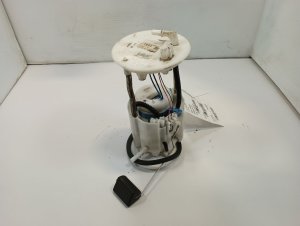
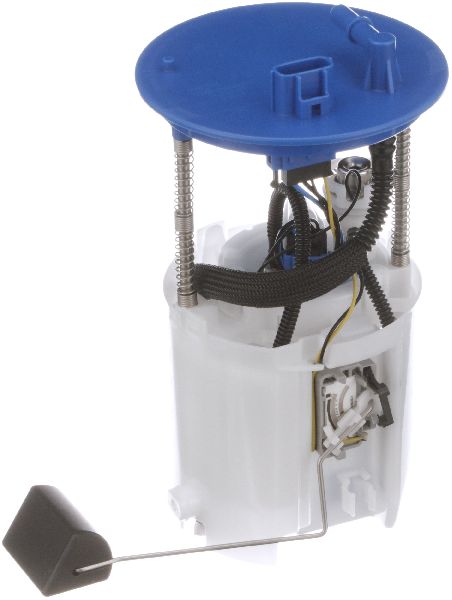
- Low-Pressure Fuel Pump Assembly
(OEM #PY8W-13-35X, PYFM-13-35X)— Identified by a Mazda TSB and a major recall as a primary cause of low fuel pressure and stalling on this vehicle.
Trusted brands: Mazda (OEM), Delphi (e.g., FG2684)
OEM price range: $350-$500
Aftermarket price range: $160-$250 - High-Pressure Fuel Pump
(OEM #PY8V-20-3F0A, PY8V-20-3F0)— This is a common failure item on direct-injection engines that leads directly to code P0087 when it can no longer generate sufficient pressure.
Trusted brands: Mazda (OEM), Bosch, Standard Motor Products (e.g., GDP762)
OEM price range: $450-$600
Aftermarket price range: $350-$500
Related Codes That Often Appear With This One
- P0192 — This code for "Fuel Rail Pressure Sensor Circuit Low Input" is often listed alongside P0087 in Mazda's TSB #01-003/18 as a potential code set by a weak low-pressure fuel pump.
- P064A — A TSB for 2016-2017 models mentions that a false P064A (Fuel Pump Control Module Error) could be stored. The diagnostic procedure advises checking for P0087 at the same time.
- P0300-P0306 — Misfire codes are common companions to P0087 because insufficient fuel pressure leads to a lean condition, causing incomplete combustion in one or more cylinders.
Technical Service Bulletins (TSBs) & Recalls
- 01-003/18 - Lack of Power, No Warning Lights On.
- 01-010/17 - DTC P064A Stored in PCM Memory.
- TSB Bulletin #01-003-18-3421 - Detailed update regarding PCM control logic modifications to ensure P0087:00 is stored when fuel injection is insufficient.
Platform-Specific Known Issues
- TSB #01-003/18 - Lack of Power: Addresses a lack of power on 2016-2018 models (VINs lower than JM3TC**216875) by reprogramming the PCM to properly detect and flag low fuel pressure with codes P0087 or P0192. It provides a specific diagnostic flow that starts with testing the low-pressure pump.
- Recall NHTSA #21V875000 (Mazda #5321K) - LPFP Failure: Affects 2018 CX-9 models (among others). The low-pressure fuel pump impeller, made with lower density material, can crack and deform, causing the pump to fail and the engine to stall, increasing crash risk. The remedy is a replacement of the fuel pump with an improved part.
Mechanic-Grade Diagnostic Values
- DTC P0087 Trigger Condition — expected: Actual fuel pressure is less than target pressure by less than 1.2 MPa (174 psi).. Failure: Actual fuel pressure is lower than target pressure by 1.2 MPa (174 psi) or more for 5 seconds.
- Low-Pressure Fuel System (LPFP) — expected: 545–695 kPa (79.1–100.0 psi) when tested with HPFP disabled via M-MDS.. Failure: Pressure is below 79.1 psi, indicating a fault with the in-tank pump or its filter.
- High-Pressure Fuel System (HPFP) at Idle (Warm) — expected: 3.44–3.95 MPa (499–572 psi).. Failure: Pressure is significantly below 499 psi at a stable, warm idle.
- Fuel Rail Pressure Sensor Voltage (KOEO) — expected: Approximately 1.01 V.. Failure: Voltage is significantly different with key on, engine off, suggesting a sensor or wiring issue.
- Fuel Rail Pressure Sensor Voltage (Idle, Warm) — expected: Approximately 1.0 V.. Failure: Voltage is stuck high (near 5V) or low (near 0V) and does not correspond to engine state.
Scan Tool Commands That Help
- Mazda M-MDS (or equivalent like FORScan): Datalogger for PIDs: FP_DUTY and FUEL_LO_T — Per TSB #01-003/18, these PIDs are plotted against a specific graph in the TSB to determine if the low-pressure fuel pump is underperforming, especially when fuel temperature is high.
- Mazda M-MDS (or equivalent): Turn off High-Pressure Fuel Pump — This function is used to isolate the low-pressure fuel system for testing. By commanding the HPFP off, a technician can measure the pressure supplied solely by the in-tank pump to verify if it meets the 79-100 psi specification.
- Mazda M-MDS: Module Reprogramming (PCM) — Required by TSB #01-003/18 for vehicles within the specified VIN range. This update changes the PCM logic to correctly set P0087/P0192 for a weak low-pressure pump, and must be performed before further diagnosis.
Wiring & Ground Locations
- Fuel Rail Pressure Sensor Connector — Located on the high-pressure fuel rail on the engine.. This is the 3-wire connector for the sensor that measures high-side pressure. The wires are typically a 5V reference, a signal wire (approx. 1.0V at idle), and a ground from the PCM. Corrosion or damage here can cause incorrect readings, leading to P0087 or P0192.
- High-Pressure Fuel Pump Connector — On the high-pressure fuel pump, which is mounted to the cylinder head.. This connector provides power to the pump's control solenoid. A poor connection can prevent the pump from building pressure. Disconnecting it is a step in the official procedure for relieving fuel pressure before service.
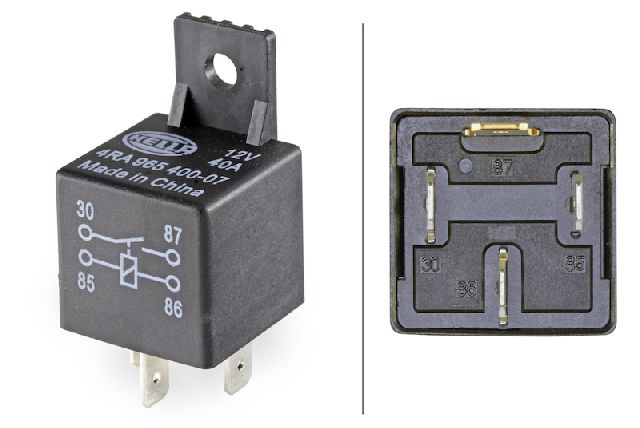
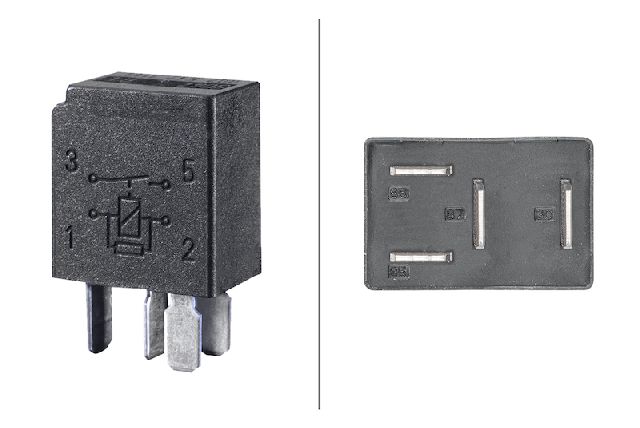
- Fuel Pump Relay — Located in the main fuse/relay box in the engine compartment.. This relay controls the low-pressure in-tank fuel pump. A failing relay can cause intermittent or total loss of low-side pressure, starving the HPFP and triggering P0087. Removing it is part of the pressure relief procedure.
Real Owner Repair Stories
- Mazdas247.com user 'AutoDesignR' (2016 Mazda CX-9 with 122,893 miles) — P0087 code, loss of power, and a visible puddle of gasoline under the rear of the engine.
❌ Tried (didn't work) Replacing the in-tank fuel filter/strainer.
✅ What actually fixed it The high-pressure fuel pump (HPFP) was found to be physically loose. The lower M8x45mm mounting bolt was missing entirely, and the upper bolt had broken off in the housing. The fix was to extract the broken bolt and secure the HPFP with new bolts, O-ring, and gasket.
OEM Part Supersession History
PY8V-20-3F0A, PY8V-20-3F0B→PY8V-20-3F0C— Standard part revision and improvement by the manufacturer.
Heads up: The newer part number PY8V-20-3F0C is the correct replacement for the older versions.PYMM-20-3F0→PYNM-20-3F0— Standard part revision for later model years, but fits the application.
Heads up: PYNM-20-3F0 is listed for 2018+ models but may be a compatible replacement for the earlier HPFP.
Model Year Variations Within This Range
- 2016-2018 (before Nov. 10, 2017): Vehicles with VINs lower than JM3TC**216875 are subject to TSB #01-003/18. The original PCM software would limit engine power due to a weak low-pressure pump without setting a code. The TSB reprograms the PCM to set P0087 or P0192 instead, making diagnosis more direct.
- 2018: Subject to safety recall NHTSA #21V875000 for a low-pressure fuel pump impeller made of lower density material that could crack, deform, and cause pump failure. This is a known hardware defect specific to this model year within the range.
- 2016-2017 (before March 7, 2017): Vehicles with VINs lower than JM3TC**140178 are subject to TSB #01-010/17 for a false P064A (Fuel Pump Control Module Error) code. The repair procedure involves checking for P0087 at the same time and reprogramming the PCM.
Diagnostic Flowchart
Real Owner Stories
Aggregated from forums and TSBs cited above. Mileages and costs reflect what owners reported in those sources.
2016 Mazda CX-9 — 122893 miles
Symptoms: P0087 code, engine lost power, puddle of gas under the rear of the engine.
What fixed it: The high-pressure fuel pump (HPFP) was found to be physically loose. The lower mounting bolt was missing and the upper was broken. The fix was to extract the broken bolt and properly secure the HPFP with new bolts.
Source hint: Mazdas247.com - Thread '2016 CX-9 Fuel Filter Replacement Tips?'
Related OBD-II Codes
Frequently Asked Questions
Does the low-pressure fuel pump recall apply to my 2016-2018 Mazda CX-9?
What is TSB #01-003/18 and how does it relate to code P0087 on my CX-9?
Can a loose high-pressure fuel pump cause a P0087 code on the 2.5L Turbo?
How do I test the low-pressure fuel pump on my Mazda CX-9?
Is the fuel filter replaceable on the 2016-2018 CX-9?
What should the high-pressure fuel pump (HPFP) pressure be at idle?
Used OEM Parts in Stock
New Aftermarket Parts Available


The information in this article is provided for general reference and educational purposes only. Vehicle specifications, procedures, and part compatibility can vary by production date, trim level, and region. Always consult your vehicle's factory service manual and verify part numbers before purchasing or performing repairs. Safety-critical components such as airbags, seat belts, and braking systems should be installed by a qualified professional.
- Mazda CX-9:
- 🧭 Diagnostic Flowchart
- 🛍️ Shop This Part
- What's Unique About the 2016-2018 Mazda CX-9
- Symptoms You May Notice
- Most Likely Causes
- Rare But Worth Checking
- Diagnosis Steps
- Parts You'll Likely Need
- Related Codes That Often Appear With This One
- Technical Service Bulletins (TSBs) & Recalls
- Platform-Specific Known Issues
- Mechanic-Grade Diagnostic Values
- Scan Tool Commands That Help
- Wiring & Ground Locations
- Real Owner Repair Stories
- OEM Part Supersession History
- Model Year Variations Within This Range
- Real Owner Stories
- 2016 Mazda CX-9 — 122893 miles
- Related OBD-II Codes
- Frequently Asked Questions
- 🎟️ Get 5% Off