

P0087 on 2018-2023 Mitsubishi Eclipse Cross: Low Fuel Pressure Causes & Fixes
This code indicates that the high-pressure side of your direct injection fuel system is not reaching the pressure commanded by the engine computer. The most common causes are a failing high-pressure fuel pump (HPFP) or a faulty fuel rail pressure sensor. Expect a repair cost of $800-$1500, depending on the failed component. The HPFP itself is part number 1460A111.
- P0087 on your Eclipse Cross means the high-pressure fuel system is failing to produce enough pressure.
- Do not immediately assume the most expensive part has failed. Diagnosis should start with the simplest things: checking the fuel level, inspecting for leaks, and testing the low-pressure fuel pump.
- The most likely culprits are the high-pressure fuel pump (HPFP), the small tappet that drives it, or the fuel rail pressure sensor and its wiring.
- Due to the extremely high pressures and fire risk involved with GDI fuel systems, this code is best left for a professional technician to diagnose and repair.
What's Unique About the 2018-2023 Mitsubishi Eclipse Cross
The 4B40 engine uses a Gasoline Direct Injection (GDI) system, which has two fuel pumps: a low-pressure pump in the tank and a high-pressure fuel pump (HPFP) driven by the engine's camshaft. Code P0087 almost always points to an issue on the high-pressure side. For this specific engine, the HPFP itself is a known potential failure point. Additionally, a critical but easily overlooked part is the small mechanical 'tappet' or 'lifter' that sits between the camshaft and the HPFP; Mitsubishi has specifically warned technicians that forgetting to transfer this part during an engine replacement will cause a P0087 code. Wear on this tappet or the camshaft lobe that drives it can also lead to this code.
Symptoms You May Notice
- Check Engine Light is on
- Reduced engine power and sluggish acceleration (Limp Mode)
- Engine hesitation or stumbling, especially under load
- Rough or unstable idle
- Difficulty starting the engine / long crank times
- Engine stalling
- Decreased fuel economy
- Replacing the low-pressure fuel pump without first testing its pressure output.
- Replacing the fuel rail pressure sensor without checking its wiring and connector for issues first.
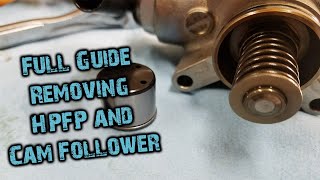
- Replacing the HPFP without inspecting the tappet and camshaft lobe for wear. 🎬 Watch: How to inspect the HPFP and cam follower for damage.
Most Likely Causes
- Failing High-Pressure Fuel Pump (HPFP) 🔴 High Probability → Shop Fuel Pump The HPFP is a complex mechanical device operating under extreme pressure and is a primary suspect for P0087 on GDI engines. It is listed as a most likely cause in Mitsubishi's own troubleshooting guide and is a documented failure point for the 4B40 engine.
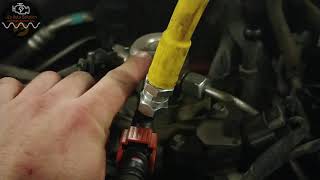
How to confirm: A technician will use a scan tool to monitor commanded vs. actual fuel rail pressure. 🎬 Watch: A professional walkthrough of GDI pump diagnosis for P0087. If actual pressure is consistently low and the low-pressure pump is confirmed to be working correctly, the HPFP is the primary suspect.
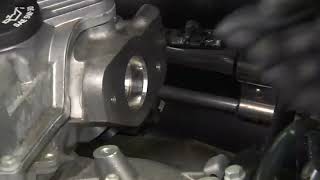
Typical fix: Replacement of the high-pressure fuel pump. 🎬 See this guide on removing and installing a high pressure pump.
Est. part cost: $680-$950 - Worn or Missing HPFP Tappet 🟡 Medium Probability This small mechanical piece (cam follower) physically connects the camshaft to the HPFP. Mitsubishi's diagnostic procedure specifically calls for checking it for wear or damage. Wear on this part or the camshaft lobe prevents the pump from generating full pressure.
How to confirm: Visual inspection is required. The HPFP must be removed to access and inspect the tappet and the camshaft lobe for wear, scoring, or damage.
Typical fix: Replacement of the HPFP tappet. If the camshaft lobe that drives it is also worn, the camshaft may need replacement as well.
Est. part cost: $30-$60 - Faulty Fuel Rail Pressure Sensor 🟡 Medium Probability → Shop Fuel Pressure Sensor The sensor provides the pressure reading to the ECM. An internal failure or a bad electrical connection can send an inaccurate low-reading, triggering the code even if the pressure is fine. A real-world owner of a 2019 diesel model reported similar symptoms that were resolved by cleaning a corroded connector.
How to confirm: Check the sensor's wiring and connector for damage or corrosion. A technician can compare the sensor's reading on a scan tool to a reading from a mechanical fuel pressure gauge to verify its accuracy.
Typical fix: Clean or repair the connector if corroded. If the sensor itself has failed, it needs to be replaced.
Est. part cost: $150-$250 - Clogged Fuel Filter or Weak Low-Pressure Fuel Pump ⚪ Low Probability → Shop Fuel Filter The in-tank fuel pump and filter supply fuel to the HPFP. If the volume of fuel is insufficient, the HPFP cannot build the required pressure. This is a foundational check for any GDI fuel system, not just the Eclipse Cross.
How to confirm: A fuel pressure test must be performed on the low-pressure side of the system to ensure it meets specifications before condemning the more expensive high-pressure components.
Typical fix: Replacement of the in-tank fuel filter or the entire low-pressure fuel pump module.
Est. part cost: $200-$400
Rare But Worth Checking
- Leaking Fuel Injector: → Shop Fuel Injector A direct fuel injector that is stuck open or leaking can cause a drop in rail pressure. The official diagnostic procedure includes checking for fuel smell from the spark plug holes as an indicator of a leaking injector.
- Damaged Fuel Lines: → Shop Fuel Line A physical leak in any of the high-pressure fuel lines between the HPFP and the injectors will cause a pressure drop and a dangerous fuel leak. A visual and smell inspection is a primary diagnostic step.
- Failed Engine Control Module (ECM): → Shop Engine Control Module (ECM) This is the least likely cause. The ECM is the final component to suspect after all other fuel system parts and wiring have been thoroughly tested and proven to be good.
Diagnosis Steps
- Check the fuel level to ensure the vehicle has not run out of gas.
- Connect an OBD-II scanner to confirm P0087 is present and check for any other related codes.
- Use the scanner's live data function to monitor 'Commanded Fuel Rail Pressure' vs. 'Actual Fuel Rail Pressure'. A large discrepancy where actual is much lower than commanded points to a real pressure loss.
- Perform a thorough visual inspection of all high-pressure and low-pressure fuel lines and components, looking for any signs of physical damage or fuel leaks (a strong fuel smell is a key indicator).
- Test the low-pressure fuel system. Connect a fuel pressure gauge to the low-pressure line to verify the in-tank pump is supplying adequate pressure to the HPFP.
- Inspect the electrical connector and wiring for the fuel rail pressure sensor and the high-pressure fuel pump for any damage, corrosion, or loose connections.
- If the low-pressure side is healthy and wiring is intact, the next step is to inspect the high-pressure pump. This involves removing the HPFP to visually inspect its mechanical tappet and the camshaft lobe for wear or damage.
- If the tappet and camshaft are in good condition, the high-pressure fuel pump is the most likely failed component and should be replaced.
Parts You'll Likely Need
- High-Pressure Fuel Pump
(OEM #1460A111)— This is the most common and highest probability cause for a P0087 code on the 4B40 engine once basic checks are completed.
Trusted brands: Mitsubishi Genuine
OEM price range: $689-$943
Aftermarket price range: $500-$700 - Fuel Pump Tappet
(OEM #1025A206)— This is a critical wear item that drives the HPFP. It must be inspected whenever the HPFP is serviced and is a known point of failure or installation error.
Trusted brands: Mitsubishi Genuine
OEM price range: $30-$60
Aftermarket price range: $20-$40 - Fuel Rail Pressure Sensor — This sensor provides the data that triggers the code. If it fails or its connection is poor, it can cause a false P0087 code.
Trusted brands: Mitsubishi Genuine, Bosch
OEM price range: $150-$250
Aftermarket price range: $80-$150
Related Codes That Often Appear With This One
- P0171 — System Too Lean. If the fuel pressure is too low, the engine will run lean (too much air, not enough fuel), which can trigger a lean condition code.
- P0300-P0304 — Random or specific cylinder misfire codes. Insufficient fuel pressure can lead to incomplete combustion and misfires, especially under load.
- P0088 — Fuel Rail/System Pressure - Too High. This can sometimes appear alongside P0087 if the fuel rail pressure sensor is failing erratically or if there are intermittent control issues.
Technical Service Bulletins (TSBs) & Recalls
- TSB-19-13-001
Platform-Specific Known Issues
- HPFP Tappet and Cam Lobe Wear: The mechanical interface between the camshaft and the high-pressure fuel pump is a critical point. Both the tappet (follower) and the cam lobe itself can wear down, reducing the pump's stroke and its ability to generate pressure. Mitsubishi's own diagnostic steps include inspecting these components, indicating it's a known possibility.
- Corroded Sensor Connectors: An owner of a 2019 model experienced classic low-pressure symptoms (rough idle, stalling) which were not caused by a failed pump, but by a corroded electrical connector on the fuel pressure sensor. This highlights the importance of checking electrical connections before replacing expensive components.
Mechanic-Grade Diagnostic Values
- Low-Side Fuel Pressure at Idle — expected: Approx. 270 kPa (38 psi). Failure: Significantly lower pressure indicates a weak in-tank pump or clogged filter.
- High-Side Fuel Rail Pressure while Cranking — expected: 30 ±5 MPa (4352 ±725 psi). Failure: Pressure falling below this range during startup points towards an HPFP, tappet, or sensor issue.
- Fuel Rail Pressure Sensor Voltage — expected: 0.5V to 4.5V (Varies with pressure). Failure: Voltage is stuck at one value regardless of engine load, or fluctuates erratically.
- DTC Set Condition 1 — expected: Fuel rail pressure must meet specified value.. Failure: The actual fuel rail pressure is lower than the specified value for 15 seconds.
- DTC Set Condition 2 — expected: Actual fuel rail pressure must be close to estimated pressure.. Failure: For 3 seconds, the estimated fuel rail pressure minus the actual sensor output is greater than a specified value.
Scan Tool Commands That Help
- Mitsubishi MUT-III: Fuel Pressure System Test — This dealer-level function can command specific fuel pressures and activate the low and high-pressure pumps independently to isolate a fault without manual testing.
- Professional OBD-II Scanner (e.g., iCarsoft): Live Data: Commanded vs. Actual Fuel Rail Pressure — This is the primary diagnostic step to confirm a real pressure loss. If Commanded pressure is high but Actual pressure is low, a mechanical fault (pump, leak, filter) is likely. If both are low or erratic, a sensor issue is more probable.
Wiring & Ground Locations
- Engine Block to Firewall Ground — A braided ground strap often runs from a bolt on the intake manifold (near the throttle cable bracket) to the firewall.. A poor engine ground can introduce electrical noise and incorrect readings for all engine-mounted sensors, including the fuel rail pressure sensor and HPFP solenoid.
- Battery to Transmission/Chassis Ground — A large gauge wire connects the negative battery terminal to a major bolt on the transmission case, and another connects to the chassis/frame rail near the battery.. This is the primary ground path for the entire powertrain. Corrosion or a loose connection here can cause widespread, intermittent electrical issues, including problems with fuel pump modules and the ECM.
- Fuel Pump Fuse/Relay — In the under-hood fuse box, fuse #30 (15A) is for the fuel pump, and fuse #32 (20A) is for the injector.. While not a ground, checking these fuses is a critical early step. A blown fuse indicates an electrical short or a seized pump that needs to be investigated before replacing parts.
Real Owner Repair Stories
- Carly Community User (2019 Mitsubishi Eclipse Cross Diesel, 108,255 km) — Check engine light on, engine runs rough, stalls at idle, jerks when accelerating.
❌ Tried (didn't work) Initial suspicion was a failed fuel pressure sensor.
✅ What actually fixed it The issue was a corroded pin inside the electrical connector for the fuel pressure sensor. Cleaning the corroded connection at a workshop resolved all symptoms for a cost of 95€.
Model Year Variations Within This Range
- 2018: A Technical Service Bulletin (TSB-19-13-001) was issued to correct the service manual procedure for removing and installing the high-pressure fuel rail and injectors specifically for the 2018 model year. Using the original, incorrect procedure could lead to improper installation and leaks.
Diagnostic Flowchart
Other Known Issues on This Vehicle
Issues unrelated to this code that are worth knowing about as an owner of this generation:
- CVT Transmission Shudder or Failure 🔴 High — Symptoms like delayed acceleration and vibration can appear between 30,000 and 60,000 km.
- Electrical and Infotainment System Glitches 🟠 Medium — The most frequently reported problem area in NHTSA complaints, with issues like infotainment freezing, system crashes, and faulty sensors. Problems can manifest as early as 20,000 km. (Ref: Multiple software-related recalls for 2018-2019 models (e.g., SR-18-007, SR-18-008).)
- Premature Brake Squealing 🟡 Low — Owners report brake squealing even when pads have significant life left, often attributed to brake material composition.
- Engine Stalling in Cold Conditions 🟠 Medium — An issue where the engine may stall after a restart in cold weather due to incorrect fuel correction data. (Ref: TSB-19-13-002)
- Excessive Oil Consumption 🔴 High — Some owners have reported abnormally high oil consumption, leading to low oil pressure warnings.
Used vs. New Parts: Buying Guide for This Vehicle
When a used part is the smart pick: For this specific repair, sourcing used parts is generally not recommended for core fuel system components. However, a used wiring harness or fuse box from a low-mileage, non-collision donor vehicle could be a cost-effective solution if a wiring issue is identified.
Donor-vehicle mileage cap: roughly under 50000 miles for the part to have meaningful remaining life.
What to inspect on the donor part:
- For wiring: Check for any signs of brittleness, previous repairs (splices, tape), or corrosion on connector pins.
- For modules/sensors: Ensure the donor vehicle was not in a flood or had significant collision damage near the component.
- Verify the part number on the used component matches the required part number exactly.
OEM-only on this vehicle (don't cheap out):
- High-Pressure Fuel Pump (HPFP): Given the high pressures and its status as a known failure point, using a new, genuine Mitsubishi part (1460A111) is strongly advised to ensure longevity and prevent catastrophic failure.
- Fuel Rail Pressure Sensor: While some aftermarket sensors may work, the sensitivity of the GDI system makes an OEM sensor a safer bet to avoid inaccurate readings that could cause persistent issues.
Brands owners have reported issues with on this vehicle:
- Unbranded 'no-name' HPFPs and sensors from online marketplaces should be avoided. The risk of premature failure is high, and a failing HPFP can potentially cause engine damage.
Real Owner Stories
Aggregated from forums and TSBs cited above. Mileages and costs reflect what owners reported in those sources.
2019 Mitsubishi Eclipse Cross 1.5L
Symptoms: Rough running, stalling, and jerking; classic low-pressure symptoms including rough idle.
What fixed it: Cleaning and repairing a corroded electrical connection on the fuel pressure sensor.
Source hint: carly.com/blog/my-mitsubishi-eclipse-cross-fuel-pressure-woes/
Related OBD-II Codes
Frequently Asked Questions
Is there a TSB for engine stalling on my 2018-2023 Mitsubishi Eclipse Cross?
Could a simple electrical connector cause the P0087 code on my 2019 Eclipse Cross?
What mechanical parts should be inspected before replacing the expensive High-Pressure Fuel Pump (HPFP)?
Are there any recalls for the electrical systems that might be related to sensor glitches?
Does the 4B40 1.5L Turbo engine have known issues with oil that could affect fuel pressure?
Can a low-pressure fuel pump issue cause the P0087 high-pressure code?
Helpful Videos
Used OEM Parts in Stock
New Aftermarket Parts Available

The information in this article is provided for general reference and educational purposes only. Vehicle specifications, procedures, and part compatibility can vary by production date, trim level, and region. Always consult your vehicle's factory service manual and verify part numbers before purchasing or performing repairs. Safety-critical components such as airbags, seat belts, and braking systems should be installed by a qualified professional.
- Mitsubishi Eclipse Cross:
- 🧭 Diagnostic Flowchart
- 🎬 Helpful Videos
- 🛍️ Shop This Part
- What's Unique About the 2018-2023 Mitsubishi Eclipse Cross
- Symptoms You May Notice
- Most Likely Causes
- Rare But Worth Checking
- Diagnosis Steps
- Parts You'll Likely Need
- Related Codes That Often Appear With This One
- Technical Service Bulletins (TSBs) & Recalls
- Platform-Specific Known Issues
- Mechanic-Grade Diagnostic Values
- Scan Tool Commands That Help
- Wiring & Ground Locations
- Real Owner Repair Stories
- Model Year Variations Within This Range
- Other Known Issues on This Vehicle
- Used vs. New Parts: Buying Guide for This Vehicle
- Real Owner Stories
- 2019 Mitsubishi Eclipse Cross 1.5L
- Related OBD-II Codes
- Frequently Asked Questions
- 🎟️ Get 5% Off