

P0087 on 2015-2019 Nissan Altima: Fuel Pressure Low Causes and Fixes
For a 2015-2019 Nissan Altima, code P0087 often points to an ECM software issue that requires a dealer reprogram, as noted in several TSBs (NTB19-048, NTB19-045 series). This should be the first check. If not software, the next likely causes are a failing in-tank fuel pump on 2015-2018 models (OEM Part No. 17040-3TA0D) or a failing high-pressure fuel pump on the direct-injected 2019 models (OEM Part No. 16630-6CA0A).
- Always check for TSBs first. Your P0087 code might be fixed with a simple, relatively inexpensive ECM reprogram at a Nissan dealer.
- Know your engine. The 2019 Altima has a direct-injection fuel system with a high-pressure fuel pump, which is a potential failure point not present on 2015-2018 models.
- If a mechanical part has failed, it is most likely the in-tank fuel pump (all years) or the high-pressure fuel pump (2019 only).
- Do not ignore this code. The risk of the engine stalling while driving is high and poses a serious safety hazard.
What's Unique About the 2015-2019 Nissan ALTIMA

This year range spans two Altima generations. The 2015-2018 models (L33 generation) use a port-injected 2.5L engine, while the redesigned 2019 model (L34 generation) introduced a new direct-injected 2.5L engine (PR25DD). This is a critical distinction, as the 2019 model has both a low-pressure in-tank pump and a new high-pressure fuel pump (HPFP) mounted on the engine. Uniquely for this platform, Nissan has issued multiple Technical Service Bulletins (TSBs) indicating that P0087 can be triggered by an ECM software error, which may only require a reprogram instead of a mechanical part replacement. [⭐, ]
Diagnostic Flowchart

Tap your situation to follow the diagnostic path that matches what you're seeing on this vehicle.
Generation note: Yes, this range covers two generations. The 2015-2018 models belong to the fifth generation (L33) and use the port-injected QR25DE 2.5L engine. The 2019 model is the first year of the sixth generation (L34) and features the new direct-injected PR25DD 2.5L engine. This new engine adds a high-pressure fuel pump (HPFP) to the system, a common failure point for P0087 on the 2019 model that does not exist on the earlier years.
Symptoms You May Notice
- Check Engine Light is on
- Engine hesitation or stumbling on acceleration
- Loss of engine power, especially under load
- Difficulty starting the engine, may require long cranks
- Engine stalls, especially under load or when coming to a stop
- Rough or uneven idle
- Reduced fuel economy 🎬 Watch: This video explains the P0087 code and common fixes.
- Replacing the in-tank fuel pump or high-pressure fuel pump when the actual problem is a software issue that only requires an ECM reprogram per Nissan's TSBs. [⭐, ]
- Replacing a fuel pump when the fuel rail pressure sensor is faulty and sending incorrect data to the ECM.
Most Likely Causes

- ECM Software Calibration Error 🔴 High Probability Nissan has released multiple TSBs (NTB19-048, NTB19-045 series, P9328) for this specific issue, indicating the ECM may improperly store or trigger the P0087 code due to a software glitch. This is a well-documented first step in diagnosis for these vehicles. [⭐, ]
How to confirm: A Nissan dealership or a properly equipped independent shop can check the vehicle's ECM part number and software version against the applicable TSBs. TSB NTB19-045b, for example, explicitly states that after performing any necessary mechanical repairs for the code, the ECM should be reprogrammed to update how the permanent DTC is stored and erased. [⭐]
Typical fix: Reprogramming the Engine Control Module (ECM) with updated software. In some cases, this is the only repair needed; in others, it's a required step after a mechanical repair. [⭐, ]
Est. part cost: $0 - Failed High-Pressure Fuel Pump (HPFP) 🟡 Medium Probability → Shop Fuel Pump This part only exists on the 2019 Altima with the 2.5L direct-injection engine. High-pressure pumps are a common failure point in many GDI systems as they are complex mechanical parts driven by the camshaft. A recall was also issued for 2019 models for an issue with the fuel line connection to the HPFP.
How to confirm: A technician can monitor the high-side fuel pressure using a capable scan tool. If the desired pressure does not match the actual pressure under load, the HPFP is a likely culprit. A failure of the HPFP is a common cause of P0087 on direct-injection engines.
Typical fix: Replace the high-pressure fuel pump. The OEM part number is 16630-6CA0A.
Est. part cost: $300-$600 - Failed In-Tank (Low-Pressure) Fuel Pump 🟡 Medium Probability → Shop Fuel Pump The in-tank fuel pump supplies fuel to the engine (on 2015-2018 models) or to the HPFP (on 2019 models). Like any electric motor, it can wear out over time, failing to provide adequate pressure. Owners on forums have reported replacing this pump to solve the P0087 code.
How to confirm: Test the low-side fuel pressure at the fuel line using a fuel pressure gauge. If the pressure is below specification (typically around 51 psi for these models), the pump is likely weak or failing.
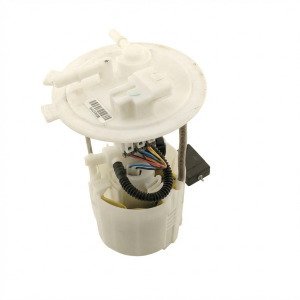
Typical fix: Replace the in-tank fuel pump module assembly. The OEM part number for 2015-2018 models is 17040-3TA0D, which supersedes previous versions. 🎬 See this step-by-step guide for replacing the in-tank fuel pump.
Est. part cost: $250-$1100 - Faulty Fuel Rail Pressure Sensor ⚪ Low Probability → Shop Fuel Pressure Sensor The sensor can fail and send incorrect low-pressure readings to the ECM, even if the actual pressure is normal. This can trick the computer into setting a P0087 code.
How to confirm: Compare the pressure reading from the sensor (via a scan tool) to a reading from a mechanical fuel pressure gauge T-fitted into the line. A significant discrepancy points to a bad sensor, not a bad pump.
Typical fix: Replace the fuel rail pressure sensor.
Est. part cost: $150-$250
Rare But Worth Checking
- Clogged Fuel Filter: → Shop Fuel Filter The fuel filter is integrated into the in-tank fuel pump module assembly and is not a separate service item. A severely clogged filter can restrict flow and cause low pressure, necessitating the replacement of the entire module. Some owners attempt to change just the filter as a first, cheaper step.
- Leaking Fuel Injector: → Shop Fuel Injector An injector stuck open can cause a drop in rail pressure. This would likely be accompanied by other symptoms like a strong fuel smell, black smoke from the exhaust, and specific misfire codes (e.g., P0301, P0302) for a single cylinder.
- Kinked or Damaged Fuel Line: → Shop Fuel Line A physical restriction in a fuel line can prevent adequate fuel flow, leading to low pressure. This is less common but should be checked during a visual inspection, especially if the vehicle has had recent underbody work.
Diagnosis Steps
- Read all trouble codes with an OBD-II scanner. Note all present codes, especially if P0101, P0448, or P2008 are present alongside P0087.
- CRITICAL FIRST STEP: Check for applicable Technical Service Bulletins (TSBs) for your vehicle's specific VIN. The most relevant are NTB19-048 (for 2019 models) and the NTB19-045 series (for 2015-2019 models). [⭐, ] If a TSB applies, an ECM reprogram at a dealership is the most likely and required fix, sometimes after a mechanical repair. [⭐]
- Use a scan tool to monitor live data for 'Fuel Rail Pressure' (and 'High Fuel Pressure' on 2019 models). Compare the actual pressure to the desired pressure commanded by the ECM.
- If pressure is low, perform a low-pressure fuel system test. Connect a mechanical fuel pressure gauge to the low-pressure line. At idle, pressure should be stable and meet spec (approx. 51 PSI). If it's low, the in-tank pump or its filter is suspect.
- For 2019 models, if low-side pressure is good but high-side pressure is low (especially under acceleration), the high-pressure fuel pump (HPFP) is the primary suspect.
- To rule out a bad sensor, compare the scan tool's pressure reading to the mechanical gauge's reading. If the mechanical gauge shows good pressure but the scan tool shows low pressure, the fuel rail pressure sensor is likely faulty.
- Visually inspect all accessible fuel lines for kinks, physical damage, or leaks, paying close attention to the connections at the fuel tank and engine. 🎬 Watch: A mechanic's guide to diagnosing and fixing low pressure.
Parts You'll Likely Need
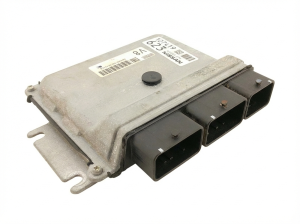
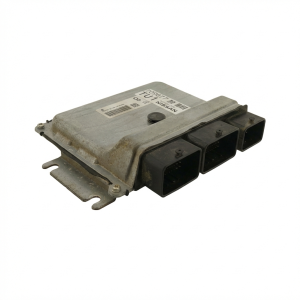
- ECM Reprogram — Multiple TSBs indicate a software update from Nissan is the correct fix in many cases, or a required final step after a hardware replacement. [⭐, ]
Trusted brands: Nissan Dealer Service
OEM price range: $150-$300
Aftermarket price range: N/A - In-Tank Fuel Pump Module Assembly
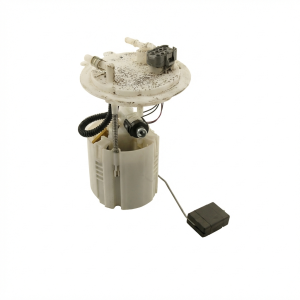
(OEM #17040-3TA0D (for 2015-2018 models))— This is the primary pump for 2015-2018 models and the low-pressure lift pump for 2019 models. It is a common wear item that can fail to produce adequate pressure.
Trusted brands: Nissan (OEM), Bosch, Delphi, Spectra Premium
OEM price range: $480-$720
Aftermarket price range: $200-$450 - High-Pressure Fuel Pump
(OEM #16630-6CA0A (for 2019 2.5L models))— Specific to the 2019 2.5L GDI engine, this is a frequent cause of P0087 on direct-injection vehicles.
Trusted brands: Nissan (OEM), Hitachi, Bosch
OEM price range: $500-$800
Aftermarket price range: $225-$600
Related Codes That Often Appear With This One
- P0101 — Mass Air Flow (MAF) Sensor Performance. TSBs NTB19-045, NTB19-045a, NTB19-045b, and campaign P9328 group this code with P0087 as potentially being caused by the same ECM software error requiring a reprogram. [⭐, ]
- P0448 — EVAP System Vent Control Circuit Shorted. Also grouped with P0087 in the same TSBs as a potential ECM software issue. [⭐, ]
- P2008 — Intake Manifold Runner Control Circuit Open. Also grouped with P0087 in the same TSBs as a potential ECM software issue. [⭐, ]
Technical Service Bulletins (TSBs) & Recalls

- NTB19-048: Specifically addresses the MIL being on with DTC P0087 for 2019 Altimas with the 2.5L engine.
- NTB19-045 / NTB19-045a / NTB19-045b: Address the MIL being on with P0087 and other codes (P0101, P0448, P2008), pointing to an ECM software issue that requires a reprogram *after* diagnosis and repair of the underlying cause.
- P9328_P9343_P9349 (NTB19-115a): Mentions a voluntary service campaign to reprogram the ECM to prevent improper storage of permanent DTCs, including P0087, due to calibration errors on vehicles registered in California.
Platform-Specific Known Issues
- A recall was issued for some 2019 Altima models because retainer clips on the low-pressure fuel lines were not properly locked to the high-pressure fuel pump, which could cause a fuel leak and trigger P0087.
- Multiple TSBs (NTB19-048, NTB19-045 series, P9328) confirm that an ECM software glitch is a known issue that can cause this code to appear without any mechanical fault, or require a reprogram after a fault is fixed.
- On Reddit, an owner with a 2015 Altima and a P0087 code ultimately fixed the issue by replacing the in-tank fuel pump with a high-quality aftermarket unit after other attempts failed.
Mechanic-Grade Diagnostic Values
- Low-Pressure Fuel System (2015-2018 models) — expected: Approximately 51 PSI at idle.. Failure: A reading of 30-32 PSI or lower indicates a weak or failing in-tank fuel pump.
- High-Pressure Fuel System (2019 GDI model) — expected: Can range from ~580 PSI at cruise to over 2,000 PSI under wide-open throttle.. Failure: When the actual pressure shown on a scan tool does not match the commanded pressure, especially under load.
- Fuel Rail Pressure Sensor Voltage (Key On, Engine Off) — expected: Approximately 0.5V.. Failure: A voltage reading stuck at 0V or 5V suggests a sensor or wiring fault.
- Fuel Rail Pressure Sensor Voltage (Idling) — expected: Approximately 1.32V.. Failure: Voltage that does not change with engine load or is outside the expected range.
Scan Tool Commands That Help
- Nissan CONSULT or advanced bidirectional scanner: Fuel Pump Driver Circuit Test — This command can be used to test the communication and function of the Fuel Pump Control Module (FPCM) and its circuit. A 'failed' response from this test points towards an internal module or wiring issue, helping to rule out the pump itself.
- Nissan CONSULT or advanced bidirectional scanner: Fuel Pressure Test / Pump Activation — This function allows a technician to command the fuel pump ON without the engine running. This is useful for verifying the pump operates and for safely checking for leaks or testing pressure at various points in the system.
Wiring & Ground Locations
- Fuel Pump Control Module (FPCM) — Typically located near the fuel tank, often under the rear passenger seat or in the trunk area. On many Nissan models, it is found under the vehicle near the rear axle, sometimes requiring removal of the spare tire to access.. The FPCM regulates the voltage to the fuel pump. A failure in the module, its wiring, or its ground connection can prevent the pump from running at the correct speed, causing low fuel pressure. A poor ground connection at the mounting bolts can cause erratic operation.
- Fuel Rail Pressure Sensor — On the 2015-2018 port-injected models, it is located on the fuel rail that supplies the injectors. On the 2019 direct-injected model, it is on the high-pressure fuel rail, which may be located under the intake manifold.. This sensor provides the pressure reading to the ECM. A fault in the sensor's wiring or connector can send an incorrect low-pressure signal, triggering P0087 even if the actual pressure is correct.
- Fuel Pump Fuse/Relay — Located in the under-hood fuse box (Intelligent Power Distribution Module - IPDM). For a 2004-2006 model, a 15-amp fuse is shown; the location and rating should be verified for the 2015-2019 range via the fuse box cover.. A faulty relay or a repeatedly blowing fuse indicates an electrical problem, such as a short in the wiring or a failing fuel pump drawing too much current.
Real Owner Repair Stories
- YouTube channel 'A v o a l' (2016 Nissan Altima) — Car would not start at times, requiring a 30-minute wait before it would start again. Also experienced stalling and loss of power while driving.
❌ Tried (didn't work) The owner was experiencing intermittent no-start and stalling issues before bringing it to the technician for diagnosis.
✅ What actually fixed it A fuel pressure test revealed the pressure was only 31.5 PSI, far below the required 51 PSI. The diagnosis was a weak in-tank fuel pump, and replacement of the fuel pump was recommended to fix the issue.
OEM Part Supersession History
17040-3TA0A, 17040-3TA0B, 17040-3TA0C→17040-3TA0D— Standard part revision and improvement by the manufacturer.
Heads up: The latest part number, 17040-3TA0D, is the correct replacement for all previous versions for the 2013-2018 Altima. Using an older, superseded part is not recommended.
Model Year Variations Within This Range
- 2015-2018: These models use a port-injected fuel system with a single in-tank low-pressure fuel pump. Diagnosis for P0087 focuses on this pump, the FPCM, the pressure sensor, and potential ECM software issues outlined in TSBs.
- 2019: This model introduced a gasoline direct injection (GDI) engine, which adds a camshaft-driven high-pressure fuel pump (HPFP) and a high-pressure fuel rail. Diagnosis for P0087 is more complex, as it could be the low-pressure pump, the high-pressure pump, or the specific ECM software issue mentioned in TSB NTB19-048. [⭐, 13, 14]
Helpful Videos

Used OEM Parts in Stock
New Aftermarket Parts Available


The information in this article is provided for general reference and educational purposes only. Vehicle specifications, procedures, and part compatibility can vary by production date, trim level, and region. Always consult your vehicle's factory service manual and verify part numbers before purchasing or performing repairs. Safety-critical components such as airbags, seat belts, and braking systems should be installed by a qualified professional.
- Nissan ALTIMA:
- 🧭 Diagnostic Flowchart
- 🎬 Helpful Videos
- 🛍️ Shop This Part
- What's Unique About the 2015-2019 Nissan ALTIMA
- Symptoms You May Notice
- Most Likely Causes
- Rare But Worth Checking
- Diagnosis Steps
- Parts You'll Likely Need
- Related Codes That Often Appear With This One
- Technical Service Bulletins (TSBs) & Recalls
- Platform-Specific Known Issues
- Mechanic-Grade Diagnostic Values
- Scan Tool Commands That Help
- Wiring & Ground Locations
- Real Owner Repair Stories
- OEM Part Supersession History
- Model Year Variations Within This Range
- 🎟️ Get 5% Off