

P0087 on 2016-2018 Nissan Maxima: Fuel Pressure Too Low Causes and Fixes
On a 2016-2018 Maxima, P0087 often points to a software issue. A Nissan Technical Service Bulletin (NTB19-045b) advises that an ECM reprogram is a common fix, especially if seen with codes P0101, P0448, or P2008. The TSB clarifies the reprogram updates how a permanent DTC is stored and should be performed after any mechanical faults are diagnosed and repaired. If not a software issue, suspect a failing high-pressure or low-pressure fuel pump.
- Before replacing any parts for a P0087 code on a 2016-2018 Maxima, investigate the possibility of a software issue.
- Check for Nissan TSB NTB19-045b, especially if codes P0101, P0448, or P2008 are also present. An ECM reprogram by a dealer may be the only fix needed.
- If it's not a software issue, the problem is likely one of the two fuel pumps: the low-pressure pump in the tank or the high-pressure pump on the engine.
- Driving with this code can be unsafe due to potential stalling and loss of power.
- Diagnosis can be complex and requires specialized tools; professional service is highly recommended.
What's Unique About the 2016-2018 Nissan MAXIMA
For this specific generation of Nissan Maxima, P0087 is frequently not a hardware failure. Nissan issued multiple Technical Service Bulletins (including NTB19-045b) for a range of vehicles, including the Maxima's VQ35DE engine, noting that "calibration errors" in the ECM can improperly store this code. The official TSB procedure is to first diagnose and repair any actual faults found, and *then* reprogram the ECM. The reprogram updates how the permanent DTC is stored and allowed to be erased, preventing it from reappearing incorrectly. This software-first consideration is a key difference from vehicles where P0087 almost always points to a mechanical pump failure.
Diagnostic Flowchart
Tap your situation to follow the diagnostic path that matches what you're seeing on this vehicle.
Symptoms You May Notice
- Check Engine Light is on
- Loss of power, especially under acceleration or when going uphill
- Engine hesitation or sputtering
- Rough idling
- Engine stalling unexpectedly
- Difficulty starting the engine, or extended cranking time
- Reduced fuel economy
- Whining or humming noise from the fuel tank area, indicating a strained low-pressure pump
- Replacing the high-pressure fuel pump when the issue is actually a software glitch that requires an ECM reprogram per TSB NTB19-045b.
- Replacing the HPFP when the in-tank low-pressure pump is weak and failing to supply the HPFP with adequate base pressure.
- Replacing fuel injectors, which are rarely the cause of a system-wide low-pressure code like P0087.
- A technician on the ScannerDanner forum shared an experience with a 2017 Pathfinder where a new high-pressure pump from the dealer did not fix the P0087 code, leading them to suspect deeper issues like engine timing or a PCM control fault.
Most Likely Causes
- ECM Software Calibration Error 🔴 High Probability Nissan has issued multiple TSBs (NTB19-045, NTB19-045a, NTB19-045b) confirming that a calibration error can cause this code to be stored improperly. This TSB applies to the Maxima, Murano, and Altima with the VQ35DE engine.
How to confirm: Check if other codes like P0101, P0448, or P2008 are present. A Nissan dealer or qualified shop with a CONSULT-III plus scan tool can check the ECM part number against the TSB to confirm if the reprogram applies.
Typical fix: First, perform standard diagnostics to rule out any mechanical failures. If a fault is found, repair it. Then, reprogram the Engine Control Module (ECM) with the updated software provided by Nissan. The TSB states this reprogram is not a fix for the DTC itself, but an update to how the permanent code is stored and erased.
Est. part cost: $0 - Failing High-Pressure Fuel Pump (HPFP) 🟡 Medium Probability → Shop Fuel Pump The HPFP is a mechanical pump driven by the camshaft and is a common failure point in many direct injection systems as it ages. Wear on the pump's internal components or the driving cam lobe can reduce its ability to generate pressure.
How to confirm: A technician can use a scan tool to monitor requested vs. actual fuel rail pressure under load. 🎬 Watch: Expert advice on diagnosing fuel rail pressure issues A significant drop in actual pressure during acceleration points to a weak HPFP. A visual inspection of the camshaft lobe that drives the pump may also be necessary in some cases.
Typical fix: Replace the high-pressure fuel pump.
Est. part cost: $300-$700 - Failing Low-Pressure Fuel Pump (In-Tank) 🟡 Medium Probability → Shop Fuel Pump
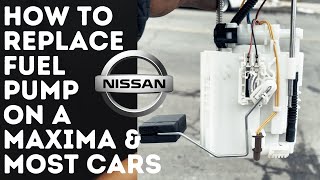
How to confirm: Test the low-side fuel pressure at idle using a fuel pressure gauge. If the pressure is below specification (typically around 51-58 psi for these systems), the in-tank pump is likely weak. A whining noise from the fuel tank 🎬 See this step-by-step Nissan Maxima fuel pump replacement walkthrough is also a common symptom.
Typical fix: Replace the in-tank fuel pump module assembly.
Est. part cost: $250-$500 - Clogged Fuel Filter ⚪ Low Probability → Shop Fuel Filter The fuel filter is integrated into the in-tank fuel pump module assembly and is not a separate, easily serviceable item. It is considered a lifetime filter and typically only clogs if there is significant contamination or debris in the fuel tank.
How to confirm: This is usually diagnosed by confirming low pressure from the in-tank pump. If the pump is running but pressure is low, the integrated filter is a likely restriction.
Typical fix: Replace the entire fuel pump module assembly, as the filter is part of it.
Est. part cost: $250-$500
Rare But Worth Checking
- Faulty Fuel Rail Pressure Sensor: → Shop Fuel Pressure Sensor This sensor tells the ECM the pressure in the rail. If it sends an incorrectly low reading, it can trigger P0087 even if the pressure is fine. This can be checked by comparing the sensor's reading on a scan tool to a mechanical gauge; a significant discrepancy points to a bad sensor.
- Kinked or Restricted Fuel Line: → Shop Fuel Line Physical damage or a blockage in the fuel lines between the tank and the engine can restrict flow and cause a pressure drop. This is less common but should be checked with a visual inspection.
Diagnosis Steps
- Check for other stored DTCs. If P0101, P0448, or P2008 are present, immediately suspect the ECM software issue described in TSB NTB19-045b.
- Consult a Nissan dealer or a qualified shop to check if TSB NTB19-045b applies to your vehicle's VIN and ECM part number.
- If the TSB does not apply or no other codes are present, begin standard fuel system diagnosis.
- Connect a fuel pressure gauge to the low-pressure side to test the in-tank fuel pump. Pressure should be stable and within spec (approx. 51-58 psi) at idle. If pressure is low, the in-tank pump is the likely cause.
- If low-side pressure is good, use a scan tool to monitor the high-pressure fuel rail sensor data. Compare the desired pressure to the actual pressure while idling and driving.
- Compare the scan tool's pressure reading to the mechanical gauge. If they differ significantly, the fuel rail pressure sensor may be faulty.
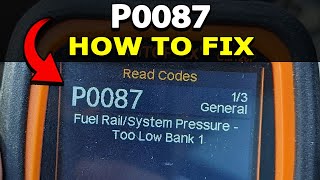
- During a test drive, accelerate firmly. If the actual pressure cannot keep up 🎬 Watch: How to diagnose and fix the P0087 code with the desired pressure, the high-pressure fuel pump (HPFP) is the likely culprit.
- Inspect for any visible fuel leaks in the engine bay or under the vehicle.
- Check the engine oil for the smell of gasoline, which could indicate a leaking HPFP seal contaminating the oil.
Parts You'll Likely Need
- High-Pressure Fuel Pump — This is the most common mechanical failure for P0087 on direct injection engines once the ECM software issue has been ruled out.
Trusted brands: Hitachi, Bosch, Nissan OE
OEM price range: $500-$700
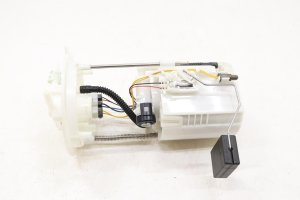
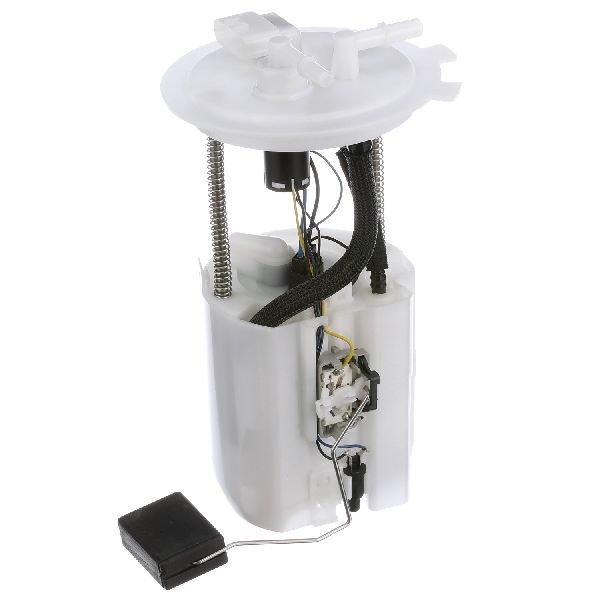
Aftermarket price range: $300-$550 - Low-Pressure Fuel Pump Assembly (In-Tank)
(OEM #17040-4RA0C (replaces 17040-4RA0B))— If the low-pressure side fails its pressure test, the entire in-tank module (which includes the pump and filter) must be replaced.
Trusted brands: Denso, Delphi, Nissan OE
OEM price range: $400-$550
Aftermarket price range: $250-$400
Related Codes That Often Appear With This One
- P0101 — Mass Air Flow (MAF) Sensor Circuit Range/Performance. This code is specifically mentioned in Nissan TSB NTB19-045b alongside P0087 as being related to the ECM calibration error.
- P0448 — EVAP System Vent Control Circuit Shorted. Also mentioned in TSB NTB19-045b as part of the group of codes that can be falsely triggered by the ECM software issue.
- P2008 — Intake Manifold Runner Control Circuit/Open Bank 1. Another code listed in TSB NTB19-045b related to the ECM calibration problem.
- P0300-P0306 — Random or specific cylinder misfire codes. Low fuel pressure can cause a lean running condition, leading to misfires as the cylinders don't receive enough fuel for proper combustion.
Technical Service Bulletins (TSBs) & Recalls
- NTB19-045b: 'MIL ON WITH DTC P0087, P0101, P0448, OR P2008, VEHICLES REGISTERED OUTSIDE OF CALIFORNIA'. This is the most critical document. It states to first diagnose and repair any found issues, then reprogram the ECM. The reprogram updates how the permanent DTC is stored and erased. It applies to Maxima, Murano, and Altima, among others.
- P9328_P9343_P934: Mentions reprogramming the ECM due to 'calibration errors' that may improperly store a permanent DTC for P0087.
- NTB19-045a /
Platform-Specific Known Issues
- A primary issue for the 2016-2018 Maxima is the ECM software glitch documented in Nissan TSBs NTB19-045, NTB19-045a, and NTB19-045b. This can cause the P0087 code to be stored without an actual mechanical fault. The fix is an ECM reprogram *after* confirming no other faults exist.
Mechanic-Grade Diagnostic Values
- Low-Pressure Fuel System Pressure (In-tank pump) — expected: Approx. 51 psi (350 kPa) or more at idle.. Failure: Pressure below 51 psi indicates a weak in-tank pump or clogged filter. Pressure should not drop below 30 psi for 30 minutes after engine off.
- High-Pressure Fuel System Pressure (HPFP) — expected: Approx. 500-600 PSI at idle, rising to 2,000-3,000 PSI under load.. Failure: If the actual pressure on a scan tool cannot keep up with the desired pressure during acceleration, the HPFP is likely failing.
- Fuel Rail Pressure Sensor Voltage (Key On, Engine Off) — expected: Approx. 0.5V with no pressure in the rail.. Failure: Voltage significantly different from 0.5V with the system depressurized, or a voltage that doesn't change as pressure builds, indicates a faulty sensor.
- Fuel Rail Pressure Sensor Voltage (Engine Idling) — expected: Approx. 1.3V to 1.7V at idle.. Failure: A voltage that is stuck high (e.g., ~4.8V) or low, or does not correspond to the actual pressure measured with a mechanical gauge, points to a sensor or wiring issue.
Scan Tool Commands That Help
- Nissan CONSULT-III Plus or equivalent professional scan tool: Fuel Pump Driver Circuit Bidirectional Test — This command allows the technician to directly activate the fuel pump circuit from the scan tool. If the pump runs with the command but not during normal operation, it can help isolate the problem to the control side (ECM, wiring) versus a failed pump. A 'failed' response to the test can indicate internal ECM damage.
- Nissan CONSULT-III Plus or equivalent professional scan tool: Clear Permanent DTC (P-DTC) — As per TSB NTB19-045b, after performing the ECM reprogram, a specific procedure using the CONSULT tool is required to clear the permanent version of P0087 that may be stored. This is a necessary final step after the software update to prevent the code from reappearing due to the original calibration error.
Wiring & Ground Locations
- Fuel Pump Control Module (FPCM) Harness Connector — In the trunk on the left (driver's) side, ahead of the tail light assembly. There are two connectors in this area; the FPCM connector is the upper one.. This connector is a key test point for diagnosing electrical issues with the low-pressure fuel pump. Technicians can check for power, ground, and control signals from the ECM at this location without having to drop the fuel tank.
Real Owner Repair Stories
- Carly forum user 'kevinlorenz4' (2014 Nissan Maxima (gasoline engine), 189,737 km) — Check engine light on, engine stalling at idle, reduced power.
❌ Tried (didn't work) Initial diagnosis pointed to the fuel rail pressure sensor.
✅ What actually fixed it After checking the wiring harness for corrosion and verifying the sensor's reference voltage was correct (around 5V), the fuel rail pressure sensor was confirmed to be defective. Replacing the sensor resolved all symptoms.
OEM Part Supersession History
16630-3JY0A→16630-4BA0A— Part revision or update by Nissan.
Heads up: 16630-4BA0A is listed as a replacement for the older part number for the High-Pressure Fuel Pump.
Helpful Videos
Used OEM Parts in Stock
New Aftermarket Parts Available




The information in this article is provided for general reference and educational purposes only. Vehicle specifications, procedures, and part compatibility can vary by production date, trim level, and region. Always consult your vehicle's factory service manual and verify part numbers before purchasing or performing repairs. Safety-critical components such as airbags, seat belts, and braking systems should be installed by a qualified professional.
- Nissan MAXIMA:
- 🧭 Diagnostic Flowchart
- 🎬 Helpful Videos
- 🛍️ Shop This Part
- What's Unique About the 2016-2018 Nissan MAXIMA
- Symptoms You May Notice
- Most Likely Causes
- Rare But Worth Checking
- Diagnosis Steps
- Parts You'll Likely Need
- Related Codes That Often Appear With This One
- Technical Service Bulletins (TSBs) & Recalls
- Platform-Specific Known Issues
- Mechanic-Grade Diagnostic Values
- Scan Tool Commands That Help
- Wiring & Ground Locations
- Real Owner Repair Stories
- OEM Part Supersession History
- 🎟️ Get 5% Off