

P0087 on 2017-2024 Subaru Impreza: Low Fuel Rail Pressure Causes and Fixes
On a 2017-2024 Impreza, P0087 is almost always caused by a failing high-pressure fuel pump (HPFP). Subaru acknowledged this with TSB 09-123-24, releasing a redesigned pump. Before replacing the pump, ensure the ECM software is updated per TSB 09-120-24R, as this can sometimes resolve the issue. Expect a shop repair cost of $750-$1300 for pump replacement.
- P0087 on a 2017-2024 Impreza is a known issue, most often caused by a faulty high-pressure fuel pump (HPFP).
- Subaru has issued a Technical Service Bulletin (TSB #09-123-24) acknowledging the problem and providing a redesigned pump as the solution.
- Before replacing the pump, have a dealer check if an ECM software update (TSB #09-120-24R) is available, as this is a less expensive potential fix.
- This is not a DIY-friendly repair due to the dangerously high pressures of the fuel system; professional service is strongly recommended.
- Do not ignore this code, as it can lead to dangerous stalling in traffic and potential engine damage.
What's Unique About the 2017-2024 Subaru Impreza
The FB20D direct-injection engine in the fifth and sixth-generation Impreza is known for this specific issue. The problem was so common that Subaru issued Technical Service Bulletin #09-123-24, which announced a redesigned high-pressure fuel pump (HPFP). The original pump's internal discharge valve could cause unstable fuel pressure due to normal engine vibrations, leading to the P0087 code. This makes the HPFP the primary suspect by a wide margin, unlike in other vehicles where the cause might be more varied. This issue is also common on the Subaru Crosstrek and Forester models that share the same engine.
Generation note: This range covers the end of the fifth generation (2017-2023) and the beginning of the sixth generation (2024+). Both generations use a 2.0L direct-injection engine (FB20D) and are explicitly covered by the relevant TSBs, indicating the high-pressure fuel pump issue affects both.
Symptoms You May Notice
- Engine hesitation or sputtering, especially during acceleration.
- Sudden loss of power or entering a reduced-power "limp mode".
- Engine stalling, sometimes unexpectedly in traffic.
- Difficulty restarting the engine, particularly when it's hot or after a short stop.
- Illuminated Check Engine Light.
- Rough idle.
- Replacing the in-tank low-pressure fuel pump without first verifying its output pressure, especially under various temperature conditions. The high-pressure pump is the much more common failure point on this specific vehicle.
- Replacing fuel injectors. While injector issues can cause fuel problems, they are not the typical cause for a P0087 code on this platform.
- Immediately replacing the HPFP without first checking for the cheaper and simpler ECM software update.
Most Likely Causes
- Failing High-Pressure Fuel Pump (HPFP) 🔴 High Probability → Shop Fuel Pump Subaru issued TSB #09-123-24 for a redesigned HPFP, acknowledging the original part's internal discharge valve was prone to failure from engine vibrations. This is a well-documented, widespread issue for this engine platform.
How to confirm: A technician will use a scan tool to monitor 'desired' vs 'actual' fuel rail pressure. If actual pressure is consistently low or drops significantly under load and the low-pressure system is working correctly, the HPFP is the culprit. A dealer can also check the part number on the pump to see if it's the old design.
Typical fix: Replace the high-pressure fuel pump with the updated part. The current OEM part number is 16625AA200.
Est. part cost: $450-$700 - Outdated Engine Control Module (ECM) Software 🟡 Medium Probability → Shop Engine Control Module (ECM) Subaru released TSB #09-120-24R with updated software to "optimize stabilization of fuel pressure" and improve the diagnostic logic that triggers P0087. This should be the first step in diagnosis, as it's the cheapest fix.
How to confirm: A Subaru dealership or a properly equipped independent shop can check the vehicle's current software version against the latest available version by VIN.
Typical fix: Reprogram the Engine Control Module (ECM) with the latest software file from Subaru. This is a dealer or specialist-only repair.
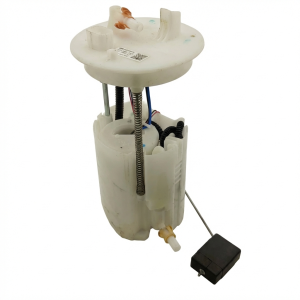
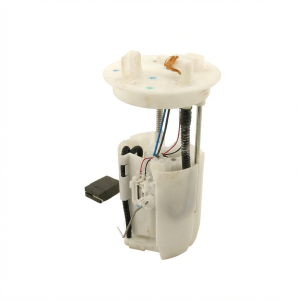
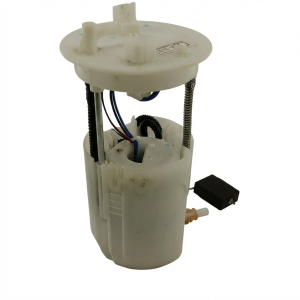
Est. part cost: $0-$150 - Problem with the Low-Pressure Fuel System ⚪ Low Probability Many 2018-2020 Imprezas were part of a recall and subsequent warranty extension (TSB #09-129-24) for a defective in-tank low-pressure fuel pump impeller made by Denso. A failing low-pressure pump can starve the HPFP, causing the P0087 code.
How to confirm: Test the fuel pressure of the in-tank (low-pressure) pump to ensure it's delivering adequate volume and pressure to the HPFP. A reading below specification (typically should be 45-58 psi) would indicate a problem with the in-tank pump or a clogged fuel filter/sock. This test is especially important under 'heat soak' conditions (when the car is hot), as some failures only appear then.
Typical fix: Replace the in-tank low-pressure fuel pump assembly. If the vehicle's VIN is part of the warranty extension, this may be covered by Subaru.
Est. part cost: $350-$600
Rare But Worth Checking
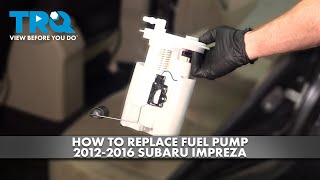
- Faulty Fuel Rail Pressure Sensor: → Shop Fuel Pressure Sensor A faulty sensor can send incorrect low-pressure readings to the ECM, triggering the code even if the pump is healthy. This is worth checking if the symptoms are purely an illuminated CEL without significant drivability issues. 🎬 Watch: Understanding common causes and fixes for the P0087 code.
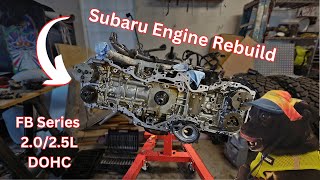
- Worn Camshaft Lobe: → Shop Engine Camshaft The HPFP is driven by a lobe on one of the camshafts. While rare, excessive wear on this lobe can prevent the pump from generating sufficient pressure. This would likely be accompanied by other engine noises and issues. 🎬 Watch: Step-by-step teardown of the Subaru FB series engine.
Diagnosis Steps
- Connect an OBD-II scanner to verify the P0087 code and check for any other related codes.
- Check with a Subaru dealer if TSB #09-120-24R (ECM reprogram) or TSB #09-123-24 (HPFP replacement) are open or have been performed on your vehicle's VIN. Also, check eligibility for the low-pressure fuel pump warranty extension (TSB #09-129-24).
- If an ECM update is available, perform this first. Clear codes and test drive to see if P0087 returns.
- Using a scan tool with live data capability, monitor the 'Commanded Fuel Rail Pressure' and 'Actual Fuel Rail Pressure'.
- At idle and during a test drive (under load), observe if the actual pressure consistently fails to meet the commanded pressure. A significant drop points to a fuel delivery issue.
- If pressure is low, the next step is to isolate the problem. Test the low-pressure in-tank fuel pump's output to ensure it is supplying sufficient pressure to the HPFP. If the low-pressure side is healthy, the issue is almost certainly the HPFP.
- If the scan tool data for the fuel pressure sensor seems erratic or stuck, test the sensor's circuit and compare its reading to a mechanical gauge if possible.
- Based on the diagnostic findings, replace the faulty component. Given the TSB, this is most likely the high-pressure fuel pump.
Parts You'll Likely Need
- High-Pressure Fuel Pump
(OEM #16625AA200)— This is the most common failure part for P0087 on this vehicle, as confirmed by Subaru's Technical Service Bulletin #09-123-24, which introduced this redesigned part to fix the issue.
Trusted brands: Subaru (OEM)
OEM price range: $500-$700
Aftermarket price range: $300-$500
Related Codes That Often Appear With This One
- P0300-P0304 — Random or specific cylinder misfire codes can occur because the low fuel pressure leads to a lean air/fuel mixture, causing incomplete combustion.
- P0171 — This code for "System Too Lean (Bank 1)" is often triggered because the low fuel pressure prevents the injectors from supplying enough fuel to match the air entering the engine.
- P0016, P0017, P0018, P0019 — Subaru's TSB for the ECM update (#09-120-24R) also lists these camshaft correlation codes. This suggests the original software had flawed logic that could trigger multiple, seemingly unrelated codes simultaneously.
Technical Service Bulletins (TSBs) & Recalls
- 09-123-24: DTC P0087 / High-Pressure Fuel Pump Design Change. States that if P0087 is detected, the HPFP requires replacement with a redesigned part due to a flaw in the original's internal discharge valve. This bulletin announces the design change made to the high-pressure fuel pump developed specifically to prevent DTC P0087.
- 09-120-24R: Reprogramming File Availability for DTCs... and P0087. Provides an ECM software update to optimize fuel pressure stabilization and diagnostic logic. These files contain enhanced logic for the self-diagnosis program of the ECM.
- 09-129-24: Fuel Pump Impeller Warranty Extension. Extends the warranty for the in-tank low-pressure fuel pump on many 2018-2020 models, which can be a contributing cause.
Platform-Specific Known Issues
- Subaru has officially acknowledged the P0087 issue on this platform via TSB #09-123-24, which details a design flaw in the original high-pressure fuel pump. The fix is a redesigned pump.
- A software update (TSB #09-120-24R) is also available and should be considered the first step in diagnosis, as it may resolve the code without hardware replacement.
Mechanic-Grade Diagnostic Values
- Low-Pressure Fuel Pump (In-Tank) — expected: 45-58 PSI at idle.. Failure: Pressure significantly below this range indicates a weak in-tank pump or clogged filter, which will starve the high-pressure pump.
- High-Pressure Fuel System (Direct Injection) — expected: Varies with load: ~500 PSI at idle to over 2,500 PSI under acceleration.. Failure: When monitoring live data, if 'Actual Fuel Rail Pressure' consistently lags far behind 'Commanded Fuel Rail Pressure', it points to a fault in the high-pressure pump or sensor.
- Fuel Rail Pressure Sensor Signal Voltage (Key On, Engine Off) — expected: Approximately 0.5V.. Failure: A reading significantly different from 0.5V at zero pressure suggests a sensor or wiring issue.
- Fuel Rail Pressure Sensor Signal Voltage (Engine Idling) — expected: Approximately 1.2V to 1.5V.. Failure: Voltage that is stuck low (near 0.5V) or high (near 5V) indicates a sensor or circuit failure.
- Fuel Rail Pressure Sensor Signal Voltage (Snap Acceleration) — expected: Voltage should jump toward 3.5V - 3.8V.. Failure: A signal that does not respond to changes in engine load and commanded pressure points to a faulty sensor.
Scan Tool Commands That Help
- Subaru Select Monitor (SSM) or equivalent: Fuel Pump Driver Circuit Bidirectional Test — Use this to manually command the fuel pump circuit on/off to verify the integrity of the wiring and the ECM's ability to control the pump, after checking for power and ground.
- Subaru Select Monitor (SSM) or equivalent: Reset Fuel Learning Value — This is a critical step AFTER replacing the high-pressure fuel pump or injectors. It clears the ECM's long-term fuel trim adaptations, forcing it to re-learn based on the new component's performance.
Wiring & Ground Locations
- Main Engine Ground — The main engine ground strap bolts to the transmission bell housing via the top starter motor bolt.. A poor main engine ground can cause a host of electrical issues, including erratic sensor readings and incorrect module behavior. While not a direct cause, verifying this ground is tight and clean is a fundamental step in any electrical diagnosis.
- Fuel Pump Control Module — While varying, the fuel pump control module is typically located in the rear of the vehicle, often under the rear seat or on the frame rail near the tank.. This module controls the voltage to the low-pressure fuel pump. A fault in the module or its wiring can starve the high-pressure pump, leading to a P0087 code.
- Intake Manifold Grounds — The main engine wiring harness grounds are located on the top of the intake manifold.. On many Subarus, the ECU and its sensors get their ground reference from the intake manifold. If this point is not properly grounded to the chassis and engine block, it can cause severe and difficult-to-diagnose electrical problems, including false sensor codes.
Real Owner Repair Stories
- Go-Parts forum compilation (2017 Subaru Forester (shares engine and HPFP issue with Impreza)) — Stalling and P0087 code.
❌ Tried (didn't work) The dealer first performed the ECM software update per TSB #09-120-24R, but the code returned.
✅ What actually fixed it The dealer replaced the high-pressure fuel pump (HPFP) with the redesigned part as instructed by TSB #09-123-24. The total repair cost was $1,500 and it permanently resolved the issue. - Reddit user on r/SubaruAscent (2019 Subaru Ascent, 70k miles (different engine, but demonstrates a relevant failure pattern)) — After a long drive in hot weather, the car would not restart. When it did, it misfired, ran terribly, and shut off. Code P0087 was stored. The issue was not present when the car was cool.
❌ Tried (didn't work) Dealer initially could not replicate the problem by driving it around the shop.
✅ What actually fixed it After further diagnosis prompted by the owner, the dealer found there was almost no pressure on the high-pressure side because the low-pressure pump was failing to supply it, specifically under heat-soak conditions.
OEM Part Supersession History
16625AA120→16625AA190, then 16625AA200— The original High-Pressure Fuel Pump design was flawed. The redesigned part has an optimized internal discharge valve to prevent unstable fuel pressure caused by engine vibrations, directly addressing the root cause of P0087.
Heads up: Using an older part number, even if new-old-stock, will likely lead to a repeat failure. Always order the most current part number (16625AA200) for this repair.
Model Year Variations Within This Range
- 2017-2023: The fifth-generation Impreza introduced the FB20D direct-injection engine, which is the platform susceptible to this specific HPFP failure.
- 2024+: The sixth-generation Impreza continues to use the FB20D engine in Base and Sport trims, making it subject to the same potential issue if it has a pre-update pump. However, the 2024 model is only available as a hatchback with a CVT. TSB 09-123-24 lists the starting VINs for vehicles built with the updated pump, so later production 2024 models are less likely to experience this failure.
Diagnostic Flowchart
Other Known Issues on This Vehicle
Issues unrelated to this code that are worth knowing about as an owner of this generation:
- Excessive Oil Consumption 🟠 Medium — More common in earlier FB engines, but some FB20D owners still report higher-than-average consumption, requiring frequent oil level checks.
- CVT Transmission Issues 🟠 Medium — Some owners report shuddering, hesitation, or premature failure. Subaru extended the CVT warranty to 10 years/100,000 miles for many models, including the 2017 Impreza. (Ref: Warranty Extension (10yr/100k miles for 2012-2017 models))
- Infotainment System Glitches 🟡 Low — Widespread reports of the head unit freezing, rebooting, or having issues with Apple CarPlay/Android Auto connectivity. Software updates from the dealer can sometimes resolve these issues.
- Premature Wheel Bearing Failure 🟠 Medium — A notable number of owners report humming or grinding noises indicating wheel bearing failure, sometimes at relatively low mileage. Subaru has issued TSBs for redesigned parts on various models. (Ref: TSB 03-96-25, TSB 05-70-19)
- Intake Valve Carbon Buildup 🟡 Low — As with most direct-injection engines, the FB20D is prone to carbon buildup on intake valves over time, typically becoming noticeable around 60,000-100,000 miles. This can cause rough idle and power loss.
Used vs. New Parts: Buying Guide for This Vehicle
When a used part is the smart pick: For this specific P0087 repair, sourcing a used part is almost never a smart choice. The primary cause is a high-pressure fuel pump with a known design flaw, and a used part from a junkyard is highly likely to be the original, failure-prone version.
What to inspect on the donor part:
- If forced to consider a used HPFP, you MUST verify the part number on the pump itself is the latest revision (16625AA200).
- Alternatively, you would need the VIN of the donor vehicle to confirm with a Subaru dealer that it was produced after the TSB production changeover date.
OEM-only on this vehicle (don't cheap out):
- High-Pressure Fuel Pump (HPFP). Due to the specific design flaw and subsequent OEM redesign documented in TSB #09-123-24, using the genuine, latest-revision Subaru part is critical to ensure a permanent fix.
Brands owners have reported issues with on this vehicle:
- Any unbranded or generic aftermarket High-Pressure Fuel Pumps. There is no evidence from forum discussions or technical articles that any aftermarket brand has successfully replicated Subaru's revised design. The risk of premature failure is very high.
Real Owner Stories
Aggregated from forums and TSBs cited above. Mileages and costs reflect what owners reported in those sources.
2017-2024 Subaru Impreza FB20D 2.0L
Symptoms: The car failed to restart after being driven in hot weather. The dealer was initially unable to replicate the issue despite the P0087 code being present.
What fixed it: Diagnosis of the fuel system under 'heat soak' conditions to identify low-pressure or high-pressure delivery failure, often leading to HPFP replacement per TSB 09-123-24.
Source hint: Reddit r/SubaruAscent thread titled 'Error Code P0087 - Dealer Can't Recreate'
2017-2024 Subaru Impreza FB20D 2.0L
Symptoms: The vehicle experienced a sudden rev limit around 3,000 RPM, acting as a reduced-power mode despite idling fine.
What fixed it: Replacement of the high-pressure fuel pump with the redesigned part (16625AA200) as specified in TSB 09-123-24.
Source hint: Reddit r/GolfGTI thread titled 'Getting a p0087 code (low fuel rail pressure) but car is idling fine and easy start'
Related OBD-II Codes
Frequently Asked Questions
Is there a specific TSB for the high-pressure fuel pump on my 2017-2024 Subaru Impreza?
Could a software update fix the P0087 code on my Impreza without replacing parts?
I have a 2018 Impreza; is the low-pressure fuel pump covered under warranty?
What is the updated part number for the high-pressure fuel pump (HPFP)?
Why does my Impreza struggle to restart only when the engine is hot?
Does the P0087 issue affect other Subaru models with the same engine?
Helpful Videos

We Have This Part in Stock

The information in this article is provided for general reference and educational purposes only. Vehicle specifications, procedures, and part compatibility can vary by production date, trim level, and region. Always consult your vehicle's factory service manual and verify part numbers before purchasing or performing repairs. Safety-critical components such as airbags, seat belts, and braking systems should be installed by a qualified professional.
- Subaru Impreza:
- 🧭 Diagnostic Flowchart
- 🎬 Helpful Videos
- 🛍️ Shop This Part
- What's Unique About the 2017-2024 Subaru Impreza
- Symptoms You May Notice
- Most Likely Causes
- Rare But Worth Checking
- Diagnosis Steps
- Parts You'll Likely Need
- Related Codes That Often Appear With This One
- Technical Service Bulletins (TSBs) & Recalls
- Platform-Specific Known Issues
- Mechanic-Grade Diagnostic Values
- Scan Tool Commands That Help
- Wiring & Ground Locations
- Real Owner Repair Stories
- OEM Part Supersession History
- Model Year Variations Within This Range
- Other Known Issues on This Vehicle
- Used vs. New Parts: Buying Guide for This Vehicle
- Real Owner Stories
- 2017-2024 Subaru Impreza FB20D 2.0L
- 2017-2024 Subaru Impreza FB20D 2.0L
- Related OBD-II Codes
- Frequently Asked Questions
- 🎟️ Get 5% Off