

P0087 on 2018-2020 Toyota Corolla: Fuel Pressure Too Low Causes & Fixes
P0087 on a 2018-2020 Corolla means the fuel pressure is too low. The most common cause is a failing low-pressure in-tank fuel pump, which was subject to a major recall (20TA02 / NHTSA 20V682). Before paying for repairs, check if your vehicle's VIN is covered by this recall. If not, the issue could still be the in-tank pump, a clogged filter, or on 2.0L engines, the high-pressure fuel pump (HPFP).
- First, check if your Corolla is part of Toyota's fuel pump recall (20TA02), as the repair may be free.
- P0087 indicates low fuel pressure, which causes serious drivability problems like stalling and hesitation.
- The 2018-2020 Corolla uses two different engines (1.8L port injection, 2.0L direct injection), which changes the diagnostic process.
- The most likely cause is the in-tank low-pressure fuel pump, followed by the high-pressure fuel pump on 2.0L models.
- Do not immediately replace O2 sensors if you also have lean codes (P0171); they are likely a symptom of the low fuel pressure, not the cause.
What's Unique About the 2018-2020 Toyota COROLLA
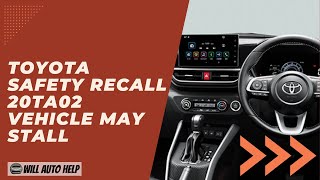
The 2018-2020 Corolla spans two different generations with two different fuel systems, which is critical for diagnosing P0087. The 2018 and some 2020 models use a 1.8L port-injected engine (2ZR-FAE), while the 2019 Hatchback and sportier 2020 sedans use a 2.0L engine (M20A-FKS) with a more complex D-4S system (both port and direct injection). This distinction is important because the 2.0L engine has a second, high-pressure fuel pump (HPFP) that can be a point of failure, while the 1.8L does not. Furthermore, a massive recall (Toyota 20TA02 / NHTSA 20V682) was issued for 🎬 Watch: How the fuel pump recall affects vehicle safety failing low-pressure in-tank fuel pumps made by Denso, which is a primary cause for this code across both engine types. The recall addressed an issue where the fuel pump impeller could degrade, causing the pump to stop operating, potentially leading to a stall while driving.
Diagnostic Flowchart
Tap your situation to follow the diagnostic path that matches what you're seeing on this vehicle.
Generation note: Yes, this range covers the end of the 11th generation and the beginning of the 12th. The 2018 model is an 11th-gen sedan. The 2019 model year introduced the 12th-gen hatchback. For 2020, both the 11th-gen platform (with the 1.8L 2ZR-FAE engine on L/LE/XLE trims) and the 12th-gen platform (with the 2.0L M20A-FKS engine on SE/XSE trims) were sold. The primary difference regarding this code is the fuel system: the 1.8L 2ZR-FAE engine is port-injection only, while the 2.0L M20A-FKS has both port and direct injection, adding a high-pressure fuel pump.
Symptoms You May Notice
- Check Engine Light is on
- Engine hesitation or stumbling, especially during acceleration
- Reduced engine power and poor acceleration
- Engine stalling, possibly while driving at high speeds
- Rough or unstable idle
- Long crank time or difficulty starting the engine
- Decreased fuel economy
- Vehicle enters 'limp mode', limiting speed
- Replacing oxygen (O2) sensors. Because P0087 is often seen with lean codes (P0171/P0174), a mechanic might mistakenly blame the O2 sensors. However, TSB T-SB-0009-23 confirms that low fuel pressure is a root cause for these codes appearing together.
- Replacing the Mass Airflow (MAF) Sensor. A dirty MAF sensor can also cause a P0171 lean code, but it would not directly cause the P0087 low fuel pressure code. Diagnosing based on P0171 alone could lead to this incorrect repair.
Most Likely Causes
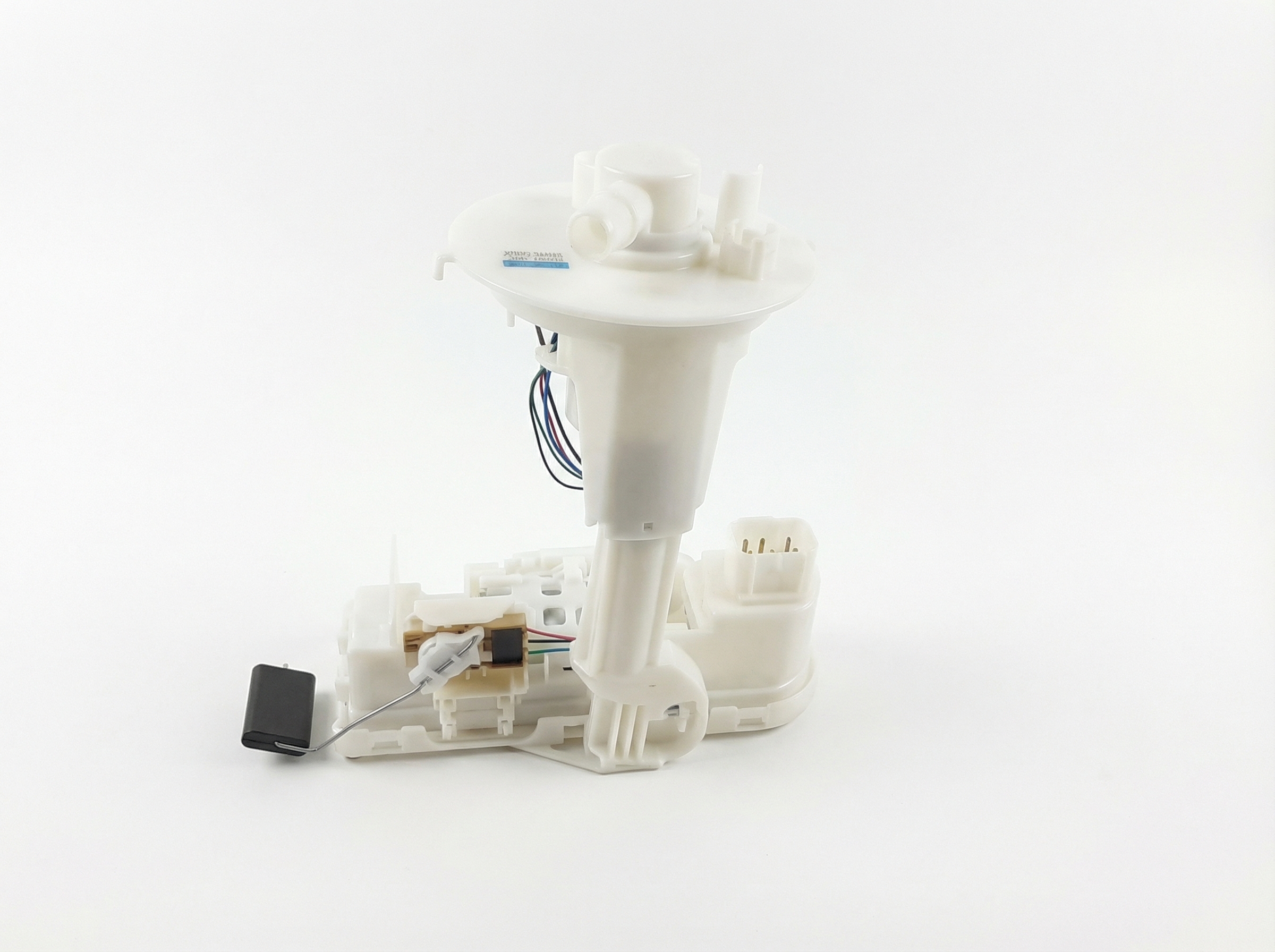
- Failing Low-Pressure In-Tank Fuel Pump (Recall Item) 🔴 High Probability → Shop Fuel Pump Many 2018-2020 Corollas were part of Toyota's massive fuel pump recall (campaign 20TA02 / NHTSA 20V682). The impeller in the Denso low-pressure pump was manufactured with a lower density, which could cause it to absorb fuel, deform, and fail, leading to a loss of fuel pressure.
How to confirm: First, check your vehicle's VIN on the NHTSA or Toyota recall website to see if it's covered. If not, a mechanic can test the low-pressure fuel system's pressure using a manual gauge to see if it meets specifications. A scan tool can also monitor requested vs. actual pressure.
Typical fix: If covered by the recall, a Toyota dealer will replace the fuel pump assembly with an improved part, free of charge. If not covered, the in-tank fuel pump assembly must be replaced.
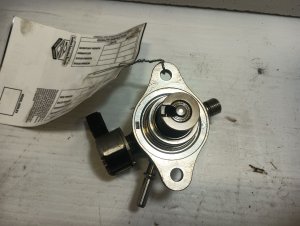
Est. part cost: $0 (if recall applies) - $350 - Failing High-Pressure Fuel Pump (HPFP) 🟡 Medium Probability → Shop Fuel Pump This applies only to models with the 2.0L M20A-FKS engine. HPFPs are a common failure point on many direct-injection engines as they are complex mechanical parts subject to high stress. The HPFP is driven by a lobe on the exhaust camshaft.
How to confirm: A diagnostic scan tool is needed to monitor the requested vs. actual fuel rail pressure on the high-pressure side. A significant and consistent discrepancy, especially when low-side pressure is confirmed to be good, points to a failing HPFP.
Typical fix: Replacement of the high-pressure fuel pump.
Est. part cost: $400 - $800 - Clogged Fuel Filter ⚪ Low Probability → Shop Fuel Filter On modern Corollas, the fuel filter is typically integrated into the in-tank fuel pump assembly and is considered a non-serviceable, lifetime part. It's unlikely to clog on its own unless there is significant fuel contamination, but it gets replaced with the pump. A restriction here is a known cause for P0087.
How to confirm: This is usually diagnosed by confirming low pressure from the in-tank pump. The filter itself is not typically inspected separately. If the pump is weak, the integrated filter/strainer is replaced along with it.
Typical fix: The entire in-tank fuel pump module, which includes the filter, is replaced.
Est. part cost: $200 - $350 - Faulty Fuel Pressure Sensor ⚪ Low Probability → Shop Fuel Pressure Sensor While not a widespread issue, sensors can fail and send incorrect low-pressure readings to the computer, triggering the code even if the pressure is normal.
How to confirm: Compare the sensor's reading on a scan tool with a reading from a manual fuel pressure gauge. If the readings don't match, the sensor is likely faulty. This is a key step outlined in Toyota's own diagnostic procedures for this issue.
Typical fix: Replacement of the fuel pressure sensor.
Est. part cost: $50 - $150
Rare But Worth Checking
- Leaking Fuel Injector: → Shop Fuel Injector An injector stuck open can cause a drop in rail pressure. This would likely be accompanied by other symptoms like a strong fuel smell, black smoke, and a specific cylinder misfire code.
- Damaged Fuel Line: → Shop Fuel Line A physically kinked, pinched, or damaged fuel line can restrict flow and cause a pressure drop. This is rare but possible if the vehicle has had underbody damage or previous incorrect repairs.
- Worn Camshaft Lobe (2.0L Engine): → Shop Engine Camshaft On the 2.0L M20A-FKS engine, the high-pressure fuel pump is driven by a dedicated lobe on the exhaust camshaft. Extreme wear on this lobe could prevent the pump from generating sufficient pressure, though this is a very rare mechanical failure on a low-mileage engine.
- Faulty Fuel Pump Control Module: → Shop Fuel Pump This module regulates the voltage sent to the in-tank fuel pump. A failure can prevent the pump from running at the correct speed, causing low pressure. This is a less common but possible electrical cause.
Diagnosis Steps
- Check for Recalls: Before any diagnosis, enter your vehicle's VIN into the NHTSA or Toyota recall database to check for fuel pump recall 20TA02 (NHTSA ID: 20V682).
- Scan for Codes: Use an OBD-II scanner to confirm P0087 and check for any other related codes like P0171. Note any freeze frame data, which shows engine conditions when the code was set.
- Check Live Data: Monitor the fuel rail pressure readings with a capable scanner. Compare the desired pressure to the actual pressure at idle and while increasing engine RPM. A significant lag or inability to meet the desired pressure is a key indicator.
- Inspect for Leaks: Perform a thorough visual inspection of all fuel lines and components, from the tank to the engine, looking for any signs of physical damage, kinks, or active leaks.
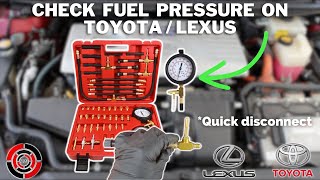
- Test Low-Pressure System: If not covered by the recall (or if the recall was performed and the issue persists), test the pressure of the in-tank fuel pump using a fuel pressure gauge to ensure it's within specification. This will help isolate the issue to the low-pressure or high-pressure side.
- Test High-Pressure System (2.0L Engine Only): If low-side pressure is good, the focus shifts to the high-pressure fuel pump (HPFP). This requires advanced diagnostics to monitor its performance under various loads, comparing requested vs. actual pressure.
- Test Fuel Pressure Sensor: If fuel pressure tests seem normal but the code persists, the fuel pressure sensor itself may be faulty. Its readings should be compared against a mechanical gauge.
Parts You'll Likely Need
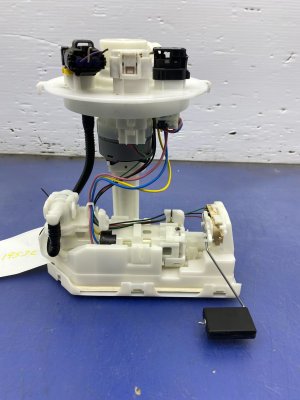
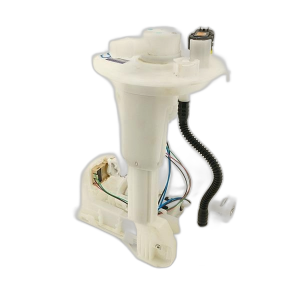
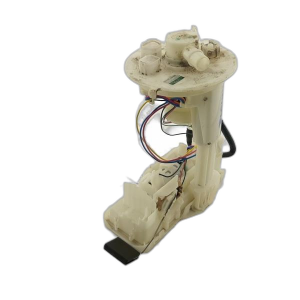
- Fuel Pump and Housing Assembly (In-Tank)
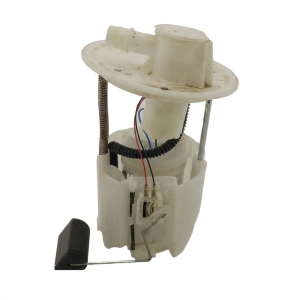
(OEM #77020-02411 (replaces 77020-02410 for 1.8L models up to 09/2018), 77020-12A00 (2.0L models))— This is the most common cause, especially given the widespread recall (20TA02) for this part failing on 2018-2020 Corollas. It is the primary pump for the 1.8L engine and the low-pressure lift pump for the 2.0L engine. - High-Pressure Fuel Pump (HPFP) — For 2.0L M20A-FKS engines only, this is the second most likely component to fail if the in-tank pump is functioning correctly.
- Fuel Pressure Sensor
(OEM #89458-06021)— In cases where the fuel pressure is mechanically sound, a faulty sensor can send incorrect low-pressure readings to the ECU, triggering the code.
Related Codes That Often Appear With This One
- P0171 — System Too Lean (Bank 1). Low fuel pressure means not enough fuel is being injected, leading to an air-fuel mixture with too much air (lean), which this code detects. This is a very common companion code.
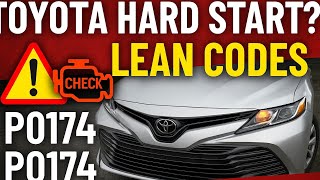
- P0174 — System Too Lean (Bank 2). This would apply to V6/V8 engines, but is sometimes listed generically with P0087. For the 4-cylinder Corolla, P0171 is the relevant code. The TSB T-SB-0009-23 explicitly links P0087 with P0171 and/or P0174.
- P107A2A — Fuel Rail Pressure Sensor (Low) Signal Stuck in Range. This is a Toyota-specific code that can appear alongside P0087, as mentioned in TSB-0058-22 for other models, pointing directly to the same fuel delivery issue.
- P0088 — Fuel Rail/System Pressure - Too High. Seeing this code alongside P0087 can indicate an erratic fuel pressure regulator or a failing fuel pressure sensor that is providing fluctuating and incorrect readings.
Technical Service Bulletins (TSBs) & Recalls
- T-SB-0092-23: Links P0087 with lean codes P0171/P0174, confirming low fuel pressure as a cause for the lean condition.
- Recall 20TA02 / NHTSA 20V682: Details the widespread recall of the low-pressure fuel pump due to a manufacturing defect in the impeller.
Platform-Specific Known Issues
- Safety Recall 20TA02: Toyota recalled a massive number of vehicles, including the 2019-2020 Corolla and 2019 Corolla Hatchback, for a faulty low-pressure fuel pump that could fail and cause the engine to stall. This is a primary suspect for code P0087.
Mechanic-Grade Diagnostic Values
- Low-Pressure Fuel System (1.8L 2ZR-FAE & 2.0L M20A-FKS) — expected: Approximately 40-70 PSI, depending on specific model and operating conditions.. Failure: Pressure that is consistently below 40 PSI at idle or that drops significantly under load indicates a weak in-tank pump or restriction.
- High-Pressure Fuel System (2.0L M20A-FKS only) — expected: Approximately 5,076 to 6,527 psi (35 to 45 MPa) at idle, increasing with engine speed.. Failure: Scan tool data showing actual pressure failing to meet target pressure, especially under acceleration, points to a failing HPFP.
- Fuel Pressure Sensor Voltage (Key On, Engine Off) — expected: Typically 0.5V at low/atmospheric pressure and rises towards 4.5V at full pressure.. Failure: A voltage reading that is stuck low (e.g., 0.5V) even when pressure should be building, or a reading that doesn't correlate with manual gauge tests, suggests a faulty sensor or wiring issue.
Hidden / Shadow Codes Worth Checking
- P107A2A: Fuel Rail Pressure Sensor (Low) Signal Stuck in Range (see via This Toyota-specific DTC may be stored alongside P0087 and is visible with a professional scan tool like Toyota Techstream. It more specifically points to a sensor or signal issue as a potential cause.)
Scan Tool Commands That Help
- Toyota Techstream: Active Test: Control the Fuel Pump / Speed (or C/OPN Relay) — This bidirectional command allows a technician to directly activate the in-tank fuel pump to verify its operation and listen for audible cues. It's a crucial step to confirm if the pump is receiving the command to run before performing manual pressure tests.
Wiring & Ground Locations
- Fuel Pump Control ECU — On similar Toyota platforms like the RAV4 and Prius, this module is often located in the rear of the vehicle, behind the left-side trim panel in the cargo/trunk area.. This module controls the in-tank low-pressure fuel pump. A failure in the module, its connector, or its ground can mimic a failed fuel pump, leading to a P0087 code. Verifying power and ground at this module is a key electrical diagnostic step.
OEM Part Supersession History
77020-02410→77020-02411— Improvement/update to the in-tank fuel pump assembly.
Heads up: Part 77020-02411 is the correct replacement for 1.8L models with the earlier part number. Using the old stock part may lead to a repeat failure.
Helpful Videos
We Have This Part in Stock

The information in this article is provided for general reference and educational purposes only. Vehicle specifications, procedures, and part compatibility can vary by production date, trim level, and region. Always consult your vehicle's factory service manual and verify part numbers before purchasing or performing repairs. Safety-critical components such as airbags, seat belts, and braking systems should be installed by a qualified professional.
- Toyota COROLLA:
- 🧭 Diagnostic Flowchart
- 🎬 Helpful Videos
- 🛍️ Shop This Part
- What's Unique About the 2018-2020 Toyota COROLLA
- Symptoms You May Notice
- Most Likely Causes
- Rare But Worth Checking
- Diagnosis Steps
- Parts You'll Likely Need
- Related Codes That Often Appear With This One
- Technical Service Bulletins (TSBs) & Recalls
- Platform-Specific Known Issues
- Mechanic-Grade Diagnostic Values
- Hidden / Shadow Codes Worth Checking
- Scan Tool Commands That Help
- Wiring & Ground Locations
- OEM Part Supersession History
- 🎟️ Get 5% Off