

P0087 on 2017-2022 Toyota Highlander: Fuel Pressure Too Low Causes & Fixes
On a 2017-2022 Toyota Highlander, P0087 indicates fuel pressure is below specification. For 2020-2022 models, this may be a software issue fixed by a dealer update per TSB T-SB-0049-21, especially at high altitudes. On 2017-2019 models, it more commonly points to a failing high-pressure fuel pump (OEM #23101-0P020), which can be an expensive repair.
- P0087 is a critical code on the Highlander that can cause dangerous stalling and should be addressed immediately.
- For 2020-2022 models, the first step should always be to check if TSB T-SB-0049-21 applies, as a simple software update may fix the issue.
- For 2017-2019 models, the cause is more likely a mechanical failure, with the high-pressure fuel pump being a primary suspect.
- Diagnosis requires separating the low-pressure and high-pressure fuel systems to pinpoint the failure, a job best left to a professional.
- Repair costs can vary dramatically, from a no-cost software update to over $1,500 for a high-pressure fuel pump replacement.
What's Unique About the 2017-2022 Toyota HIGHLANDER

The 2017-2022 Highlander range spans two generations with different likely causes for P0087. The 4th generation (2020-2022) has a known software issue where the ECM can incorrectly set this code under specific conditions: high altitude (above 3,300 ft) and high ambient temperatures (above 85°F), which is addressed by Technical Service Bulletin T-SB-0049-21 Rev. In contrast, earlier 3rd generation models (2017-2019) are more prone to mechanical failures, such as a worn high-pressure fuel pump, as highlighted in owner complaints about sudden power loss and stalling.
Diagnostic Flowchart

Tap your situation to follow the diagnostic path that matches what you're seeing on this vehicle.
Generation note: The 2017-2019 models belong to the 3rd generation (XU50), while 2020-2022 models are the 4th generation (XU70). TSB T-SB-0049-21 Rev specifically addresses a software logic issue in 2020-2022 models and also applies to the Sienna Hybrid. Issues on 2017-2019 models are more likely related to mechanical parts like the fuel pump itself, as suggested by TSB TSB000923 and owner complaints.
Symptoms You May Notice

- Complete loss of engine power
- Engine stalling, sometimes at low speeds or in traffic
- Hesitation or sputtering during acceleration
- Rough idling
- Difficulty starting the engine or engine won't start
- Check Engine Light is on
- Reduced fuel economy
- Replacing the high-pressure fuel pump on a 2020-2022 model without first checking for the software update specified in TSB T-SB-0049-21, especially if the vehicle is operated at high altitude.
Most Likely Causes

- ECM Software Logic 🔴 High Probability Specific to 2020-2022 models, Toyota issued TSB T-SB-0049-21 Rev because the ECM logic could misinterpret data at high altitudes (above 3,300 ft) and high temperatures (above 85°F), falsely triggering P0087.
How to confirm: A Toyota dealership can check if the TSB applies to your vehicle's VIN and if the software update has been performed. The repair is covered under the Federal Emission Control Warranty (96 months or 80,000 miles).
Typical fix: Reprogramming the ECM with updated software.
Est. part cost: $0 (if under warranty) - Failing High-Pressure Fuel Pump 🟡 Medium Probability → Shop Fuel Pump This is a common failure point in direct injection systems and is cited in owner complaints for the 2017-2019 models, leading to stalling. A Reddit user with a 2019 Highlander confirmed a P0087 code required a fuel pump replacement, which the dealer ultimately covered under a customer service program.
How to confirm: After ruling out the low-pressure system, a technician will use a scan tool to monitor high-pressure fuel rail data under load. A significant deviation from the desired pressure points to a failing pump.
Typical fix: Replacement of the high-pressure fuel pump (OEM Part #23101-0P020 for V6 models).
Est. part cost: $930-$1200 (OEM) - Failing Fuel Rail Pressure Sensor ⚪ Low Probability → Shop Fuel Pressure Sensor Sensors can fail and send incorrect readings to the ECM. TSB T-SB-0049-21 also mentions code P107A2A, which is specific to the fuel rail pressure sensor, indicating it can be part of the software-related issue.
How to confirm: Compare the sensor's reading on a scan tool to a manual pressure gauge. If the readings differ significantly, the sensor is likely faulty.
Typical fix: Replacement of the fuel rail pressure sensor.
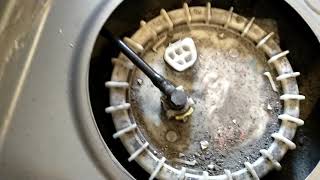
Est. part cost: $230-$250 - Clogged Fuel Filter or Failing Low-Pressure Fuel Pump ⚪ Low Probability → Shop Fuel Filter The high-pressure pump cannot function correctly if the in-tank low-pressure pump isn't supplying it with enough fuel. The fuel filter is typically part of the in-tank pump assembly. 🎬 Watch: Step-by-step guide for removing the in-tank fuel pump.
How to confirm: A technician will test the pressure of the low-pressure fuel system first to ensure it meets specifications before diagnosing the high-pressure side.
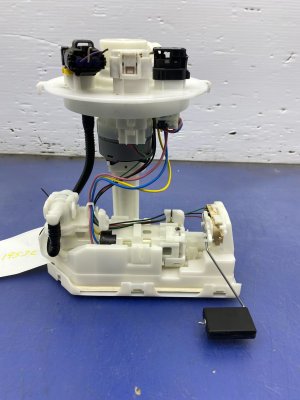
Typical fix: Replacement of the in-tank fuel pump assembly or fuel filter. For hybrid models, the pump part number may be 23220-31600.
Est. part cost: $200-$600
Rare But Worth Checking
- Worn High-Pressure Pump Cam Lobe:
Diagnosis Steps
- Check for any Technical Service Bulletins (TSBs) related to your vehicle's VIN and P0087. For 2020-2022 models, TSB T-SB-0049-21 is the primary starting point.
- Connect a professional scan tool to read live data. Monitor both the desired and actual fuel rail pressure at idle and under load. Note the freeze frame data, paying attention to altitude and ambient temperature.
- Test the low-pressure fuel system. Use a fuel pressure gauge to verify the in-tank pump is delivering fuel to the high-pressure pump within specification (typically 50-70 PSI at idle).
- If low-pressure is adequate, inspect the fuel rail pressure sensor. Compare its live data reading to a mechanical gauge. A significant discrepancy suggests a bad sensor.
- If the sensor is accurate and low-pressure is good, but high-pressure readings are still low under load, the high-pressure fuel pump is the most likely culprit.
- Inspect the high-pressure pump's drive (cam lobe) for wear if accessible, as damage here can also cause low pressure.
Parts You'll Likely Need
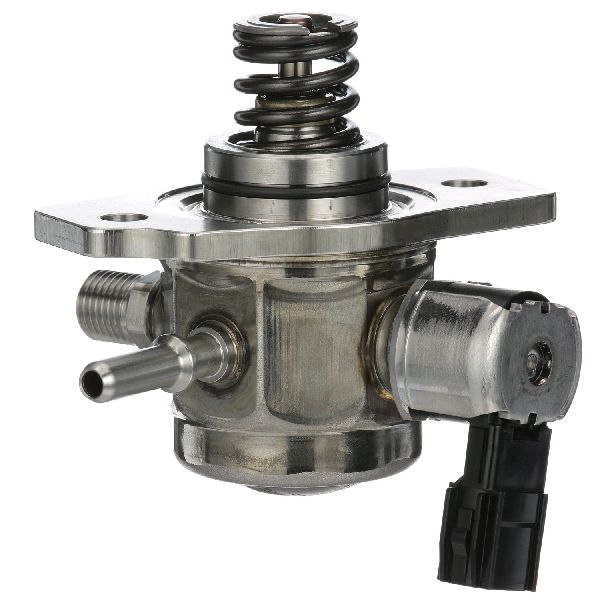
- High-Pressure Fuel Pump
(OEM #23101-0P020)— This is the most common mechanical failure causing P0087, especially on 2017-2019 3.5L V6 models, leading to significant power loss.
Trusted brands: Toyota (Genuine OEM), Denso
OEM price range: $930-$1300
Aftermarket price range: $700-$1000 - Fuel Rail Pressure Sensor — Can fail and send incorrect low-pressure readings to the ECM. It's also implicated in a TSB for 2020-2022 models.
Trusted brands: Denso, Beck Arnley
OEM price range: $230-$250
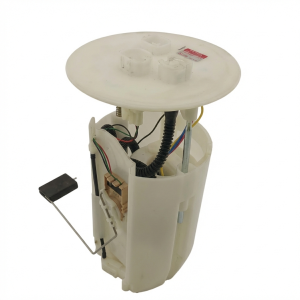
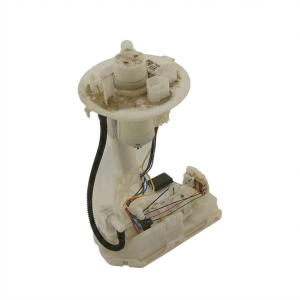
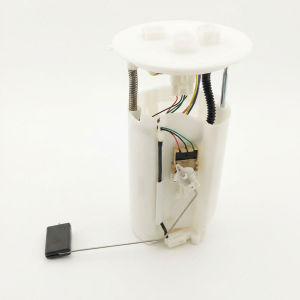
Aftermarket price range: $80-$150 - In-Tank Fuel Pump Assembly (Low-Pressure)
(OEM #23220-31600 (For Hybrid Models))— Though less common, a failing low-pressure pump will starve the high-pressure pump, causing P0087. The filter is integrated into this assembly.
Trusted brands: Toyota (Genuine OEM), Denso
OEM price range: $350-$450
Aftermarket price range: $150-$300
Related Codes That Often Appear With This One
- P107A2A — This code for 'Fuel Rail Pressure Sensor (Low) Signal Stuck in Range' is specifically mentioned alongside P0087 in TSB T-SB-0049-21 for 2020-2022 models.
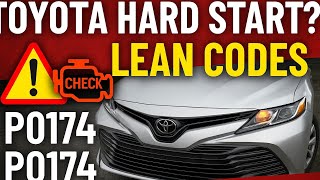
- P0171 / P0174 — These 'System Too Lean' codes can appear because low fuel pressure leads to an incorrect air-fuel mixture, as noted in TSB TSB000923. 🎬 Watch: How lean codes and hard starts relate to P0087.
- P3190 — This Toyota-specific code often means 'Poor Engine Power' and can be triggered by the underlying fuel delivery failure that also causes P0087, as seen in an owner complaint.
Technical Service Bulletins (TSBs) & Recalls
- T-SB-0049-21 Rev: Addresses a MIL ON condition with DTC P0087 and/or P107A2A on 2020-2022 Highlander/Highlander Hybrid and 2021-2022 Sienna Hybrid models due to an ECM logic issue at high altitude/temperature.
Platform-Specific Known Issues
- A software issue on some 2020-2022 Highlander and Highlander Hybrid models can cause P0087 to set when driving at high altitudes (above 3,300 ft) and high ambient temperatures (above 85°F). Toyota addressed this with a software update under TSB T-SB-0049-21 Rev.
- An owner of a 2017 Highlander reported a complete loss of power, including engine, steering, and brakes, associated with code P0087, highlighting the critical safety nature of this fault.
- A 2019 Highlander owner experienced a stall and was told by a dealer that Toyota had not yet issued an update for the problem at that time (July 2021), indicating the issue was known before the TSB was widely circulated.
- On Reddit, a user with a 2019 Highlander reported getting code P0087 and was quoted $1500 for a repair. They were informed of a 'customer service program' and the dealership ultimately covered the cost of the fuel pump replacement.
Mechanic-Grade Diagnostic Values
- Low-Pressure Fuel System (2GR-FKS) — expected: 196 to 833 kPa (28 to 121 psi). Failure: Pressure below 28 psi at idle or when commanded by a scan tool.
- High-Pressure Fuel System at 3000 RPM (2GR-FKS) — expected: 2,400 to 19,500 kPa (348 to 2,828 psi). Failure: Pressure fails to rise under engine load or significantly lags the target pressure shown on a scan tool.
- High-Pressure Fuel System (A25A-FXS Hybrid) — expected: 3.0 to 25 MPa (435 to 3,626 psi). Failure: Pressure is significantly below the target value commanded by the ECM.
- High-Pressure Fuel Rail Sensor Voltage (A25A-FXS) — expected: Normal operating voltage varies with pressure.. Failure: Sensor output voltage is less than 0.2933 V for 3 seconds or more, which may trigger a P019011 code.
- Direct Fuel Injector Resistance (2GR-FKS) — expected: 1.74 to 2.04 Ω at 20°C (68°F). Failure: Resistance is outside the specified range, indicating a faulty injector coil.
Scan Tool Commands That Help
- Toyota Techstream: Active Test: Control the Fuel Pump / Spd — Used with the engine off to command the low-pressure in-tank fuel pump ON. This allows a technician to test the pump's operation and check low-side fuel pressure without starting the engine.
- Toyota Techstream: Active Test: Control the Fuel Pump Duty Ratio — For vehicles with a fuel pump control module, this test allows the technician to vary the duty cycle sent to the low-pressure pump and compare the scan tool data with a mechanical pressure gauge to verify pump and module performance.
- Toyota Techstream: Active Test: Control the Injection Mode — On D-4S engines like the 2GR-FKS, this test forces the system to switch between port and direct injection. It helps diagnose issues with the high-pressure system by isolating its operation. Note: A known bug may affect this test on some software versions.
- Toyota Techstream: Data List: Fuel Pressure (High) — This is the primary data PID to monitor. It shows the actual fuel pressure reading from the high-pressure sensor, which should be compared to the 'Target Fuel Pressure' PID to check for deviations.
Wiring & Ground Locations
- Fuel Pump Control Module — On 2017-2019 models, it is located in the rear seating area, on the left-hand (driver's) side, under the plastic trim near the C-pillar.. A faulty fuel pump control module can fail to supply adequate voltage to the in-tank low-pressure pump, starving the high-pressure pump and causing P0087.
- Main Body Ground — A common factory ground point is located behind the driver's side kick panel, near the interior fuse box. It consists of several ring terminals bolted to the chassis.. A poor ground for the fuel pump control module or the ECM can cause erratic voltage and intermittent fuel pressure problems. Verifying this ground is secure is a key electrical diagnostic step.
- In-Tank Fuel Pump Access — The low-pressure fuel pump is accessed from inside the vehicle by removing the second-row seat cushion. The access panel is typically on the right (passenger) side of the vehicle.. This is the physical location for testing the low-pressure pump's electrical connector and for replacing the pump assembly. Improper reassembly, such as a pinched O-ring, can cause leaks or pressure issues.
Real Owner Repair Stories
- Reddit user @ParkieDude on r/ToyotaHighlander (2019 Toyota Highlander) — After a fuel pump recall was performed, the owner noticed a rough idle. A week later, the Check Engine Light came on.
❌ Tried (didn't work) The initial fuel pump replacement under recall.
✅ What actually fixed it The dealership found that during the recall service, the O-ring for the fuel pump was rolled over and pinched, causing a fuel pressure issue. Re-installing the pump correctly with a properly seated O-ring resolved the problem. - Reddit user @PenaltyAppropriate60 on r/ToyotaHighlander (2019 Toyota Highlander with ~20k miles) — Engine light on and sputtering from time to time with code P0087.
✅ What actually fixed it The owner was quoted $1500 for a fuel pump repair. However, after contacting Toyota, it was determined the vehicle was covered under a 'customer service program' for the known fuel pump issue, and the dealership replaced the fuel pump at no cost.
"I Checked Everything" — The Actual Cause
- On 2020-2022 models, all mechanical fuel system checks (low-pressure test, high-pressure test) may pass perfectly, yet code P0087 will still set. The actual cause is an ECM software logic flaw that misinterprets sensor data under specific high altitude and high-temperature conditions, as documented in TSB T-SB-0049-21 Rev. The fix is a software update, not a mechanical part replacement.
Model Year Variations Within This Range
- 2017-2019: These models use the 2GR-FKS V6 engine and were subject to a major fuel pump recall (NHTSA Campaign 20V012000). P0087 on these years is highly likely to be related to a mechanical failure of the low-pressure or high-pressure fuel pump.
- 2020-2022: These models (both 2GR-FKS and A25A-FXS Hybrid) are subject to TSB T-SB-0049-21 Rev, which points to a software issue causing P0087 at high altitudes and temperatures. Diagnosis should start with checking for this software update before replacing any parts.
Helpful Videos


Used OEM Parts in Stock
New Aftermarket Parts Available

The information in this article is provided for general reference and educational purposes only. Vehicle specifications, procedures, and part compatibility can vary by production date, trim level, and region. Always consult your vehicle's factory service manual and verify part numbers before purchasing or performing repairs. Safety-critical components such as airbags, seat belts, and braking systems should be installed by a qualified professional.
- Toyota HIGHLANDER:
- 🧭 Diagnostic Flowchart
- 🎬 Helpful Videos
- 🛍️ Shop This Part
- What's Unique About the 2017-2022 Toyota HIGHLANDER
- Symptoms You May Notice
- Most Likely Causes
- Rare But Worth Checking
- Diagnosis Steps
- Parts You'll Likely Need
- Related Codes That Often Appear With This One
- Technical Service Bulletins (TSBs) & Recalls
- Platform-Specific Known Issues
- Mechanic-Grade Diagnostic Values
- Scan Tool Commands That Help
- Wiring & Ground Locations
- Real Owner Repair Stories
- "I Checked Everything" — The Actual Cause
- Model Year Variations Within This Range
- 🎟️ Get 5% Off