

P0087 on 2019-2022 Toyota RAV4: Fuel Pressure Too Low Causes and Fixes
On a 2019-2022 RAV4, code P0087 is almost always caused by a known issue at high altitudes and temperatures, addressed by Toyota TSB #T-SB-0058-22. The fix involves an updated in-tank fuel pump assembly, which is often covered under the 8-year/80,000-mile emissions warranty. Ignoring other causes before verifying the TSB conditions is a common misstep.
- For a 2019-2022 RAV4, P0087 is most likely not a simple part failure but a specific issue that occurs at high altitude and high temperature.
- Before replacing any parts, check the code's freeze frame data. If it matches the conditions in Toyota TSB T-SB-0058-22, that is your diagnostic path.
- The fix is an updated in-tank fuel pump assembly (P/N 77020-0R051) and is often covered under the 8-year/80,000-mile Federal Emissions Warranty.
- Do not immediately assume the expensive high-pressure fuel pump is bad; the problem is usually the fuel *supply* to that pump.
What's Unique About the 2019-2022 Toyota RAV4
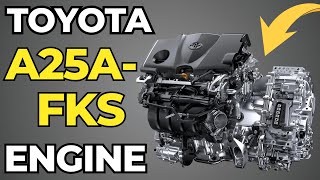
For the 2019-2022 RAV4 with the A25A-FKS engine, P0087 is rarely a random part failure. It's most often triggered by a specific design sensitivity to environmental conditions. At high altitudes (above 3,300 feet) and high temperatures (above 85°F), gasoline in the low-pressure line can vaporize, creating vapor pockets that starve the high-pressure fuel pump (HPFP). This phenomenon, known as cavitation, causes a temporary but significant drop in rail pressure, which the ECM flags as a P0087 fault. Toyota has acknowledged this and issued a specific technical service bulletin (T-SB-0058-22) to fix it.
Symptoms You May Notice
- Check Engine Light (MIL) is on
- Reduced engine power or 'limp mode'
- Engine hesitation or stumbling, especially during acceleration or climbing hills at high altitude.
- Engine running rough or stalling.
- Difficulty starting the engine
- Replacing the expensive high-pressure fuel pump (HPFP) without first checking if the conditions for TSB-0058-22 are met. The issue is most often with the fuel supply *to* the HPFP, not the HPFP itself.
- Simply clearing the code and hoping it goes away. The issue is hardware and logic-based and will return when the environmental conditions are met again.
Most Likely Causes
- High Altitude / High Temperature Operation (TSB-0058-22) 🔴 High Probability The original fuel suction tube assembly design is susceptible to fuel vaporization (cavitation) in low atmospheric pressure and high heat, starving the high-pressure pump. This is a documented design flaw for which an improved part was developed.
How to confirm: Use a scan tool to check the freeze frame data for the P0087 code. If the fault occurred at an altitude above 3,300 ft (atmospheric pressure ≤12.7 psi), an ambient temperature above 85°F (30°C), and the fuel level was above 15%, this is the likely cause.
Typical fix: Follow Toyota TSB T-SB-0058-22. Replace the in-tank fuel suction tube assembly with the updated part (P/N 77020-0R051). If the issue persists after this, the TSB may require an ECM replacement. This repair is often covered under the 8yr/80k mile Federal Emissions Warranty.
Est. part cost: $375-$575 (for pump assembly if not under warranty)
Rare But Worth Checking
- Failing Low-Pressure In-Tank Fuel Pump: → Shop Fuel Pump A widespread recall (NHTSA Campaign 20V012000) was issued for the 2019-2020 RAV4 for low-pressure fuel pumps that could fail and cause stalling. A weak pump from this batch could cause low pressure before it fails completely. It's crucial to check if your VIN was part of this recall.
- Failing High-Pressure Fuel Pump (HPFP): → Shop Fuel Pump If the TSB conditions are not met, a mechanical failure of the engine-mounted high-pressure pump is the next logical suspect, though less common than the TSB issue on this platform. Some Dynamic Force engines have had issues with fuel odor from a corroding HPFP, covered under customer support program 23TE01.
- Clogged Fuel Filter: → Shop Fuel Filter The fuel filter is integrated into the in-tank fuel pump assembly. While not a common failure point on its own, a severely clogged filter could restrict flow and cause this code. Using additives like Seafoam is a common first step by owners, but rarely solves a true pressure issue.
- Faulty Fuel Rail Pressure Sensor: → Shop Fuel Pressure Sensor The sensor could be sending an inaccurate low reading to the ECM. This is less common than an actual pressure drop, but the TSB does list a related code, P107A2A ('Fuel Rail Pressure Sensor (Low) Signal Stuck in Range'), that can appear with P0087.
Diagnosis Steps
- Connect an OBD-II scanner and verify that P0087 is present. Check for any other codes, especially P107A2A, P0171, or P0174.
- Analyze the freeze frame data associated with the P0087 code.
- Check if the TSB conditions are met: Was the ambient temperature above 85°F (30°C), the atmospheric pressure at or below 12.7 psi (indicating an altitude over 3,300 ft), and was the fuel level above 15%?
- If TSB conditions ARE met, the diagnosis is likely complete. Check vehicle service history to see if the updated fuel suction tube assembly (P/N 77020-0R051) has already been installed.
- If the updated part has NOT been installed, the fix is to install it per TSB-0058-22. Check for warranty coverage (8yr/80k miles emissions).
- If the updated part HAS been installed and the code returns, the TSB procedure calls for replacing the Engine Control Module (ECM) with an updated part.
- If TSB conditions are NOT met, check if the vehicle's VIN is part of the low-pressure fuel pump recall (NHTSA 20V012000).
- If not related to the TSB or recall, proceed with standard diagnosis: monitor live low-pressure and high-pressure fuel data, check for fuel leaks, and test the performance of both the low-pressure and high-pressure pumps.
Parts You'll Likely Need
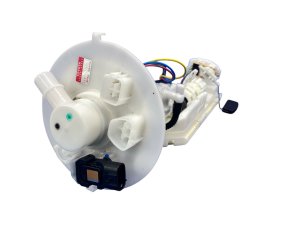
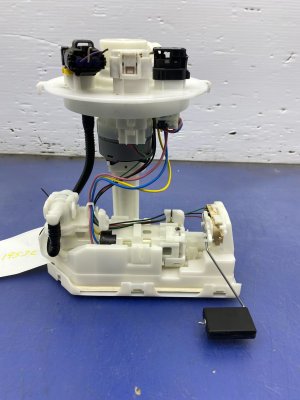
- Fuel Suction Tube Assembly (In-tank Fuel Pump Module)
(OEM #77020-0R051)— This is the updated part specified by Toyota in TSB-0058-22 to fix the common high-altitude/high-temperature issue causing P0087. It supersedes previous part numbers 77020-0R050, 77020-42230, and 77020-42231.
Trusted brands: Toyota Genuine
OEM price range: $375-$575
Aftermarket price range: N/A - Engine Control Module (ECM)
(OEM #Varies by VIN, see TSB-0058-22)— This is the secondary repair step in TSB-0058-22 if the fuel suction tube has already been replaced but the problem persists.
Trusted brands: Toyota Genuine
OEM price range: $800-$1200
Aftermarket price range: N/A
Related Codes That Often Appear With This One
- P107A2A — This Toyota-specific code for 'Fuel Rail Pressure Sensor (Low) Signal Stuck in Range' is explicitly mentioned in TSB-0058-22 as appearing alongside P0087 for the same high-altitude/high-temperature issue.
- P0171 / P0174 — These 'System Too Lean' codes can be triggered because the low fuel pressure results in less fuel being injected than the ECM expects, creating a lean air-fuel mixture. TSB-0009-23 confirms this relationship.
Technical Service Bulletins (TSBs) & Recalls
- T-SB-0058-22 (Revised Feb 2023): MIL ON With DTCs P0087, P008700 and/or P107A2A at High Altitude and With High Temperatures. This is the primary document for diagnosing and fixing this code.
- T-SB-0009-23: Links P0087 with lean codes (P0171/P0174) across many Toyota models, confirming low pressure as a cause for a lean condition.
- Bulletin #TSB005822: Confirms that some model year RAV4 vehicles may exhibit a MIL ON condition with P0087/P008700 (Fuel Rail/System Pressure – Too Low) and P107A2A (Fuel Rail Pressure Sensor (Low) Signal Stuck in Range).
- Bulletin #TSB000923: Notes that Techstream data list analysis may reveal positive fuel trims including a no pressure condition verified by the presence of P0087 alongside P0171 and/or P0174.
Platform-Specific Known Issues
- This model is subject to Toyota Technical Service Bulletin T-SB-0058-22, which describes a specific scenario where P0087 is set at high altitude and high temperature due to fuel vaporization.
- The 2019-2020 RAV4 was also part of a major safety recall (NHTSA 20V012000) for the low-pressure fuel pump, which could fail and cause the vehicle to stall.
Mechanic-Grade Diagnostic Values
- High-Pressure Fuel System (Direct Injection) — expected: 2.4 to 20 MPa (350 to 2900 psi).. Failure: DTC P0087 is set if actual pressure is 2 MPa (290 psi) below target for 15+ seconds, or 5 MPa (725 psi) below target for 10+ seconds.
- Low-Pressure Fuel System (In-tank pump) — expected: 300 to 530 kPa (43.5 to 76.8 psi).. Failure: Pressure below this range will starve the high-pressure pump and trigger P0087, especially under load.
- Freeze Frame Data for TSB-0058-22 Confirmation — expected: Ambient Temperature > 85°F (30°C), Atmospheric Pressure ≤ 12.7 psi, and Fuel Level > 15%.. Failure: If all three conditions are met in the freeze frame data when P0087 was set, the TSB is the indicated repair path.
- High-Pressure Fuel Rail Pressure Sensor Voltage — expected: Corresponds to pressure between 3.0 to 25 MPa.. Failure: A voltage reading below 0.2933V or above 4.9V for more than 3 seconds will trigger sensor-specific fault codes (P019011/P019015).
Hidden / Shadow Codes Worth Checking
- P008700: A more detailed version of P0087, explicitly meaning 'Fuel Rail/System Pressure – Too Low'. Its presence alongside the base code is a strong indicator for the TSB condition. (see via Toyota Techstream or a compatible professional-grade OBD2 scanner that can read manufacturer-specific codes.)
Scan Tool Commands That Help
- Toyota Techstream: Active Test: Control the Injection Mode — To manually switch between port and direct injection to isolate problems. A technician can observe if the fuel pressure drop occurs only in a specific mode, helping to pinpoint injector or pump issues.
- Toyota Techstream: Active Test: Control the Fuel Pump / Speed — To directly command the in-tank low-pressure fuel pump to operate. This allows a technician to verify the pump runs and to check the low-side pressure without the engine running, isolating it from the high-pressure system.
- Toyota Techstream: Data List — To monitor live data PIDs such as 'Fuel Pressure (High)', 'Fuel Pressure (Low)', 'Target Fuel Pressure', and fuel trims. Comparing target vs. actual pressure is the fundamental diagnostic step for P0087.
Wiring & Ground Locations
- Fuel Pump Control ECU — Integrated into the fuel tank assembly, which is accessed from under the rear seat.. This module directly controls the in-tank low-pressure pump. While failure is uncommon, a wiring issue to this module could cause a loss of pump function and trigger P0087.
- EFI-MAIN NO. 1 Relay — Located in the No. 1 engine room relay block and junction block assembly (under the hood).. This relay supplies power to the fuel system. A faulty relay could cause intermittent power loss to the pumps.
- Ground Points — Multiple ground points for the engine and fuel system are located on the engine block, chassis rails in the engine bay, and near the fuel tank. Specific ground point locations are detailed in the factory wiring diagrams.. A poor ground for either the low-pressure pump control ECU or the high-pressure pump driver can cause erratic operation and low pressure faults.
OEM Part Supersession History
77020-0R050, 77020-42230, 77020-42231→77020-0R051— The original fuel suction tube assembly design was prone to fuel vaporization (cavitation) at high altitudes and temperatures. The updated part (0R051) has an improved design to mitigate this issue.
Heads up: Installing an older part number will not fix the TSB-related issue and the P0087 code will return when environmental conditions are met.
Model Year Variations Within This Range
- 2019-2022: Per TSB T-SB-0058-22, vehicles built after specific Production Change Effective VINs already have the updated fuel suction tube assembly and/or ECM logic from the factory and should not experience this specific issue. The TSB provides a detailed list of VIN cutoffs by plant and drivetrain.
Diagnostic Flowchart
Other Known Issues on This Vehicle
Issues unrelated to this code that are worth knowing about as an owner of this generation:
- Leaking Roof Rails 🟠 Medium — Common on 2019-2021 models. Caused by faulty roof rail mounting clip seals. (Ref: Customer Support Program 22TE05 / T-SB-0016-23. Extends warranty coverage for this specific leak to 10 years, unlimited mileage.)
- 12V Battery Parasitic Drain 🟠 Medium — More common on 2020-2021 Hybrid models. The Data Communication Module (DCM) fails to enter sleep mode, draining the battery overnight. (Ref: T-SB-0021-20 and T-SB-0089-21 Rev2 address this with a DCM firmware update.)
- Hesitant 8-Speed Automatic Transmission 🟡 Low — Most prevalent on 2019-2021 models. Owners report jerky or hesitant shifting at low speeds. (Ref: Several software update TSBs were released to improve transmission control module logic.)
- Fuel Pump Failure (Recall) 🔴 High → Shop Fuel Pump — Affects certain 2019-2020 models. A defective low-pressure fuel pump can fail suddenly, causing the engine to stall. (Ref: NHTSA Campaign 20V012000 (Toyota Recall 20TA02).)
- Hybrid System Malfunction Warning 🟠 Medium — Primarily affects Hybrid and Prime models, especially in cold weather. A weak 12V battery can trigger a system-wide fault during startup. (Ref: No specific TSB, but diagnosis often points to a weak 12V AGM battery that needs replacement.)
Used vs. New Parts: Buying Guide for This Vehicle
When a used part is the smart pick: For this specific P0087 issue on this vehicle, using a used part for the primary fix is NEVER a smart choice. The problem is a design flaw in the original fuel pump assembly. A used part from a junkyard will almost certainly be the old, defective design and will not solve the problem.
What to inspect on the donor part:
- Do not source a used fuel suction tube assembly for this repair.
OEM-only on this vehicle (don't cheap out):
- Fuel Suction Tube Assembly (In-tank Fuel Pump Module)
- Engine Control Module (ECM)
Aftermarket brands forum-validated for this vehicle:
- For this TSB-related repair, no aftermarket brands are recommended. Only the Toyota Genuine updated part (77020-0R051) is confirmed to solve the issue.
Brands owners have reported issues with on this vehicle:
- Any aftermarket fuel pump assembly that does not explicitly state it is a direct replacement for the superseded OEM part number 77020-0R051 should be avoided.
Real Owner Stories
Aggregated from forums and TSBs cited above. Mileages and costs reflect what owners reported in those sources.
2020 Toyota RAV4 (A25A-FKS)
Symptoms: Had this exact issue on a trip to Colorado; check engine light came on with P0087 and P107A2A.
What fixed it: Dealer performed the TSB-0058-22 fix under warranty.
Source hint: YouTube Comments on 'RAV4 Hesitation + Engine Light P0087 P107A2A On?'
2019-2022 Toyota RAV4 (A25A-FKS)
Symptoms: Experienced the check engine light during summer trips to mountainous regions.
What fixed it: Replacement of the fuel pump assembly per TSB-0058-22; some owners confirmed this was covered under the 8yr/80k emissions warranty.
Source hint: RAV4World Forum - 'RAV4 DTCs P0087/P107A2A High Altitude'
Related OBD-II Codes
Frequently Asked Questions
Does T-SB-0058-22 apply to my 2019-2022 Toyota RAV4 if I live in a mountainous area?
Will the repair for P0087 be covered under warranty for my RAV4?
What is the specific part number needed to fix the high-altitude fuel starvation issue?
Is there a recall for the fuel pump on the 2019-2020 RAV4?
What happens if the updated fuel suction tube (P/N 77020-0R051) doesn't clear the P0087 code?
Can a roof leak or battery issue be related to my P0087 code?
Helpful Videos
Used OEM Parts in Stock
New Aftermarket Parts Available


The information in this article is provided for general reference and educational purposes only. Vehicle specifications, procedures, and part compatibility can vary by production date, trim level, and region. Always consult your vehicle's factory service manual and verify part numbers before purchasing or performing repairs. Safety-critical components such as airbags, seat belts, and braking systems should be installed by a qualified professional.
- Toyota RAV4:
- 🧭 Diagnostic Flowchart
- 🎬 Helpful Videos
- 🛍️ Shop This Part
- What's Unique About the 2019-2022 Toyota RAV4
- Symptoms You May Notice
- Most Likely Causes
- Rare But Worth Checking
- Diagnosis Steps
- Parts You'll Likely Need
- Related Codes That Often Appear With This One
- Technical Service Bulletins (TSBs) & Recalls
- Platform-Specific Known Issues
- Mechanic-Grade Diagnostic Values
- Hidden / Shadow Codes Worth Checking
- Scan Tool Commands That Help
- Wiring & Ground Locations
- OEM Part Supersession History
- Model Year Variations Within This Range
- Other Known Issues on This Vehicle
- Used vs. New Parts: Buying Guide for This Vehicle
- Real Owner Stories
- 2020 Toyota RAV4 (A25A-FKS)
- 2019-2022 Toyota RAV4 (A25A-FKS)
- Related OBD-II Codes
- Frequently Asked Questions
- 🎟️ Get 5% Off