

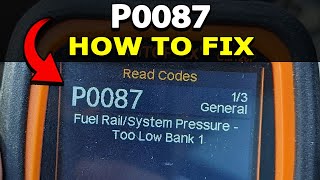
P0087 on 2019-2025 Toyota RAV4 Hybrid: Fuel Pressure Too Low Causes and Fixes
On a 2019-2022 RAV4 Hybrid, P0087 is most often caused by a known issue with fuel vaporization that occurs at high altitudes (>3,300 ft) and temperatures (>85°F). The fix is detailed in Toyota TSB T-SB-0058-22 and involves replacing the fuel suction tube assembly with an improved part. This repair is typically covered under the 8-year/80,000-mile Federal Emissions Warranty.
- For 2019-2022 models, P0087 is very likely caused by a specific issue at high altitude and temperature, covered by TSB T-SB-0058-22.
- Always check the freeze frame data first. If the environmental conditions match the TSB, you have a clear diagnostic path.
- The repair may be covered under Toyota's 8-year/80,000-mile Federal Emissions Warranty.
- Do not immediately assume the expensive high-pressure fuel pump has failed. The problem is often in the low-pressure side (in-tank pump/filter) or related to the TSB.
- This is not a DIY-friendly repair due to the complexity and safety risks of working with the fuel system.
What's Unique About the 2019-2025 Toyota RAV4 Hybrid
For 2019-2022 RAV4 models (including the Hybrid), this code is frequently not a random part failure but a specific design sensitivity. Toyota issued Technical Service Bulletin (TSB) T-SB-0058-22 because these vehicles can set a P0087 code when operated at high altitudes (above 3,300 feet) and high ambient temperatures (above 85°F). In these conditions, fuel in the low-pressure line can vaporize (a form of vapor lock), starving the high-pressure fuel pump (HPFP) and causing a pressure drop. The official fix involves an improved fuel suction tube assembly and, in some cases, a new ECM with updated software. This issue also affects other Toyota hybrids with the same engine, like the Highlander and Sienna. Manufacturer Bulletin #TSB005822 confirms that this condition specifically triggers DTCs P0087, P008700, and P107A2A.
Symptoms You May Notice
- Check Engine Light is on
- Reduced engine power or sluggish acceleration (limp mode)
- Engine hesitation or stumbling, especially under load
- Engine stalling, sometimes at idle
- Rough running or misfiring
- Hard starting
- Replacing the high-pressure fuel pump (HPFP) when the actual cause is the low-pressure pump or the issue described in TSB T-SB-0058-22.
- Replacing fuel injectors when the issue is fuel supply pressure, not atomization.
Most Likely Causes
- Fuel Vaporization at High Altitude/Temperature (TSB T-SB-0058-22) 🔴 High Probability A known design sensitivity in 2019-2022 models where low atmospheric pressure and high heat cause fuel to vaporize before it reaches the high-pressure pump.
How to confirm: Check the freeze frame data stored with the DTC. If the code was set at an altitude above 3,300 ft (indicated by atmospheric pressure at or below 12.7 psi), an ambient temperature above 85°F, and the fuel level was above 15%, this TSB almost certainly applies. The vehicle's VIN should also be checked against the production change information in the TSB.
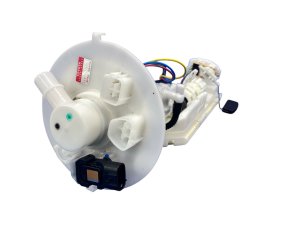
Typical fix: Install the updated fuel suction tube assembly (part of the in-tank fuel pump module) and/or replace the ECM as directed by the TSB. The repair is covered under the Federal Emissions Warranty (8 years/80,000 miles).
Est. part cost: $375-$575 for the OEM fuel suction tube assembly. (Part cost may be covered by warranty). - Failing Low-Pressure In-Tank Fuel Pump 🟡 Medium Probability → Shop Fuel Pump The in-tank pump is responsible for feeding the high-pressure pump. If it weakens, it cannot supply enough volume, starving the high-pressure side. This is a common failure point on many modern vehicles and was the subject of a major recall on the related Toyota Camry.
How to confirm: A technician can perform a low-pressure fuel system test with a pressure gauge to see if it meets factory specifications. On this vehicle, this requires teeing into the fuel line as there is no dedicated test port.
Typical fix: Replace the in-tank fuel pump module assembly.
Est. part cost: $375-$575 - Failing High-Pressure Fuel Pump (HPFP) ⚪ Low Probability → Shop Fuel Pump The HPFP is a mechanical pump driven by the camshaft that can wear out over time. While less common than the TSB issue, it's a primary component of the system under watch with this code.
How to confirm: This is difficult to test directly without specialized tools. Diagnosis typically involves ruling out the low-pressure system first and then monitoring high-pressure rail data with a scan tool while driving under load.
Typical fix: Replace the high-pressure fuel pump.
Est. part cost: $800-$1200
Rare But Worth Checking
- Clogged Fuel Filter: → Shop Fuel Filter The fuel filter is integrated into the in-tank fuel pump assembly. If it becomes clogged, it will restrict fuel flow, mimicking a weak pump. It is typically replaced with the entire pump module.
- Faulty Fuel Rail Pressure Sensor: → Shop Fuel Pressure Sensor The sensor itself can fail and send incorrect low-pressure readings to the ECM. This can be diagnosed by comparing the sensor's live data on a scan tool to a reading from a mechanical pressure gauge. A voltage reading below 0.2933 V for more than 3 seconds indicates a fault.
- Running Out of Fuel: If the vehicle has recently run out of fuel, it can trap air in the system and trigger a P0087 code even after refueling. The system may need to be bled or driven to purge the air.
- Fuel Leak: A physical leak anywhere in the high or low-pressure fuel lines can cause a drop in pressure and set this code. A visual inspection and fuel smell are primary indicators.
- Faulty Fuel Pump Control Module: → Shop Fuel Pump This module regulates the voltage supplied to the low-pressure fuel pump. A failure can cause the pump to run slow or not at all, leading to low pressure. It is located behind the driver's side rear quarter trim panel.
Diagnosis Steps
- Read the DTC and review the freeze frame data with an OBD-II scanner. Pay close attention to altitude (Atmospheric Pressure), ambient temperature, and fuel level readings.
- If conditions match TSB T-SB-0058-22 (high altitude/temp on a 2019-2022 model), proceed with the TSB's diagnostic steps. Check if the repair is covered under the Federal Emissions Warranty.
- If the TSB does not apply, begin by visually inspecting for any external fuel leaks from the tank to the engine.
- Connect a fuel pressure gauge to the low-pressure side of the system to test the in-tank fuel pump's pressure and volume. Compare readings to manufacturer specifications. This requires special adapters on this vehicle.
- If low-pressure is within spec, diagnosis moves to the high-pressure system. Monitor commanded vs. actual fuel rail pressure using a scan tool's live data feature during idle and under load (while driving).
- If actual pressure consistently fails to meet commanded pressure, and the low-pressure side is confirmed good, suspicion falls on the high-pressure fuel pump (HPFP) or the rail pressure sensor.
- Test the fuel rail pressure sensor by comparing its reading on the scan tool to a mechanical gauge, if possible. A sensor voltage below 0.2933 V for over 3 seconds points to a bad sensor or circuit.
Parts You'll Likely Need
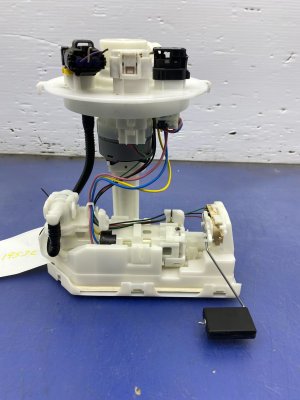
- Fuel Suction Tube Assembly (In-tank Fuel Pump Module)
(OEM #Varies by VIN, must be confirmed via EPC)— This is the updated part specified in TSB T-SB-0058-22 to fix the most common cause of P0087 on 2019-2022 models. The original part number from Pass 1 (77020-0R051) is for non-hybrid models and was cited incorrectly in some early TSB documentation.
Trusted brands: Toyota (OEM)
OEM price range: $375-$575
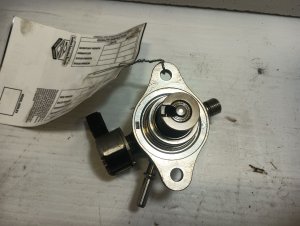
Aftermarket price range: N/A - High-Pressure Fuel Pump — If the low-pressure system is healthy and the TSB does not apply, a worn mechanical high-pressure pump is the next likely cause.
Trusted brands: Toyota (OEM), Denso
OEM price range: $800-$1200
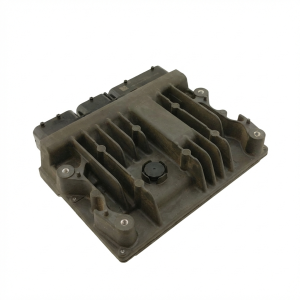
Aftermarket price range: $500-$800 - Engine Control Module (ECM)
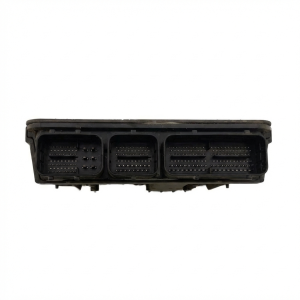
(OEM #Varies by VIN, must be confirmed via EPC)— In some cases, the TSB repair requires replacing the ECM with an updated unit with revised software logic, especially if the fuel suction tube has already been replaced.
Trusted brands: Toyota (OEM)
OEM price range: $800-$1200
Aftermarket price range: N/A
Related Codes That Often Appear With This One
- P107A2A — This code for 'Fuel Rail Pressure Sensor (Low) Signal Stuck in Range' is specifically mentioned alongside P0087 in TSB T-SB-0058-22 as part of the same high-altitude/temperature issue.
- P0171 / P0174 — These 'System Too Lean' codes can be triggered by low fuel pressure, as the engine isn't receiving the amount of fuel it expects for the measured amount of air. TSB T-SB-0009-23 confirms this link.
Technical Service Bulletins (TSBs) & Recalls
- T-SB-0058-22 (Revised Feb 2023): 'MIL ON With DTCs P0087, P008700 and/or P107A2A at High Altitude and With High Temperatures' - This is the primary document for diagnosing and fixing the most common cause of this code on 2019-2022 models.
- T-SB-0009-23: Notes that P0087 can appear with lean codes (P0171/P0174) across many Toyota models, pointing to low fuel pressure as a root cause for a lean condition. Manufacturer Bulletin #TSB000923 further notes that Techstream data list analysis may reveal positive fuel trims including a no pressure condition.
- T-SB-0049-21: A related TSB for the same high-altitude P0087 issue on platform-mate Toyota Highlander and Sienna hybrids.
Platform-Specific Known Issues
- TSB T-SB-0058-22: Addresses P0087 specifically on 2019-2022 RAV4 models when driven at high altitudes and temperatures, pointing to fuel vaporization as the cause.
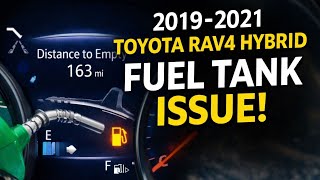
- Customer Support Program (CSP) 20TE04: While for a different issue (fuel tank not filling completely), it highlights that the fuel tank and sender design on 2019-2021 RAV4 Hybrids has been a focus of service actions and involves some of the same components (fuel sender).
Mechanic-Grade Diagnostic Values
- High-Pressure Fuel System (Commanded vs. Actual) — expected: 3.0 to 25 MPa (435 to 3,626 psi), with actual pressure closely tracking commanded pressure on a scan tool.. Failure: Actual pressure is lower than target pressure by 5 MPa (725 psi) for ~10 seconds, or by 2 MPa (290 psi) for 15+ seconds during port injection only.
- High-Pressure Fuel Rail Sensor Voltage — expected: Varies with pressure, typically above 0.5V.. Failure: Sensor output voltage is less than 0.2933 V for 3 seconds or more, indicating a short to ground or sensor failure.
- Low-Pressure Fuel Rail Sensor Voltage — expected: Varies with pressure, typically above 0.5V.. Failure: Sensor output voltage is less than 0.43 V for 3 seconds or more, indicating a short to ground or sensor failure.
- TSB T-SB-0058-22 Freeze Frame Data Condition — expected: N/A. Failure: Atmospheric pressure is at or below 12.7 psi, ambient temperature is above 85°F (30°C), and fuel level is above 15%.
Hidden / Shadow Codes Worth Checking
- Vehicle Control History (Engine Malfunction): The Hybrid Vehicle Control ECU may store 'Vehicle Control History' data when an engine malfunction like P0087 occurs. This provides a timestamp and additional vehicle conditions that can be useful for troubleshooting, supplementing the standard freeze frame data. (see via Toyota Techstream software. Navigate to Powertrain > Hybrid Control and check for stored history.)
Scan Tool Commands That Help
- Toyota Techstream: Active Test: Control the Injection Mode — This test allows a technician to force the engine to switch between direct injection, port injection, or combined modes. It can help isolate whether the pressure drop issue is specific to one mode of operation. The engine must be at operating temperature (>176°F) and idling to perform this test.
- Toyota Techstream: Active Test: Check Cylinder Compression — While not directly a fuel system test, this function can help rule out a severe mechanical engine issue (like a worn camshaft lobe driving the HPFP) that could masquerade as a fuel pressure problem. It measures engine speed changes during cranking for each cylinder.
- Toyota Techstream: Utility: Inspection Mode (Maintenance Mode) — To perform many diagnostic tests, the gasoline engine must be forced to run. This utility in the Hybrid Control menu prevents the vehicle from switching to EV mode, allowing for stable testing of the fuel system while the vehicle is stationary.
Wiring & Ground Locations
- Fuel Pump Control Module — Located in the rear of the vehicle, on the driver's side, concealed behind the quarter trim panel.. This module controls the low-pressure in-tank fuel pump. A bad connection, faulty ground, or failed module at this location will prevent the low-pressure pump from supplying the high-pressure pump, directly causing a P0087 code.
- Fuel Pump Connector — The connector for the fuel pump module is accessible after removing the driver's side rear trunk side cover.. Corrosion or a loose connection at this point can interrupt power to the low-pressure pump, leading to a loss of fuel pressure.
OEM Part Supersession History
Varies by VIN→Varies by VIN (New PNs specified in TSB)— The original fuel suction tube assembly was susceptible to causing fuel vaporization at high altitude and temperature. The new part is an improved design to mitigate this issue.
Heads up: Vehicles produced AFTER the Production Change Effective VINs listed in TSB T-SB-0058-22 should already have the improved parts from the factory.
Model Year Variations Within This Range
- 2019-2022: These model years are susceptible to the fuel vaporization issue described in TSB T-SB-0058-22. Vehicles built before the VIN cutoffs in the TSB have the original, problematic fuel suction tube and ECM logic.
- 2023-2025: These models were built after the production changes and should have the improved fuel suction tube assembly and updated ECM logic from the factory, making the TSB issue much less likely. A P0087 on these later models is more likely to be a standard component failure (pump, sensor, etc.).
Diagnostic Flowchart
Other Known Issues on This Vehicle
Issues unrelated to this code that are worth knowing about as an owner of this generation:
- High-Voltage Cable Corrosion ('Cablegate') 🔴 High — Common on 2019-2022 models, especially in salt-belt regions. Corrosion can become evident after just 1-3 years, leading to hybrid system failure. (Ref: A class-action lawsuit resulted in a warranty extension (Customer Support Program) in the US and Canada for the high-voltage cable on affected models.)
- Fuel Tank Not Filling to Capacity 🟠 Medium — Widespread on 2019-2020 RAV4 Hybrid models. Owners report the fuel nozzle clicks off prematurely, preventing a full fill-up and reducing the vehicle's driving range. (Ref: Toyota addressed this with Customer Support Program (CSP) 20TE04, which involves replacing the fuel tank and sender gauge unit.)
- Roof Rail Water Leaks 🟠 Medium — Common on 2019-2021 models. Faulty roof rail clip seals degrade and allow water to leak into the cabin, potentially damaging the headliner, pillar trim, and electronics. (Ref: Addressed by TSB T-SB-0016-23 and Customer Support Program (CSP) 22TE05, which extends warranty coverage for the repair to 10 years with unlimited mileage.)
Used vs. New Parts: Buying Guide for This Vehicle
When a used part is the smart pick: A used High-Pressure Fuel Pump (HPFP) or Engine Control Module (ECM) from a low-mileage, accident-damaged vehicle could be a cost-effective option. However, for the low-pressure pump, new is strongly preferred.
Donor-vehicle mileage cap: roughly under 50000 miles for the part to have meaningful remaining life.
What to inspect on the donor part:
- Verify the donor vehicle's VIN to ensure it's a 2023 or newer model to get the updated parts.
- Inspect electrical connectors for any signs of corrosion, melting, or damaged pins.
- For the HPFP, check the cam follower surface for any scoring or unusual wear.
- Ensure the part comes from a vehicle that did not suffer a fire or flood.
OEM-only on this vehicle (don't cheap out):
- Fuel Suction Tube Assembly (Low-Pressure Pump Module): To guarantee you are getting the revised part that fixes the TSB issue, you must buy this new from Toyota. A used part from a 2019-2022 model will have the same design flaw.
- Fuel Rail Pressure Sensor: Given the criticality of this sensor for engine operation and the relatively low cost, OEM is the only reliable choice.
Aftermarket brands forum-validated for this vehicle:
- Denso (For High-Pressure Fuel Pump, as they are often the OEM supplier)
Brands owners have reported issues with on this vehicle:
- Unknown, no-name brands for any fuel system component, especially pumps and sensors. The risk of premature failure and causing repeat labor costs is very high.
Real Owner Stories
Aggregated from forums and TSBs cited above. Mileages and costs reflect what owners reported in those sources.
2019 RAV4 Adventure (A25A-FXS platform)
Symptoms: The owner experienced P0087 and P107A2A codes while driving in Colorado (high altitude). An initial dealer visit did not resolve the problem.
What fixed it: The dealer performed the TSB-0058-22 repair by replacing the fuel pump assembly (fuel suction tube).
Source hint: rav4world.com forum user experience with P0087 and TSB-0058-22
2020 Toyota Owner (NHTSA ODI #11716690)
Symptoms: An owner reported hesitant and sluggish acceleration that caused the check engine light to illuminate and activated limp mode. Diagnostic testing revealed code P0087 for fuel rail/system pressure too low.
2017 Toyota Sienna Owner (NHTSA ODI #11539491)
Symptoms: The vehicle acted like it was in limp mode several times. A mechanic identified fault code P0087 for low fuel pressure. The owner noted that while many vehicles were recalled for this issue, their specific VIN was not included.
Documented NHTSA Reports
NHTSA ODI #11442457 describes a case where a vehicle was diagnosed with code P0087 indicating a fuel pump failure, leading the owner to seek a diagnostic appointment with a dealer. Additionally, NHTSA ODI #11716690 highlights that even when a vehicle is not included in a major fuel pump recall, it may still experience the hesitant acceleration and limp mode associated with a P0087 pressure fault.
Related OBD-II Codes
Frequently Asked Questions
Does TSB T-SB-0058-22 apply to my 2019-2022 Toyota RAV4 Hybrid?
Is the P0087 repair covered under warranty for my RAV4 Hybrid?
Could my RAV4's fuel tank filling issue be related to the P0087 code?
What specific part is usually replaced to fix the high-altitude P0087 issue?
How can a technician confirm if my low-pressure fuel pump is failing?
Are other Toyota hybrids with the A25A-FXS engine affected by this same pressure code?
Helpful Videos

We Have This Part in Stock

The information in this article is provided for general reference and educational purposes only. Vehicle specifications, procedures, and part compatibility can vary by production date, trim level, and region. Always consult your vehicle's factory service manual and verify part numbers before purchasing or performing repairs. Safety-critical components such as airbags, seat belts, and braking systems should be installed by a qualified professional.
- Toyota RAV4 Hybrid:
- 🧭 Diagnostic Flowchart
- 🎬 Helpful Videos
- 🛍️ Shop This Part
- What's Unique About the 2019-2025 Toyota RAV4 Hybrid
- Symptoms You May Notice
- Most Likely Causes
- Rare But Worth Checking
- Diagnosis Steps
- Parts You'll Likely Need
- Related Codes That Often Appear With This One
- Technical Service Bulletins (TSBs) & Recalls
- Platform-Specific Known Issues
- Mechanic-Grade Diagnostic Values
- Hidden / Shadow Codes Worth Checking
- Scan Tool Commands That Help
- Wiring & Ground Locations
- OEM Part Supersession History
- Model Year Variations Within This Range
- Other Known Issues on This Vehicle
- Used vs. New Parts: Buying Guide for This Vehicle
- Real Owner Stories
- 2019 RAV4 Adventure (A25A-FXS platform)
- 2020 Toyota Owner (NHTSA ODI #11716690)
- 2017 Toyota Sienna Owner (NHTSA ODI #11539491)
- Documented NHTSA Reports
- Related OBD-II Codes
- Frequently Asked Questions
- 🎟️ Get 5% Off