

P0087 on 2018-2020 Toyota Sequoia: Fuel Pressure Too Low Causes and Fixes
On a 2018-2020 Sequoia, P0087 almost always points to a failing low-pressure fuel pump in the tank, a known issue covered by a major safety recall (NHTSA 20V682000) and TSBs. If you also have lean codes (P0171/P0174), the fuel pump is the primary suspect. Expect a shop repair to cost between $700 and $1,200, though it should be free if your VIN is covered by the recall.
- P0087 on a 2018-2020 Sequoia is a serious code that should be addressed immediately to prevent stalling.
- The most likely cause is a failing in-tank fuel pump, which is a known issue backed by a massive recall (NHTSA 20V682000) for 2018-2020 models and a TSB.
- Always check for open recalls on your vehicle's VIN at Toyota's or NHTSA's website before paying for a repair.
- Do not replace the oxygen (A/F) sensors if you also have codes P0171 or P0174; they are symptoms of the low fuel pressure, not the cause.
- This is not a DIY-friendly repair due to the fire risk associated with handling gasoline and the need to drop the fuel tank.
What's Unique About the 2018-2020 Toyota SEQUOIA
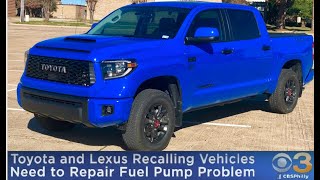
The 2018-2020 Toyota Sequoia's 5.7L V8 is known for fuel pump issues. Toyota issued a Technical Service Bulletin (TSB #TSB000923) specifically linking P0087 with lean codes P0171 and P0174, pointing directly to a fuel delivery problem. Furthermore, a major safety recall (NHTSA 20V682000) was issued for failing Denso fuel pumps in 2018-2020 models, making the in-tank fuel pump the most likely culprit. This recall was massive, affecting over 3.3 million Toyota and Lexus vehicles, confirming a widespread manufacturing defect with the fuel pump impeller.
Diagnostic Flowchart
Tap your situation to follow the diagnostic path that matches what you're seeing on this vehicle.
Symptoms You May Notice
- Check Engine Light is on
- Engine hesitation or stumbling, especially during acceleration
- Lack of engine power
- Engine may stall, sometimes while driving at high speeds
- Long crank time or hard starting
- Rough idle
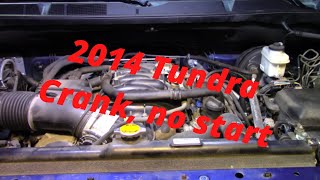
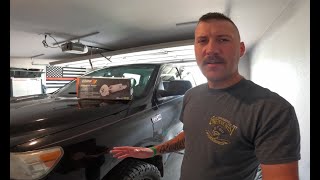
- Engine cranks but does not start 🎬 See a diagnosis of a Toyota V8 crank-no-start condition.
- Replacing Air/Fuel (Oxygen) sensors. The lean codes P0171 and P0174 are symptoms of the low fuel pressure, not the cause. The sensors are correctly reporting the lean condition created by the lack of fuel. Replacing them will not fix the P0087 code.
Most Likely Causes
- Failing Low-Pressure Fuel Pump 🔴 High Probability → Shop Fuel Pump A widespread recall (NHTSA 20V682000, Toyota recall 20TA02) was issued for faulty Denso fuel pumps on 2018-2020 Sequoias. The pump's impeller was manufactured with a lower density material that could absorb fuel, deform, and cause the pump to fail. TSB #TSB000923 also points to fuel pump failure as the cause for P0087 when seen with lean codes.
How to confirm: A technician will perform a fuel pressure test to verify the pressure is below specification (typically 44-50 PSI at idle). The vehicle's VIN should be checked immediately on Toyota's recall website or the NHTSA site to see if it's covered for a free replacement.
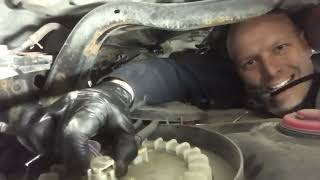
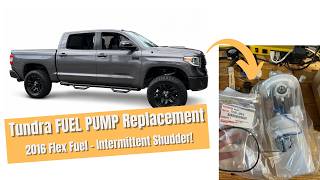
Typical fix: Replace the in-tank fuel pump assembly. If the vehicle is part of the recall, this repair must be performed by a Toyota dealer at no cost. The fix involves installing an improved fuel pump assembly. 🎬 Watch: How to replace the fuel pump with the updated part.
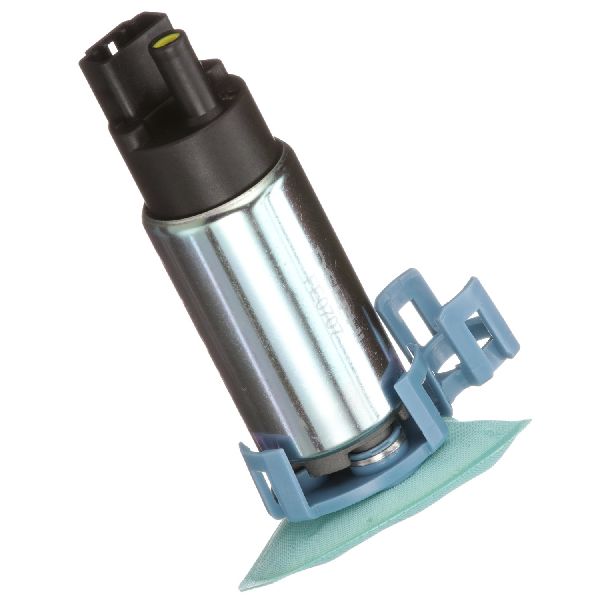
Est. part cost: $300-$500 - Clogged Fuel Filter 🟡 Medium Probability → Shop Fuel Filter The fuel filter is integrated into the fuel pump module assembly. While not a separate failure point, it gets replaced with the pump. If the pump impeller degrades, debris can clog the filter sock, contributing to low pressure.
How to confirm: This is typically diagnosed after a fuel pressure test shows low pressure. Since the filter is part of the pump assembly, it's replaced as a unit. A forum user with an older Sequoia running lean (P0171/P0174) confirmed that replacing the fuel pump and filter assembly solved the issue.
Typical fix: Replace the fuel pump module, which includes the integrated fuel filter. This is the same fix as a failed pump.
Est. part cost: $40-$80 - Faulty Fuel Pressure Sensor ⚪ Low Probability → Shop Fuel Pressure Sensor
How to confirm: Compare the fuel pressure reading from the OBD-II scanner's live data with the reading from a mechanical fuel pressure gauge connected to the fuel rail. If the mechanical gauge shows good pressure (44-50 PSI) but the scanner shows low pressure, the sensor is likely faulty or has a wiring issue.
Typical fix: Replace the fuel pressure sensor located on the fuel rail.
Est. part cost: $70-$150
Rare But Worth Checking
- Kinked or Restricted Fuel Line: → Shop Fuel Line Physical damage to a fuel line can restrict flow. This is uncommon but should be checked, especially if the vehicle has been driven off-road or has had recent underbody work.
- Fuel Pump Control Module Failure: → Shop Fuel Pump While less common than the pump itself, the control module (FPCM) that regulates the pump's voltage can fail, leading to low pressure. A Reddit user with an older 2008 Sequoia reported a melted connector on the module causing failure, which highlights a potential, though rare, point of failure in the system.
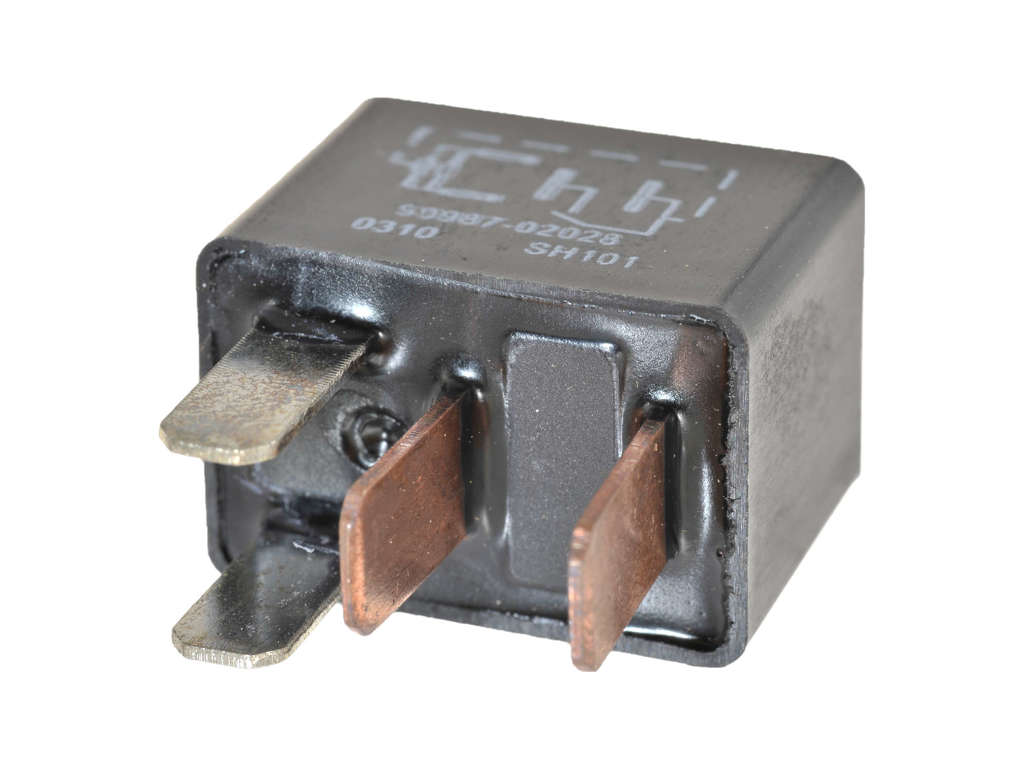
- Blown Fuel Pump Fuse or Relay: → Shop Fuel Pump A simple blown fuse or a faulty fuel pump relay can cut power to the pump, resulting in a P0087 code. This should be one of the first and easiest checks. A failing relay can cause intermittent power loss, stalling, and hard starts.
Diagnosis Steps
- Scan the vehicle for all DTCs. Note if P0171 and P0174 are present with P0087, as this strongly indicates a fuel delivery issue per TSB #TSB000923.
- Check the vehicle's VIN for open recalls on nhtsa.gov or toyota.com/recall. Specifically check for NHTSA 20V682000 regarding the fuel pump.
- Check the fuses and relays related to the fuel pump. This is a quick and simple step that can rule out an electrical supply issue.
- Connect a fuel pressure gauge to the fuel system. On many Toyotas, a special adapter may be needed as there is no standard test port.
- Start the engine and observe the fuel pressure at idle. Compare it to the manufacturer's specification (typically 44-50 PSI).
- If pressure is low, the fuel pump is the most likely cause, especially given the recall history.
- If pressure is normal, compare the gauge reading to the live data from the fuel rail pressure sensor on a scan tool. A significant discrepancy points to a bad sensor.
- Visually inspect all accessible fuel lines for kinks, damage, or leaks from the tank to the engine.
Parts You'll Likely Need
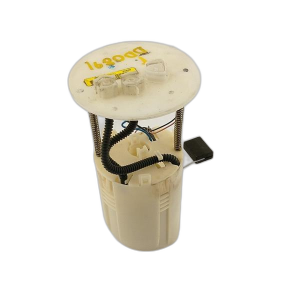
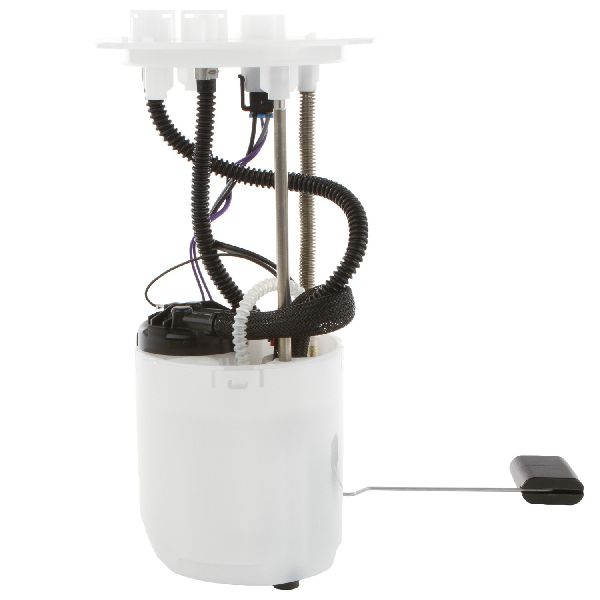
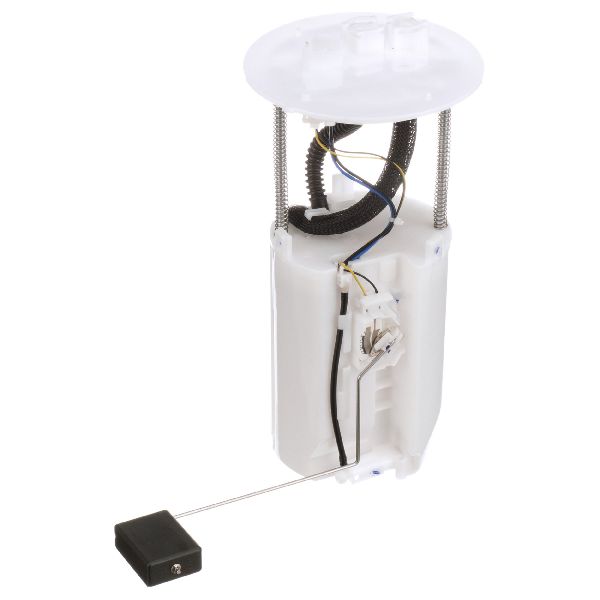
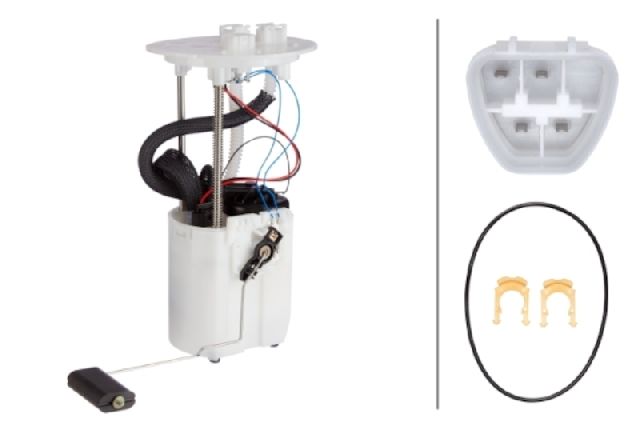
- Fuel Pump and Hanger Assembly
(OEM #77020-0C121, 77020-0C120)— This is the most common failure part for code P0087 on this vehicle, as documented by a major safety recall and a TSB. Part number 77020-0C120 is listed for the 5.7L Flex Fuel engine with the 26-gallon tank. Always verify the correct part number with a dealer using the vehicle's VIN.
Trusted brands: Toyota (OEM), Denso
OEM price range: $400-$550
Aftermarket price range: $200-$400
Related Codes That Often Appear With This One
- P0171 — System Too Lean (Bank 1). The engine is not receiving enough fuel, causing an excess of oxygen in the exhaust on the passenger's side bank. This code is explicitly linked to P0087 in TSB #TSB000923.
- P0174 — System Too Lean (Bank 2). The engine is not receiving enough fuel, causing an excess of oxygen in the exhaust on the driver's side bank. Seeing P0171 and P0174 together with P0087 strongly indicates a fuel delivery problem affecting the entire engine.
- P1604 — Startability Malfunction. This code can appear on Flex Fuel (3UR-FBE) models alongside lean codes when a failing fuel pump causes hard starting issues, as noted in TSB #T-SB-0166-19_Rev.
Technical Service Bulletins (TSBs) & Recalls
- TSB000923: Notes that a MIL ON condition with DTCs P0087, P0171, and/or P0174 may be present, indicating a fuel pressure problem.
- T-SB-0166-19_Rev: Relevant for Flex Fuel models, connecting hard starts and lean codes to fuel pump problems.
Platform-Specific Known Issues
- NHTSA Recall 20V682000: Affects 2018-2020 Sequoias for a faulty low-pressure fuel pump made by Denso. The impeller can degrade and cause the pump to fail, leading to an engine stall. This was a massive, multi-stage recall affecting millions of Toyota and Lexus vehicles.
- TSB #TSB000923: Explicitly states that a MIL ON condition with DTCs P0087, P0171, and/or P0174 can be caused by a fuel pressure issue, pointing towards a failing fuel pump.
- TSB #T-SB-0166-19_Rev: Pertains to 2017-2018 Sequoias with the 3UR-FBE (Flex Fuel) engine, linking hard starts and lean/rich codes (P0171/P0174/P0172/P0175) to a fuel pump issue that may also set code P1604.
Mechanic-Grade Diagnostic Values
- Low-pressure fuel system pressure (3UR-FBE Flex Fuel engine) — expected: 270–330 kPa (39–48 psi) with fuel pressure switching valve OFF; 370–430 kPa (54–62 psi) with valve ON.. Failure: Pressure is below 270 kPa (39 psi) or does not increase when the valve is commanded ON via scan tool.
- Fuel pressure sensor signal voltage — expected: Varies between approximately 0.5V and 4.5V depending on pressure.. Failure: Voltage is stuck at 0V, 5V, or does not change when engine load changes. Compare with a mechanical gauge to confirm.
- Fuel Pump Control Module ground side voltage drop — expected: When the pump is commanded ON, voltage on the ground wire (typically red) at the pump connector should drop to near 0V.. Failure: Voltage on the ground wire remains high (e.g., 1.4V or more) when the pump should be running, indicating the module is not providing a proper ground path.
Hidden / Shadow Codes Worth Checking
- P008700: A more detailed version of P0087 for 'Fuel Rail/System Pressure – Too Low', often seen on dealer-level scan tools like Techstream. (see via This format is typically displayed in advanced diagnostic tools like Toyota's Techstream software.)
Scan Tool Commands That Help
- Toyota Techstream: Active Test: Control the Fuel Pump / Speed — To manually command the low-pressure fuel pump ON to check for audible operation or to test voltage and ground at the pump connector without starting the engine.
- Toyota Techstream: Active Test: Activate the Fuel Pressure Switching Valve — On Flex Fuel (3UR-FBE) models, this switches the system between low and high pressure modes. It's used to verify the function of the valve and check for corresponding pressure changes with a mechanical gauge.
Wiring & Ground Locations
- Fuel Pump Control Module (FPCM) — On the inside of the driver-side frame rail, toward the rear of the vehicle. May also be called the Fuel Pump Driver or Fuel Pump ECU.. This module controls the voltage and ground supplied to the in-tank fuel pump. A failure of this module can cause a no-start or low-pressure condition even if the fuel pump itself is good.
- Fuel Pump Connector Wiring — At the top of the fuel pump assembly on the fuel tank.. For diagnosis, the larger blue wire is typically the +12V supply, and the larger red wire is the ground controlled by the FPCM. Testing voltage here is critical to determine if the pump or the control module has failed.
- Engine Control Module (ECM) — Located behind the glove box compartment on the passenger side of the dashboard.. The ECM receives the signal from the fuel pressure sensor and commands the Fuel Pump Control Module. While rarely the cause, it is the central computer in the system.
Real Owner Repair Stories
- Tundras.com forum user (2010 Toyota Tundra 5.7L (shared platform)) — Starts for a few seconds and then dies. Sometimes would run longer.
❌ Tried (didn't work) Replacing the in-tank fuel pump assembly.
✅ What actually fixed it The Fuel Pump Control Module had failed and was not providing a ground to the pump. The user confirmed the fix by running a temporary wire from the pump's ground pin directly to the vehicle frame, which allowed the truck to run properly. The final fix was replacing the faulty module. - YouTube comment on a Sequoia repair video (2001 Toyota Sequoia) — Engine won't start.
❌ Tried (didn't work) Checking fuses, Checking fuel pump, Checking relays, Checking anti-theft system, Checking ECU, Checking fuel filter
✅ What actually fixed it The wires to the crankshaft position sensor had been damaged by the serpentine belt. After repairing the wires, the engine started and ran correctly.
When the Usual Fixes Don't Work
- While the overwhelming majority of P0087 codes on this platform are due to the recalled in-tank fuel pump, there are documented cases where the fix was something else entirely. In one instance involving a platform-sharing Tundra, a new fuel pump did not resolve a no-start condition. The actual cause was a failed Fuel Pump Control Module that was unable to provide a proper ground for the new pump. In another case, damaged crankshaft position sensor wiring prevented the ECU from ever commanding the fuel pump to turn on, mimicking a fuel system failure. These cases highlight the importance of not skipping diagnostic steps and confirming power and ground at the pump before assuming the pump itself is the only possible point of failure.
OEM Part Supersession History
23280-38040→23280-38041— Standard part revision or supplier change.23270-50010→23270-50012— Standard part revision or supplier change.
Model Year Variations Within This Range
- 2018: There is a part number split for the in-tank fuel pump assembly in late 2018. Parts catalogs show a different assembly for vehicles built 'To 12/18' versus those built 'From 12/2018'. Verifying the correct part with the vehicle's VIN is critical.
Helpful Videos
Used OEM Parts in Stock
New Aftermarket Parts Available


The information in this article is provided for general reference and educational purposes only. Vehicle specifications, procedures, and part compatibility can vary by production date, trim level, and region. Always consult your vehicle's factory service manual and verify part numbers before purchasing or performing repairs. Safety-critical components such as airbags, seat belts, and braking systems should be installed by a qualified professional.
- Toyota SEQUOIA:
- 🧭 Diagnostic Flowchart
- 🎬 Helpful Videos
- 🛍️ Shop This Part
- What's Unique About the 2018-2020 Toyota SEQUOIA
- Symptoms You May Notice
- Most Likely Causes
- Rare But Worth Checking
- Diagnosis Steps
- Parts You'll Likely Need
- Related Codes That Often Appear With This One
- Technical Service Bulletins (TSBs) & Recalls
- Platform-Specific Known Issues
- Mechanic-Grade Diagnostic Values
- Hidden / Shadow Codes Worth Checking
- Scan Tool Commands That Help
- Wiring & Ground Locations
- Real Owner Repair Stories
- When the Usual Fixes Don't Work
- OEM Part Supersession History
- Model Year Variations Within This Range
- 🎟️ Get 5% Off