

P0087 on 2012-2014 Volkswagen Beetle: Fuel Rail Pressure Too Low Causes and Fixes
This code indicates low pressure in the fuel rail, most often caused by a failing high-pressure fuel pump (HPFP) or a worn camshaft follower on the 2.0T TSI engine. Expect to replace the HPFP and follower, which can cost between $200 and $500 for parts. In some cases, the intake camshaft lobe that drives the pump can also be worn.
- P0087 on a 2012-2014 Beetle 2.0T almost always points to a problem with the high-pressure fuel system.
- The most likely culprits are the high-pressure fuel pump (HPFP) and its associated camshaft follower.
- It is critical to inspect the cam follower for wear; if it is worn, both the follower and the HPFP should be replaced together.
- Do not drive the vehicle with this code, as it can stall at any time, posing a serious safety risk.
- Diagnosis involves checking fuel pressure with a scan tool and physically inspecting the cam follower.
What's Unique About the 2012-2014 Volkswagen BEETLE
The 2.0T TSI engine (engine codes CCTA/CBFA) in the 2012-2014 Beetle is known for issues related to its high-pressure fuel system. The mechanical HPFP is driven by a lobe on the camshaft via a small component called a camshaft follower. This follower is a known wear item and a common failure point. When it wears down or fails, it can no longer properly actuate the HPFP, leading directly to the low pressure condition of P0087. 🎬 Watch: Diagnosing P0087 on the TSI 2.0 Turbo engine. If neglected, a worn-through follower can cause catastrophic damage to the HPFP and the intake camshaft lobe, resulting in a much more expensive repair.
Diagnostic Flowchart
Tap your situation to follow the diagnostic path that matches what you're seeing on this vehicle.
Symptoms You May Notice
- Check Engine Light is on
- Significant loss of engine power, especially under acceleration (limp mode)
- Engine sputtering, hesitation, or running rough
- Difficulty starting the engine or long crank times
- Engine stalling unexpectedly, sometimes at idle
- Reduced fuel economy
- Strong smell of fuel in the engine bay or in the oil
- Replacing only the fuel filter without checking the HPFP and cam follower.
- Replacing the low-pressure fuel pump when the high-pressure pump is the actual cause of the problem.
- Replacing the HPFP without inspecting the cam follower, leading to a repeat failure of the new pump.
Most Likely Causes
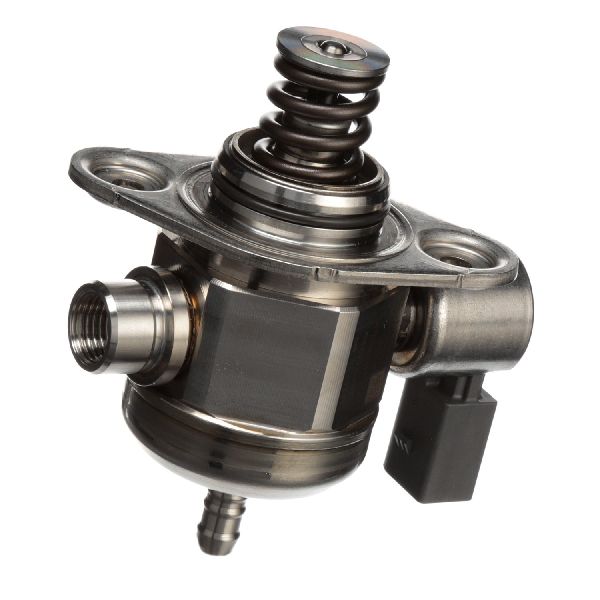
- Worn or Failed High-Pressure Fuel Pump (HPFP) 🔴 High Probability → Shop Fuel Pump The HPFP is a mechanical pump driven by the camshaft and is a common failure point on this engine, often due to wear on its internal components or the cam follower. The internal plunger can break or the diaphragm can fail.
How to confirm: Use a scan tool (like VCDS) to monitor requested vs. actual fuel rail pressure in real-time. If actual pressure drops significantly below requested pressure under load (e.g., during a wide-open throttle pull in 3rd or 4th gear), the HPFP is a likely culprit. A visual inspection may reveal a broken plunger tip.
Typical fix: Replace the high-pressure fuel pump and the camshaft follower. It is highly recommended to replace both at the same time. Ensure the new pump is the latest revision, as older models may require an adapter fitting.
Est. part cost: $200-$450 - Worn Camshaft Follower 🔴 High Probability → Shop Engine Camshaft The cam follower is a small, flat-faced tappet that sits between the camshaft and the HPFP plunger. It is a sacrificial part designed to wear out and is a very common failure point on the 2.0T TSI engine. Failure to replace it can lead to camshaft and HPFP damage.
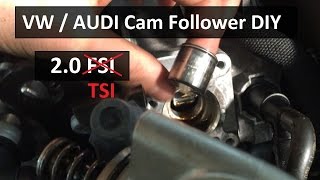
How to confirm: Physical inspection is required. Remove the HPFP to access and inspect the cam follower. Look for a worn-through hole, deep scoring, or significant thinning of the contact surface. Enthusiasts recommend checking it every 20,000-30,000 miles.
Typical fix: Replace the camshaft follower. Given the low cost of the part, it should be replaced whenever the HPFP is serviced, regardless of its apparent condition. The OEM part number is 06L109311.
Est. part cost: $20-$50 - Faulty Fuel Rail Pressure Sensor (G410 or G247) 🟡 Medium Probability → Shop Fuel Pressure Sensor Sensors can fail and send incorrect low-pressure readings to the ECM. VW has issued TSBs for improved pressure sensors on some 2.0T engines. There are two sensors: a low-pressure sensor (G410) on the HPFP and a high-pressure sensor (G247) on the fuel rail. The G410 is a more common failure point.
How to confirm: Compare the live data from the sensor on a scan tool with a reading from a mechanical fuel pressure gauge. If the readings differ significantly, the sensor is likely faulty. TSB 01-11-28 (TPI 2027458) provides diagnostic guidance for the G410 sensor.
Typical fix: Replace the faulty fuel pressure sensor. The updated part number for the low-pressure G410 sensor is often cited as 06E 906 051 K.
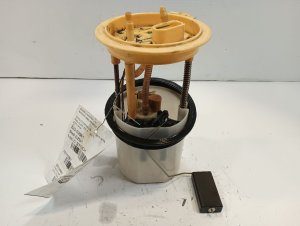
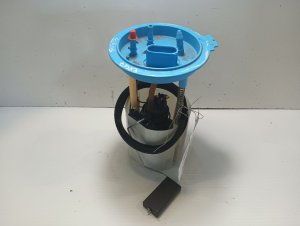
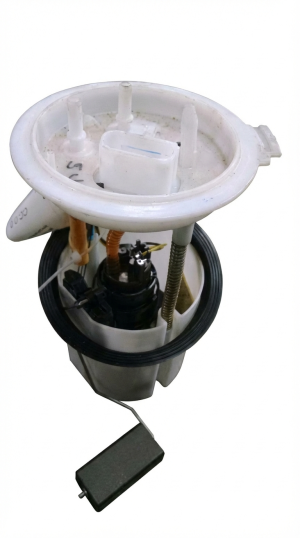
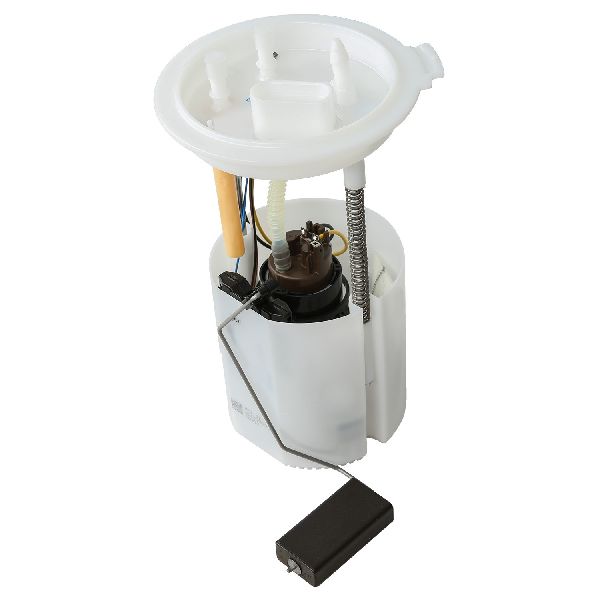
Est. part cost: $50-$120 - Failing In-Tank Low-Pressure Fuel Pump (LPFP) ⚪ Low Probability → Shop Fuel Pump The LPFP supplies fuel to the HPFP. If it cannot provide sufficient volume (around 4.5-5 bar), the HPFP will be starved and cannot generate high pressure. This is less common than HPFP-related failures but does happen.
How to confirm: Test the low-pressure system's fuel pressure at the HPFP inlet using a mechanical gauge. You can also monitor the LPFP duty cycle with a scan tool; a value consistently over 60% at idle suggests it's working too hard.
Typical fix: Replace the in-tank low-pressure fuel pump assembly.
Est. part cost: $150-$300
Rare But Worth Checking
- Worn Intake Camshaft Lobe: → Shop Engine Camshaft If the cam follower wears completely through, it can cause rapid wear on the camshaft lobe that drives the HPFP. This is a much more expensive repair requiring camshaft replacement. A VW TSB (2015153/15-11-03) specifically addresses checking for a worn intake camshaft.
- Clogged Fuel Filter: → Shop Fuel Filter A severely clogged fuel filter can restrict flow to the HPFP. This is a basic maintenance item that should be checked, especially if its service history is unknown.
- Leaking Fuel Injector: → Shop Fuel Injector A fuel injector stuck open can cause a drop in rail pressure. This would likely be accompanied by other codes for rich conditions or misfires on a specific cylinder, and potentially a strong fuel smell.
Diagnosis Steps
- Scan the ECM for P0087 and any other related fault codes (e.g., P030x, P2293, P053F). Note the freeze frame data to see the conditions when the fault occurred.
- Using a capable scan tool (like VCDS), monitor live data for 'Fuel Rail Pressure (specified)' vs. 'Fuel Rail Pressure (actual)'. At idle, the pressure should be stable around 40 bar. Under hard acceleration, requested pressure can rise to 150 bar; watch to see if the actual pressure fails to keep up or drops dramatically.
- If pressure is low, perform a visual inspection. Check for fuel leaks around the HPFP and fuel lines. Check the engine oil for a strong gasoline smell, which indicates a leaking HPFP.
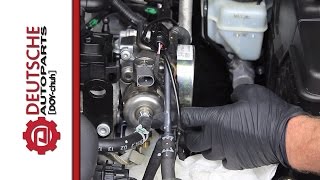
- The next step is to inspect the cam follower. Relieve fuel system pressure, then remove the HPFP from the cylinder head (typically held by three T30 Torx bolts).
- Carefully inspect the cam follower for wear, holes, or damage. Also inspect the plunger of the HPFP for scoring or breakage.
- Inspect the camshaft lobe through the HPFP mounting hole for any signs of scoring or damage. A damaged lobe requires camshaft replacement.
- If the cam follower is worn, replace it (Part #06L109311) and the HPFP (Part #06H127025Q or newer revision). It's best practice to replace them as a set.
- If the follower and cam lobe look good, further testing is needed. Test the low-pressure fuel pump to ensure it is supplying adequate pressure (4-6 bar) to the HPFP.
- Check the wiring and connector for the fuel rail pressure sensors (G410 on the HPFP, G247 on the rail) and the HPFP solenoid for any damage or corrosion.
- If sensor readings are suspect, compare them against a mechanical gauge to confirm a faulty sensor before replacing it. Refer to VW TSBs for known sensor issues.
Parts You'll Likely Need
- High-Pressure Fuel Pump (HPFP)
(OEM #06H127025Q (and later revisions like 06H127025N/M/P))— This is the most common component to fail and cause a P0087 code on the 2.0T TSI engine.
Trusted brands: Bosch (OEM), Hitachi
OEM price range: $300-$450
Aftermarket price range: $150-$350 - Camshaft Follower
(OEM #06L109311 (supersedes 06H109311B))— This is a critical wear item that directly impacts the HPFP's operation. It should always be replaced when servicing the HPFP to prevent repeat failure.
Trusted brands: INA (OEM), Volkswagen Genuine
OEM price range: $30-$50
Aftermarket price range: $20-$40 - Low-Pressure Fuel Sensor (G410)
(OEM #06E906051K (updated part))— Can fail and provide incorrect readings, leading to a misdiagnosis. It's a potential cause if the pump and follower are confirmed to be good. VW has issued TSBs regarding this sensor.
Trusted brands: Bosch (OEM), Standard Motor Products
OEM price range: $70-$120
Aftermarket price range: $50-$90
Related Codes That Often Appear With This One
- P0300-P0304 — Random or specific cylinder misfires can occur due to the lean fuel condition caused by low rail pressure.
- P053F — This code for 'Cold Start Fuel Pressure Performance' is often seen with P0087, as indicated in VW Technical Service Bulletins. [VIN4APIN20220126, VIN4APIN20220118]
- P2293 — This code for 'Fuel Pressure Regulator 2 Performance' is also directly related to the high-pressure fuel system and frequently appears alongside P0087.
- P310B — This code for 'Low Pressure Fuel regulation: Fuel Pressure Outside Specification' often points to a faulty low-pressure sensor (G410) or LPFP issue that can trigger P0087.
Technical Service Bulletins (TSBs) & Recalls
- VIN4APIN20220126: Notes customer complaints of MIL-on with P0087 and P053F in the ECM. [VIN4APIN20220126]
- VIN4APIN20220118: Also documents customer states of MIL-on with P0087 and P053F in the ECM. [VIN4APIN20220118]
- VW TSB 2015153 / 15-11-03: For diagnosis of a worn intake camshaft lobe, a severe consequence of cam follower failure.
- VW TSB 2027458 / 01-11-19: Recommends checking for an improved Fuel Pressure Sensor (G410) when diagnosing P0087.
Platform-Specific Known Issues
- The 2.0T TSI engine has a known history of accelerated wear on the camshaft follower, which is the primary point of failure leading to P0087. Enthusiast communities recommend preventative inspection every 20,000-30,000 miles.
- A VW Technical Service Bulletin (TSB 2015153) exists for checking a worn intake camshaft lobe, which is a potential, and severe, consequence of a failed cam follower.
- Another TSB (2027458 / 01-11-19) points to an improved Low-Pressure Fuel Sensor (G410) to resolve incorrect pressure readings.
Mechanic-Grade Diagnostic Values
- High-Pressure Fuel Rail (Actual) at Idle — expected: 40-50 bar. Failure: Significantly lower, e.g., 6-10 bar, indicates a failing HPFP or severe leak.
- High-Pressure Fuel Rail (Actual) under Load — expected: Rises to 110-170 bar. Failure: Pressure fails to rise with RPM or drops significantly below the specified value.
- Low-Pressure Fuel System (LPFP output) — expected: 4.5 - 6.5 bar (approx. 65-95 PSI). Failure: Pressure below this range indicates a failing in-tank pump, clogged filter, or faulty control module.
- Low-Pressure Fuel Pump (LPFP) Duty Cycle at Idle — expected: ~50-55%. Failure: A duty cycle consistently above 60-70% suggests the LPFP is overworking to compensate for a restriction or a failing HPFP.
- HPFP Fuel Pressure Regulator Valve (N276) Resistance — expected: 1.0 - 5.0 Ω. Failure: A reading outside this range indicates a faulty solenoid on the HPFP.
Hidden / Shadow Codes Worth Checking
- 16471/P0087/000135: This is the VAG-specific fault code identifier for P0087, which means 'Fuel Rail/System Pressure: Too Low'. It will be displayed this way in diagnostic tools like VCDS. (see via VCDS or other VAG-compatible diagnostic software.)
Scan Tool Commands That Help
- VCDS (VAG-COM): Engine -> Meas. Blocks -> Groups 103, 106, 140, 230 — Use these measuring blocks to view specified vs. actual fuel pressure on both the low and high-pressure sides, as well as the LPFP duty cycle. This is the primary step for diagnosing P0087.
- VCDS (VAG-COM): Engine -> Output Tests -> Fuel Pump Electronics — This function activates the in-tank low-pressure fuel pump (LPFP). It's used to prime the fuel system after replacing a filter or pump, and to verify the pump and its control module are operational.
- VCDS (VAG-COM): Engine -> Output Tests -> Fuel Pressure Regulator Valve (N276) — This test cycles the solenoid on the HPFP. A distinct clicking sound confirms the solenoid is receiving a signal and is mechanically actuating, helping to isolate a mechanical pump failure from an electrical one.
Wiring & Ground Locations
- J538 - Fuel Pump Control Module — Under the rear seat, on top of the fuel tank assembly.. This module controls the in-tank low-pressure fuel pump. A failure of this module can starve the HPFP of fuel, directly causing a P0087 code. It is known to fail from overheating, causing intermittent stalling.
- G247 - High Pressure Fuel Sensor Connector — On the end of the high-pressure fuel rail, under the intake manifold.. For testing purposes, the 3-pin connector has a specific pinout: Pin 1 is Ground, Pin 2 is the Signal wire, and Pin 3 is the 5-volt reference from the ECM.
Real Owner Repair Stories
- YouTube channel 'SP88' (Audi A3 2.0T TFSI (similar EA888 engine)) — P0087 code, hesitation and holding back on acceleration.
❌ Tried (didn't work) The previous owner had already replaced the High-Pressure Fuel Pump (HPFP) and the cam follower.
✅ What actually fixed it The intake camshaft lobe that drives the HPFP was visibly worn flat. Replacing the intake camshaft resolved the low-pressure issue. - YouTube channel 'MotorCarNut' (2011 VW Tiguan 2.0T TSI) — P0087 code and random misfires.
❌ Tried (didn't work) Initial diagnosis focused on the common cam follower failure.
✅ What actually fixed it Upon removing the HPFP, it was discovered that the internal plunger tip had physically broken off from the pump body. The cam follower was intact. Replacing the entire HPFP assembly fixed the problem. - YouTube channel 'VW 2.0t TSI fuel injector issues!' (VW MK6 GTI 2.0T TSI) — P0087, P0300, P0303, and P130A (Cylinder Disabling). Car was running and misfiring badly.
❌ Tried (didn't work) Diagnosis ruled out pump issues.
✅ What actually fixed it A borescope inspection revealed a fuel injector on cylinder #3 was stuck wide open, constantly spraying fuel and preventing the rail from building pressure. Replacing the single faulty injector resolved all codes.
"I Checked Everything" — The Actual Cause
- In a case documented on the Ross-Tech forums, a 2009 VW CC with P0087 had its HPFP and rail sensor replaced without success. The low-pressure pump was then tested and showed under 50 psi. After replacing the low-pressure pump, readings improved to 80-90 psi (low side) and 160-170 bar (high side), yet the P0087 code persisted. The final suspected culprit, even with correct pressure readings, was a faulty Fuel Pump Driver Module (J538), which was on order. This shows that even when pumps and sensors test good, the control module can be the root cause.
OEM Part Supersession History
e.g., 06D 906 051 A (for G247 Sensor)→e.g., 06J 906 051 B (for G247 Sensor)— Part update for different engine production runs or ECU calibrations.
Heads up: CRITICAL: Different revisions of the G247 high-pressure sensor are NOT interchangeable. They are specific to the engine code (e.g., BPY vs CCTA) and ECU part number. Installing a physically identical but incorrect part number will result in persistent fuel pressure codes like P2293 or P0087. Always verify the correct sensor part number via VIN with a dealer.
Model Year Variations Within This Range
- 2012-2014: The 2.0T TSI engine in this Beetle can be engine code CCTA (49-state emissions) or CBFA (California SULEV emissions). The main physical difference is the CBFA includes a secondary air injection system, visible as an extra hose on the airbox. While this system is for emissions, some sources note the CCTA engine variant suffers more frequently from HPFP failures.
Helpful Videos


Used OEM Parts in Stock
New Aftermarket Parts Available


The information in this article is provided for general reference and educational purposes only. Vehicle specifications, procedures, and part compatibility can vary by production date, trim level, and region. Always consult your vehicle's factory service manual and verify part numbers before purchasing or performing repairs. Safety-critical components such as airbags, seat belts, and braking systems should be installed by a qualified professional.
- Volkswagen BEETLE:
- 🧭 Diagnostic Flowchart
- 🎬 Helpful Videos
- 🛍️ Shop This Part
- What's Unique About the 2012-2014 Volkswagen BEETLE
- Symptoms You May Notice
- Most Likely Causes
- Rare But Worth Checking
- Diagnosis Steps
- Parts You'll Likely Need
- Related Codes That Often Appear With This One
- Technical Service Bulletins (TSBs) & Recalls
- Platform-Specific Known Issues
- Mechanic-Grade Diagnostic Values
- Hidden / Shadow Codes Worth Checking
- Scan Tool Commands That Help
- Wiring & Ground Locations
- Real Owner Repair Stories
- "I Checked Everything" — The Actual Cause
- OEM Part Supersession History
- Model Year Variations Within This Range
- 🎟️ Get 5% Off