

P0088 on 2016-2018 Chevrolet Colorado: Fuel Rail Pressure Too High Causes and Fixes
P0088 on a 2016-2018 Colorado indicates dangerously high fuel pressure. For the 3.6L V6 gas engine, suspect a faulty high-pressure fuel pump (HPFP) or fuel rail pressure sensor. For the 2.8L Duramax diesel, the HPFP is also the primary suspect. A GM Technical Service Bulletin also points to fuel contamination as a major cause on gas models.
- P0088 is a serious code on the 2016-2018 Colorado that indicates excessively high fuel pressure and means you should stop driving the vehicle.
- The most likely cause is a failing high-pressure fuel pump (HPFP) on both V6 and Duramax engines, or a faulty fuel rail pressure sensor.
- For gasoline V6 models, always consider fuel contamination as a possible cause, per GM TSB PIP5151F.
- For 2.8L Duramax models, a P0088 code could be an early warning of a catastrophic HPFP failure that can contaminate the entire fuel system.
- Proper diagnosis is crucial: use a scan tool to compare desired vs. actual fuel pressure to determine if the fault is mechanical (high pressure) or electrical (bad sensor reading).
What's Unique About the 2016-2018 Chevrolet COLORADO
For the 2016-2018 Colorado, the cause of P0088 can differ significantly between the gasoline and diesel engines. On gasoline models, GM has issued a specific Technical Service Bulletin (PIP5151F) warning that fuel contamination can trigger this code, necessitating a full system inspection. For the 2.8L Duramax diesel, the code often points to the failure of the high-pressure fuel pump (HPFP), a known issue that can sometimes lead to metal debris contaminating the entire fuel system, resulting in a costly repair. A faulty fuel pressure regulator (or a bad electrical connection to it) can also cause the pump to default to maximum pressure on diesel models.
Diagnostic Flowchart
Tap your situation to follow the diagnostic path that matches what you're seeing on this vehicle.
Symptoms You May Notice
- Check Engine Light is on.
- Hard starting or failure to start.
- Rough running and idling.
- Reduced engine power or entering 'limp mode'.
- Engine hesitation or stalling.
- Black smoke from the exhaust.
- Decreased fuel economy.
- Smell of raw fuel.
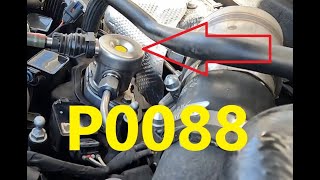
- Replacing the fuel rail pressure sensor without first verifying if the pressure is actually high mechanically. A scan tool reading high pressure doesn't always mean the sensor is bad; it could be accurately reporting a real problem with the pump or regulator. 🎬 See this overview of common causes and fixes for P0088.
Most Likely Causes
- Faulty High-Pressure Fuel Pump (HPFP) 🔴 High Probability → Shop Fuel Pump The HPFP is a known failure point on both the 3.6L V6 and 2.8L Duramax engines. On the Duramax, the internal fuel pressure regulator (suction control valve) on the pump is a common failure point causing high pressure. A recall (NHTSA #18V358) was issued for some 2018 models for improperly welded HPFPs that could detach, damage the fuel line, and cause a fire, highlighting it as a component with known issues.
How to confirm: Use a scan tool to monitor 'Desired Fuel Rail Pressure' vs. 'Actual Fuel Rail Pressure'. If the actual pressure is significantly higher than desired and does not respond correctly to engine load changes, the HPFP is a likely cause. A smell of gasoline in the engine oil can also indicate a failed HPFP on V6 models, as the pump can leak fuel into the crankcase.
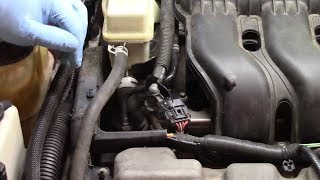
Typical fix: Replacement of the high-pressure fuel pump. If the pump on a Duramax has failed and sent metal debris, the entire fuel system (injectors, lines, rails) must be replaced and cleaned. For the 3.6L V6, the replacement part is often GM #12691088. 🎬 Watch: Step-by-step walkthrough for replacing the V6 high-pressure fuel pump. For the 2.8L Duramax, the pump is GM #40009046 (which supersedes 55593582, among others).
Est. part cost: $300-$900 - Faulty Fuel Rail Pressure Sensor 🟡 Medium Probability → Shop Fuel Pressure Sensor The sensor provides the pressure reading to the ECM. If it fails and sends an inaccurately high voltage signal, the ECM will set P0088 even if the mechanical pressure is normal.
How to confirm: With the engine off, the scan tool should show near-zero fuel pressure. If it reads high, the sensor is likely faulty. Another test is to compare the scan tool's pressure reading with a mechanical gauge; a significant difference points to a bad sensor.
Typical fix: Replacement of the fuel rail pressure sensor. For the 3.6L V6 (LGZ), the OEM part number is typically 12682589. 🎬 Watch: How to properly replace a fuel rail pressure sensor.
Est. part cost: $50-$150 - Fuel Contamination 🟡 Medium Probability GM Technical Service Bulletin #PIP5151F specifically identifies fuel contamination as a cause for P0088 on gasoline models. Water, debris, or incorrect fuel (like E85) can affect the performance of the entire fuel system, including the HPFP and its regulator.
How to confirm: Take a fuel sample and inspect it for water, rust, sediment, or other contaminants. For diesel engines, check for gasoline or Diesel Exhaust Fluid (DEF) contamination.
Typical fix: If contamination is found, the entire fuel system needs to be drained and cleaned, which may include dropping the fuel tank, flushing lines, and replacing the fuel filter, as per TSB guidelines.
Est. part cost: $20-$100 (for filters and cleaning supplies, not including potential component replacement) - Wiring or Connector Issues ⚪ Low Probability Damage to the wiring harness for the fuel rail pressure sensor or HPFP can cause a short to voltage, leading the ECM to see a false high-pressure reading. Rodent damage to harnesses on top of the engine is also a known, though less common, cause.
How to confirm: Visually inspect the wiring harness and connectors going to the fuel rail pressure sensor and high-pressure fuel pump for any signs of damage, corrosion, or loose connections. Check for 5V reference, ground, and signal voltage at the sensor connector. A loose ground wire on the fuel pressure regulator has been reported to cause max pressure on Duramax models.
Typical fix: Repair or replace the damaged section of the wiring harness or the connector.
Est. part cost: $10-$100
Rare But Worth Checking
- Blocked Fuel Return Line: This is more common on older fuel systems with a return line. While less likely on modern systems, a restriction could theoretically cause pressure to build, triggering P0088.
- Faulty Engine Control Module (ECM): → Shop Engine Control Module (ECM) This is a rare cause and should only be considered after all other possibilities have been thoroughly ruled out. An internal ECM fault could cause it to misinterpret sensor data.
Diagnosis Steps
- Check for other diagnostic trouble codes (DTCs) that may provide more context, such as P0087, P0191, or misfire codes.
- Connect a scan tool and observe live data for 'Desired Fuel Rail Pressure' and 'Actual Fuel Rail Pressure'.
- With the key on and engine off, check the fuel pressure reading. It should be low. If it reads high, suspect a faulty fuel rail pressure sensor.
- Start the engine and monitor the pressure readings at idle and while carefully increasing RPM. Note if the actual pressure is consistently and significantly higher than the desired pressure.
- Visually inspect the wiring and connectors for the fuel rail pressure sensor and the high-pressure fuel pump for any signs of damage, corrosion, or loose connections.
- If possible, connect a mechanical fuel pressure gauge to the high-pressure system to verify the reading from the electronic sensor. (Warning: This requires special tools and extreme caution).
- Take a fuel sample to inspect for contamination (water, debris, rust) as recommended by TSB PIP5151F.
- If the pressure is confirmed to be high mechanically and the sensor is good, the high-pressure fuel pump is the most likely culprit.
Parts You'll Likely Need
- High-Pressure Fuel Pump (3.6L V6)
(OEM #12691088)— This is the most common mechanical cause for P0088 on the gasoline engine. The internal regulator can fail, or the pump can mechanically over-pressurize the system.
Trusted brands: ACDelco, GM Genuine
OEM price range: $400-$900
Aftermarket price range: $250-$600 - High-Pressure Fuel Pump (2.8L Duramax)
(OEM #40009046)— The HPFP is a very common failure point on the 2.8L diesel, often due to the internal fuel pressure regulator failing and commanding maximum pressure.
Trusted brands: ACDelco, GM Genuine, Bosch
OEM price range: $500-$1000
Aftermarket price range: $350-$700 - Fuel Rail Pressure Sensor (3.6L V6)
(OEM #12682589)— A faulty sensor can send an erroneously high voltage signal to the ECM, triggering P0088 even if the mechanical pressure is normal. It's a common misdiagnosis but also a frequent point of failure.
Trusted brands: ACDelco, GM Genuine
OEM price range: $50-$110
Aftermarket price range: $30-$80
Related Codes That Often Appear With This One
- P0087 — Fuel Rail/System Pressure - Too Low. This may appear with P0088 if a failing component (like a fuel pressure regulator) is causing erratic pressure swings, or if widespread contamination is causing intermittent blockages and pressure drops.
- P0191 — Fuel Rail Pressure Sensor Circuit Range/Performance. This code points more directly to a problem with the sensor's signal or circuit and is often logged alongside P0087 and P0088, as noted in TSB PIP5151F.
- P128E — A GM-specific code related to fuel system performance, also cited in TSB PIP5151F as appearing with P0088.
Technical Service Bulletins (TSBs) & Recalls
- PIP5151F: Notes that fuel contamination can cause P0088 on gasoline models and recommends a full system inspection if debris is found.
Platform-Specific Known Issues
- 2.8L Duramax Regulator Failure: Owners on forums for the 2.8L Duramax (LWN
Mechanic-Grade Diagnostic Values
- Fuel Rail Pressure Sensor (FRP) Signal Voltage — expected: Key On, Engine Off (KOEO): Approximately 1.5V to 1.8V. The sensor operates on a 0.5V to 4.5V scale.. Failure: A reading stuck at 0V, 5V, or fluctuating erratically indicates a failed sensor or a wiring/ground issue. A constant 5V signal suggests a short to power.
- FRP Sensor 5V Reference Voltage — expected: With the sensor connector unplugged and ignition on, the reference wire from the ECM should read between 4.8V and 5.2V.. Failure: A reading of 0V indicates an open or short to ground in the reference circuit from the ECM.
- Low-Side Fuel Pressure (2.8L Duramax with Aftermarket Lift Pump) — expected: Should be regulated to a level that does not overwhelm the high-pressure pump. In one documented case, reducing pressure from 14 PSI to around 9 PSI resolved the P0088 code.. Failure: Excessively high low-side pressure (e.g., 14+ PSI) can prevent the high-pressure pump from regulating correctly, especially during deceleration, causing a P0088 code.
Scan Tool Commands That Help
- GM GDS2 (Global Diagnostic System 2): Fuel Pump Relay Command ON/OFF — This bidirectional control allows a technician to manually operate the low-pressure fuel pump to check its function and build pressure for leak testing without starting the engine. It is a primary step in the GM diagnostic flowchart for fuel system issues.
- GM GDS2 (Global Diagnostic System 2): Module Diagnostics > Control Functions — Within a specific module like the ECM or BCM, this allows for activating various outputs to test circuits. For P0088, this could involve monitoring sensor data while commanding changes in the fuel system to see if the components respond as expected.
Wiring & Ground Locations
- Fuel Rail Pressure Sensor (2.8L LWN Duramax) — On the driver's side of the engine, located on the fuel rail toward the back near the firewall. It is a 4-pin connector and is situated underneath a foam shroud that covers the fuel lines.. This is the primary sensor that reports the pressure reading to the ECM. Damage to its connector or wiring harness, which can be difficult to access, can directly cause a false P0088 code.
- Fuel Rail Pressure Sensor (3.6L V6) — Mounted on the high-pressure fuel rail on top of the engine. The wiring harness is often exposed on top of the engine, making it susceptible to rodent damage.. A short in this harness can send a false high voltage signal to the ECM, tricking it into setting a P0088 code even if the mechanical pressure is normal.
Real Owner Repair Stories
- YouTube channel 'Pine Hollow Auto Diagnostics' (Chevrolet Colorado with 2.8L Duramax and an aftermarket PPE lift pump.) — P0088 - Fuel Pressure Too High, engine goes into limp mode. The code would set specifically during deceleration/coasting downhill after being off-throttle.
❌ Tried (didn't work) Initial diagnosis confirmed that 'Actual' fuel rail pressure was spiking over 2900 PSI higher than 'Desired' pressure during deceleration events.
✅ What actually fixed it The aftermarket lift pump's output pressure was too high (around 14 PSI). The technician adjusted the regulator on the lift pump to lower the low-side pressure to approximately 9 PSI. This prevented the high-pressure fuel pump (HPFP) from being overwhelmed and allowed it to regulate pressure correctly, resolving the P0088 code. - Reddit user on r/Duramax (LMM Duramax (similar principle to LWN)) — P0088 code, rough running, limp mode after replacing fuel lines and sending unit. Found rusty metal bits in the fuel filter.
❌ Tried (didn't work) Replacing the fuel filter.
✅ What actually fixed it The user added injector cleaner to the fuel tank and let the engine idle for about 30 minutes. The engine sputtered, and then the fuel pressure dropped to normal, clearing the code. This suggests a small piece of debris from the earlier contamination was stuck in the fuel pressure regulator and eventually passed through.
OEM Part Supersession History
55593582, 55493585, 55496866→40009046— These are previous part numbers for the 2.8L Duramax High-Pressure Fuel Pump (HPFP). GM consolidates part numbers as revisions are made.
Heads up: Part number 40009046 is the current recommended OEM replacement for the 2016-2018 Colorado 2.8L diesel.12662738, 12652442→12682589— These are older part numbers for the Fuel Rail Pressure Sensor for the 3.6L V6 engine.
Heads up: Part number 12682589 is the correct replacement for the 2017-2018 LGZ V6 engine.
Model Year Variations Within This Range
- 2017-2018: In 2017, the 3.6L V6 was updated from the LFX to the LGZ engine. While fundamentally similar, the LGZ is a significant redesign with different cylinder heads, a larger bore, and is designed for truck applications, potentially affecting fuel delivery characteristics and part numbers compared to the 2016 LFX.
Helpful Videos
Used OEM Parts in Stock
New Aftermarket Parts Available


The information in this article is provided for general reference and educational purposes only. Vehicle specifications, procedures, and part compatibility can vary by production date, trim level, and region. Always consult your vehicle's factory service manual and verify part numbers before purchasing or performing repairs. Safety-critical components such as airbags, seat belts, and braking systems should be installed by a qualified professional.
- Chevrolet COLORADO:
- 🧭 Diagnostic Flowchart
- 🎬 Helpful Videos
- 🛍️ Shop This Part
- What's Unique About the 2016-2018 Chevrolet COLORADO
- Symptoms You May Notice
- Most Likely Causes
- Rare But Worth Checking
- Diagnosis Steps
- Parts You'll Likely Need
- Related Codes That Often Appear With This One
- Technical Service Bulletins (TSBs) & Recalls
- Platform-Specific Known Issues
- Mechanic-Grade Diagnostic Values
- Scan Tool Commands That Help
- Wiring & Ground Locations
- Real Owner Repair Stories
- OEM Part Supersession History
- Model Year Variations Within This Range
- 🎟️ Get 5% Off