

P0088 on 2014-2018 Chevrolet Cruze: Fuel Pressure Too High Causes and Fixes
P0088 on a 2014-2018 Chevy Cruze typically points to a failing high-pressure fuel pump (HPFP) or a faulty fuel rail pressure sensor. Expect to spend between $300 and $800+ for diagnosis and replacement of the most likely component. Driving is not recommended as the over-pressure condition can damage other expensive parts.
- P0088 means fuel pressure is dangerously high; do not continue to drive the vehicle.
- The most likely cause on a 2014-2018 Cruze is a failing high-pressure fuel pump (HPFP).
- A faulty fuel rail pressure sensor is the second most likely cause and is cheaper to replace.
- Proper diagnosis with a scan tool that can read live fuel pressure data is essential to avoid replacing the wrong parts.
- Due to the complexity and fire risk of high-pressure fuel systems, professional diagnosis and repair are strongly recommended.
What's Unique About the 2014-2018 Chevrolet CRUZE
The Chevrolet Cruze, particularly with the common 1.4L Turbo engine, uses a high-pressure, gasoline direct injection (GDI) system. Unlike older port injection systems, this design has two fuel pumps: a low-pressure pump in the tank and a high-pressure fuel pump (HPFP) driven by the engine's camshaft. Code P0088 almost always relates to the high-pressure side of this system. A GM Technical Service Bulletin (TSB) also notes that fuel system contamination (e.g., water, debris, or incorrect fluids) can trigger this code, sometimes requiring a complete system cleaning.
Diagnostic Flowchart
Tap your situation to follow the diagnostic path that matches what you're seeing on this vehicle.
Generation note: The 2014-2018 range covers two generations of the Cruze. The first generation (J300) ran until 2016 (as the 'Cruze Limited'), and the second generation (D2XX) began in 2016. While both generations used 1.4L turbo engines, they are different designs (Gen 1 LUV, Gen 2 LE2). However, the causes for P0088—related to the high-pressure fuel system—are broadly similar for both, with the HPFP being a known failure point on both engine types.
Symptoms You May Notice
- Check Engine Light is on
- Reduced engine power and performance, possibly entering 'limp mode'
- Engine running rough, hesitating, or stalling
- Hard starting or failing to start, especially after a hot soak
- Noticeable decrease in fuel economy
- Black smoke from the exhaust, indicating a rich running condition
- Smell of raw gasoline
- Replacing the in-tank (low-pressure) fuel pump. This pump is rarely the cause of a high-pressure code like P0088, as its job is to supply the HPFP, not regulate final pressure.
- Replacing fuel injectors. While high pressure can damage injectors, they are not the root cause of the pressure problem itself.
Most Likely Causes
- Failing High-Pressure Fuel Pump (HPFP) 🔴 High Probability → Shop Fuel Pump The HPFP is a mechanical pump driven by the camshaft that can wear out internally. Its internal regulator can fail, causing it to produce excessive, uncontrolled pressure. This is a widely reported failure item for the 1.4L Turbo engines in the Cruze and its platform mates.
How to confirm: A technician will use a scan tool to monitor 'Requested Fuel Rail Pressure' vs. 'Actual Fuel Rail Pressure'. If the actual pressure is consistently and uncontrollably high, and the sensor is verified to be working, the HPFP is the likely culprit. The pressure may read normally at idle but spike far above the commanded pressure during acceleration.
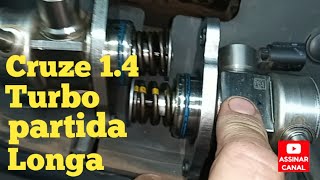
Typical fix: Replacement of the high-pressure fuel pump. 🎬 Watch: A complete diagnosis and repair guide for the P0088 code.
Est. part cost: $200-$500 - Faulty Fuel Rail Pressure Sensor 🟡 Medium Probability → Shop Fuel Pressure Sensor The sensor can fail electronically, sending an incorrect high-voltage signal to the ECM, which is interpreted as high pressure even if the pressure is normal. This can be caused by internal failure or corrosion in the connector.
How to confirm: Compare the sensor's reading on a scan tool with a direct pressure measurement from a mechanical gauge. If the readings don't match, the sensor is faulty. Another test is to check the sensor's voltage with the engine off (key on); it should not be stuck at 5 volts. A failure of this sensor may also trigger code P0191.
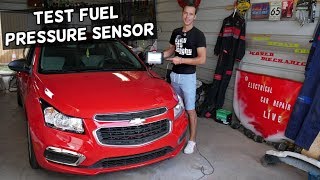
Typical fix: Replacement of the fuel rail pressure sensor. 🎬 See how to test the fuel pressure sensor on your Cruze.
Est. part cost: $50-$150 - Restricted Fuel Return Line ⚪ Low Probability This is less common on modern GDI systems but can still occur due to blockages, kinks, or debris in the fuel lines. If excess fuel pressure cannot be bled off, it will build up in the rail.
How to confirm: Visual inspection of all fuel lines for kinks or damage. A flow test may be required to confirm a blockage.
Typical fix: Repairing the kinked section or replacing the blocked fuel line.
Est. part cost: $20-$100
Rare But Worth Checking
- Wiring Issues: A short-to-voltage in the fuel rail pressure sensor's wiring harness can cause the ECM to see a false high-pressure reading. Rodent damage to the harness on top of the engine is a known, though infrequent, cause. TSB 20-NA-197 also points to potential corrosion in the sensor's electrical connector. This should be checked before replacing expensive components.
- Powertrain Control Module (PCM) Fault: → Shop Engine Control Module (ECM) In very rare cases, the engine computer itself can be the problem, misinterpreting a correct sensor signal or having a software glitch. This is a last-resort diagnosis after all other possibilities have been eliminated.
Diagnosis Steps
- Connect a professional OBD-II scan tool to read the code and view live data.
- Monitor the 'Fuel Rail Pressure' and 'Desired Fuel Rail Pressure' PIDs. Note the difference between the actual and commanded pressure at idle and under load.
- If actual pressure is significantly higher than desired, the issue is likely real and not just a sensor error.
- Perform a visual inspection of the fuel system, including the high-pressure pump, fuel lines, and the sensor's wiring harness for any visible damage, leaks, kinks, or signs of rodent activity.
- If a sensor fault is suspected, test the sensor's voltage output. With the key on and engine off, the voltage should not be stuck at its maximum (e.g., 5V). Compare its readings to a known-good sensor or specifications. Check the wiring and connector for corrosion or damage as noted in TSB 20-NA-197.
- If possible, connect a mechanical fuel pressure gauge to the system to verify if the pressure reported by the scan tool is accurate.
- If the sensor and wiring are good, the focus shifts to the high-pressure fuel pump (HPFP). Test the HPFP's operation according to the factory service manual. 🎬 Watch: How to test the high-pressure fuel pump operation.
- Check for any restrictions in the fuel return system if applicable.
- If contamination is suspected, as per TSB PIP5151F, a fuel sample should be taken and inspected for water, debris, or other fluids.
Parts You'll Likely Need
- High-Pressure Fuel Pump
(OEM #12677329 (Gen 1 LUV), 12682079 (Gen 2 LE2, supersedes 12649461, 12673450))— This is the most common mechanical failure point that leads to an over-pressurization of the fuel rail on GDI engines.
Trusted brands: ACDelco, Bosch, GM Genuine Parts
OEM price range: $350-$500
Aftermarket price range: $200-$400 - Fuel Rail Pressure Sensor
(OEM #12705503 or 12672582 (Check VIN, primarily for Gen 2 LE2))— This sensor can fail and send incorrect high-pressure signals to the computer, triggering the code even if the mechanical pressure is normal.
Trusted brands: ACDelco, Delphi, Standard Motor Products
OEM price range: $80-$150
Aftermarket price range: $50-$100
Related Codes That Often Appear With This One
- P0087 — P0087 (Fuel Rail/System Pressure - Too Low) can appear with P0088 if the high-pressure pump or sensor is failing erratically, causing pressure to swing between being too high and too low. TSB PIP5151F explicitly mentions these codes can appear together.
- P0191 — P0191 (Fuel Rail Pressure Sensor Circuit Range/Performance) often accompanies P0088 as it indicates the sensor's readings are erratic or out of the expected range, which can be a cause or a symptom of the high-pressure condition.
Technical Service Bulletins (TSBs) & Recalls
- PIP5151F: Mentions that P0088 can be caused by fuel system contamination and may be seen with codes P0087, P0191, and P128E, potentially requiring a full fuel system service. While the bulletin often shows examples from diesel engines, the principle applies to gasoline direct injection systems as well.
- 20-NA-197: Although not specific to P0088, this TSB addresses corrosion or damage at the fuel pressure sensor electrical connector causing various fuel pressure codes. It advises inspecting the connector terminals and replacing the pigtail if corrosion is found.
Platform-Specific Known Issues
- Per GM TSB #PIP5151F, fuel system contamination can lead to P0088 along with other fuel pressure codes. If contamination is found (water, rust, DEF fluid in diesel applications), the entire fuel system may need to be cleaned or replaced to prevent repeat failures.
- A thread on CruzeTalk.com titled 'P0088 Fuel Rail Pressure Too High' details an owner's experience with a 2014 Cruze. After replacing the fuel rail pressure sensor did not fix the issue, replacing the high-pressure fuel pump (HPFP) resolved the code and restored performance. This aligns with the HPFP being the most common failure.
- Another owner on a forum reported that their P0088 was ultimately caused by a damaged wiring harness near the sensor connector, which was creating a short and sending a false high-voltage signal.
Mechanic-Grade Diagnostic Values
- Fuel Rail Pressure Sensor (FRP) Signal Voltage — expected: Approx. 0.5V at Key On, Engine Off (KOEO). Voltage increases with pressure. Should not be stuck at 5V.. Failure: A constant 5V signal indicates a short-to-voltage or a bad sensor. A reading of 0V indicates an open circuit or loss of 5V reference.
- High-Pressure Fuel System Pressure (Scan Tool) — expected: Idle: ~2.0-3.5 MPa (290-500 PSI). Under load/acceleration: Can exceed 15 MPa (2175+ PSI).. Failure: P0088 sets when 'Actual' pressure significantly exceeds 'Desired' pressure. If actual pressure is uncontrollably high, the HPFP is suspect.
- Low-Pressure Fuel System Pressure — expected: 50-94 PSI (345–650 kPa) when commanding the in-tank pump on with a scan tool (engine off).. Failure: While not a direct cause of P0088, verifying the low-side pressure is a preliminary step to ensure the HPFP is receiving adequate supply.
Scan Tool Commands That Help
- GDS2 (GM Dealer Scan Tool): Fuel System Test / Fuel Pressure Control — This bidirectional function allows a technician to command specific fuel pressures and observe the 'Actual' pressure reading from the sensor. It's used to verify if the HPFP is capable of being controlled or if it is running uncontrollably high, and to test the accuracy of the fuel rail pressure sensor's response.
- GDS2 (GM Dealer Scan Tool): Fuel Trim Reset — After replacing a major fuel system component like the HPFP or injectors, resetting the fuel trims forces the ECM to relearn fuel delivery adjustments from a baseline, which can help resolve performance issues after the repair.
Wiring & Ground Locations
- G103 / G105 — Major chassis grounds located on the driver's side shock tower in the engine bay.. A loose or corroded connection at these main ground points can affect the ground reference for the ECM and multiple sensors, including the fuel rail pressure sensor, leading to erratic readings and false codes.
- K20 ECM Connector X1 (LE2 Engine) — At the Engine Control Module (ECM).. Allows for testing the fuel rail pressure sensor circuit directly at the computer. For the LE2 engine, the FRP sensor signal wire is typically on Pin 37, the 5V reference on Pin 28, and the low reference (ground) on Pin 8. This helps isolate a wiring fault from a sensor or ECM fault.
- Fuel Rail Pressure Sensor Connector — On the high-pressure fuel rail on the engine.. This is the primary point for testing the sensor's voltage output and checking for corrosion or damage, as mentioned in TSB 20-NA-197. It is a 3-wire connector containing 5V reference, signal, and ground.
Real Owner Repair Stories
- CruzeTalk.com forum user (2014 Chevrolet Cruze 1.4L Turbo) — P0088 code, engine stalling, rough running.
❌ Tried (didn't work) Replacing the Fuel Rail Pressure Sensor.
✅ What actually fixed it The issue was resolved by replacing the High-Pressure Fuel Pump (HPFP). This confirms the common failure pattern where the sensor is replaced first without success.
OEM Part Supersession History
12641847, 12651039→12677329 (ACDelco HPM1029)— Part has been updated multiple times by GM to improve reliability.
Heads up: Applies to Gen 1 (LUV) engine, typically up to 2016 Cruze Limited. Always use the latest part number for replacement.12649461, 12673450→12682079— Part has been updated by GM for the newer engine design.
Heads up: Applies to Gen 2 (LE2) engine, typically 2016 (new model) and newer. These parts are not interchangeable with Gen 1 pumps.
Model Year Variations Within This Range
- 2016: In 2016, Chevrolet sold two different cars under the 'Cruze' name. The 'Cruze Limited' was a carryover of the first generation (J300) body and LUV engine. The 'All-New Cruze' was the start of the second generation (D2XX) with the LE2 engine. These two models use different high-pressure fuel pumps, sensors, and have different part numbers. When sourcing parts for a 2016, it is critical to confirm if it is a 'Limited' (Gen 1) or the new body style (Gen 2). A common tip is for Gen 2 2016 owners to look up parts for a 2017 to avoid confusion.
Helpful Videos

Used OEM Parts in Stock
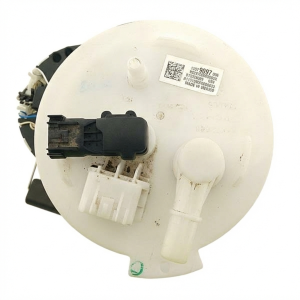
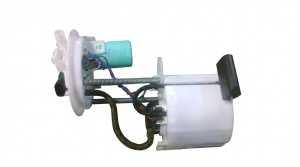
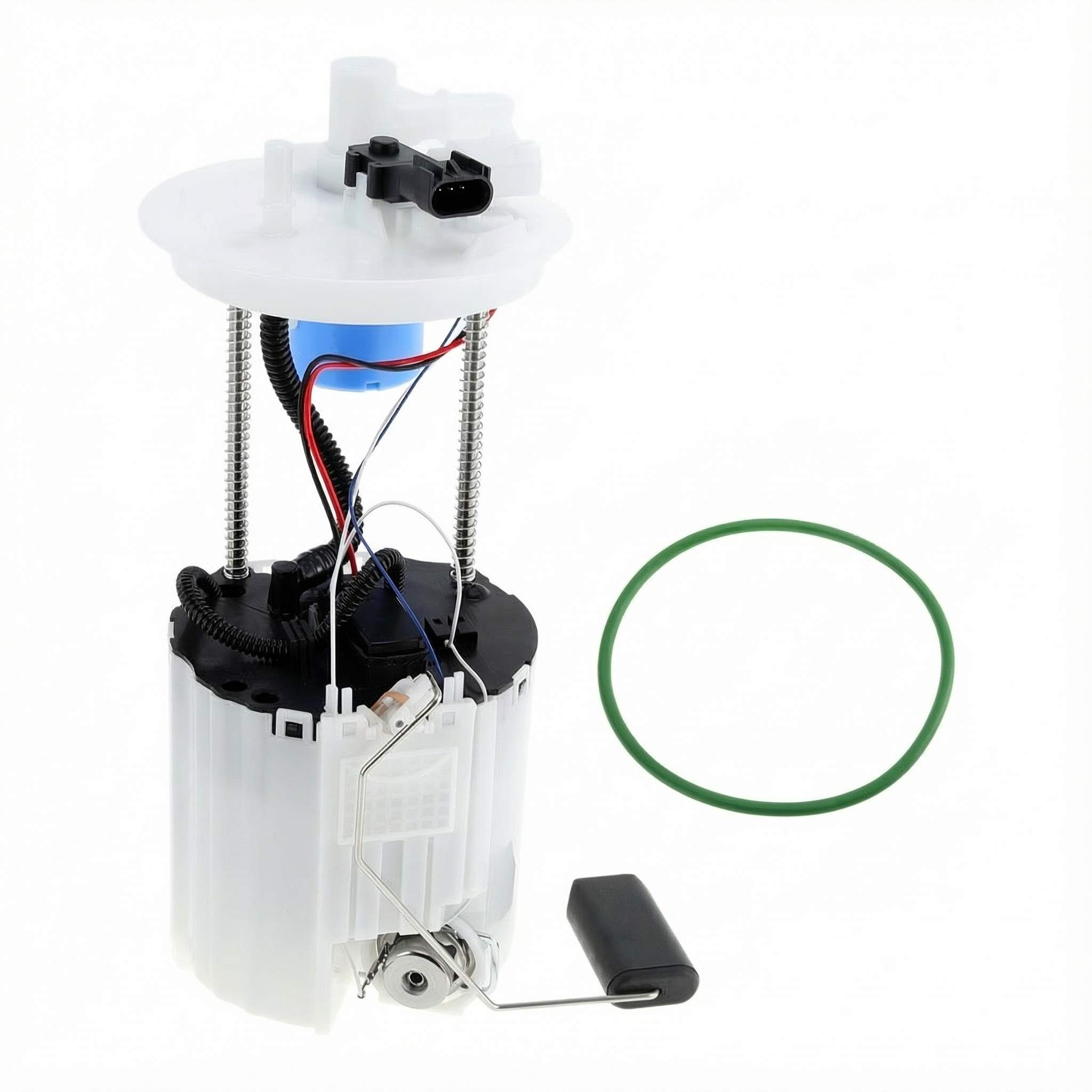
New Aftermarket Parts Available
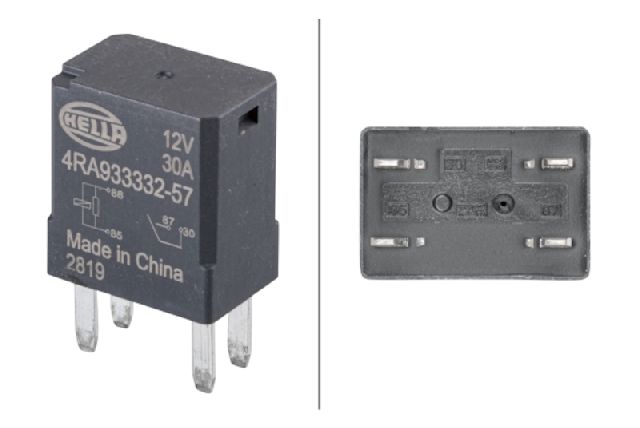



The information in this article is provided for general reference and educational purposes only. Vehicle specifications, procedures, and part compatibility can vary by production date, trim level, and region. Always consult your vehicle's factory service manual and verify part numbers before purchasing or performing repairs. Safety-critical components such as airbags, seat belts, and braking systems should be installed by a qualified professional.
- Chevrolet CRUZE:
- 🧭 Diagnostic Flowchart
- 🎬 Helpful Videos
- 🛍️ Shop This Part
- What's Unique About the 2014-2018 Chevrolet CRUZE
- Symptoms You May Notice
- Most Likely Causes
- Rare But Worth Checking
- Diagnosis Steps
- Parts You'll Likely Need
- Related Codes That Often Appear With This One
- Technical Service Bulletins (TSBs) & Recalls
- Platform-Specific Known Issues
- Mechanic-Grade Diagnostic Values
- Scan Tool Commands That Help
- Wiring & Ground Locations
- Real Owner Repair Stories
- OEM Part Supersession History
- Model Year Variations Within This Range
- 🎟️ Get 5% Off