

P0088 on 2018-2024 Chevrolet Equinox: Fuel Rail Pressure Too High Causes & Fixes
For the 2018-2024 Equinox, code P0088 almost always points to a failing high-pressure fuel pump (HPFP), a known issue for these engines. A faulty fuel rail pressure sensor is a less common but possible cause. Expect a repair cost of $500-$1500, as the HPFP is an expensive part and can be labor-intensive to replace. Driving is not recommended due to risk of engine damage and fire.
- P0088 is a critical code on the 2018-2024 Equinox indicating dangerously high fuel pressure. Do not continue to drive the vehicle.
- The most probable cause is a failed high-pressure fuel pump (HPFP), a known weak point on these engines.
- A faulty fuel rail pressure sensor is the second most likely cause and should be ruled out before replacing the more expensive HPFP.
- Due to the high pressures involved and significant fire risk, diagnosis and repair by a qualified professional are strongly recommended.
- Check for open recalls or customer satisfaction programs related to the fuel system, as GM has issued documents for these components.
What's Unique About the 2018-2024 Chevrolet Equinox
The 2018-2024 Equinox uses GDI engines (1.5L LYX and 2.0L LTG) that rely on a camshaft-driven high-pressure fuel pump (HPFP) in addition to the standard in-tank pump. These mechanical high-pressure pumps are a known failure point across many GM vehicles of this era, often leading to pressure regulation problems. GM issued a customer satisfaction program (N182199610) for some 2018-2019 models due to HPFPs that could crack and leak fuel, highlighting the component's vulnerability. A key diagnostic step specific to this platform is to check the engine oil for a gasoline smell, which strongly indicates the HPFP has failed internally and is leaking fuel into the crankcase.
Symptoms You May Notice
- Check Engine Light illuminated
- Engine running rough or misfiring
- Reduced engine power or entering "limp mode"
- Hard starting or stalling
- Poor fuel economy
- Strong smell of gasoline from the engine bay or exhaust
- Black smoke from the exhaust
- Noticeable smell of gasoline in the engine oil on the dipstick
- Replacing the in-tank (low-pressure) fuel pump when the issue is with the engine-mounted high-pressure fuel pump.
- Replacing fuel injectors without confirming that excessive fuel pressure is the root cause.
- Replacing the HPFP without first ruling out the much cheaper and easier-to-replace fuel rail pressure sensor.
Most Likely Causes
- Failing High-Pressure Fuel Pump (HPFP) 🔴 High Probability → Shop Fuel Pump The HPFP is a widely documented failure point on these GM GDI engines. The internal regulator can fail or the pump's piston can seize, causing excessive pressure. GM issued a customer satisfaction program (N182199610) for some 2018-2019 models due to HPFPs that could crack and leak fuel. A failed internal seal can also leak high-pressure fuel directly into the crankcase, contaminating the engine oil.
How to confirm: Use a scan tool to monitor desired vs. actual fuel rail pressure. If the actual pressure is significantly and consistently higher than the desired pressure, the HPFP is the primary suspect. A definitive sign of failure is the smell of gasoline in the engine oil on the dipstick.
Typical fix: Replacement of the high-pressure fuel pump and the one-time-use high-pressure fuel feed pipe. 🎬 Watch: Step-by-step walkthrough for removing and installing a high pressure pump. An engine oil and filter change is mandatory if fuel has contaminated the oil.
Est. part cost: $300-$800 - Faulty Fuel Rail Pressure Sensor (FRPS) 🟡 Medium Probability → Shop Fuel Pressure Sensor
How to confirm: With the Key On, Engine Off (KOEO), the fuel rail pressure reading on a scan tool should be very low (near 0 PSI). If it reads an abnormally high value (e.g., stuck at 4,000+ PSI), the sensor is faulty. If the scan tool shows high pressure but a mechanical fuel pressure gauge shows normal pressure, the sensor or its circuit is faulty. A constant high voltage signal (near 5V) from the sensor also points to a bad sensor or a shorted wire.
Typical fix: Replacement of the fuel rail pressure sensor. On some engines, this may require removing the intake manifold for access.
Est. part cost: $50-$150 - Wiring or Connector Issue ⚪ Low Probability
How to confirm: Visually inspect the wiring harness and connectors for the fuel rail pressure sensor and high-pressure fuel pump. Look for signs of damage, corrosion, or rodent activity, which is a known issue for harnesses on top of the engine. Use a multimeter to check for a short-to-power on the sensor's signal wire. On some GM platforms, the FRPS connector can be accidentally swapped with other nearby sensors after service, so verify it's connected correctly.
Typical fix: Repair or replace the damaged section of the wiring harness or the connector.
Est. part cost: $10-$100
Rare But Worth Checking
- Clogged or Restricted Fuel Return Line: While less common on modern returnless systems, a restriction in any pressure relief path can cause pressure to build. This is unlikely to be the primary cause but is a possibility in some fuel system designs.
- Stuck-Open Fuel Injector: In a counterintuitive failure, a mechanically stuck-open fuel injector can sometimes cause erratic fuel pressure readings as the HPFP attempts to compensate. One owner on a Chevrolet forum reported that a stuck injector was the ultimate cause of their P0088 code after a pump replacement didn't fix the issue. This is often accompanied by a specific cylinder misfire code (e.g., P030x).
- Engine Control Module (ECM) Fault: → Shop Engine Control Module (ECM) In very rare cases, the ECM itself can fail, misinterpreting sensor data or failing to properly command the fuel pump. This should only be considered after all other possibilities have been exhaustively ruled out.
Diagnosis Steps
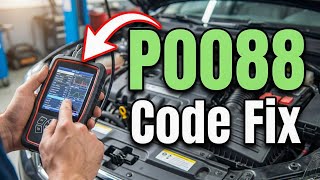
- Connect an OBD-II scanner and confirm the presence of the P0088 code. 🎬 Watch: A complete diagnosis and repair guide for P0088 codes. Check for any other related codes.
- Using the scanner's live data function, monitor the 'Desired Fuel Rail Pressure' and 'Actual Fuel Rail Pressure' PIDs. At idle, and during a short test drive, observe if the actual pressure is consistently and significantly higher than the desired pressure.
- Perform a thorough visual inspection of the fuel system, focusing on the high-pressure fuel pump, fuel rail, and all associated wiring and connectors. Look for any signs of fuel leaks, which are a major safety hazard.
- Carefully remove the engine oil dipstick and smell it for the presence of gasoline. A strong fuel odor is a definitive sign of an internal HPFP failure. If fuel is present, do not run the engine further and plan to replace the HPFP and change the oil.
- Check for any applicable Technical Service Bulletins (TSBs) or recalls for your vehicle's VIN. TSB PIP5151F is particularly relevant for fuel system issues on these models.
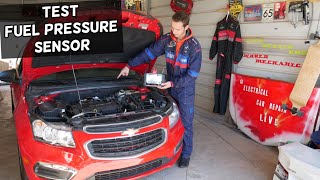
- If the live data is inconclusive, test the fuel rail pressure sensor. With the Key On, Engine Off, check the pressure reading. A high reading indicates a faulty sensor.
- If the sensor and wiring are confirmed to be good, and the actual fuel pressure is verified to be too high, the high-pressure fuel pump is the most likely culprit.
Parts You'll Likely Need
- High-Pressure Fuel Pump (HPFP)
(OEM #1.5L LYX: 12679294 (or superseding part 12682079 as per N182199610). 2.0L LTG: 12676415, 12651170.)— This is the most common failure point for code P0088 on this platform due to internal regulator failure or mechanical wear.
Trusted brands: ACDelco, GM Genuine, Bosch
OEM price range: $500-$800
Aftermarket price range: $300-$550 - Fuel Rail Pressure Sensor (FRPS)
(OEM #12691242 (or superseding part 12705503))— The sensor can fail and send an erroneously high pressure reading to the ECM, triggering the code even if the mechanical pressure is normal.
Trusted brands: ACDelco, GM Genuine, Bosch
OEM price range: $80-$150
Aftermarket price range: $40-$90 - High-Pressure Fuel Feed Pipe
(OEM #12684046 (for 1.5L LYX under N182199610))— This is considered a one-time-use part by GM. It connects the HPFP to the fuel rail and must be replaced whenever it is loosened to ensure a proper seal under extreme pressure.
Trusted brands: GM Genuine
OEM price range: $30-$70
Aftermarket price range: $20-$50
Related Codes That Often Appear With This One
- P0087 — Fuel Rail/System Pressure - Too Low. This can appear with P0088 if the high-pressure fuel pump or its internal regulator is failing erratically, causing pressure to swing between too high and too low.
- P0191 — Fuel Rail Pressure Sensor Circuit Range/Performance. This code points directly to a problem with the sensor's signal, which could be the cause of the P0088 reading (a bad sensor) or a result of it (the pressure is so high it's outside the sensor's normal operating parameters).
- P228D — Fuel Pressure Regulator 1 Performance - High Pressure. This is a more specific GM code that often accompanies P0088, pointing directly at the high-pressure fuel pump's regulating solenoid.
Technical Service Bulletins (TSBs) & Recalls
- PIP5151F: Diagnostic aid for various fuel pressure DTCs (P0087, P0088, P0191, P128E) which may be caused by fuel contamination.
- N182199610: A GM Customer Satisfaction Program for 2018-2019 Equinox 1.5L models concerning a high-pressure fuel pump that may crack and leak. The program ended March 31, 2021, but the documentation confirms the known issue.
Platform-Specific Known Issues
- Customer Satisfaction Program N182199610 was issued for some 2018-2019 Equinox models with the 1.5L engine for a high-pressure fuel pump that could crack and leak fuel, requiring replacement. This program expired on March 31, 2021.
- Technical Service Bulletin (TSB) PIP5151F addresses a range of fuel pressure codes (including P0087 and P0088) that may be caused by fuel contamination, requiring a full system inspection and cleaning.
- A stuck-open fuel
Mechanic-Grade Diagnostic Values
- Low-Pressure Fuel System Pressure (In-tank pump) — expected: ~58 PSI at idle. Failure: Significantly higher or lower pressure can indicate a problem with the in-tank pump or the Fuel Pump Control Module (FPCM).
- High-Pressure Fuel Rail Pressure (HPFP output) — expected: ~440 PSI (3.0 MPa) at idle. The system can reach up to 2900 PSI (20 MPa) under load.. Failure: With a P0088 code, a scan tool will show the actual pressure is significantly and consistently higher than the ECM's desired pressure.
- Fuel Rail Pressure Sensor (FRPS) Signal Voltage — expected: Varies between ~0.5V and 4.5V depending on pressure.. Failure: A signal wire stuck at a constant high voltage (e.g., 4.8V - 5.0V) with the key on or engine running indicates a faulty sensor or a short-to-voltage in the wiring.
- Fuel Injector Coil Resistance — expected: ~1.6 - 1.7 Ohms. Failure: A reading significantly outside this range could indicate a faulty injector, which can sometimes contribute to fuel pressure issues.
Scan Tool Commands That Help
- GDS2 (GM Diagnostic Software): Fuel System Depressurize — This function is used to test the fuel rail pressure sensor. With the engine idling, activating this command should cause the pressure reading to drop to zero as the engine stalls. If the sensor reading remains high after the engine stalls, the sensor is confirmed to be faulty.
Wiring & Ground Locations
- Fuel Rail Pressure Sensor (FRPS) Connector — Under the intake manifold, connected to the fuel rail. For the 1.5L LYX engine, the signal wire is typically yellow.. Damage or corrosion to this connector or its wiring can cause a false high-pressure signal. A forum user confirmed the wire colors for a pigtail replacement are Blue/Black, Black/Blue, and Yellow. Rodent damage to this harness is also a common cause of shorts.
- Fuel Pump Control Module (FPCM) — Located under the vehicle on the driver's side, protected by a large shield held on by 10mm nuts.. The FPCM controls the low-pressure in-tank pump. While less likely to cause high pressure, a fault here can disrupt the entire fuel delivery system and should be considered if other diagnoses fail. This module requires programming upon replacement.
- Engine Control Module (ECM) Connector X1 — On the Engine Control Module (ECM), typically located in the engine bay.. This connector contains the pins for the FRPS. A poor connection or corrosion at the specific pins for the sensor's 5V reference, signal, or ground can cause incorrect readings and trigger P0088.
Real Owner Repair Stories
- Chevy Equinox Forum user (Chevrolet Equinox (year not specified, but within GDI generation)) — P0088 code
❌ Tried (didn't work) Replacement of the High-Pressure Fuel Pump (HPFP)
✅ What actually fixed it The ultimate root cause was a stuck-open fuel injector, which was causing erratic fuel pressure readings as the system tried to compensate.
OEM Part Supersession History
12677329, 12649461, 12673450→12682079 / 12691016— Part revision and consolidation for reliability. Part number 12682079 was notably used in Customer Satisfaction Program N182199610 for the 1.5L engine.
Heads up: While multiple numbers exist, 12682079 is a key replacement for the 1.5L LYX engine in the Equinox. Always verify the correct part number with the vehicle's VIN.12672582→12705503— Part revision for the Fuel Rail Pressure Sensor.
Diagnostic Flowchart
Other Known Issues on This Vehicle
Issues unrelated to this code that are worth knowing about as an owner of this generation:
- Cracked Pistons (1.5L LYX Engine) 🔴 High — A known, but not universal, problem. Can occur under 100,000 miles. Failure of the piston ring lands leads to loss of compression, misfires (e.g., P0300-P0304), and excessive oil consumption. (Ref: No specific recall, but related TSBs like PIE0505 investigate misfire causes.)
- Transmission Shudder/Harsh Shifting (9-Speed Automatic) 🟠 Medium — Common complaint. Owners report shuddering, hesitation, or jerky shifts, particularly at low speeds. Can sometimes be addressed with a fluid change or software update, but may indicate internal wear. (Ref: Recall N202313440 for some 2018-2020 models addresses missing bolts on the start/stop accumulator, which can cause a leak and loss of propulsion.)
- PCV System Clogging / Freezing 🟠 Medium — A carry-over issue from prior GM engines. Moisture can collect in the PCV system and freeze in cold weather, or the orifice can clog over time. This can lead to high crankcase pressure, blown seals (especially the rear main seal), and oil leaks. (Ref: GM TSB 14882 addressed this on prior generation engines. For the 1.5L Turbo, TSB 22-NA-065 addresses related moisture buildup in the charge air cooler causing misfires.)
- Excessive Oil Consumption 🟠 Medium — Reported by numerous owners, sometimes related to the cracked piston issue, but can also occur independently. Requires frequent oil level checks to prevent engine damage from oil starvation. (Ref: GM has issued various TSBs for oil consumption on different Ecotec engines over the years.)
- Charge Air Cooler (CAC) Icing/Moisture Ingestion (1.5L LYX) 🟠 Medium — Occurs in cold and/or humid conditions. Moisture accumulates in the intercooler and can be ingested by the engine, causing misfires (P0300) and hesitation. (Ref: TSB #22-NA-065 describes the issue and provides a fix by installing a lower grille cover to alter airflow.)
Used vs. New Parts: Buying Guide for This Vehicle
When a used part is the smart pick: For this repair, using used parts is generally not recommended. The High-Pressure Fuel Pump (HPFP) is a known failure item with a finite lifespan, and a used unit carries a high risk of premature failure. Electronic components like the Fuel Rail Pressure Sensor and Fuel Pump Control Module are also risky to buy used due to unknown history and potential for hidden electronic faults.
Donor-vehicle mileage cap: roughly under 40000 miles for the part to have meaningful remaining life.
What to inspect on the donor part:
- Verify the donor vehicle was not in a severe front-end collision.
- If possible, check the donor vehicle's oil dipstick for any signs of fuel contamination, which would condemn the HPFP.
- Inspect wiring connectors for corrosion, brittleness, or cut wires.
OEM-only on this vehicle (don't cheap out):
- High-Pressure Fuel Pump (HPFP): Due to the high failure rate and the critical nature of this part, a new OEM (ACDelco/GM Genuine) or a top-tier OE supplier like Bosch is strongly recommended to ensure reliability.
- High-Pressure Fuel Feed Pipe: This is a one-time-use, torque-to-yield part and must always be replaced with a new one to prevent catastrophic fuel leaks.
- Fuel Pump Control Module (FPCM): This module requires programming with GM-specific software (GDS2) after installation, making a used part problematic if it cannot be properly flashed to the vehicle.
Aftermarket brands forum-validated for this vehicle:
- Bosch (Often the OE manufacturer)
- Delphi
- Standard Motor Products (for sensors and connectors)
Brands owners have reported issues with on this vehicle:
- Unnamed, no-brand "white box" parts from online marketplaces should be avoided for critical fuel system components like the HPFP, as their quality control and pressure specifications are unverified.
Real Owner Stories
Aggregated from forums and TSBs cited above. Mileages and costs reflect what owners reported in those sources.
2018 Chevrolet Equinox 1.5L
Symptoms: High-pressure fuel pump cracked and leaked fuel.
What fixed it: Replacement of the high-pressure fuel pump under Customer Satisfaction Program N182199610.
Source hint: Customer Satisfaction Program N182199610
2019 Chevrolet Equinox
Symptoms: Intermittent P0088 code that appeared and then cleared on its own.
What fixed it: Discussion pointed toward a potentially failing fuel rail pressure sensor.
Source hint: reddit.com/r/MechanicAdvice - Post 'How do I go about troubleshooting this? 2019 Equinox.'
Chevrolet Equinox (Year Unspecified)
Symptoms: P0088 code present; the high-pressure fuel pump was initially suspected.
What fixed it: The ultimate culprit was found to be a stuck-open fuel injector.
Source hint: equinoxforum.net - Thread 'Failed Fuel Components'
2010 Chevrolet Equinox (Relevant Platform History)
Symptoms: Classic high-pressure fuel pump failure symptoms, including fuel diluting the engine oil.
What fixed it: Replacement of the high-pressure fuel pump (HPFP).
Source hint: pyforums.com - Thread 'GM Techs-2010 Equinox high pressure fuel pump failure'
Related OBD-II Codes
Frequently Asked Questions
Does Customer Satisfaction Program N182199610 apply to my 2018 Chevrolet Equinox 1.5L?
I have a P0088 code on my 2019 Equinox; could this be related to fuel contamination?
Why does my engine oil smell like gasoline along with the P0088 code?
Is the P0088 code on my Equinox related to the 9-speed transmission shudder issue?
Can I just replace the fuel rail pressure sensor to fix P0088?
Are there any other parts I must replace if I change the high-pressure fuel pump?
Helpful Videos

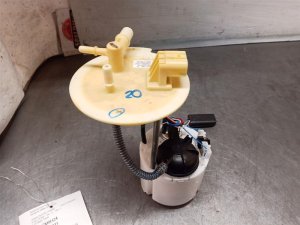
We Have This Part in Stock

The information in this article is provided for general reference and educational purposes only. Vehicle specifications, procedures, and part compatibility can vary by production date, trim level, and region. Always consult your vehicle's factory service manual and verify part numbers before purchasing or performing repairs. Safety-critical components such as airbags, seat belts, and braking systems should be installed by a qualified professional.
- Chevrolet Equinox:
- 🧭 Diagnostic Flowchart
- 🎬 Helpful Videos
- 🛍️ Shop This Part
- What's Unique About the 2018-2024 Chevrolet Equinox
- Symptoms You May Notice
- Most Likely Causes
- Rare But Worth Checking
- Diagnosis Steps
- Parts You'll Likely Need
- Related Codes That Often Appear With This One
- Technical Service Bulletins (TSBs) & Recalls
- Platform-Specific Known Issues
- Mechanic-Grade Diagnostic Values
- Scan Tool Commands That Help
- Wiring & Ground Locations
- Real Owner Repair Stories
- OEM Part Supersession History
- Other Known Issues on This Vehicle
- Used vs. New Parts: Buying Guide for This Vehicle
- Real Owner Stories
- 2018 Chevrolet Equinox 1.5L
- 2019 Chevrolet Equinox
- Chevrolet Equinox (Year Unspecified)
- 2010 Chevrolet Equinox (Relevant Platform History)
- Related OBD-II Codes
- Frequently Asked Questions
- 🎟️ Get 5% Off