

P0088 on 2010-2014 Chevrolet Silverado: Fuel Pressure Too High Causes and Fixes
On 2014+ Silverados with direct injection, P0088 often points to a failing high-pressure fuel pump (HPFP) or a bad fuel rail pressure sensor. For 2010-2013 models, the cause is more likely a faulty fuel pressure regulator or sensor. Check the engine oil for a gasoline smell on direct-injection models, as this is a key sign of HPFP failure. Fuel system contamination is also a known cause across all years, as cited in GM TSBs.
- P0088 means fuel pressure is too high. On a 2010-2014 Silverado, the cause heavily depends on the model year and engine.
- For 2014 models with direct injection, immediately check the engine oil for a fuel smell. If present, the high-pressure fuel pump (HPFP) has likely failed and needs replacement to prevent engine damage.
- For 2010-2013 models, the issue is more likely a faulty fuel rail pressure sensor or a stuck fuel pressure regulator.
- Always verify the pressure sensor's reading with a mechanical gauge before replacing an expensive fuel pump.
- Due to the risk of fire and potential for severe engine damage, this code is considered serious and professional diagnosis is recommended.
What's Unique About the 2010-2014 Chevrolet SILVERADO
The 2010-2014 Silverado spans two distinct generations and fuel systems. The 2010-2013 (GMT900) trucks primarily use port fuel injection with a lower-pressure system, where pressure is managed by an in-tank pump and a regulator. The 2014 model year introduced the K2XX platform with new direct-injected (DI) gasoline engines (4.3L V6, 5.3L V8, 6.2L V8). These DI engines use a second, camshaft-driven high-pressure fuel pump (HPFP) that is a common failure point leading to code P0088. Therefore, diagnosis differs significantly between a 2013 and a 2014 model. Additionally, some 2014 models were subject to a recall (Emission Recall #13370A) for an incorrect fuel pressure regulator in the fuel pump module, which could cause pressure issues.
Diagnostic Flowchart
Tap your situation to follow the diagnostic path that matches what you're seeing on this vehicle.
Generation note: This range covers the second generation (GMT900, 2010-2013) and the third generation (K2XX, 2014). The GMT900 trucks use conventional port fuel injection, where P0088 diagnosis focuses on the in-tank pump, fuel pressure regulator, and return lines. The K2XX trucks introduced direct injection gasoline engines (EcoTec3 family), which have a high-pressure fuel system that is more commonly associated with this code. Diagnosis on these models centers on the high-pressure fuel pump (HPFP) and the fuel rail pressure sensor.
Symptoms You May Notice
- Check Engine Light is on
- Hard starting or no-start conditions
- Rough running or idling
- Engine stalling or hesitation
- Reduced engine power or 'limp mode' activation
- Poor fuel economy
- Strong smell of gasoline in the engine oil (especially on 2014+ direct injection models)
- Black smoke from the exhaust
- Loud high-pressure sound from the engine bay
- Replacing the in-tank (low-pressure) fuel pump on a direct-injection model when the high-pressure fuel pump is the actual cause.
- Replacing a fuel pump when the actual problem is a faulty fuel rail pressure sensor providing incorrect data.
- Replacing fuel injectors when they are a symptom of the high pressure, not the cause.
Most Likely Causes
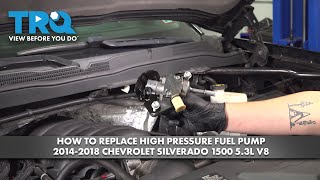
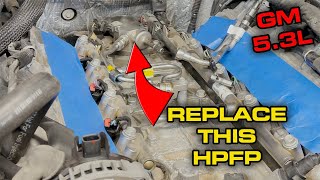
- Failing High-Pressure Fuel Pump (HPFP) - 2014+ DI Engines 🔴 High Probability → Shop Fuel Pump The mechanical HPFP on the direct-injection EcoTec3 engines is a widely documented failure point. It can fail internally, causing over-pressurization, or its internal seal can rupture, leaking fuel directly into the crankcase.
How to confirm: The most definitive symptom is a strong smell of gasoline on the engine oil dipstick. A technician can also monitor desired vs. actual fuel rail pressure with a scan tool; actual pressure will be much higher 🎬 Watch this video for a full P0088 diagnosis and repair walkthrough. than commanded (e.g., 2500 PSI at idle when it should be 500-900 PSI). This requires replacing the pump and performing an immediate oil change.
Typical fix: Replace the high-pressure fuel pump, the one-time-use high-pressure fuel line, and the pump gasket. An immediate oil and filter change is mandatory if fuel contamination is present.
Est. part cost: $250-$700 - Faulty Fuel Rail Pressure Sensor (FRPS) 🔴 High Probability → Shop Fuel Pressure Sensor The sensor can fail electronically, sending an incorrect high-voltage signal to the ECM even if the mechanical pressure is normal. This can happen on both port and direct-injected engines.
How to confirm: Compare the scan tool's pressure reading with a mechanical fuel pressure gauge. If the gauge shows normal pressure but the scanner shows high pressure, the sensor is faulty. With the Key On, Engine Off (KOEO), the scan tool should show a low pressure reading; a reading stuck very high (e.g., 4,626 PSI) or near 5 volts points to a bad sensor or a wiring short.
Typical fix: Replace the fuel rail pressure sensor. 🎬 See how to test and replace the fuel rail pressure sensor.
Est. part cost: $50-$150 - Faulty Fuel Pressure Regulator (2010-2013 Port Injection) 🟡 Medium Probability → Shop Fuel Injection Pressure Regulator On return-style fuel systems, the vacuum-operated regulator can get stuck closed, preventing excess fuel from returning to the tank and causing pressure to spike. A lack of vacuum to the regulator will also cause it to max out pressure.
How to confirm: Test fuel pressure with a mechanical gauge. If the pressure is excessively high (well above the typical 55-65 PSI range) and does not bleed down, the regulator is likely at fault. Inspect the vacuum line for cracks or disconnection.
Typical fix: Replace the fuel pressure regulator.
Est. part cost: $60-$180 - Fuel System Contamination 🟡 Medium Probability
How to confirm: Inspect the fuel filter for signs of debris, rust, or water. TSB PIP4949D specifically instructs technicians to inspect the fuel pressure regulator on the high-pressure pump for magnetic metal debris, which indicates HPFP failure.
Typical fix: If contamination is found, the entire fuel system may need to be cleaned, which can include flushing the tank, lines, and rails, and replacing the fuel filter. If metal debris is found, the HPFP, fuel rails, and injectors must be replaced.
Est. part cost: $20-$100 (for filter and cleaning supplies), but can be thousands if the full system needs replacement.
Rare But Worth Checking
- Blocked Fuel Return Line: A kinked or clogged fuel return line can prevent pressure from being relieved, mimicking a failed regulator. This is more applicable to the 2010-2013 models with return-style fuel systems.
- Wiring Issues: A short to voltage on the fuel rail pressure sensor's signal wire can cause the ECM to see a constant high-pressure reading (near 5 volts), even if the pressure is normal. Rodent damage to the harness on top of the engine is a known cause of this.
- Faulty Fuel Pump Driver Module (FPDM): → Shop Fuel Pump On some systems, the FPDM controls the in-tank fuel pump's speed. If it fails in a 'full on' state, it can over-pressurize the low-pressure side of the system, which can sometimes contribute to issues on the high-pressure side, especially during deceleration on DI models.
- Swapped Electrical Connectors: A GM TSB (#PIP5119) warns that after engine repairs, the Fuel Rail Pressure sensor connectors can be accidentally swapped, leading to P0088. This is a human error issue during reassembly.
Diagnosis Steps
- Connect an OBD-II scanner to confirm P0088 is present and check for other codes like P0087 or P0191.
- View live data for Fuel Rail Pressure (FRP). Compare the desired pressure commanded by the ECM to the actual pressure reading. Note the reading at idle, under load, and with Key On, Engine Off (KOEO).
- For 2014+ DI engines, turn off the engine and carefully check the engine oil dipstick for a strong smell of gasoline. If present, the high-pressure fuel pump has almost certainly failed and must be replaced.
- Inspect the wiring and connector for the fuel rail pressure sensor for any damage, corrosion, rodent damage, or looseness.
- With the key on and engine off, check the fuel rail pressure reading on the scan tool. A very high reading (e.g., thousands of PSI) indicates a likely sensor or wiring fault.
- If possible, connect a mechanical fuel pressure gauge to the fuel rail to verify the actual pressure. If the mechanical gauge shows normal pressure while the scanner shows high pressure, the FRPS is bad.
- For 2010-2013 models, inspect the vacuum line to the fuel pressure regulator (if equipped) for cracks, leaks, or disconnection.
- For 2010-2013 models, inspect the fuel return line for any kinks or blockages.
- Check for applicable TSBs, such as PIP4949D, which may guide you to inspect the HPFP regulator for metal debris, indicating a failed pump.
Parts You'll Likely Need
- High-Pressure Fuel Pump
(OEM #12641847, 12677329, 12688607)— This is the most common cause on 2014+ models with direct injection. The pump is mechanical and subject to wear, and failure can lead to dangerously high pressure and fuel in the oil.
Trusted brands: ACDelco, Bosch
OEM price range: $400-$700
Aftermarket price range: $250-$500 - Fuel Rail Pressure Sensor
(OEM #12673824, 12627092, 13516496)— This sensor can fail and send false high-pressure signals to the computer, triggering the code even when pressure is normal. It's a common failure on all model years in this range.
Trusted brands: ACDelco, Delphi, Dorman, Standard Motor Products
OEM price range: $80-$150
Aftermarket price range: $40-$100 - High-Pressure Fuel Line — The high-pressure fuel line connecting the HPFP to the fuel rail is a one-time-use part and must be replaced anytime the HPFP is serviced to ensure a proper seal.
Trusted brands: ACDelco
OEM price range: $30-$70
Aftermarket price range: $20-$50
Related Codes That Often Appear With This One
- P0087 — Fuel Rail/System Pressure - Too Low. This code can appear alongside P0088 if the underlying cause (like a faulty regulator or contamination) is causing erratic pressure fluctuations. Both are mentioned in TSBs PIP4949D and PIP5151A.
- P0191 — Fuel Rail Pressure Sensor Circuit Range/Performance. This code often indicates a problem with the sensor or its circuit, which is a primary cause of P0088. It is also cited in TSBs PIP4949D and PIP5151A.
- P128E — This is a GM-specific code also related to fuel pressure diagnostics and is mentioned in conjunction with P0088 in TSBs PIP4949D and PIP5151A.
Technical Service Bulletins (TSBs) & Recalls
- PIP4949D: Addresses hard start/no start with P0087, P0088, P0191. Guides technicians to inspect Fuel Pressure Regulator 1 (on the HPFP) for magnetic metal debris, which indicates a failed HPFP requiring extensive fuel system replacement.
- PIP5151A / PIP5151F: Discusses hard start, no start, or rough running with codes P0087/P0088. Points to fuel system contamination as a primary cause requiring the complete fuel system to be cleaned.
- PIP5119: Warns that swapped electrical connectors for the fuel rail pressure sensors after a repair can cause P0088.
- Emission Recall #13370A: Issued for some 2014 models with 4.3L and 5.3L engines due to an incorrect fuel pressure regulator installed in the fuel pump module from the factory, which could cause pressure deviations.
Platform-Specific Known Issues
- 2014 Direct Injection HPFP Failure: The 2014 model year, being the first for the K2XX platform and EcoTec3 DI engines, is particularly noted for failures of the high-pressure fuel pump (HPFP). The primary symptom is fuel contaminating the engine oil, which is a critical check.
- 2010-2013 Port Injection Regulator/Return Line Issues: For the earlier GMT900 trucks, P0088 is almost never the HPFP (as they don't have one). Diagnosis should focus on the vacuum-controlled fuel pressure regulator on the rail or a potential kink/blockage in the fuel return line.
- 2014 Fuel Pump Module Recall: → Shop Fuel Pump A subset of 2014 Silverado 1500s were recalled under campaign #13370A because the in-tank fuel pump module was assembled with an incorrect pressure regulator, which could cause fuel pressure problems. A VIN check with a GM dealer can confirm if a specific truck was affected.
Mechanic-Grade Diagnostic Values
- Low-Pressure Fuel System Pressure (2010-2013, Port Injection) — expected: 55-65 PSI with key on, engine off.. Failure: Pressure significantly above 65 PSI points to a stuck fuel pressure regulator or a blocked return line.
- High-Pressure Fuel System Pressure at Idle (2014+, Direct Injection) — expected: 500-900 PSI (3.4 - 6.2 MPa).. Failure: Pressure that is stuck high, unresponsive, or significantly exceeds the commanded pressure on a scan tool.
- Fuel Rail Pressure Sensor (FRPS) Signal Voltage — expected: 0.5V (low pressure) to 4.5V (high pressure). At idle on a DI engine, voltage should be around 2.2V.. Failure: A signal that is stuck at or near 5.0V indicates a short to voltage in the wiring or a failed sensor.
- Low-Pressure Fuel System (2014+, DI) - FPDM Commanded Test — expected: Should achieve a minimum of 73 PSI (500 kPa).. Failure: Failure to reach 73 PSI during a scan tool-commanded test indicates an issue with the in-tank pump or FPDM, not the high-pressure side.
Hidden / Shadow Codes Worth Checking
- P127C / P127D: Fuel Rail Pressure Sensor 2 Circuit Low/High Voltage. On some GM vehicles, the FRPS is a dual sensor. A fault in the second sensor can set these codes, which may provide more specific diagnostic information than a general P0088 or P0191. (see via A professional scan tool like the GM GDS2 or Tech2. These codes may not be visible on all consumer-grade scanners.)
Scan Tool Commands That Help
- GDS2 / Professional Scan Tool: Fuel Pump Trim Reset — After replacing a high-pressure fuel pump or fuel rail pressure sensor, resetting the learned fuel pump trim values can be necessary to ensure the ECM uses the correct baseline for the new components.
- GDS2 / Professional Scan Tool: Fuel Pressure Control / Pump Speed Command — Allows a technician to command the Fuel Pump Driver Module (FPDM) to run the in-tank pump at a specific speed (e.g., 100%) to verify its maximum pressure output, helping to isolate a weak in-tank pump.
- Physical Test (Jumper Wires): Bypass Fuel Pump Control Module (FPCM/FPDM) — On 2010-2013 models, if a no-start condition accompanies the code, jumping the power and ground pins at the FPCM connector can directly power the fuel pump. If the pump runs, it confirms the pump is functional and strongly suggests the FPCM has failed.
Wiring & Ground Locations
- Fuel Pump Driver Module (FPDM/FPCM) — For 2010-2013 models, it is typically located on a frame crossmember above the spare tire.. This module controls the in-tank fuel pump. Corrosion of the module or its connector due to its exposed location is common and can cause erratic fuel pressure. A failure in the 'full on' state could contribute to high pressure.
- FPDM Power and Ground Pins (2010-2013) — At the FPDM connector: Pin 32 (typically Red/White) is the main battery voltage feed, and Pin 1 (typically Black) is the chassis ground.. Verifying battery voltage at Pin 32 and a good ground at Pin 1 is a critical first step when diagnosing a faulty FPDM or in-tank pump issue.
- Fuel Pump Frame Ground — On the driver's side frame rail, often near the wheel well. It is a black wire bolted directly to the frame.. This is the primary ground for the in-tank fuel pump assembly. If this ground is corroded or loose, it can cause intermittent or poor pump performance, leading to erratic fuel pressure readings.
Real Owner Repair Stories
- Reddit user in r/Duramax (LMM Duramax (similar high-pressure common rail system)) — P0088 code, limp mode.
❌ Tried (didn't work) Replaced fuel pressure sensor., Found and repaired two severely kinked fuel lines., Changed fuel filter., Verified wiring integrity.
✅ What actually fixed it Replacing the fuel pressure regulator (FPR) with a new Bosch OEM part finally resolved the code after a diesel shop's diagnosis. - Reddit user @Ricks_Cafe (2014 Chevrolet Silverado 1500, 97,000 miles) — Not specified, but resulted in code P0088.
✅ What actually fixed it The high-pressure fuel pump (HPFP) was replaced, which resolved the issue.
OEM Part Supersession History
12608371, 12633115, 12633423, 12639694→GM 12641847 / ACDelco HPM1006— Part has been updated by the manufacturer over time for reliability or design changes.
Heads up: These part numbers are associated with the high-pressure fuel pump (HPFP) on direct-injection engines (2014+). Always verify the latest part number with a dealer using the vehicle's VIN before ordering.
Model Year Variations Within This Range
- 2014: The 2014 model year marked the switch to the K2XX platform and the introduction of the direct-injection EcoTec3 engine family (4.3L V6, 5.3L V8, 6.2L V8), which use a high-pressure fuel system not present on 2010-2013 models. These engines feature an 11.0:1 compression ratio.
- 2014: A recall was issued for some 2014 models with 4.3L and 5.3L engines due to a software glitch that could cause the engine to idle on too many cylinders, leading to overheating of exhaust components and a potential fire risk. Owners were advised not to leave their trucks idling unattended until a software update was performed.
Helpful Videos
Used OEM Parts in Stock
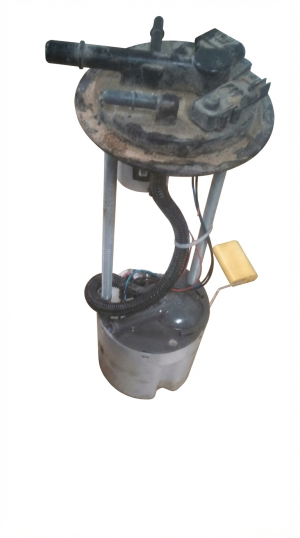
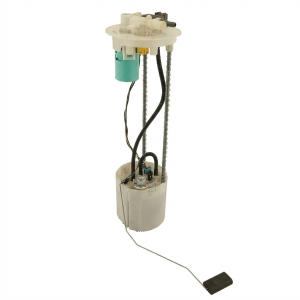
New Aftermarket Parts Available



The information in this article is provided for general reference and educational purposes only. Vehicle specifications, procedures, and part compatibility can vary by production date, trim level, and region. Always consult your vehicle's factory service manual and verify part numbers before purchasing or performing repairs. Safety-critical components such as airbags, seat belts, and braking systems should be installed by a qualified professional.
- Chevrolet SILVERADO:
- 🧭 Diagnostic Flowchart
- 🎬 Helpful Videos
- 🛍️ Shop This Part
- What's Unique About the 2010-2014 Chevrolet SILVERADO
- Symptoms You May Notice
- Most Likely Causes
- Rare But Worth Checking
- Diagnosis Steps
- Parts You'll Likely Need
- Related Codes That Often Appear With This One
- Technical Service Bulletins (TSBs) & Recalls
- Platform-Specific Known Issues
- Mechanic-Grade Diagnostic Values
- Hidden / Shadow Codes Worth Checking
- Scan Tool Commands That Help
- Wiring & Ground Locations
- Real Owner Repair Stories
- OEM Part Supersession History
- Model Year Variations Within This Range
- 🎟️ Get 5% Off