

P0088 on 2013-2014 Chevrolet Silverado 3500: High Fuel Pressure Causes & Fixes
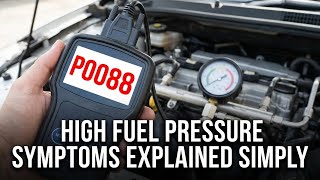
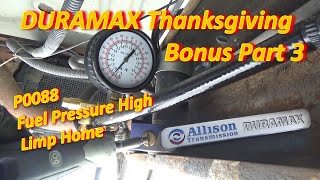
P0088 indicates dangerously high fuel pressure. On the 6.6L Duramax, this often points to a failing high-pressure fuel pump regulator or the CP4 pump itself, a known weak point. For the 6.0L gas engine, suspect a faulty fuel pressure sensor or fuel pump driver module. Fuel system contamination is a known issue for both, with GM issuing multiple TSBs.
- P0088 is a critical code indicating dangerously high fuel pressure that should be addressed immediately.
- For the 6.6L Duramax, immediately inspect for metal debris in the fuel filter. If found, this indicates a likely CP4 pump failure, which is a very expensive repair.
- If no metal is found, the most likely cause on a Duramax is the fuel pressure regulator on the high-pressure pump. Use a genuine Bosch replacement.
- For the 6.0L gas engine, focus on diagnosing the fuel rail pressure sensor and fuel pump driver module.
- If you've had recent engine work, double-check that the fuel rail pressure sensor connectors are not swapped, as per TSB #PIP5119.
What's Unique About the 2013-2014 Chevrolet SILVERADO 3500
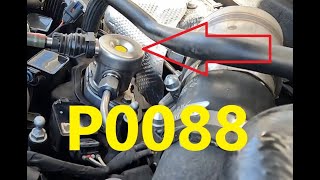
For the 2013-2014 Silverado 3500, the cause of P0088 is highly dependent on the engine. 🎬 Watch: A quick overview of what the P0088 code means. On the 6.6L Duramax LML diesel, the code is a notorious warning sign for issues with the Bosch CP4.2 high-pressure fuel pump, which is known to fail and send metal debris through the fuel system. This pump is considered less robust than its predecessor (the CP3) partly due to modern ultra-low sulfur diesel (ULSD) fuel having less lubricity. For both gas and diesel models, GM has issued Technical Service Bulletins (TSBs) warning that fuel system contamination (from debris, water, or even DEF) can cause this code. Another unique, documented issue is the accidental swapping of fuel rail pressure sensor connectors after a repair, which can also trigger P0088. [PIP5119, 3]
Diagnostic Flowchart
Tap your situation to follow the diagnostic path that matches what you're seeing on this vehicle.
Symptoms You May Notice
- Check Engine Light is on
- Hard starting or no-start condition [16-NA-102, PIP4949E, 29]
- Rough running, surging, or engine hesitation [PIP5151F, 33]
- Reduced engine power (Limp Mode)
- Poor fuel economy
- Black smoke from the exhaust (especially on diesel)
- Strong smell of fuel in the engine oil (on GDI/diesel models)
- Whining or grinding noise from the engine valley, indicative of a failing CP4 pump
- Replacing the fuel injectors when they are merely a symptom of the high pressure or contamination, not the root cause.
- Replacing the in-tank low-pressure fuel pump (on gas models) or adding a lift pump (on diesel) without first confirming the high-pressure side is functioning correctly. P0088 almost always relates to the high-pressure side of the system.
Most Likely Causes
- Faulty Fuel Pressure Regulator (FPR) / Fuel Control Actuator 🔴 High Probability → Shop Fuel System Controller On the 6.6L Duramax, the fuel pressure regulator (also called a fuel control actuator or MPROP) on the CP4 high-pressure pump is a very common failure point. It can stick or become contaminated with debris, causing pressure to build excessively. Using non-OEM replacement parts is a known cause of repeat failures, and care must be taken during installation not to damage the O-rings.
How to confirm: Monitor desired vs. actual fuel rail pressure with a scan tool. If actual pressure is consistently much higher than desired, especially during deceleration, the regulator is a prime suspect. TSB 16-NA-102 directs technicians to remove and inspect the regulator's screen for magnetic metal debris as the first step in diagnosing a potential CP4 failure.
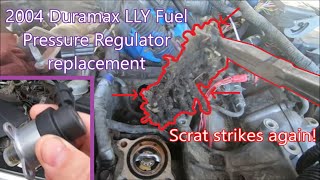
Typical fix: Replace the fuel pressure regulator. On the Duramax LML, this is a Bosch part, number 0928400757. Ensure the mounting area is perfectly clean before installation and press the new regulator in by hand to avoid damaging the O-rings before tightening the bolts.
Est. part cost: $70-$200 - Failing High-Pressure Fuel Pump (CP4) 🔴 High Probability → Shop Fuel Pump The Bosch CP4.2 pump used on the 2011-2016 6.6L Duramax LML engine is infamous for catastrophic failure. Lack of lubricity in modern diesel fuel and fuel aeration are cited as primary causes, leading to internal metal-on-metal contact that generates debris. Unlike some other platforms, the LML Duramax does not have a factory lift pump, which some experts believe makes it more susceptible to aeration-induced failure.
How to confirm: Check the fuel pressure regulator screen and fuel filter for metallic debris, often called 'forbidden glitter'. A no-start condition along with codes P0087, P0191, and P128E is a strong indicator of CP4 failure. A scan tool may show actual rail pressure staying below 5,000 PSI during cranking.
Typical fix: Complete fuel system replacement is required to prevent repeat contamination. This includes the CP4 pump, all 8 injectors, both fuel rails, and all high-pressure lines, plus dropping and cleaning the fuel tank. This is a very expensive repair, often exceeding $10,000. Many owners opt for a 'CP3 conversion kit' to replace the failure-prone CP4 with the more robust CP3 pump.
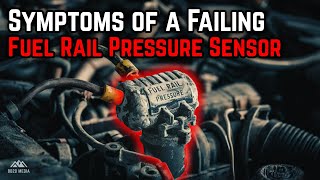
Est. part cost: $4000-$12000 - Faulty Fuel Rail Pressure Sensor 🟡 Medium Probability → Shop Fuel Pressure Sensor The sensor can fail electronically, sending a false high-pressure signal (e.g., a constant 5-volt reading) to the ECM even when the mechanical pressure is normal. Corrosion on the connector is also a possibility.
How to confirm: With the key on and engine off, check the fuel pressure reading on a scan tool. It should be near zero. If it shows a high reading, the sensor or its wiring is likely faulty. Compare the scan tool's reading to a mechanical gauge to verify if the pressure is actually high.
Typical fix: Replace the fuel rail pressure sensor. For the LML Duramax, a common OEM part number is 12686809, and a Bosch equivalent is 0281006313.
Est. part cost: $80-$250 - Fuel System Contamination 🟡 Medium Probability Multiple GM TSBs (16-NA-102, PIP5151F) cite debris in the fuel system as a cause for P0088. For the Duramax, this is often metal from a failing CP4, but can also be rust from water in the fuel, or even contamination from Diesel Exhaust Fluid (DEF), which can crystallize and clog components.
How to confirm: Inspect the fuel filter and fuel pressure regulator screen for metal shavings or other debris. TSB PIP5151F shows images of regulators contaminated with rust and DEF. A fuel sample may also show signs of water or other fluids.
Typical fix: If contamination is found, the entire fuel system (fuel tank, lines, rails, injectors, and pump) must be cleaned or replaced to prevent repeat failures, as per TSB #PIP5151F. GM explicitly states that damage from contamination may not be covered by warranty.
Est. part cost: $500-$10,000+ - Restricted Fuel Return Line ⚪ Low Probability A kinked or clogged fuel return line can prevent excess fuel pressure from being bled off, causing it to build up in the rail. This is less common than pump or regulator issues but is a valid diagnostic check.
How to confirm: Visually inspect all fuel lines, particularly the return line from the engine back to the tank, for any kinks, damage, or blockages. A simple flow test can confirm proper operation.
Typical fix: Repair or replace the damaged section of the fuel line.
Est. part cost: $50-$300
Rare But Worth Checking
- Swapped Fuel Rail Pressure Sensor Connectors: → Shop Fuel Pressure Sensor TSB #PIP5119 specifically warns that after an engine or fuel system repair, the Fuel Rail Pressure 1 and 2 connectors can be accidentally swapped, leading directly to codes P0088 and P128E. This is a simple but crucial check after any recent service.
- Aftermarket Lift Pump Issues (Diesel): If an aftermarket lift pump is installed and its pressure is set too high (e.g., 10+ PSI), it can prevent the high-pressure pump from regulating correctly, causing P0088, especially during deceleration or coasting downhill. The CP4 pump may be unable to bleed off rail pressure against the high inlet pressure.
- Wiring Issues: A short-to-voltage in the fuel rail pressure sensor's signal wire can cause the ECM to see a constant 5V signal, falsely interpreting it as maximum pressure. A loose ground connection for an aftermarket dual fueler controller has also been reported to cause intermittent pressure spikes.
Diagnosis Steps
- Connect an OBD-II scanner and confirm P0088 is present, noting any other codes (P0087, P0191, P128E are common companions).
- View live data. Monitor 'Desired Fuel Rail Pressure' vs. 'Actual Fuel Rail Pressure'. Note the conditions under which the pressure spikes (e.g., idle, acceleration, deceleration/coasting).
- Perform a Key On, Engine Off (KOEO) test. The actual fuel rail pressure should be very low (under 100 PSI). If it reads high, suspect a faulty fuel rail pressure sensor or a wiring issue.
- If recent repairs were performed, inspect the fuel rail pressure sensor connectors to ensure they are not swapped, as per TSB #PIP5119.
- For Duramax engines, carefully remove the Fuel Pressure Regulator 1 from the CP4 pump and inspect its screen for magnetic metal debris. This is the definitive test for a failing CP4 pump.
- Test the fuel pressure regulator (FCA/MPROP) for resistance. It should be between 2.7 and 3.5 ohms.
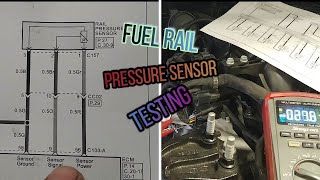
- Verify the fuel rail pressure sensor signal voltage. It should be around 0.5V with Key On, Engine Off, and should not be stuck at 5V.
Parts You'll Likely Need
- Fuel Pressure Regulator / Fuel Control Actuator (Diesel)
(OEM #0928400757)— This is the most common failure point on the 6.6L Duramax LML for causing P0088 when the CP4 pump has not failed catastrophically. Aftermarket versions are known to be unreliable.
Trusted brands: Bosch
OEM price range: $120-$200
Aftermarket price range: $70-$150 - Fuel Rail Pressure Sensor — Can fail and send an incorrect high-pressure signal to the ECM, causing the code even if mechanical pressure is normal.
Trusted brands: ACDelco, Bosch
OEM price range: $150-$250
Aftermarket price range: $80-$160 - High-Pressure Fuel Pump (CP4.2) — A known failure point on the 6.6L Duramax LML engine. Its failure often necessitates the replacement of the entire fuel system due to metal contamination.
Trusted brands: Bosch
OEM price range: $1000-$1800
Aftermarket price range: $700-$1200
Related Codes That Often Appear With This One
- P0087 — Fuel Rail/System Pressure - Too Low. This can appear with P0088 if the fuel pressure regulator is failing erratically, or it can be the primary code indicating CP4 failure. Both codes are listed together in multiple GM TSBs.
- P0191 — Fuel Rail Pressure Sensor Circuit Range/Performance. This code points to a problem with the sensor's signal, which could be the cause of the P0088 or a result of the extreme pressure readings. It is mentioned in TSBs alongside P0088.
- P128E — A manufacturer-specific code for Fuel Rail Pressure Performance. GM TSBs explicitly link this code with P0088, indicating a related fuel system fault. [16-NA-102, PIP5151F, PIP4949E, PIP5119, 3]
Technical Service Bulletins (TSBs) & Recalls
- 16-NA-102: Procedure to inspect and replace fuel components to correct hard start/no start and DTCs P0087, P0088, P0191 or P128E caused by fuel system contamination.
- PIP5151F: Addresses hard start, no start, rough running, or low fuel pressure with DTCs P0087, P0088, P0191 and P128E, requiring complete fuel system replacement if contamination is found.
- PIP4949E: Information for hard start or no start conditions with DTCs P0087, P0088, P0191 or P128E.
- PIP5119: Highlights that DTCs P0088 and P128E can set after a repair due to swapped Fuel Rail Pressure 1 and 2 connectors.
Platform-Specific Known Issues
- CP4.2 Pump Failure and Full System Contamination: The most feared issue on the 2013-2014 LML Duramax. The CP4.2 pump, often due to aeration or lack of lubricity, can self-destruct, sending metal shavings throughout the entire fuel system. TSB 16-NA-102 outlines the diagnostic procedure: inspect the fuel pressure regulator (FPR) on the pump for magnetic debris. If found, a complete fuel system replacement is required, including injectors, rails, lines, and cleaning the tank. This is not a simple pump swap; failure to clean the system results in repeat failures of new components. Kits for this repair exist, such as the Alliant Power Fuel Contamination Kit.
- Aftermarket Lift Pump Causing High Pressure on Deceleration: A documented case showed a P0088 code being set specifically when coasting downhill with the throttle off. An aftermarket lift pump was supplying too much pressure (14 PSI) to the CP4 inlet, which prevented the high-pressure side from bleeding off pressure as commanded by the ECM. The solution was to adjust the lift pump's output pressure down to around 9 PSI, which resolved the issue without replacing any OEM components.
Mechanic-Grade Diagnostic Values
- LML Fuel Rail Pressure (High-Side) at Idle — expected: ~4,000 - 6,000 PSI. Failure: Stuck at maximum pressure (e.g., 29,000+ PSI) even at idle.
- LML Fuel Rail Pressure Sensor Signal Voltage — expected: ~0.5V KOEO (Key On, Engine Off), ~1.3-1.8V at idle, up to 4.8V under acceleration.. Failure: Voltage is stuck at 5V (short to power) or does not change with engine speed.
- LML Fuel Pressure Regulator (MPROP/FCA) Coil Resistance — expected: ~2.7 Ohms (new, cold) to 3.5 Ohms.. Failure: Reading is significantly outside this range, indicating a faulty solenoid coil.
- LML Fuel Return Line Pressure — expected: 58 PSI to 200 PSI (4 to 14 bar) at 2000 RPM.. Failure: Pressure outside this range can indicate a blockage or a problem with the return pressure regulator.
Scan Tool Commands That Help
- GDS2 / Tech 2: Fuel Pressure Control — To manually command the fuel pressure regulator to increase or decrease pressure. If the actual pressure shown on the scanner does not respond to commands, it points to a faulty regulator or a wiring issue.
- GDS2 / Tech 2: Injector Balance Rates — To check the health of individual injectors. While not a direct cause of P0088, high pressure can damage injectors, and balance rates outside of +4 to -6.9 can indicate which cylinders are affected.
Wiring & Ground Locations
- G108 / G130 / G140 — G108 is at the lower right rear of the engine block. G130 is at the left rear corner of the engine. G140 is at the top right rear of the engine.. These are primary engine ground points. A loose or corroded ground at these locations can cause erratic behavior from the ECM and sensors, including the fuel rail pressure sensor, leading to false high-pressure readings.
- FRP Regulator 1 & 2 Connectors — On the high-pressure fuel pump (CP4) and the fuel rail.. TSB #PIP5119 explicitly warns that these two connectors can be swapped after a repair, which will cause P0088 and P128E to set immediately.
Real Owner Repair Stories
- YouTube channel 'Ivan's Garage' (2011-2016 Chevrolet Silverado with LML Duramax engine and an aftermarket PPE lift pump.) — P0088 code would set only during deceleration/coasting.
❌ Tried (didn't work) Initial diagnosis focused on common causes like the fuel pressure regulator.
✅ What actually fixed it The aftermarket lift pump's pressure was set too high (~10 PSI). This high inlet pressure prevented the CP4 pump from bleeding off rail pressure quickly enough during deceleration, causing a spike that set the code. The fix was adjusting the lift pump's output pressure down to ~5 PSI. - Reddit user in r/Duramax (LMM Duramax (similar fuel system principles to LML)) — P0088 code, rough running, and limp mode immediately after replacing fuel lines and sending unit.
❌ Tried (didn't work) Replacing the fuel filter after finding rusty metal bits inside.
✅ What actually fixed it After finding contamination, the user added injector cleaner to the fuel tank and let the engine idle for about 30 minutes. The engine sputtered, and then the fuel pressure dropped to normal, clearing the code. This suggests a piece of debris was temporarily stuck in the fuel pressure regulator and was successfully dislodged.
When the Usual Fixes Don't Work
- While pass 2 correctly identifies failing factory components like the fuel pressure regulator as a primary cause, a confirmed repair case demonstrates that an incorrectly configured aftermarket part can also be the root cause. An aftermarket lift pump with its pressure set too high can prevent the high-pressure CP4 pump from correctly bleeding off pressure during deceleration, causing a pressure spike and a P0088 code. In this scenario, replacing factory parts would not solve the issue; the fix is to properly adjust the aftermarket component.
OEM Part Supersession History
12647909→12686809— Standard part revision/update by the manufacturer.
Heads up: The new part number (12686809) is the correct replacement for the original.
Model Year Variations Within This Range
- 2011 vs 2012-2016: The 2011 LML Duramax uses different fuel feed and return lines compared to the 2012-2016 models.
- 2013-2014: The main engine wiring harness for 2013-2014 models has a different part number than the 2011 and 2012 models, suggesting wiring or connector changes.
Helpful Videos

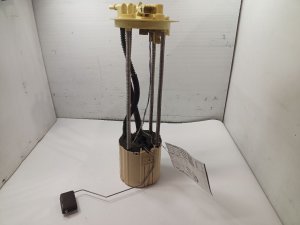
Used OEM Parts in Stock
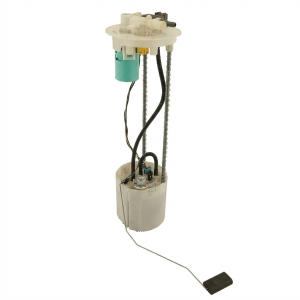
New Aftermarket Parts Available


The information in this article is provided for general reference and educational purposes only. Vehicle specifications, procedures, and part compatibility can vary by production date, trim level, and region. Always consult your vehicle's factory service manual and verify part numbers before purchasing or performing repairs. Safety-critical components such as airbags, seat belts, and braking systems should be installed by a qualified professional.
- Chevrolet SILVERADO 3500:
- 🧭 Diagnostic Flowchart
- 🎬 Helpful Videos
- 🛍️ Shop This Part
- What's Unique About the 2013-2014 Chevrolet SILVERADO 3500
- Symptoms You May Notice
- Most Likely Causes
- Rare But Worth Checking
- Diagnosis Steps
- Parts You'll Likely Need
- Related Codes That Often Appear With This One
- Technical Service Bulletins (TSBs) & Recalls
- Platform-Specific Known Issues
- Mechanic-Grade Diagnostic Values
- Scan Tool Commands That Help
- Wiring & Ground Locations
- Real Owner Repair Stories
- When the Usual Fixes Don't Work
- OEM Part Supersession History
- Model Year Variations Within This Range
- 🎟️ Get 5% Off