

P0088 on 2015-2018 Ford Edge 2.7L EcoBoost: Causes and Fixes for High Fuel Pressure
On the 2.7L EcoBoost Edge, code P0088 almost always points to a problem in the high-pressure fuel system. The most likely cause is a failing High-Pressure Fuel Pump (HPFP), which is a known wear item. A faulty fuel rail pressure sensor is the next most common culprit, sending false high-pressure readings. Expect to pay a significant amount for an HPFP replacement due to labor costs, as it is located behind the passenger side cylinder head and requires intake manifold removal for access.
- P0088 on a 2015-2018 Edge 2.7L means the fuel pressure is too high, not too low.
- The most likely cause is a failing High-Pressure Fuel Pump (HPFP).
- A faulty Fuel Rail Pressure Sensor is the second most likely cause and is cheaper and easier to replace.
- Diagnosing the issue with a scan tool that can read live data is crucial to avoid replacing the wrong parts.
- Replacing the HPFP is a complex job that is best left to a professional technician.
What's Unique About the 2015-2018 Ford Edge
The 2.7L EcoBoost is a Gasoline Direct Injection (GDI) engine, which means it has two fuel pumps: a low-pressure pump in the gas tank (around 40-75 PSI) and a high-pressure fuel pump (HPFP) driven by the engine's camshaft that can generate pressures up to 2900 PSI. This P0088 code specifically relates to the high-pressure side of the system. On these engines, the HPFP is a common failure point that can lead to pressure regulation issues. It is located on the back of the passenger-side cylinder head, making replacement a labor-intensive job that involves removing the upper intake manifold. While a Ford Customer Satisfaction Program (20B27) existed for other models regarding a fuel rail issue causing P0088, it highlights the sensitivity of the system to mechanical faults.
Symptoms You May Notice
- Check Engine Light is on
- Reduced engine power or 'limp mode'
- Rough idle or stalling
- Hesitation during acceleration, especially between 2000-4000 RPM
- Decreased fuel economy
- Strong smell of fuel or black smoke from the exhaust
- Hard or delayed starting
- A winding sound detected while driving at highway speeds (reported in NHTSA ODI #11515513)
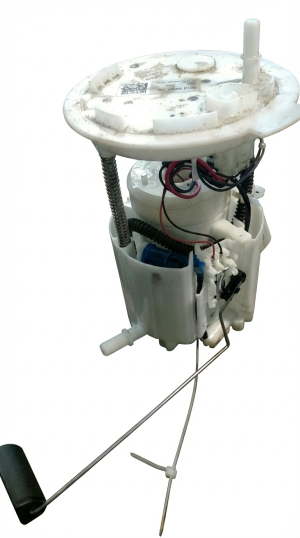
- Replacing the in-tank low-pressure fuel pump, which is not responsible for the high-pressure side of the system and would typically cause a low-pressure code like P0087 or P008A.
- Replacing fuel injectors, which are more likely to cause low pressure (P0087) if they are leaking, not high pressure.
Most Likely Causes
- Failing High-Pressure Fuel Pump (HPFP) 🔴 High Probability → Shop Fuel Pump The HPFP is a mechanical pump driven by a camshaft lobe and is a known wear item on EcoBoost engines. It contains an internal fuel pressure regulator (or fuel control valve) that can fail or stick, causing over-pressurization. The internal plunger or the cam follower (tappet) can also wear out or break, sometimes damaging the camshaft lobe itself.
How to confirm: Use a diagnostic scan tool to monitor 'Desired Fuel Rail Pressure' vs. 'Actual Fuel Rail Pressure'. If the actual pressure remains significantly higher than desired and does not follow the desired pressure command, especially during deceleration, the HPFP is likely faulty. A sticking internal regulator is a common cause.
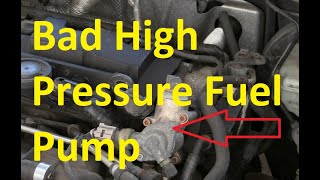
Typical fix: Replace the High-Pressure Fuel Pump and the associated tappet/cam follower. This is a complex job as the intake manifold must be removed for access on the 2.7L engine. It is highly recommended to replace the tappet at the same time as the pump 🎬 See these helpful tips for accessing the 2.7L EcoBoost HPFP, as they are a common point of failure.
Est. part cost: $250-$500 - Faulty Fuel Rail Pressure Sensor 🟡 Medium Probability → Shop Fuel Pressure Sensor The sensor can fail electronically, sending an incorrect high-pressure signal to the PCM even if the actual pressure is normal. This can cause the PCM to command less pressure, leading to hesitation, or it can simply report a false high-pressure reading.
How to confirm: With the engine off (key on), the fuel rail pressure reading on a scan tool should be very low (near 0 PSI). If it shows a high reading without the engine running, the sensor is likely bad. Compare the live data reading to a manual pressure gauge if possible, though this is difficult and dangerous on the high-pressure side.
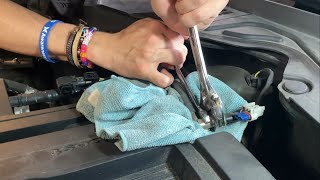
Typical fix: Replace the fuel rail pressure sensor. It is typically located on the fuel rail and is more accessible than the HPFP. 🎬 Watch: How to replace a fuel rail pressure sensor
Est. part cost: $50-$150 - Restricted Fuel Return Line or Fuel Rail Component Failure ⚪ Low Probability While less common on modern returnless-style systems, a blockage or kink in any part of the system designed to relieve pressure can cause a spike. Manufacturer Bulletin #SSM 49185 notes that a pressure control valve in the fuel rail itself can cause P0088, requiring replacement of the rail and valve.
How to confirm: This is difficult to diagnose without ruling out other components first. It involves a physical inspection of all fuel lines for kinks or damage.
Typical fix: Clear the obstruction or replace the kinked/damaged fuel line or fuel rail.
Est. part cost: $20-$100
Rare But Worth Checking
- Wiring Issues: A short to voltage in the fuel rail pressure sensor's circuit could cause the PCM to see a constant high-pressure reading. This should be checked before replacing expensive components. Rodent damage to harnesses is also a possibility, as they can chew through wires and cause shorts.
- PCM Fault: In very rare cases, the Powertrain Control Module itself could be misinterpreting the sensor data or have a faulty driver circuit. This is extremely unlikely and should be the last resort after all other possibilities have been exhausted.
Diagnosis Steps
- Connect an OBD-II scanner and check for any other stored codes. Note any codes related to fuel pressure sensors or injection pump control circuits.
- Use the scanner's live data function to monitor 'Fuel Rail Pressure' and 'Desired Fuel Rail Pressure'.
- With the engine off (key on, engine off), check the fuel rail pressure reading. It should be close to zero (ambient pressure). If it's high, the Fuel Rail Pressure Sensor is likely faulty.
- Start the engine. At idle, the actual and desired pressures should be very close. Rev the engine and watch if the actual pressure follows the desired pressure command.
- If the actual pressure is consistently much higher than desired, especially on deceleration when fuel demand drops, the High-Pressure Fuel Pump (HPFP) or its internal regulator is the primary suspect.
- If the pressure readings seem erratic, frozen, or incorrect, inspect the wiring and connector for the fuel rail pressure sensor for any damage, corrosion, or short circuits. Rodent damage is a known possibility.
- If the sensor and wiring are confirmed to be good, and the pressure is verified to be too high, the HPFP is the most probable cause of the failure.
- Due to the complexity and danger, further diagnosis and replacement of the HPFP should be performed by a qualified technician who can safely relieve system pressure before work begins.
Parts You'll Likely Need
- High-Pressure Fuel Pump (HPFP)
(OEM #FT4Z9350B)— This is the most common failure point for code P0088 on the 2.7L EcoBoost engine, as it is responsible for generating and regulating the high fuel pressure.
Trusted brands: Motorcraft, Bosch, Standard Motor Products
OEM price range: $300-$500
Aftermarket price range: $200-$400 - Fuel Rail Pressure Sensor
(OEM #BU5Z9F972B (supercedes BU5A9F972CA))— This sensor can fail and send incorrect high-pressure readings to the computer, triggering the code even if the mechanical parts are working correctly.
Trusted brands: Motorcraft (CM5250), Bosch, Standard Motor Products (FPS88)
OEM price range: $80-$150
Aftermarket price range: $40-$90 - HPFP Cam Follower / Tappet — This small mechanical piece sits between the camshaft lobe and the HPFP plunger. It is a wear item and should always be inspected and likely replaced when replacing the HPFP to prevent premature failure of the new pump.
Trusted brands: Motorcraft
OEM price range: $30-$50
Aftermarket price range: $20-$40
Related Codes That Often Appear With This One
- P0087 — If you see both P0088 (too high) and P0087 (too low) intermittently, it strongly suggests a sticking fuel pressure regulator/control valve within the HPFP, which is unable to maintain a stable pressure.
- P0254 — This code, 'Injection Pump Fuel Metering Control 'A' High', can accompany P0088 as it directly relates to the electronic control of the high-pressure pump's output.
Technical Service Bulletins (TSBs) & Recalls
- Ford Customer Satisfaction Program 20B27: While not for the Edge specifically, this program for other Ford models describes how an internal orifice in the high-pressure fuel rail can dislodge, causing damage to the pressure control valve and triggering DTC P0088. This illustrates a known failure mode within Ford's GDI fuel systems.
- Manufacturer Bulletin #20B41: This bulletin notes that if a fuel orifice becomes dislodged, it can travel down and damage the pressure control valve pintle, resulting in Diagnostic Trouble Code (DTC) P0088.
- Manufacturer Bulletin #SSM 49185: This record indicates that vehicles may exhibit an illuminated MIL with DTC P0088 due to the pressure control valve in the fuel rail, requiring replacement of the rail and the valve to correct the condition.
- TSB 19-2315: This TSB is for a different engine (3.5L EcoBoost) and issue (cold start rattle), but it is an example of Ford issuing service bulletins to address known issues with fuel system components like VCT units, which are related to engine timing that drives the HPFP.
Platform-Specific Known Issues
- HPFP Location and Labor: Unlike the 3.5L EcoBoost where the HPFP is more accessible, on the 2.7L engine it is mounted on the rear of the passenger side cylinder head. Access requires the removal of the upper intake manifold, making the repair a 2-3 hour job for an experienced technician.
Mechanic-Grade Diagnostic Values
- Fuel Rail Pressure (FRP) Sensor Voltage — expected: Operates on a 0.5 to 4.5 volt scale. Voltage increases with pressure.. Failure: A constant reading of 5 volts suggests a short to power or a bad ground in the sensor circuit.
- Fuel Rail Pressure (FRP) - Key On, Engine Off — expected: Near 0 PSI (ambient pressure).. Failure: A high reading (e.g., thousands of PSI) with the engine off points to a faulty FRP sensor or a shorted circuit.
- High-Pressure Fuel System Operating Pressure — expected: Up to 200 bar / 2900 PSI under load.. Failure: Actual pressure consistently and significantly exceeding desired pressure on a scan tool, especially on deceleration.
Scan Tool Commands That Help
- Ford IDS (Integrated Diagnostic System) / FORScan: HPCR Duty Cycle Output / PCV Command — This bidirectional test allows a technician to command the Pressure Control Valve (PCV) or the HPFP's internal regulator to check for mechanical response. The valve should click when cycled. A lack of response or erratic pressure changes suggest a stuck or failed valve.
- Ford IDS (Integrated Diagnostic System) / FORScan: Reset KAM (Keep Alive Memory) — After replacing a fuel system component like the HPFP or FRP sensor, this function should be performed to clear the PCM's learned adaptive fuel trim values, forcing it to re-learn based on the new, correctly functioning parts.
Wiring & Ground Locations
- PCM Grounds — Located on the firewall in the engine bay. There may be one or two ground points depending on the model year.. A poor ground for the Powertrain Control Module (PCM) can cause a host of erratic sensor readings, including a false high reading from the Fuel Rail Pressure sensor. Ensuring these grounds are clean and tight is a critical step in diagnosing electrical faults.
- Engine Harness Chafe Points — General Motors TSB 21-NA-149 for the 2.7L engine (a similar design) identifies multiple chafe points, including where the harness crosses the camshaft carrier cover, near the generator bracket, and against the lower air cleaner housing.. Although a GM bulletin, it highlights common areas where engine vibration can cause wiring harnesses to rub through on sharp edges. A short in the FRP sensor or HPFP control circuit from this type of damage can directly cause a P0088 code.
- Main Battery Ground — Typically located on the chassis in the engine bay, just in front of the washer fluid reservoir on related platforms.. A weak main ground connection can create floating voltages and unstable sensor readings throughout the vehicle's electrical system, potentially affecting the fuel pressure sensor signal.
Real Owner Repair Stories
- Ford F150 Forum (2015 Ford F-150 2.7L EcoBoost (shares engine and fuel system with the Edge)) — Intermittent P0087 (low pressure) and P0088 (high pressure) codes.
❌ Tried (didn't work) Initial diagnosis was uncertain due to conflicting high and low pressure codes.
✅ What actually fixed it The user reported that having both high and low pressure codes simultaneously strongly points to a sticking internal regulator valve within the High-Pressure Fuel Pump (HPFP), which was the ultimate cause. - YouTube - 'Ecoboost low fuel rail pressure and no power' (Ford EcoBoost (specific model not stated, but 2.7L architecture)) — P0087 (low pressure), but the failure mechanism is identical for P0088.
❌ Tried (didn't work) Initial scan pointed to a fuel pressure issue.
✅ What actually fixed it The root cause was a completely worn-out HPFP plunger and a destroyed lobe on the exhaust camshaft that drives the pump. This required replacement of the HPFP, the cam follower, and the entire exhaust camshaft. This is an extreme but possible failure mode. - NHTSA ODI #10721001 — An owner reported experiencing a lack of power and confirmed the P0088 code for fuel rail pressure too high. They noted that there is a known manufacturer defect associated with this condition.
OEM Part Supersession History
FT4Z-9350-A→FT4Z-9350-B— Standard part revision by the manufacturer, likely for improved reliability or minor design changes.BU5Z-9F972-A / CM5226→BU5Z-9F972-B / CM5250— Standard part revision by the manufacturer. The new part incorporates any engineering improvements since the vehicle's original production.
Model Year Variations Within This Range
- 2015-2017 vs 2018+: The 2.7L EcoBoost received a second-generation update starting in the 2018 model year, which included the addition of port fuel injection alongside direct injection. While the high-pressure system principles remain the same, some components and software logic may differ slightly. The 2018 engine also saw a power increase to 335 hp and 380 lb-ft of torque for the Edge ST (previously Sport).
Diagnostic Flowchart
Other Known Issues on This Vehicle
Issues unrelated to this code that are worth knowing about as an owner of this generation:
- Engine Oil Pan Leak 🟠 Medium — Common on 2015-2017 models due to failure of the original RTV sealant. Less common on 2018+ models which used an updated pan with a gasket. (Ref: TSB 23-2338 (supersedes 22-2181) for 2015-2017 Edge models, advising replacement of the original RTV-sealed pan with an updated pan that uses a press-in-place gasket.)
- Coolant Intrusion into Cylinders 🔴 High — While more widely reported on the 2.0L EcoBoost, the 2.7L is not entirely immune. Symptoms include white exhaust smoke, rough running, and unexplained coolant loss. Can lead to catastrophic engine failure. (Ref: TSB 19-2208 (for 2.0L) highlights the issue in the EcoBoost family, but no specific TSB exists for the 2.7L. The fix is typically a long block replacement.)
- Carbon Buildup on Intake Valves 🟠 Medium — An inherent issue with all Gasoline Direct Injection (GDI) engines, including the 2.7L EcoBoost. Becomes noticeable after 50,000-70,000 miles, causing rough idle, hesitation, and loss of power.
- Premature Turbocharger Failure 🔴 High — Can occur due to oil starvation/contamination or extreme heat cycles. Symptoms include whining noises, significant loss of power, and blue/grey exhaust smoke.
Used vs. New Parts: Buying Guide for This Vehicle
When a used part is the smart pick: For this specific repair, using a used part is generally not recommended. The High-Pressure Fuel Pump (HPFP) is a known wear item, and a used pump carries a high risk of premature failure. A used Fuel Rail Pressure Sensor could be a viable option if sourced from a low-mileage, verified running donor vehicle, but the cost savings may not be worth the risk of it also failing.
Donor-vehicle mileage cap: roughly under 50000 miles for the part to have meaningful remaining life.
What to inspect on the donor part:
- Verify the donor vehicle's mileage and ensure it was not involved in a front-end collision.
- For a sensor, inspect the connector for any signs of corrosion, bent pins, or harness damage.
- For an HPFP (if you must), inspect the plunger and electrical connector for any visible damage, but internal wear is impossible to see.
OEM-only on this vehicle (don't cheap out):
- High-Pressure Fuel Pump (HPFP): Due to the high pressures and precision required, a new OEM (Motorcraft) or high-quality OEM-supplier (like Bosch) part is strongly recommended. Cheap aftermarket pumps have a high failure rate.
- HPFP Cam Follower/Tappet: This is an inexpensive but critical wear part that should always be replaced with a new OEM part during an HPFP job.
Aftermarket brands forum-validated for this vehicle:
- Bosch (Often the OEM supplier)
- Standard Motor Products (SMP)
Brands owners have reported issues with on this vehicle:
- Unnamed, no-brand, or white-box parts from online marketplaces should be avoided for critical fuel system components like the HPFP.
Real Owner Stories
Aggregated from forums and TSBs cited above. Mileages and costs reflect what owners reported in those sources.
2015-2017 Ford F-150 2.7L EcoBoost
Symptoms: The vehicle was throwing fuel pressure codes and experiencing performance issues related to the high-pressure system.
What fixed it: Replacement of the High Pressure Fuel Pump (HPFP).
Cost: $800-$800
Source hint: Ford F150 Forum - 'P0087 code?'
2015-2017 Ford F-150 2.7L EcoBoost
Symptoms: Diagnostic confirmed the pump was located behind the passenger head and required intake manifold removal for access.
What fixed it: Replacement of the High Pressure Fuel Pump and the cam tappet.
Source hint: YouTube - 'Ford F150 2.7 Ecoboost P0087 Solved High Pressure Fuel Pump'
Ford F-350 Owner Report
Symptoms: While driving approximately 50-55 MPH, a winding sound was detected and code P0088 was displayed.
What fixed it: The vehicle was towed to a local dealer for diagnosis and repair of the fuel system.
Source hint: NHTSA ODI #11515513
Documented NHTSA Reports
NHTSA ODI #10721001 describes an owner who pulled engine codes and found P0088, indicating fuel rail pressure was too high, which they noted was a known manufacturer defect. Additionally, Manufacturer Bulletin #20B41 explains that a dislodged fuel orifice can damage the pressure control valve pintle, directly resulting in DTC P0088. For certain diesel models, Manufacturer Bulletin #SSM 49185 also identifies the pressure control valve in the fuel rail as a cause for this code.
Related OBD-II Codes
Frequently Asked Questions
Is the High-Pressure Fuel Pump (HPFP) on my 2.7L EcoBoost Edge as easy to replace as the one on the 3.5L engine?
Should I replace any other parts when I install a new fuel pump to fix P0088?
Does Ford TSB 19-2315 apply to my P0088 fuel pressure issue?
Can a faulty sensor cause a P0088 code even if my actual fuel pressure is fine?
Is there a specific Ford program regarding fuel rail damage causing this code?
Why does my Edge hesitate specifically between 2000 and 4000 RPM?
Helpful Videos
Used OEM Parts in Stock
New Aftermarket Parts Available


The information in this article is provided for general reference and educational purposes only. Vehicle specifications, procedures, and part compatibility can vary by production date, trim level, and region. Always consult your vehicle's factory service manual and verify part numbers before purchasing or performing repairs. Safety-critical components such as airbags, seat belts, and braking systems should be installed by a qualified professional.
- Ford Edge:
- 🧭 Diagnostic Flowchart
- 🎬 Helpful Videos
- 🛍️ Shop This Part
- What's Unique About the 2015-2018 Ford Edge
- Symptoms You May Notice
- Most Likely Causes
- Rare But Worth Checking
- Diagnosis Steps
- Parts You'll Likely Need
- Related Codes That Often Appear With This One
- Technical Service Bulletins (TSBs) & Recalls
- Platform-Specific Known Issues
- Mechanic-Grade Diagnostic Values
- Scan Tool Commands That Help
- Wiring & Ground Locations
- Real Owner Repair Stories
- OEM Part Supersession History
- Model Year Variations Within This Range
- Other Known Issues on This Vehicle
- Used vs. New Parts: Buying Guide for This Vehicle
- Real Owner Stories
- 2015-2017 Ford F-150 2.7L EcoBoost
- 2015-2017 Ford F-150 2.7L EcoBoost
- Ford F-350 Owner Report
- Documented NHTSA Reports
- Related OBD-II Codes
- Frequently Asked Questions
- 🎟️ Get 5% Off