

P0088 on 2013-2016 Ford Escape 2.0L EcoBoost: Causes and Fixes for High Fuel Pressure
On a 2013-2016 Escape 2.0L EcoBoost, code P0088 is most often caused by a faulty Fuel Rail Pressure (FRP) sensor, which can fail electronically and send false high readings. A failing High-Pressure Fuel Pump (HPFP) is the second most likely cause. Diagnosis must begin by testing the sensor with a scan tool (KOEO test) to avoid the costly misdiagnosis of replacing the pump unnecessarily.
- P0088 on your Escape indicates dangerously high pressure in the direct injection fuel system and should be addressed promptly.
- The most likely cause is a faulty Fuel Rail Pressure (FRP) sensor, which is a relatively inexpensive part.
- Always diagnose the FRP sensor first using a scan tool's live data (Key On, Engine Off test) before assuming the more expensive High-Pressure Fuel Pump has failed.
- Do not continue to drive the vehicle, as you risk expensive damage to the catalytic converter and internal engine components.
- Due to extreme pressures and fire risk, this repair is best left to a professional mechanic unless you are highly experienced with GDI fuel systems.
What's Unique About the 2013-2016 Ford Escape
Ford's 2.0L EcoBoost engine uses a Gasoline Direct Injection (GDI) system, which features both a low-pressure pump in the tank and a high-pressure fuel pump (HPFP) driven by the camshaft. Code P0088 specifically relates to this high-pressure side, which can operate at over 2,000 PSI. The most common failures are the two key components that manage this intense pressure: the HPFP or the Fuel Rail Pressure (FRP) sensor that measures its output. Differentiating between a mechanical pump failure and an electronic sensor failure is critical to avoid costly misdiagnoses, as the sensor is the more frequent point of failure.
Symptoms You May Notice
- Check Engine Light illuminated
- Engine may enter a reduced power 'limp mode'
- Stalling or engine dying, sometimes without starting again
- Rough idle or poor running
- Hesitation when accelerating
- Reduced fuel economy
- Hard or delayed starts
- Black smoke from the exhaust
- A winding sound detected while driving (as noted in NHTSA ODI #11515513)
- Replacing the High-Pressure Fuel Pump when only the Fuel Rail Pressure Sensor is bad. This is a costly mistake, as the sensor is cheaper and more common to fail.
- Replacing the in-tank low-pressure fuel pump, which is not related to this high-pressure side fault code.
Most Likely Causes
- Faulty Fuel Rail Pressure (FRP) Sensor 🔴 High Probability → Shop Fuel Pressure Sensor This is the most common cause for P0088 on this platform. The sensor can fail electronically and send an incorrect high-voltage signal to the PCM, tricking it into thinking the pressure is too high. Ford has reportedly used bad batches of these sensors, making them a frequent failure point.
How to confirm: Use an OBD-II scan tool to monitor live data for 'Fuel Rail Pressure'. With the Key On, Engine Off (KOEO), the pressure should read very low (under 100 PSI). If it reads abnormally high (e.g., thousands of PSI), the sensor is almost certainly bad.
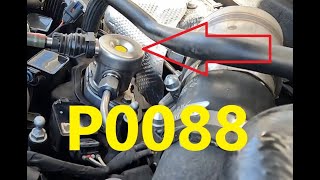
Typical fix: Replace the Fuel Rail Pressure Sensor located on the high-pressure fuel rail. 🎬 Watch: How to replace the fuel rail pressure sensor.
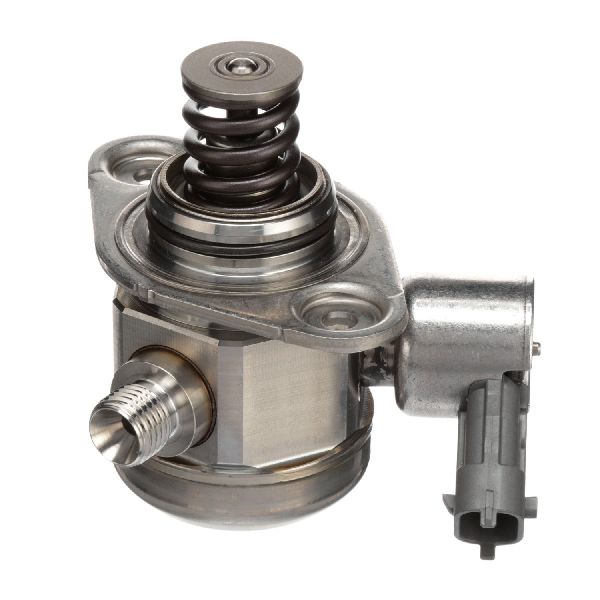
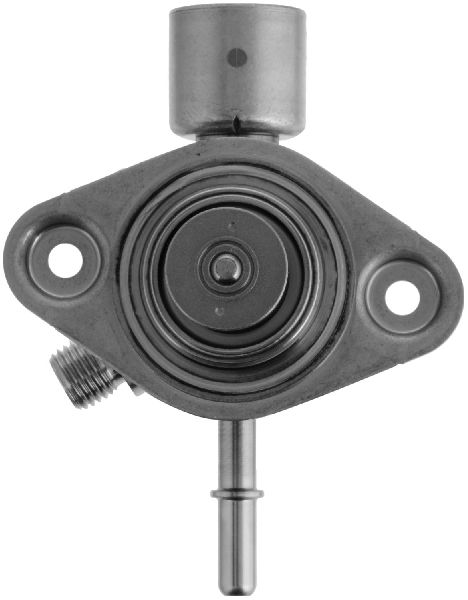
Est. part cost: $70-$150 - Failing High-Pressure Fuel Pump (HPFP) 🟡 Medium Probability → Shop Fuel Pump The mechanical HPFP is a known wear item on EcoBoost engines. Its internal pressure regulator can stick or fail, causing it to mechanically over-pressurize the fuel rail.
How to confirm: If the FRP sensor tests good (shows normal pressure at KOEO), use a scan tool to compare 'Desired Fuel Rail Pressure' to 'Actual Fuel Rail Pressure' while the engine is running. If the actual pressure is consistently and significantly higher than desired, the HPFP is likely at fault.
Typical fix: Replace the High-Pressure Fuel Pump. It is best practice to also replace the cam follower (tappet) that the pump rides on at the same time.
Est. part cost: $400-$700
Rare But Worth Checking
- Wiring or Connector Issues: Vibrations and heat can damage the FRP sensor wiring. A short to voltage in the signal wire can cause a constant high reading, mimicking a failed sensor. Rodent damage to the engine harness is also a known cause of shorts. Always inspect the harness and connector for damage before replacing parts.
- Worn Camshaft Lobe or Follower: In some cases, a catastrophically worn HPFP cam follower (tappet) can damage the camshaft lobe that drives the pump, leading to erratic pump behavior. If the follower has failed, the camshaft must be inspected.
- Incorrectly Installed Fuel Line: → Shop Fuel Line Ford has issued a Special Service Message (SSM 50089) for other models indicating that P0088 can occur if a fuel jumper line is installed backward during engine repairs, a possibility if recent work has been performed.
- Pressure Control Valve Damage: In other Ford fuel systems, manufacturer Bulletin #20B41 notes that if a fuel orifice becomes dislodged, it can travel down and damage the pressure control valve pintle, resulting in DTC P0088.
Diagnosis Steps
- Connect an OBD-II scan tool and confirm the presence of P0088 and any other codes.
- Access the live data stream on the scan tool. With the Key On and Engine Off (KOEO), observe the 'Fuel Rail Pressure' (FRP) reading.
- If the FRP reading is high (e.g., over 1,000 PSI) with the engine off, the FRP sensor is faulty or its wiring is shorted. The sensor needs to be replaced.
- If the FRP reading is low/normal with the engine off, start the engine and monitor the 'Actual Fuel Rail Pressure' versus the 'Desired Fuel Rail Pressure' PIDs.
- If the actual pressure is significantly higher than the desired pressure while running, this indicates a mechanical over-pressurization. The primary suspect is the High-Pressure Fuel Pump (HPFP).
- Before replacing any parts, visually inspect the wiring and connector for the FRP sensor for any signs of damage, corrosion, or rodent activity.
- If replacing the HPFP, it is critical to also replace the cam follower (tappet) and inspect the camshaft lobe for wear or damage.
Parts You'll Likely Need
- Fuel Rail Pressure Sensor
(OEM #Motorcraft CM-5229 (Ford P/N: 3F2Z-9G756-AC))— This is the most common failure point for P0088 on this platform. An internal electronic fault causes it to send a false high-pressure signal to the PCM.
Trusted brands: Motorcraft, Bosch, Standard Motor Products
OEM price range: $80-$100
Aftermarket price range: $50-$80 - High-Pressure Fuel Pump (HPFP)
(OEM #Motorcraft EJ7Z-9350-A)— If the sensor is not at fault, the mechanical HPFP is the next likely cause due to a failure of its internal pressure regulator, causing a true overpressure condition.
Trusted brands: Motorcraft, Bosch
OEM price range: $250-$400
Aftermarket price range: $200-$350 - High-Pressure Fuel Pump Tappet/Follower — This is the follower that rides on the camshaft lobe to actuate the HPFP. It is a wear item and best practice is to replace this small, inexpensive part whenever the HPFP is replaced.
Trusted brands: Motorcraft
OEM price range: $20-$35
Aftermarket price range: $15-$25
Related Codes That Often Appear With This One
- P0193 — This code means 'Fuel Rail Pressure Sensor 'A' Circuit High', which points directly to a sensor or wiring fault as the cause of the high pressure reading.
- P0087 — This is the opposite code, 'Fuel Rail/System Pressure - Too Low'. Seeing either code points to a problem in the high-pressure fuel system, involving the same components (HPFP, FRP sensor).
- P0300 — Random or multiple cylinder misfires can occur as a result of the engine running rough or stalling due to the incorrect fuel pressures associated with P0088.
- P0113 — Intake Air Temperature (IAT) Sensor Circuit High. This may appear alongside P0088 if there is a wiring harness issue affecting multiple sensors, or as part of a crank-no-start condition caused by a shorted FRP sensor.
Technical Service Bulletins (TSBs) & Recalls
- TSB 19-2346: While not for P0088, this is a critical TSB for the 2.0L EcoBoost family regarding coolant intrusion into cylinders. It applies to 2017-2019 Escapes and other models. An owner should be aware of this potential major engine issue, which can cause misfires and rough running.
- Bulletin #SSM 49185: A manufacturer service bulletin notes that an illuminated MIL with DTC P0088 may be due to the pressure control valve in the fuel rail, requiring replacement of the rail and valve to correct the condition.
- TSB 11-4-22: Although issued for a different Ford engine, this bulletin titled "Lacks Power-DTC P0088" highlights that fuel rail pressure too high is a known manufacturer defect in some Ford fuel systems (as referenced in NHTSA ODI #10721001).
Mechanic-Grade Diagnostic Values
- Fuel Rail Pressure (FRP) Sensor Signal Voltage (KOEO) — expected: ~0.5 V. Failure: A reading stuck near 5.0V indicates an internal sensor short or a short to power in the signal wire.
- Fuel Rail Pressure (FRP) PID Reading (KOEO) — expected: Under 100 PSI. Failure: A reading of several hundred or thousands of PSI indicates a faulty FRP sensor.
- FRP Sensor Reference Voltage (VREF) — expected: 5.0 V at the sensor connector with the sensor unplugged and key on.. Failure: Significantly lower than 5.0V or 0V points to a problem with the PCM or the 5V reference circuit.
- High-Side Fuel Rail Pressure (FRP) at Idle — expected: Approximately 400-800 PSI, should closely match the 'Desired Fuel Rail Pressure' PID.. Failure: Actual pressure is consistently and significantly higher than the desired pressure, pointing to a mechanical issue with the HPFP.
- High-Side Fuel Rail Pressure (FRP) Under Load — expected: Varies with load, up to 2,150 PSI or higher.. Failure: Actual pressure consistently exceeds desired pressure, indicating a pump regulation failure.
Scan Tool Commands That Help
- FORScan / Ford IDS: Monitor PIDs: FRP (Fuel Rail Pressure) vs. FRP_DSD (Desired Fuel Rail Pressure) — This is the primary diagnostic step after checking KOEO pressure. Comparing the actual vs. desired pressure while the engine is running is essential to determine if the fault is a sensor providing false data or a mechanical pump over-pressurizing the system.
- FORScan / Ford IDS: Bidirectional control of fuel system components (e.g., commanding specific pressures) — Advanced scan tools may allow a technician to command the fuel pressure control valve/solenoid on the HPFP to test its response. If the valve can be commanded and pressure changes accordingly, it suggests the valve is functional and the issue may lie elsewhere.
Wiring & Ground Locations
- FRP Sensor Connector — On the high-pressure fuel rail, located on the driver's side of the 2.0L EcoBoost engine.. This is the primary connection to test for the 5V reference, ground, and the signal wire voltage. The pinout is typically Pin 1: Signal, Pin 2: Ground, Pin 3: 5V Reference. A short or open here will cause incorrect readings.
- G104 — On the top rear of the transmission for 2.0L Turbo models.. A poor engine/transmission ground can cause a variety of sensor reading issues and electrical noise, potentially affecting the FRP sensor signal.
- G103 — On the left side of the engine compartment, near the battery junction box.. This is a primary chassis ground. Corrosion or a loose connection here can cause floating grounds and unpredictable behavior from various electronic modules, including the PCM.
- Engine Wiring Harness Chafe Point — While not specific to the Escape, related platforms with the 2.0L engine note potential for the harness to chafe near the intake manifold.. A chafed harness can cause the FRP sensor signal wire to short to voltage or ground, creating false high or low readings that can trigger P0088 or related codes.
Real Owner Repair Stories
- 2CarPros Forum (2013 Ford Escape) — Engine cranks but will not start. Codes P0088 (Fuel Rail/System Pressure - Too High) and P0113 (IAT Sensor Circuit High) were present.
✅ What actually fixed it A verified mechanic on the forum confirmed that a shorted fuel rail pressure sensor is a common cause for this exact combination of symptoms and provided a location diagram for the owner to replace it. The implied fix was replacing the FRP sensor. - NHTSA ODI #11515513 — An owner reported that while driving approximately 50-55 MPH, a winding sound was detected and code P0088 was displayed. The vehicle was towed to a dealer for diagnosis of the fuel system.
- NHTSA ODI #10721001 — An owner reported experiencing a lack of power and pulling engine codes to find P0088 (Fuel Rail Pressure Too High), later discovering a known manufacturer defect related to this code.
OEM Part Supersession History
3F2E-9G756-AD→3F2Z-9G756-AC (Motorcraft CM-5229)— Part revision and consolidation. The CM-5229 part number is widely used across many Ford vehicles.N/A→Motorcraft WPT-1099— This is the service pigtail connector for the FRP sensor, used when the original connector or its wiring is damaged.
Model Year Variations Within This Range
- 2013-2016: The 2.0L EcoBoost engine used in this generation (2013-2016) is the first generation, single-scroll turbo version. The 2017 model year Escape received an updated, second-generation twin-scroll 2.0L EcoBoost engine, which may have different components or characteristics, though the fundamental causes of P0088 remain similar.
Diagnostic Flowchart
Other Known Issues on This Vehicle
Issues unrelated to this code that are worth knowing about as an owner of this generation:
- 2.0L EcoBoost Coolant Intrusion 🔴 High — Widespread issue across multiple model years. A design flaw in the engine block may allow coolant to leak into the cylinders, causing misfires, white smoke, and eventual catastrophic engine failure. (Ref: TSB 19-2346 (for 2017-2019 models, but the issue is known on earlier blocks as well))
- 6F35 Transmission Failure/Shudder 🔴 High — Very common. Owners report harsh shifting, shuddering, slipping, and complete transmission failure. Issues are attributed to torque converters, solenoids, and software. (Ref: Multiple TSBs and a class-action lawsuit have been filed regarding this transmission.)
- AWD Power Transfer Unit (PTU) Failure 🟠 Medium — Common on AWD models, especially if not serviced. Ford's 'lifetime fluid' recommendation is often blamed; the PTU can overheat and fail if the fluid is not changed periodically.
- EVAP Canister Purge Valve Failure 🟡 Low — A common failure part causing rough idle after refueling and potentially other EVAP-related codes.
Used vs. New Parts: Buying Guide for This Vehicle
When a used part is the smart pick: For this repair, buying used parts is generally not recommended. The primary failure components are an electronic sensor and a high-wear mechanical pump, both of which have a finite lifespan. A used part may fail shortly after installation, negating any cost savings.
Donor-vehicle mileage cap: roughly under 80000 miles for the part to have meaningful remaining life.
What to inspect on the donor part:
- If considering a used High-Pressure Fuel Pump (HPFP), source it from a vehicle with the lowest possible mileage.
- Check for any signs of external corrosion or damage to the pump body and electrical connector.
- Avoid parts from vehicles that show signs of poor maintenance or have been in a major collision.
OEM-only on this vehicle (don't cheap out):
- Fuel Rail Pressure (FRP) Sensor: While reputable aftermarket brands like Bosch exist, cheap, unbranded sensors are known to fail quickly or leak, posing a significant fire risk. Sticking with Motorcraft (OEM) is the safest choice.
- High-Pressure Fuel Pump (HPFP): This is a critical engine component operating under extreme pressure. OEM (Motorcraft) or a high-quality equivalent from the original manufacturer (e.g., Bosch) is strongly recommended to ensure reliability and proper function.
Aftermarket brands forum-validated for this vehicle:
- Bosch (Often the OEM supplier for Ford fuel system components)
- Standard Motor Products (For sensors)
- Xtreme-DI, Nostrum (For high-performance/upgraded HPFPs, not standard replacement)
Brands owners have reported issues with on this vehicle:
- Unbranded, no-name sensors and pumps from online marketplaces. These parts often have poor quality control, use inferior materials, and may not meet OEM specifications, leading to premature failure or fuel leaks.
Real Owner Stories
Aggregated from forums and TSBs cited above. Mileages and costs reflect what owners reported in those sources.
2013 Ford Escape 2.0L 4 Cyl 2WD — 125000 miles
Symptoms: Engine cranks but does not start. CEL with codes P0088 and P0113.
What fixed it: A verified mechanic identified a shorted fuel rail pressure sensor as the common cause for this condition on this specific vehicle.
Source hint: 2CarPros.com thread titled '2013 Ford Escape Engine Cranks but Does Not Start, Code P0088 Fuel Rail/System...'
Related OBD-II Codes
Frequently Asked Questions
Does TSB 19-2346 apply to my 2013-2016 Ford Escape 2.0L EcoBoost?
My 2013 Escape has a P0088 code and won't start. Is it the fuel pump?
I hear a loud ticking noise from the engine area; does this mean my HPFP is causing the P0088 code?
What should the fuel pressure read on a scan tool when the engine is off?
If I have to replace the High-Pressure Fuel Pump, are there other parts I need?
Could my rough idle be caused by something other than the fuel rail pressure?
Helpful Videos
Used OEM Parts in Stock
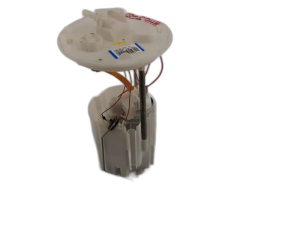
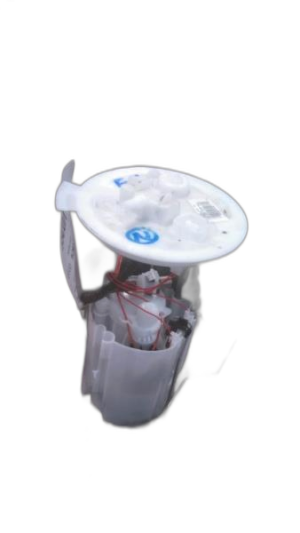
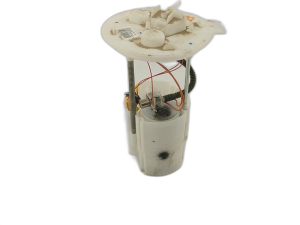
New Aftermarket Parts Available

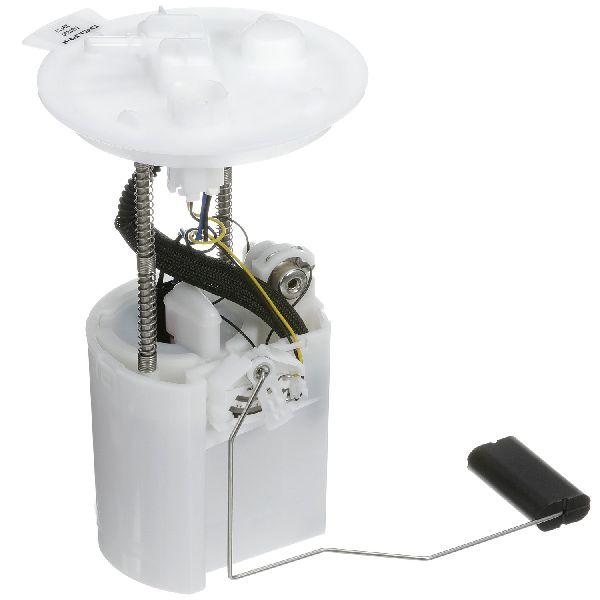

The information in this article is provided for general reference and educational purposes only. Vehicle specifications, procedures, and part compatibility can vary by production date, trim level, and region. Always consult your vehicle's factory service manual and verify part numbers before purchasing or performing repairs. Safety-critical components such as airbags, seat belts, and braking systems should be installed by a qualified professional.
- Ford Escape:
- 🧭 Diagnostic Flowchart
- 🎬 Helpful Videos
- 🛍️ Shop This Part
- What's Unique About the 2013-2016 Ford Escape
- Symptoms You May Notice
- Most Likely Causes
- Rare But Worth Checking
- Diagnosis Steps
- Parts You'll Likely Need
- Related Codes That Often Appear With This One
- Technical Service Bulletins (TSBs) & Recalls
- Mechanic-Grade Diagnostic Values
- Scan Tool Commands That Help
- Wiring & Ground Locations
- Real Owner Repair Stories
- OEM Part Supersession History
- Model Year Variations Within This Range
- Other Known Issues on This Vehicle
- Used vs. New Parts: Buying Guide for This Vehicle
- Real Owner Stories
- 2013 Ford Escape 2.0L 4 Cyl 2WD — 125000 miles
- Related OBD-II Codes
- Frequently Asked Questions
- 🎟️ Get 5% Off