

P0088 on 2010-2014 GMC Savana: Fuel Pressure Too High Causes & Fixes
On a 2010-2014 GMC Savana with a gasoline engine, code P0088 most often points to a faulty Fuel Rail Pressure (FRP) sensor or a failing Fuel Pump Driver Module (FPDM). The FPDM is a known failure point due to corrosion and requires programming upon replacement. Always verify actual fuel pressure with a mechanical gauge before replacing parts. TSBs also point to fuel system contamination as a possible cause.
- P0088 on a 2010-2014 Savana means fuel pressure is too high.
- The most common causes are a bad Fuel Rail Pressure (FRP) sensor or a failed Fuel Pump Driver Module (FPDM).
- Always use a mechanical gauge to confirm high pressure before replacing expensive parts like the fuel pump.
- Be aware of official GM service bulletins that point to fuel system contamination as a known issue for these vans.
- This code indicates a serious issue; driving should be limited until a proper diagnosis and repair can be performed.
What's Unique About the 2010-2014 Gmc SAVANA
For the gasoline-powered 2010-2014 GMC Savana, the fuel system is a returnless, electronically controlled design. Instead of a simple mechanical regulator, it uses a Fuel Pump Driver Module (FPDM), also called a Fuel Pump Flow Control Module, to manage fuel pressure by adjusting voltage to the in-tank pump. This module is notoriously prone to failure from corrosion due to its location on the frame rail. Crucially, a replacement FPDM must be programmed to the vehicle's VIN. This architecture makes the FPDM and the Fuel Rail Pressure sensor primary suspects. Additionally, multiple Technical Service Bulletins (TSBs) for these vans specifically mention fuel system contamination causing a range of fuel pressure codes, including P0088, which can lead to 🎬 See this guide on diagnosing and fixing P0088 high pressure codes. hard-starting or no-start conditions. 🎬 Watch: Step-by-step fuel system diagnosis for a crank-no-start condition. [PIP4949E, 16-NA-102, PIP5151F]
Diagnostic Flowchart
Tap your situation to follow the diagnostic path that matches what you're seeing on this vehicle.
Symptoms You May Notice
- Check Engine Light is on
- Hard starting or no-start condition [PIP4949E, PIP5151F]
- Rough running or stalling [PIP5151F, 2]
- Poor engine performance and acceleration
- Reduced fuel economy
- Black smoke from the exhaust
- Strong fuel smell from the exhaust or engine bay
- Replacing the fuel pump without first verifying the actual fuel pressure with a mechanical gauge. The problem is often an electrical sensor or module, not the pump itself.
- Replacing the Fuel Pump Driver Module (FPDM) without programming the new unit, leading to a continued no-start or fault code condition.
Most Likely Causes
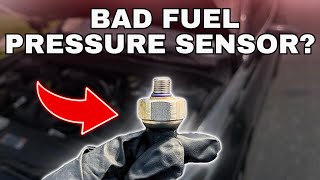
- Faulty Fuel Rail Pressure (FRP) Sensor 🔴 High Probability → Shop Fuel Pressure Sensor The sensor provides the pressure reading to the ECM. If it fails and sends an inaccurately high voltage signal (often stuck at 5 volts), the ECM will set P0088 even if the mechanical pressure is normal. Wiring damage between the sensor and ECM can also cause this.
How to confirm: Compare the live data from the FRP sensor on a scan tool to a reading from a mechanical fuel pressure gauge. If the scan tool shows high pressure but the gauge shows normal pressure, the sensor or its wiring is bad. A sensor reading stuck at 5V is a strong indicator of a circuit short.
Typical fix: Replace the Fuel Rail Pressure sensor. Inspect the connector and wiring for damage.
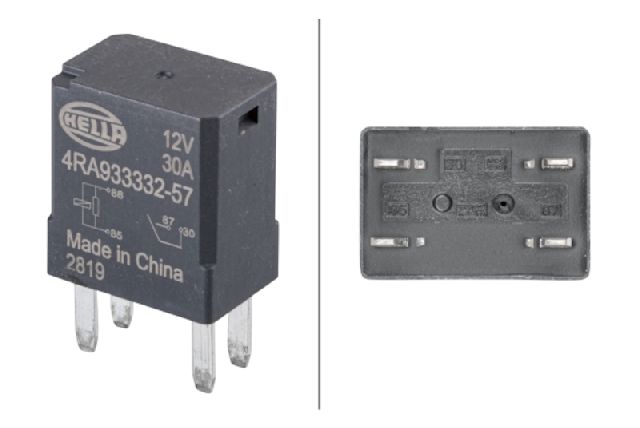
Est. part cost: $40-$100 - Faulty Fuel Pump Driver Module (FPDM) 🟡 Medium Probability → Shop Fuel Pump The FPDM (or Fuel Pump Flow Control Module) controls the fuel pump's speed. It is mounted on the frame rail, where it is highly susceptible to corrosion and water intrusion, leading to failure. If it malfunctions and commands the pump to run at full duty cycle constantly, it will create excessive fuel pressure.
How to confirm: Requires advanced diagnostics to check the command signals from the ECM and the output voltage to the fuel pump. Visual inspection for heavy corrosion on the module's case and connector pins is the first step. Location is typically on the frame rail above the spare tire.
Typical fix: Replace the Fuel Pump Driver Module. The new module MUST be programmed to the vehicle with GM-specific software.
Est. part cost: $70-$200 - Fuel System Contamination 🟡 Medium Probability Manufacturer TSBs #16-NA-102 and #PIP5151F specifically cite debris in the fuel system as a cause for P0088. TSB 16-NA-102 details a procedure to check for magnetic metal debris on the fuel pressure regulator, which indicates a failing pump is contaminating the system.
How to confirm: Requires inspection of the fuel tank, fuel lines, and fuel filter for debris. If contamination is found, the source must be identified. TSB 18-NA-361 recommends a full system flush before component replacement.
Typical fix: Thoroughly clean the entire fuel system, including the tank, lines, and fuel rail, and replace the fuel filter and potentially the fuel pump module. [PIP5151F]
Est. part cost: $100-$500+ - Failing In-Tank Fuel Pump ⚪ Low Probability → Shop Fuel Pump While fuel pumps more commonly fail in a way that causes low pressure (P0087), an internal failure of the integrated pressure regulator can cause it to over-pressurize the system. This is less common than an FPDM or sensor failure.
How to confirm: This is typically diagnosed after confirming the FRP sensor and FPDM are working correctly and mechanical pressure tests confirm consistently high pressure.
Typical fix: Replace the in-tank fuel pump module assembly. This requires dropping the fuel tank.
Est. part cost: $250-$500
Rare But Worth Checking
- Kinked or Restricted Fuel Line: → Shop Fuel Line A restriction in a fuel line, particularly the return line on systems that have one (though these are returnless), can sometimes cause pressure to spike. A visual inspection of all fuel lines from the tank to the engine is a worthwhile step.
- Wiring Issues: A short in the wiring to the FRP sensor can cause a false high reading. Inspect the harness for damage, especially near hot or moving parts, or for signs of rodent damage.
- Faulty ECM: In very rare cases, the Engine Control Module itself can be the source of the problem, misinterpreting sensor data. This should only be considered after all other possibilities have been exhausted.
Diagnosis Steps
- Connect an OBD-II scanner to confirm the P0088 code and check for any other related codes.
- View the live data for the Fuel Rail Pressure (FRP) sensor with the key on, engine off, and then with the engine running. Note if the voltage is stuck high (e.g., 5 volts).
- Connect a mechanical fuel pressure gauge to the fuel rail's test port. Compare the gauge's reading to the scanner's live data.
- If the gauge shows normal pressure while the scanner shows high pressure, the FRP sensor is likely faulty or there is a wiring issue. Replace the sensor and re-test.
- If the mechanical gauge confirms that the fuel pressure is too high, proceed with further diagnosis.
- Visually inspect the wiring harness for the FRP sensor and the Fuel Pump Driver Module (FPDM) for any signs of damage, corrosion, or looseness.
- Locate and inspect the FPDM (on the frame rail, near the spare tire) for physical damage or heavy corrosion.
- If a new FPDM is installed, it MUST be programmed using GM-specific software (SPS2) before it will function correctly.
- If TSBs are relevant, inspect the fuel system for contamination by checking the fuel filter and potentially taking a sample from the fuel tank, looking for debris as per TSB 16-NA-102.
- If the sensor, module, and wiring are good and no contamination is found, the in-tank fuel pump's internal regulator may be at fault.
Parts You'll Likely Need
- Fuel Rail Pressure Sensor
(OEM #ACDelco 12635273, 12668189 (Verify by VIN))— This sensor often fails, sending incorrect high-pressure signals to the ECM. It's a common first part to test and replace.
Trusted brands: ACDelco, Bosch, Delphi
OEM price range: $60-$120
Aftermarket price range: $40-$100 - Fuel Pump Driver Module (FPDM)
(OEM #ACDelco 20759945, 22899959, 13554821 (Verify by VIN))— This module controls fuel pump speed and is a known failure point due to corrosion. It can get stuck commanding maximum pump output, causing high pressure. Replacement requires programming.
Trusted brands: ACDelco, Dorman
OEM price range: $120-$250
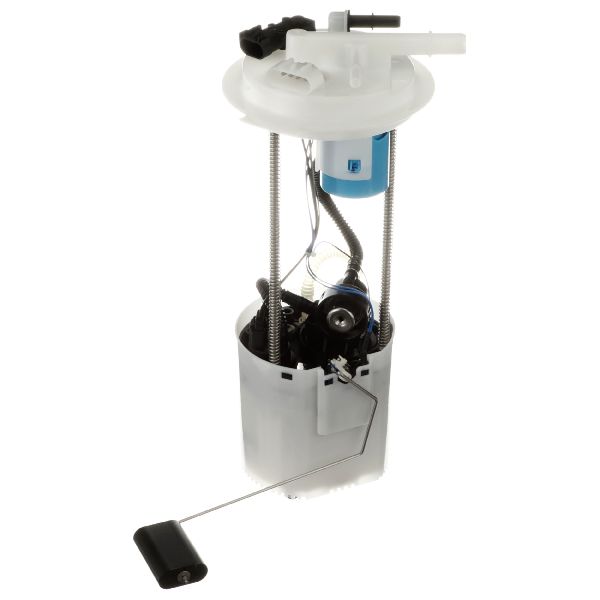
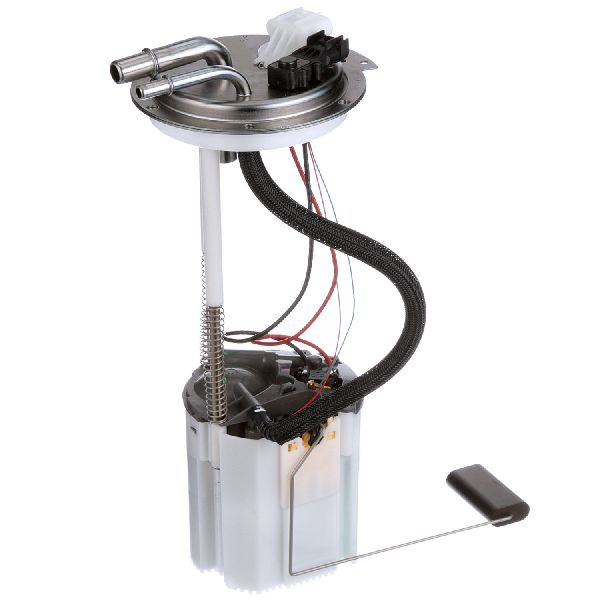
Aftermarket price range: $70-$200 - Fuel Pump Module Assembly — If the internal pressure regulator fails or the pump itself is the cause of contamination, the entire in-tank assembly usually needs to be replaced. This is diagnosed after ruling out the sensor and FPDM.
Trusted brands: ACDelco, Delphi, Carter
OEM price range: $300-$500
Aftermarket price range: $250-$400
Related Codes That Often Appear With This One
- P0087 — Fuel Rail/System Pressure - Too Low. This code may appear intermittently with P0088 if the pressure is fluctuating wildly due to a faulty regulator or driver module. It is also cited in the same TSBs. [PIP4949E]
- P0191 — Fuel Rail Pressure Sensor Circuit Range/Performance. This code points more directly to a problem with the sensor or its circuit and is often seen with P0087/P0088. It is also cited in the same TSBs. [PIP4949E, 16-NA-102]
- P228D — Fuel Pressure Regulator 1 Exceeded Control Limits - Pressure Too High. This is a more specific code indicating the control system cannot lower the pressure to the desired level, often seen alongside P0088.
- P128E — This is a GM-specific code also related to fuel pressure control and is mentioned alongside P0088 in the manufacturer TSBs. [PIP4949E, 16-NA-102]
Technical Service Bulletins (TSBs) & Recalls
- PIP4949E: Mentions DTCs P0087, P0088, P0191 or P128E related to hard start or no start conditions.
- 16-NA-102: Provides a procedure to inspect and replace fuel components to correct hard start/no start and DTCs P0087, P0088, P0191 or P128E caused by fuel system contamination.
- PIP5151F: Discusses hard start, no start, or rough running with codes P0087, P0088, P0191 and P128E, and advises that if contamination is found, the complete fuel system needs to be cleaned.
Platform-Specific Known Issues
- FPDM Programming Required: The Fuel Pump Driver Module (FPDM), also called the Fuel Pump Flow Control Module, is not a plug-and-play part on these vans. After replacement, the new module must be programmed to the vehicle's VIN using GM's Techline Connect (SPS2) software. Failure to program the module will result in a no-start condition or immediate return of fuel pressure codes.
- FPDM Corrosion: The FPDM is typically mounted to the frame rail, often above the spare tire. This location exposes it to road salt, water, and debris, making corrosion of the module's housing and electrical connector a common cause of failure. A visual inspection for heavy rust or green/white powder on the pins is a key diagnostic step.
Mechanic-Grade Diagnostic Values
- Fuel Pressure (Key On, Engine Off) — expected: 415-455 kPa (60-66 psi). Failure: Pressure significantly exceeding this range, especially above 517 kPa (75 psi), confirms a high-pressure condition.
- Fuel Rail Pressure (FRP) Sensor Signal Voltage — expected: Varies between ~0.5V (low pressure) and ~4.5V (high pressure).. Failure: Voltage is stuck at 0V or 5V regardless of actual pressure, or does not change with engine RPM. A 5V reading will falsely trigger P0088.
- Fuel Rail Pressure (FRP) Sensor Reference Voltage — expected: 4.8V - 5.2V. Failure: A reading of 0V on the reference wire indicates an open or a short to ground in the circuit from the ECM.
Scan Tool Commands That Help
- GM GDS2/Tech2/Techline Connect: Fuel Pump Driver Module Replacement Programming — This is a mandatory step after replacing the FPDM. The new module must be programmed with the vehicle's VIN using GM's Service Programming System (SPS2) to function correctly.
- Professional Scan Tool (e.g., GDS2): Fuel Pump On/Off Command — Used during diagnosis to manually activate the fuel pump while monitoring fuel pressure with a mechanical gauge. This helps isolate whether the pump is functional and if the FPDM is responding to commands from the ECM.
Wiring & Ground Locations
- FPDM Ground — The Fuel Pump Driver Module itself grounds through its mounting bolts to the frame rail, typically above the spare tire.. Corrosion between the module and the frame can cause a poor ground, leading to erratic FPDM operation and incorrect fuel pressure.
- Fuel Pump Ground — On similar GM trucks, a primary ground for the fuel pump circuit is located on the driver's side frame rail.. A corroded or broken frame rail ground can interrupt power to the entire fuel pump circuit, including the FPDM, causing it to malfunction.
- Main Chassis Ground — The main ground cable runs from the battery's negative terminal to the chassis/frame, often near the radiator support.. If this primary ground is broken or corroded, multiple systems will fail. The FPDM relies on a solid chassis ground to function, and a failure here can cause fuel pressure issues that mimic a bad module.
- ECM/PCM Ground — A critical ground for the Engine Control Module is located on the rear of the driver's side cylinder head/engine block.. A poor ECM ground can cause incorrect readings from all sensors, including the Fuel Rail Pressure sensor, leading to misdiagnosis.
Real Owner Repair Stories
- YouTube channel 'Oz Mechanics' (2017 Chevy Express 6.0L (similar platform)) — Crank, no start.
❌ Tried (didn't work) Initial diagnosis pointed towards the fuel pump or FPDM.
✅ What actually fixed it The main ground cable from the battery to the chassis was broken. The FPDM and fuel pump were not receiving a proper ground path. Repairing the main ground connection restored fuel pump operation. - Reddit user in r/MechanicAdvice (1999 GMC Savana 5.7L (older but relevant system)) — Crank, no start, low fuel pressure (40 psi instead of 56+).
❌ Tried (didn't work) Replacing the fuel pump initially did not solve the low pressure issue.
✅ What actually fixed it The brand new replacement fuel pump was faulty out of the box. It had an internal issue where its overflow port was bypassing pressure, preventing the system from reaching the required PSI. Replacing the 'new' pump with another one fixed the issue.
When the Usual Fixes Don't Work
- While the Fuel Pump Driver Module (FPDM) is a common cause for P0088, technicians should not immediately replace it without checking primary electrical foundations. A real-world repair on a similar GM van showed that a broken main chassis ground wire prevented the FPDM from functioning, causing a no-start condition. The fix was a simple ground repair, not an expensive module replacement.
- Furthermore, do not automatically trust replacement parts. In one documented case, a brand new fuel pump was defective out of the box and caused persistent fuel pressure problems. The final fix was replacing the new, faulty pump with another new unit. This highlights the importance of testing pressures after a repair, not just assuming the new part has fixed the issue.
OEM Part Supersession History
13501024, 15213110, 20850907, 25785013, 25854536, 25866052, 25967325→20759945— Part consolidation and potential design updates by the manufacturer.
Heads up: Always verify the correct FPDM part number by VIN, as multiple designs were used across the GM truck/van lineup.13534714, 13537053, 13544060, 13544950, 13545846→13554821— Part consolidation and potential design updates by the manufacturer.
Heads up: This part number may apply to different engine or chassis configurations. Using the wrong module can result in a no-start condition even after programming.
Helpful Videos
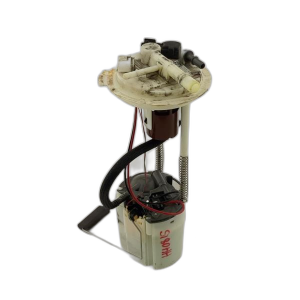
Used OEM Parts in Stock
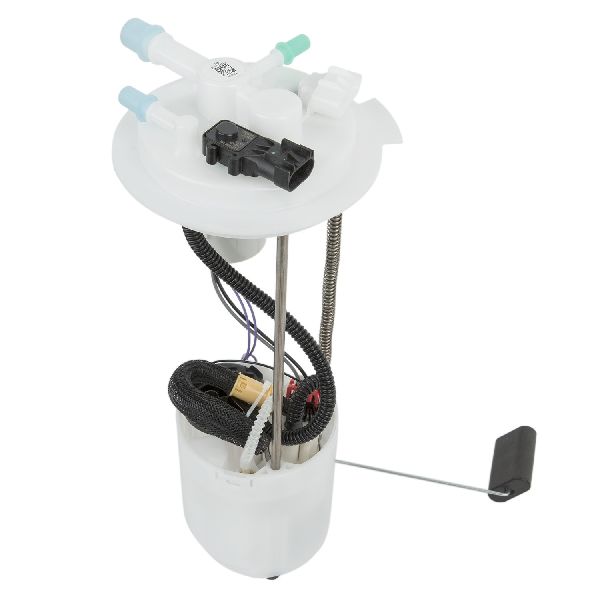
New Aftermarket Parts Available



The information in this article is provided for general reference and educational purposes only. Vehicle specifications, procedures, and part compatibility can vary by production date, trim level, and region. Always consult your vehicle's factory service manual and verify part numbers before purchasing or performing repairs. Safety-critical components such as airbags, seat belts, and braking systems should be installed by a qualified professional.
- Gmc SAVANA:
- 🧭 Diagnostic Flowchart
- 🎬 Helpful Videos
- 🛍️ Shop This Part
- What's Unique About the 2010-2014 Gmc SAVANA
- Symptoms You May Notice
- Most Likely Causes
- Rare But Worth Checking
- Diagnosis Steps
- Parts You'll Likely Need
- Related Codes That Often Appear With This One
- Technical Service Bulletins (TSBs) & Recalls
- Platform-Specific Known Issues
- Mechanic-Grade Diagnostic Values
- Scan Tool Commands That Help
- Wiring & Ground Locations
- Real Owner Repair Stories
- When the Usual Fixes Don't Work
- OEM Part Supersession History
- 🎟️ Get 5% Off