

P0088 on 2010-2016 GMC Sierra 1500: High Fuel Pressure Causes & Fixes
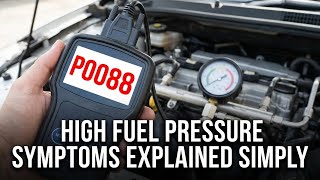
For 2014-2016 models with direct injection, P0088 is most often caused by a failing high-pressure fuel pump (HPFP). For earlier 2010-2013 models, the issue is more likely a faulty fuel rail pressure sensor or fuel pressure regulator. The HPFP is a costly repair, often exceeding $1,000 at a shop, with some estimates reaching over $1,500.
- For 2014-2016 Sierra 1500s, P0088 is very frequently caused by a failed high-pressure fuel pump (HPFP).
- A key diagnostic step is to check the engine oil for the smell of fuel, which strongly indicates a failed HPFP leaking into the crankcase.
- The second most likely cause is a faulty fuel rail pressure sensor providing incorrect readings.
- This is a serious code that should be addressed promptly to avoid drivability issues and potential engine damage.
- Due to the high pressures and fire risk, this repair, especially the HPFP replacement, is best left to a professional.
What's Unique About the 2010-2016 Gmc SIERRA 1500
The 2010-2016 Sierra 1500 spans two key generations. The 2014 model year introduced the EcoTec3 engine family (5.3L L83, 6.2L L86), which uses gasoline direct injection (GDI). These GDI systems feature a second, engine-driven high-pressure fuel pump (HPFP) in addition to the standard in-tank pump. Consequently, diagnosing P0088 on a 2014-2016 model almost always involves the high-pressure fuel system, with the HPFP being a very common failure point. On earlier 2010-2013 models with port injection, the diagnosis focuses on the traditional fuel system components like the in-tank pump and fuel pressure regulator.
Diagnostic Flowchart
Tap your situation to follow the diagnostic path that matches what you're seeing on this vehicle.
Generation note: This range covers the end of the second generation (GMT900, 2010-2013) and the start of the third generation (K2XX, 2014-2016). The primary difference is the fuel system. GMT900 trucks use a standard port fuel injection system with a test port on the fuel rail. K2XX trucks introduced direct injection, which adds a high-pressure fuel pump and a different fuel rail pressure sensor setup, making diagnosis more complex.
Symptoms You May Notice
- Check Engine Light is on
- Hard starting or no-start conditions [Bulletin #PIP5151F]
- Rough running or idling [Bulletin #PIP4949E]
- Reduced engine power (Limp Mode)
- Black smoke from the exhaust
- Strong smell of fuel
- Decreased fuel economy
- Engine stalling
- Replacing the in-tank (low-pressure) fuel pump on a 2014+ model when the issue is with the engine-mounted high-pressure fuel pump (HPFP).
- Replacing the fuel rail pressure sensor without first verifying if the pressure is actually high with a mechanical gauge or checking for wiring faults.
Most Likely Causes
- Failing High-Pressure Fuel Pump (HPFP) 🔴 High Probability → Shop Fuel Pump Applies to 2014-2016 models with direct injection. The internal regulator of the HPFP can fail or stick, causing it to produce excessive pressure. This is a widely documented issue on GM's EcoTec3 engines. The pump is mechanically driven by a lobe on the camshaft.
How to confirm: A technician will use a scan tool to monitor desired vs. actual fuel rail pressure. If the actual pressure is consistently and significantly higher than desired, and the sensor is confirmed to be working, the HPFP is the likely culprit. A critical secondary check is to inspect the engine oil for a strong smell of gasoline, which indicates the HPFP's internal seal has failed and is leaking fuel into the crankcase.
Typical fix: Replacement of the high-pressure fuel pump and the associated high-pressure fuel line, which is a one-time use part. An oil and filter change is mandatory if fuel has contaminated the crankcase.
Est. part cost: $300-$600 - Faulty Fuel Rail Pressure Sensor 🟡 Medium Probability → Shop Fuel Pressure Sensor The sensor can fail and send an erroneously high voltage signal to the ECM, tricking it into thinking the pressure is too high when it's actually normal. This can be due to internal failure or corrosion in the connector.
How to confirm: Compare the fuel pressure reading on a scan tool with a reading from a mechanical fuel pressure gauge (if a port is available). If the scan tool shows high pressure but the mechanical gauge shows normal pressure, the sensor is bad. With the engine off (key on), the sensor's voltage can be tested; a reading of 5 volts often indicates a short or a bad sensor, whereas a normal reading might be around 1.5-1.8 volts.
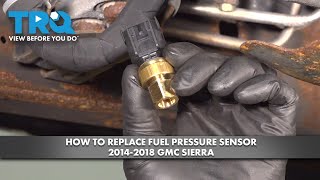
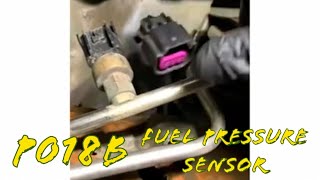
Typical fix: Replace the fuel rail pressure sensor. On 2014+ models, this sensor is located on the high-pressure fuel line, often on the driver's side of the engine.
Est. part cost: $50-$150 - Clogged or Restricted Fuel Return Line ⚪ Low Probability This is more applicable to the 2010-2013 port-injected models. A kink or blockage can prevent excess fuel from returning to the tank, causing pressure to build up. Modern GDI systems are typically returnless from the high-pressure side.
How to confirm: Visually inspect all fuel lines for kinks, damage, or obstructions.
Typical fix: Clear the obstruction or replace the damaged section of the fuel line.
Est. part cost: $20-$100 - Wiring Issues ⚪ Low Probability The wiring harness to the fuel rail pressure sensor or fuel pump can become damaged (e.g., by rodents chewing on wires on top of the engine) or corroded, causing a short to power that results in a high voltage signal.
How to confirm: Visually inspect the wiring harness for any signs of damage. Use a multimeter to check for a short to power or ground on the sensor's signal wire. A reading of 5V on the signal wire with the sensor unplugged can indicate a short to power in the harness.
Typical fix: Repair or replace the damaged section of the wiring harness.
Est. part cost: $10-$50
Rare But Worth Checking
- Fuel System Contamination: As noted in TSB #PIP5151F, significant fuel system contamination (like rusty metal bits or water) can cause pressure regulation issues by clogging regulators or injectors. The TSB warns that if contamination is found, the 'complete fuel system will need to be replaced,' which is an extremely expensive repair. [Bulletin #PIP5151F]
- Faulty Powertrain Control Module (PCM): → Shop Engine Control Module (ECM) In very rare cases, the PCM itself can fail and misinterpret the data from the fuel pressure sensor, causing it to set a false P0088 code. This should only be considered after all other possibilities, especially wiring, have been exhausted.
- Aftermarket Low-Pressure (Lift) Pump Issues: On trucks modified with an aftermarket lift pump (common on diesels, but sometimes added to gas engines), if the lift pump's output pressure is set too high, it can overwhelm the high-pressure pump's regulator, causing a P0088 code, especially during deceleration. A technician in a detailed video diagnostic had to slightly reduce the output pressure of an aftermarket pump to resolve the code.
Diagnosis Steps
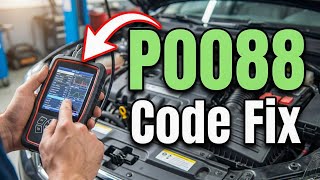
- Connect an OBD-II scanner and confirm the P0088 code is present. Check for any other related codes.
- View live data on the scanner. Observe the 'Fuel Rail Pressure' PID. Compare the desired pressure to the actual pressure at idle and while revving the engine. On GDI engines, idle pressure might be a few hundred PSI, while under load it can be over 2,000 PSI.
- Perform a visual inspection of the fuel system, including the fuel lines and the wiring harness for the fuel pressure sensor and high-pressure pump (if equipped), looking for any obvious damage, kinks, or corrosion. Pay close attention to the harness on top of the engine, a known spot for rodent damage.
- For 2014+ models, the primary suspects are the fuel rail pressure sensor and the high-pressure fuel pump. To test the sensor, check its voltage with the key on, engine off. A reading near 5V suggests a short or failed sensor. If possible, compare the scan tool reading to a mechanical gauge. If they differ significantly, the sensor is likely faulty.
- If the sensor is accurate and the pressure is confirmed to be too high, the high-pressure fuel pump is the most probable cause.
- Crucially for 2014+ models, check the engine oil for a strong smell of gasoline. This is a tell-tale sign that the HPFP's internal seal has failed and is leaking fuel into the crankcase. If fuel is present, an oil change is mandatory with the pump replacement. 🎬 Watch: Professional diagnosis and repair for high fuel pressure
- For 2010-2013 models, test the fuel pressure sensor as described above. If the sensor is good, investigate the fuel pressure regulator and check for restrictions in the fuel return line.
Parts You'll Likely Need
- High-Pressure Fuel Pump (HPFP)
(OEM #12677329 (Note: This part has been superseded by newer numbers like 12691016))— This is the most common failure point for P0088 on 2014-2016 Sierra 1500s with direct injection. The internal regulator fails, causing over-pressurization. Multiple sources confirm this part number and its successors.
Trusted brands: ACDelco, Bosch
OEM price range: $400-$600
Related Codes That Often Appear With This One
- P0087 — This code for 'Fuel Rail/System Pressure - Too Low' can appear alongside P0088 if the pressure is fluctuating wildly or if a failing component is causing erratic behavior. Both are mentioned in TSBs #PIP5151F and #PIP4949E. [Bulletin #PIP5151F, Bulletin #PIP4949E]
- P0191 — This code for 'Fuel Rail Pressure Sensor Circuit Range/Performance' directly relates to the sensor's operation and often accompanies pressure codes when the sensor itself is faulty or providing irrational readings. It is also cited in TSBs #PIP5151F and #PIP4949E. [Bulletin #PIP5151F, Bulletin #PIP4949E]
- P0172 / P0175 — These codes for 'System Too Rich (Bank 1 / Bank 2)' are common when a failing high-pressure fuel pump leaks fuel into the crankcase. The fuel vapor is ingested through the PCV system, causing a rich condition that the oxygen sensors detect.
Technical Service Bulletins (TSBs) & Recalls
- PIP5151F: Discusses hard start, no start, and rough running with codes P0087, P0088, P0191. Warns that fuel system contamination (water, rust, DEF in diesels) can be a cause and may require complete fuel system replacement.
- PIP4949E: Mentions hard start or no-start conditions with codes P0087, P0088, P0191, or P128E, directing technicians to follow standard service information for diagnosis.
- PIP5119: Specific to 2011-2013 6.6L Duramax diesels, but relevant for diagnostic principle. Warns that P0088 can be set if the two fuel pressure regulator connectors are swapped during a repair.
Platform-Specific Known Issues
- Owner Experience: HPFP Failure with Fuel in Oil: A common repair story for the 2014-2016 models involves the truck suddenly running rough, going into limp mode, and throwing codes P0088, P0172, and P0175. Upon checking the oil dipstick, owners report a very strong smell of gasoline. This confirms the diagnosis of a failed high-pressure fuel pump leaking fuel directly into the engine oil. The standard dealer repair is to replace the pump, the single-use high-pressure pipe, and change the oil and filter.
- Owner Experience: Misdiagnosis of Fuel Pressure Sensor: → Shop Fuel Pressure Sensor Several owners have shared experiences of replacing the fuel rail pressure sensor first, only to have the P0088 code return. The issue was ultimately traced back to the high-pressure fuel pump. This highlights the importance of verifying actual fuel pressure and checking for fuel in the oil before replacing the sensor, which is a less common failure point for this specific code on GDI models.
Mechanic-Grade Diagnostic Values
- Fuel Rail Pressure Sensor (FRPS) Voltage, Key On Engine Off (KOEO) — expected: ~1.5V to 1.8V. Failure: A reading of 0V, 5V, or a wildly fluctuating voltage. A constant 5V indicates a short to power or a bad sensor.
- Fuel Rail Pressure Sensor (FRPS) Voltage, Stationary/No Load — expected: ~0.5V. Failure: Significant deviation from 0.5V when the engine is off and the system has depressurized.
- Fuel Rail Pressure Sensor (FRPS) Voltage, Idle — expected: ~1.32V. Failure: Voltage significantly higher or lower than ~1.3V at idle.
- Low-Pressure Fuel System Pressure (In-tank pump) — expected: 40-60 PSI. Failure: Pressure significantly outside this range could indicate a problem with the in-tank pump or the Fuel Pump Control Module (FPCM), which can affect the high-pressure system.
- Fuel Pressure Sensor Torque Specification (2014-2018 models) — expected: 11 ft-lbs. Failure: Over-torquing can damage the new sensor or fuel line; under-torquing can cause leaks.
Scan Tool Commands That Help
- GDS2 (GM Techline): Fuel Pressure Control — This bidirectional control allows a technician to command changes in fuel pressure to test the response of the high-pressure fuel pump, fuel pressure sensor, and the Fuel Pump Control Module (FPCM). It's used to verify if the components can achieve and hold commanded pressures, isolating a non-responsive part.
- GDS2 (GM Techline): Fuel Pump Enable/Disable — This function is used to safely disable the low-pressure fuel pump when servicing the fuel system or to test the high-pressure pump's ability to draw fuel independently under certain conditions. It's a critical safety and diagnostic step.
Wiring & Ground Locations
- Fuel Rail Pressure Sensor Connector (2014+) — On the high-pressure fuel line, typically on the driver's side of the engine compartment, below the ABS module.. This is the primary sensor reporting the high-pressure data. A bad connection, corrosion, or wiring damage at this connector can cause false P0088 codes.
- ECM Connector X1, Pins 18, 19, 29 (2014+ L83/L86) — At the Engine Control Module (ECM), located on the left front of the engine compartment near the fan shroud.. Pin 19 (D-BU/WH) is the sensor signal wire, Pin 29 (GY) is the 5V reference, and Pin 18 (BK/L-BU) is the low reference (ground). Testing for voltage and continuity at these specific pins can isolate a wiring fault between the sensor and the ECM.
- Fuel Pump Control Module (FPCM) — On 2014+ models, it is typically mounted on the right-hand rear frame rail near the fuel tank.. The FPCM controls the in-tank (low-pressure) pump. While a failure here usually causes low pressure (P0087), an intermittent fault or failure in the 'full on' state could theoretically contribute to an over-pressure situation by supplying excessive volume to the HPFP.
- G104 / G103 (Engine Grounds) — G104 is on the left rear of the engine block. G103 is on the right rear of the engine block.. The ECM and its sensors rely on clean ground connections. A poor engine block ground can create a floating ground, causing incorrect sensor readings, including the fuel rail pressure sensor, potentially leading to a false P0088 code.
Real Owner Repair Stories
- Diesel Bombers forum user 'clcreek' (2006 Silverado 6.6 Duramax (LBZ) - Note: This is a diesel, but the P0088 diagnostic thought process is similar and valuable.) — Intermittent inconsistent idle after startup, Check Engine Light on, truck in limp mode. Clearing the code would temporarily resolve the idle issue.
❌ Tried (didn't work) Replacing the fuel filter.
✅ What actually fixed it The user replaced the fuel pressure regulator on the high-pressure pump. The repair was noted as being difficult due to tight access to the T-25 Torx screws, requiring modified tools. After replacement, the symptoms and code were resolved.
OEM Part Supersession History
12677329→12691016, 12733943, and others.— GM often updates parts to improve reliability or change suppliers. The HPFP for these engines has had multiple revisions.
Heads up: While many part numbers are listed as replacements, it is critical to use a VIN-based catalog to get the exact correct part for the specific vehicle. Part 12691016 is a common service replacement for 12677329.12623130→12673824— Part update/revision for the Fuel Rail Pressure Sensor.
Heads up: For 2014-2016 models, either part number may be encountered, but 12673824 is the current service replacement.20856290→23382215 (and others in between)— Part update/revision for the Fuel Pump Control Module (FPCM).
Heads up: These modules are specific. The part number must be matched to the vehicle's original equipment. Part 23382215 is noted for a 'Mid Model Year Update'.
Model Year Variations Within This Range
- 2014-2016: These K2XX platform trucks use a direct injection system with a mechanically driven high-pressure fuel pump (HPFP) and a separate low-pressure in-tank pump controlled by a Fuel Pump Control Module (FPCM). Diagnosis of P0088 almost always centers on the HPFP or its sensor.
- 2010-2013: These GMT900 platform trucks use a traditional port fuel injection system with a single in-tank fuel pump and a fuel pressure regulator. P0088 diagnosis focuses on a faulty regulator, a restriction in the return line, or a bad sensor on the fuel rail.
Helpful Videos
Used OEM Parts in Stock
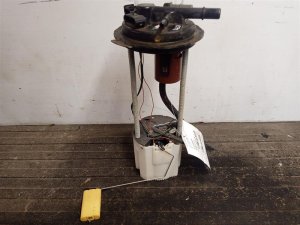
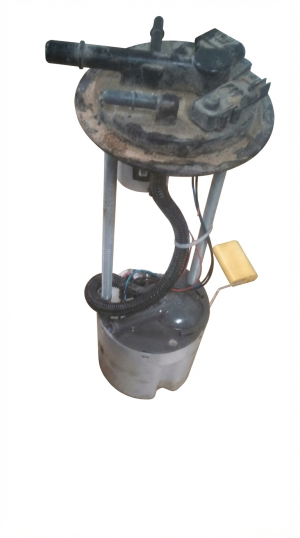
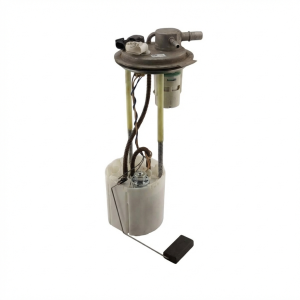
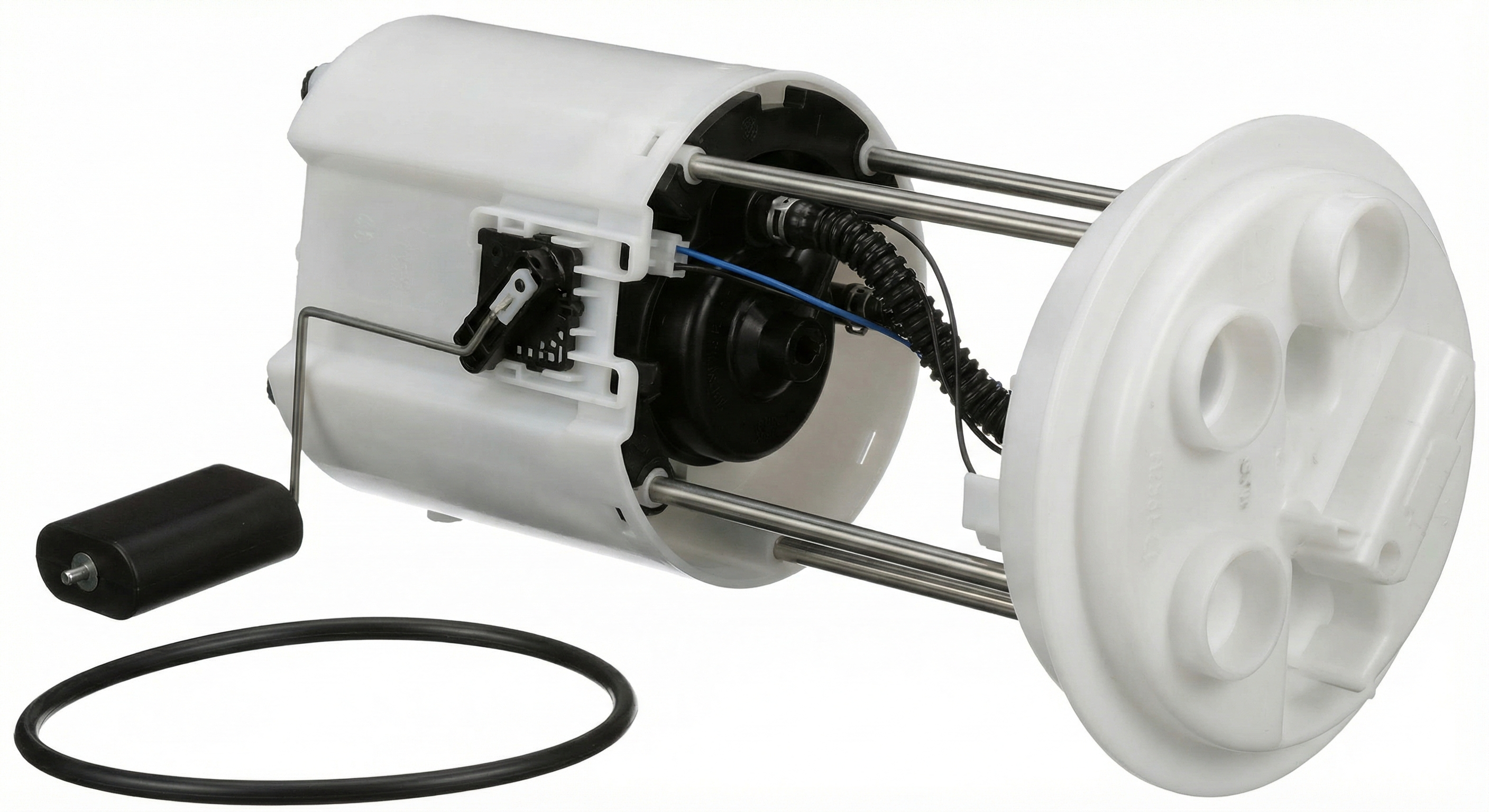
New Aftermarket Parts Available
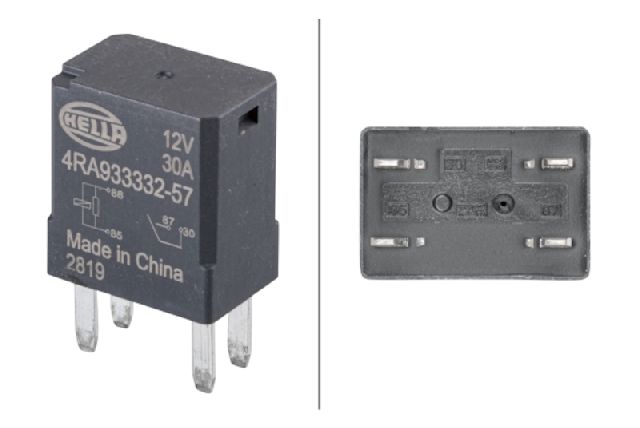



The information in this article is provided for general reference and educational purposes only. Vehicle specifications, procedures, and part compatibility can vary by production date, trim level, and region. Always consult your vehicle's factory service manual and verify part numbers before purchasing or performing repairs. Safety-critical components such as airbags, seat belts, and braking systems should be installed by a qualified professional.
- Gmc SIERRA 1500:
- 🧭 Diagnostic Flowchart
- 🎬 Helpful Videos
- 🛍️ Shop This Part
- What's Unique About the 2010-2016 Gmc SIERRA 1500
- Symptoms You May Notice
- Most Likely Causes
- Rare But Worth Checking
- Diagnosis Steps
- Parts You'll Likely Need
- Related Codes That Often Appear With This One
- Technical Service Bulletins (TSBs) & Recalls
- Platform-Specific Known Issues
- Mechanic-Grade Diagnostic Values
- Scan Tool Commands That Help
- Wiring & Ground Locations
- Real Owner Repair Stories
- OEM Part Supersession History
- Model Year Variations Within This Range
- 🎟️ Get 5% Off