

P0088 on 2011-2015 GMC Sierra 3500 6.6L Duramax: High Fuel Rail Pressure Causes & Fixes
On a 2011-2015 Sierra 3500 with the 6.6L LML Duramax engine, code P0088 means the fuel rail pressure is dangerously high. This is most often caused by a failing Fuel Pressure Regulator (FCA) on the CP4 high-pressure pump, often due to contamination from the pump itself failing. It is critical to stop driving, as this can be an early symptom of a catastrophic CP4 pump failure which can destroy the entire fuel system, leading to repairs costing over $10,000.
- P0088 on an LML Duramax is a critical code indicating dangerously high fuel pressure.
- Do not drive the vehicle. Tow it to a qualified diesel mechanic immediately to prevent catastrophic engine damage.
- The most likely cause is a failing fuel pressure regulator, often due to the beginning of a CP4 high-pressure pump failure.
- Diagnosis must include checking the fuel filter and regulator for metal shavings. The presence of metal confirms CP4 failure and requires a full fuel system replacement.
- If the truck was just serviced, check for swapped electrical connectors on the two fuel pressure regulators as a possible, simpler cause.
What's Unique About the 2011-2015 Gmc SIERRA 3500

The 2011-2016 LML Duramax engine uses a Bosch CP4.2 high-pressure fuel pump, which is notoriously prone to failure due to a lack of lubricity in modern diesel fuel. Unlike the more robust CP3 pump used in earlier Duramax generations, the CP4.2 can disintegrate internally, sending metallic debris throughout the entire fuel system. Code P0088 can be an early warning sign of this catastrophic failure, often caused by the fuel pressure regulator sticking due to this debris. Therefore, this code carries more weight on an LML Duramax than on many other vehicles, as confirmed by GM Technical Service Bulletins #16-NA-102 and #PIP5151F which directly link P0088 to fuel system contamination.
Diagnostic Flowchart

Tap your situation to follow the diagnostic path that matches what you're seeing on this vehicle.
Symptoms You May Notice

- Check Engine Light is on
- Engine goes into "limp mode" with severely reduced power
- Rough or surging idle
- Engine knocking or louder than usual combustion sounds
- Hard starting or no-start condition
- Black smoke from the exhaust
- Engine stalling unexpectedly.
- Replacing only the fuel filter. While a clogged filter can cause low pressure (P0087), it is not a typical cause for high pressure (P0088). However, the filter should always be inspected for metal debris as a primary diagnostic step.
- Replacing the Fuel Pressure Regulator 2 (Relief Valve). This is a safety relief valve on the rail, not the primary controlling device. While it can fail, the more common culprit for P0088 is the Regulator 1 on the pump. A forum member suggested checking this valve for debris, but it's less likely to be the cause than Regulator 1.
Most Likely Causes

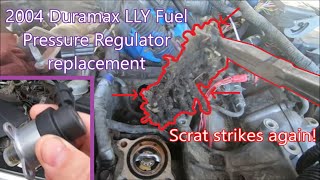
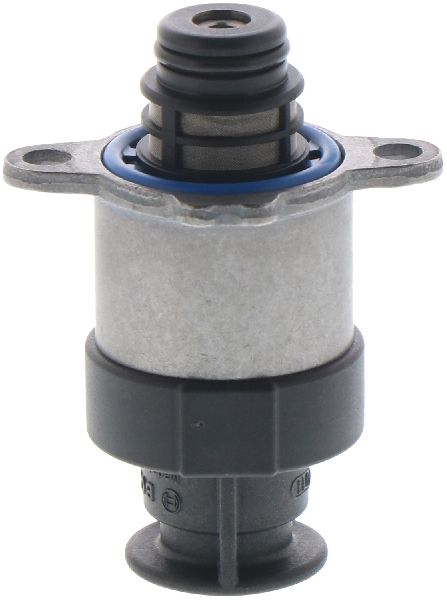
- Failing Fuel Pressure Regulator 1 (FCA/Inlet Metering Valve) 🔴 High Probability → Shop Diesel Fuel Injector Pump This regulator is mounted on the CP4 pump and is the primary component for controlling rail pressure. It can fail electronically or, more commonly, get stuck due to metallic debris from a failing pump or other fuel contamination. This is the most common cause for P0088 when no metal is found.
How to confirm: Use a scan tool to compare 'Desired Rail Pressure' with 'Actual Rail Pressure'. At idle, desired pressure is around 4,000 PSI. If the actual pressure is significantly higher (e.g., spiking to 29,000 PSI), the regulator is a prime suspect. A technician may also command it with a scan tool to check for response. Visual inspection of the regulator's screen for debris is a key diagnostic step per TSB 16-NA-102.
Typical fix: Replace the Fuel Pressure Regulator 1 on the CP4 pump. It is critical to inspect the old regulator's screen for metallic debris upon removal. If metal is present, the CP4 pump is failing and the entire fuel system needs replacement. If the screen is clean, replacing just the regulator may solve the issue.
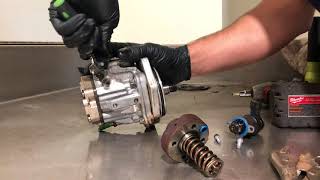
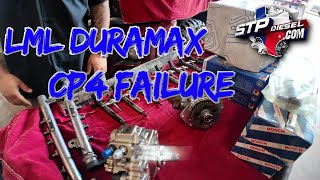
Est. part cost: $100-$250 - Failing High-Pressure CP4.2 Fuel Pump 🟡 Medium Probability → Shop Fuel Pump The LML Duramax is infamous for CP4.2 pump failures. The pump can wear internally due to a design that is less tolerant of low-lubricity fuel, sending metal particles that jam 🎬 See the internal damage caused by a CP4 pump failure. the fuel pressure regulator, causing it to stick and create excessive pressure.
How to confirm: The definitive sign is finding metallic (magnetic) shavings on the screen of the fuel pressure regulator or in the fuel filter housing. This confirms the pump is destroying itself. GM TSB 16-NA-102 outlines this exact inspection process.
Typical fix: This is a catastrophic failure requiring replacement of the entire fuel system: CP4 pump (often converted to a more reliable CP3), all 8 fuel injectors, both fuel rails, and all high and low-pressure fuel lines, plus cleaning the fuel tank. 🎬 Watch: Complete fuel system replacement and CP4 failure fix. This is the only way to prevent the new pump from being destroyed by leftover debris.
Est. part cost: $3000-$8000 - Swapped Fuel Pressure Regulator Connectors ⚪ Low Probability → Shop Fuel Injection Pressure Regulator This occurs almost exclusively after a major engine or fuel system repair. The connectors for Fuel Pressure Regulator 1 (on the pump) and Fuel Pressure Regulator 2 (on the rail) can be accidentally swapped. This causes the ECM to lose control of pressure, which then spikes to its mechanical maximum, immediately setting a P0088.
How to confirm: Visually inspect the wiring harness connectors for the two fuel pressure regulators. According to GM Service Information, they are keyed differently but can be forced. This will immediately set a P0088 and cause a rough run condition with extreme rail pressure (29,000+ PSI at idle).
Typical fix: Correctly connect the wiring harness to the proper regulators.
Est. part cost: $0 - Faulty Fuel Rail Pressure Sensor ⚪ Low Probability → Shop Fuel Pressure Sensor While less common than regulator or pump failure, the sensor itself can fail and send an erroneously high voltage signal to the ECM, making it think the pressure is too high when it isn't.
How to confirm: With the engine off (but ignition on), a scan tool should show near-zero fuel rail pressure. If it shows a high reading (e.g., thousands of PSI), the sensor is likely faulty or has a wiring issue. A user on DuramaxDiesels.com forum replaced the sensor first, but the code returned, indicating it's often not the root cause.
Typical fix: Replace the fuel rail pressure sensor, which is located on the passenger side fuel rail.
Est. part cost: $80-$200
Rare But Worth Checking
- Restricted Fuel Return Line: A kinked or clogged fuel return line can prevent the system from bleeding off excess pressure, causing it to build up in the rail and trigger a P0088 code. This is uncommon but should be checked during diagnosis.
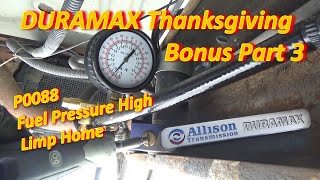
- Excessive Lift Pump Pressure: If an aftermarket lift pump is installed and its pressure is set too high, it can overwhelm the CP4's ability to regulate pressure, causing spikes. A YouTube video by Pine Hollow Auto Diagnostics documented a case where adjusting an aftermarket pump's output pressure resolved a P0088 code that only occurred during deceleration.
- Wiring Harness Issues: A loose ground or a short in the wiring to the fuel pressure regulator or its controller can cause erratic behavior and maximum rail pressure spikes. A user on DuramaxDiesels.com reported that a loose ground wire on their controller caused intermittent P0088 codes.
Diagnosis Steps
- Connect a professional-grade OBD-II scanner capable of reading live data for GM diesel systems.
- Check for any other accompanying fault codes, paying close attention to P128E, P0087, or P0191.
- Observe the 'Desired Fuel Rail Pressure' vs. 'Actual Fuel Rail Pressure' live data streams at idle. For P0088, the 'Actual' will be significantly higher than 'Desired' (which should be ~4,000 PSI).
- Turn the engine off, but leave the ignition on. The 'Actual Fuel Rail Pressure' should drop to a very low reading (near 0 PSI). If it remains high, suspect a faulty Fuel Rail Pressure Sensor or wiring issue.
- Carefully remove the fuel filter and drain its contents into a clean, clear container. Inspect the fuel for any shiny, metallic particles. Use a magnet to confirm if they are steel. The presence of metal indicates a failing CP4 pump.
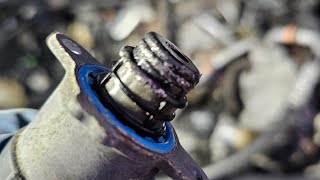
- If no metal is found in the filter, the next step is to remove and inspect Fuel Pressure Regulator 1 on the CP4 pump, as per TSB 16-NA-102. Clean the area thoroughly before removal to prevent contamination. Check its inlet screen for any magnetic debris.
- If magnetic debris is found on the regulator, the CP4 pump has failed. The entire fuel system must be replaced and cleaned.
- If the vehicle was recently repaired, verify that the electrical connectors for Fuel Pressure Regulator 1 and 2 are not swapped.
- Inspect the fuel return lines for any visible kinks or blockages.
- If an aftermarket lift pump is installed, check its output pressure to ensure it is within the recommended specs (typically not to exceed 10-12 PSI).
Parts You'll Likely Need
- Fuel Pressure Regulator 1 (On CP4 Pump)
(OEM #12642623)— This is the most common failure point for causing a P0088 code. It gets stuck or fails electronically, leading to uncontrolled high pressure.
Trusted brands: Bosch (OEM Manufacturer), ACDelco, Exergy
OEM price range: $150-$250
Aftermarket price range: $100-$180 - CP4 to CP3 Conversion Kit / Full Fuel System Kit — If metal is found in the fuel system, this is the only correct repair. The kit replaces the unreliable CP4 pump with the older, more robust CP3 design and includes all necessary components like injectors, lines, and rails.
Trusted brands: S&S Diesel Motorsport, Fleece Performance Engineering, Exergy Performance
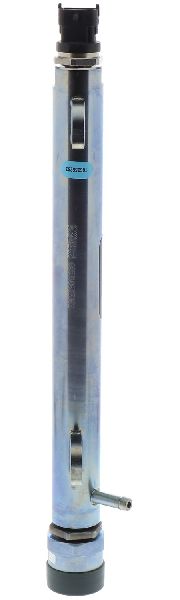
Aftermarket price range: $3500-$7000 - Fuel Rail Pressure Sensor
(OEM #12651990)— Replaced when diagnosis points to a sensor malfunction (e.g., high pressure reading with engine off), though it is a less common cause than the regulator or pump.
Trusted brands: Bosch (OEM, P/N 0281006313), ACDelco
OEM price range: $100-$200
Aftermarket price range: $70-$150
Related Codes That Often Appear With This One
- P128E — This is a GM-specific code for Fuel Rail Pressure Performance. It often sets alongside P0088 when the ECM detects erratic or out-of-range pressure readings, and is specifically mentioned in TSBs 16-NA-102 and PIP5151F.
- P0087 — Fuel Rail Pressure Too Low. It may seem contradictory, but a failing regulator or CP4 pump can cause pressure to be both erratic and unstable, sometimes spiking high (P0088) and other times dropping low (P0087) under different load conditions. This is a classic symptom of CP4 failure.
- P0191 — Fuel Rail Pressure Sensor Circuit Range/Performance. This code can set along with P0088 and is also noted in the same GM service bulletins related to fuel contamination.
Technical Service Bulletins (TSBs) & Recalls
- Duramax Diesel Hard Start, No Start, DTCs P0087, P0088, P0191, P128E or Injection Pump Replacement: This key bulletin provides the official GM procedure for diagnosing fuel system contamination. It instructs technicians to inspect Fuel Pressure Regulator 1 for magnetic debris if a P0088 code leads to a potential pump replacement. If metal is found, it mandates the replacement and cleaning of the entire fuel system.
- Diagnostic Tip - 6.6L Duramax Fuel System Contamination Identification: This preliminary bulletin alerts technicians that codes like P0087, P0088, P0191, and P128E are often linked to fuel contamination from sources like water, rust, or Diesel Exhaust Fluid (DEF). It advises a thorough inspection and cleaning of the fuel system if any contamination is discovered.
Platform-Specific Known Issues
- Catastrophic CP4.2 Pump Failure: The 2011-2016 LML Duramax engine is widely known for failures of the Bosch CP4.2 high-pressure fuel pump. This failure contaminates the entire fuel system with metal shavings, requiring a complete system replacement that can exceed $10,000. Code P0088 is a major red flag for this issue.
- Fuel Contamination TSBs: While the provided TSBs (#16-NA-102, #PIP5151F) reference P0088 on gasoline models due to debris, a similar TSB for diesels (#16-NA-102, updated Aug 2019) addresses P0088 from metallic debris originating from the injection pump. It outlines the procedure for inspecting for debris and confirms that if magnetic debris is found, a full fuel system replacement is necessary.
Mechanic-Grade Diagnostic Values
- Fuel Pressure Control Mode — expected: At idle, Fuel Pressure Regulator 2 (on rail) is used. Above 1700 RPM, Fuel Pressure Regulator 1 (on pump) is primarily used.. Failure: Incorrect pressure readings that don't align with the active regulator based on RPM may help isolate the faulty component.
- Fuel Rail Pressure Sensor Voltage (Key On, Engine Off) — expected: Near 0 PSI. A high reading indicates a faulty sensor or wiring issue.. Failure: A reading of thousands of PSI with the engine off points to a sensor or circuit fault, not actual pressure.
- Aftermarket Lift Pump Low-Side Pressure — expected: Adjustable from 3-15 PSI, but should be set to the lowest pressure needed to supply the CP4 pump without causing high rail pressure on deceleration.. Failure: High rail pressure (P0088) specifically on deceleration (engine braking) can be caused by excessive lift pump pressure overwhelming the CP4's regulator.
Scan Tool Commands That Help
- GDS2/Tech2: Fuel Rail Pressure Control — A technician can use this bidirectional command to manually increase or decrease commanded fuel pressure to test the response of the fuel pressure regulators and see if the actual pressure follows the command. This helps differentiate a sensor issue from a regulator or pump issue.
- GDS2/Tech2: Injector Balance Rates — While not a direct test for P0088, checking injector balance rates (should be between +4 and -6.9) can help identify if a single injector is failing or if the issue is system-wide. An out-of-spec injector could be related to contamination that also affects the pressure regulators.
- GDS2/Tech2: Reductant Fluid Quality Test — This is not directly for P0088, but is a critical scan tool function for the LML platform's emissions system. It's important to note that proper diagnosis on this truck often requires dealer-level tools for functions beyond basic code reading.
Wiring & Ground Locations
- Engine Block Ground — The main ground from the battery negative terminal connects to the engine block near the front. A separate ground strap connects the cab to the rear of the driver's side cylinder head.. The ECM and all its sensors, including the fuel pressure sensor and regulators, rely on a solid engine ground. A poor ground connection can cause erratic sensor readings and incorrect actuator commands, potentially leading to pressure spikes.
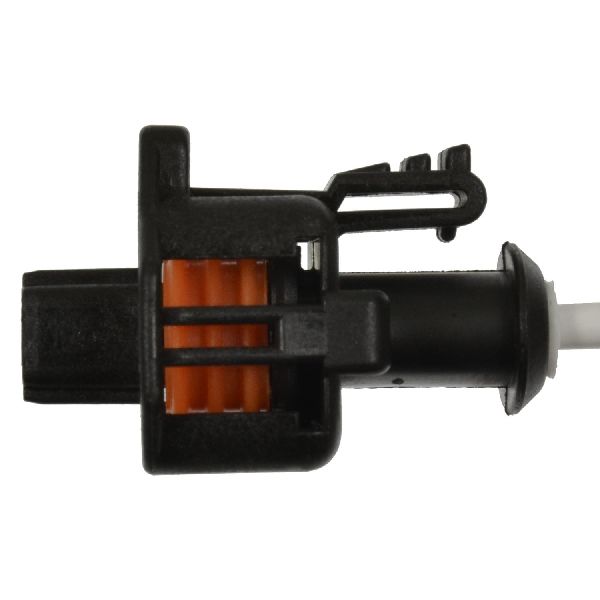
- Fuel Pressure Regulator 1 Connector — On top of the CP4.2 high-pressure fuel pump, located in the engine valley.. This is the primary actuator for controlling fuel pressure above 1700 RPM. A loose connection, corrosion, or swapped connector with Regulator 2 can cause a loss of control and default to maximum pressure.
- Fuel Pressure Regulator 2 Connector — On the driver's side (LH) fuel rail.. This regulator controls pressure at idle. A wiring issue here could cause idle pressure problems and could be swapped with the Regulator 1 connector after a repair.
- G101 / G102 — Chassis ground locations. A GM document (PIT5562) indicates these grounds can be faulty on some vehicles, causing a wide range of electrical issues.. While not directly tied to the fuel system in the document, a poor main chassis ground can create unpredictable electrical problems across the vehicle, potentially affecting ECM or fuel system module operation.
Real Owner Repair Stories
- YouTube channel 'Pine Hollow Auto Diagnostics' (Duramax LML (year not specified, but within range) with an aftermarket PPE lift pump.) — P0088 code setting only during deceleration/coasting downhill.
❌ Tried (didn't work) Initial diagnosis was complicated by other electrical issues (PRNDL display, no-crank).
✅ What actually fixed it The aftermarket lift pump pressure was set too high (around 15 PSI). During deceleration, when the injectors were off, this excess low-side pressure overwhelmed the CP4's ability to regulate, causing a spike in high-side rail pressure. The fix was to adjust the lift pump's output pressure down to about 5 PSI. - DuramaxDiesels.com forum user (LMM Duramax (similar fuel system principles)) — Intermittent P0088 code, rail pressure maxing out to 29,000 PSI randomly.
❌ Tried (didn't work) Replacing both fuel pressure regulators did not solve the issue.
✅ What actually fixed it The user found a loose ground wire on their fuel system controller. After securing the ground connection, the pressure spikes stopped and the code did not return. - Reddit user on r/Duramax (LMM Duramax) — P0088 code, rough running, limp mode after replacing fuel lines and sending unit. Found rusty metal bits in the fuel filter.
❌ Tried (didn't work) Replacing the fuel filter alone.
✅ What actually fixed it The user added injector cleaner to the fuel and let the engine idle for about 30 minutes. The engine sputtered, and then the pressure dropped to normal, clearing the code. This suggests a small piece of debris was temporarily blocking a regulator and was eventually flushed through the system. This was a lucky outcome, as metal debris usually indicates catastrophic failure.
OEM Part Supersession History
Bosch 0281006019, GM 12611872→Current OEM parts may have different numbers.— This is the part number for the Fuel Pressure Regulator 1 (on the pump).
Heads up: Always verify the part number with a VIN at a GM dealer. Cross-references include ACDelco 12611872.Bosch 0281006313, GM 12651990→Current OEM parts may have different numbers.— This is the part number for the Fuel Rail Pressure Sensor.
Heads up: This LML sensor, with a scale up to ~31,000 PSI, is sometimes used as a high-performance upgrade on older Duramax models (LLY/LBZ), but requires ECU tuning to rescale the pressure readings.
Model Year Variations Within This Range
- 2011-2016: The LML engine, introduced in 2011, was a significant update over the prior LMM. It featured a new block casting, stronger pistons/rods, a new oil pump, and a completely different fuel system using the Bosch CP4.2 pump and higher-pressure piezoelectric injectors (up to 29,000-30,000 PSI). It also introduced the DEF/SCR system. These changes mean that diagnostics for P0088 are very different from pre-2011 models.
- 2015: In 2015, the Sierra/Silverado HD trucks received a major exterior and interior body style overhaul, but the LML powertrain and its associated fuel system remained largely the same as the 2011-2014 models.
Helpful Videos
We Have This Part in Stock


The information in this article is provided for general reference and educational purposes only. Vehicle specifications, procedures, and part compatibility can vary by production date, trim level, and region. Always consult your vehicle's factory service manual and verify part numbers before purchasing or performing repairs. Safety-critical components such as airbags, seat belts, and braking systems should be installed by a qualified professional.
- Gmc SIERRA 3500:
- 🧭 Diagnostic Flowchart
- 🎬 Helpful Videos
- 🛍️ Shop This Part
- What's Unique About the 2011-2015 Gmc SIERRA 3500
- Symptoms You May Notice
- Most Likely Causes
- Rare But Worth Checking
- Diagnosis Steps
- Parts You'll Likely Need
- Related Codes That Often Appear With This One
- Technical Service Bulletins (TSBs) & Recalls
- Platform-Specific Known Issues
- Mechanic-Grade Diagnostic Values
- Scan Tool Commands That Help
- Wiring & Ground Locations
- Real Owner Repair Stories
- OEM Part Supersession History
- Model Year Variations Within This Range
- 🎟️ Get 5% Off