

P0088 on 2016-2018 GMC Sierra 3500 Duramax: Fuel Pressure Too High Causes & Fixes
For a 2016 Sierra 3500 (LML engine), P0088 is a critical warning of a failing CP4.2 high-pressure fuel pump, a repair that can exceed $10,000 if it contaminates the system. For 2017-2018 models (L5P engine), the cause is more likely a faulty fuel rail pressure sensor or its connector, a much less expensive fix.
- For a 2016 Sierra 3500, P0088 is a code red. Immediately stop driving and check the fuel filter for metal shavings to rule out a catastrophic CP4.2 pump failure.
- For a 2017-2018 Sierra 3500, the cause is most likely an electrical issue with the fuel rail pressure sensor, which is a much less severe problem.
- Do not drive the vehicle with this code. You risk either catastrophic, multi-thousand-dollar damage (2016) or a dangerous engine stall (all years).
- Due to the extreme pressures and complexity, especially if metal contamination is found, this repair should be handled by a qualified diesel mechanic.
What's Unique About the 2016-2018 Gmc SIERRA 3500
The diagnosis for P0088 on this truck depends entirely on the model year due to a mid-cycle engine change. The 2016 model uses the 6.6L LML Duramax engine with a Bosch CP4.2 high-pressure fuel pump, which is infamous for catastrophic failure that sends metal debris through the entire fuel system. On the LML, P0088 is a classic early warning of this impending, and very expensive, failure. In contrast, the 2017-2018 models feature the newer 6.6L L5P Duramax with a much more reliable Denso HP4 fuel pump, making a faulty sensor, regulator, or their electrical connectors a more probable cause for P0088.
Diagnostic Flowchart
Tap your situation to follow the diagnostic path that matches what you're seeing on this vehicle.
Generation note: While the truck chassis (GMT K2XX) is the same, the engine and fuel system changed during this period. The 2016 model year uses the 6.6L Duramax LML engine with the failure-prone Bosch CP4.2 high-pressure fuel pump. The 2017 and 2018 model years use the updated 6.6L Duramax L5P engine with a more robust Denso HP4 high-pressure fuel pump. This difference is critical for diagnosis.
Symptoms You May Notice
- Check Engine Light is on
- Engine enters 'limp mode' with severely reduced power
- Rough, surging, or inconsistent idle
- Engine stalling unexpectedly
- Hard starting or no-start condition
- Loud engine knocking or unusual combustion sounds
- Black smoke from the exhaust
- A message on the Driver Information Center (DIC) about reduced power
- Replacing only the fuel filter. A clogged filter causes low pressure (P0087), not high pressure. However, inspecting the old filter for metal is a critical diagnostic step on 2016 LML engines.
- Replacing the Fuel Pressure Regulator on a 2016 LML without checking for metal debris. If the CP4.2 pump is failing, a new regulator will soon fail from the same contamination, wasting time and money.
- On an L5P, replacing the sensor but not addressing a faulty connector. The problem will likely return as the root cause is the poor electrical connection.
Most Likely Causes
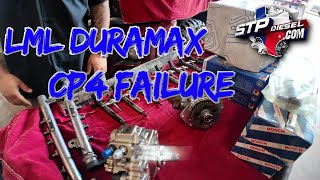
- Failing CP4.2 High-Pressure Fuel Pump (HPFP) or Sticking Fuel Control Actuator (FCA) 🔴 High Probability → Shop Fuel System Controller This applies specifically to the 2016 model with the LML Duramax engine. The Bosch CP4.2 pump is known to fail due to a lack of lubricity in US diesel fuel, causing internal components to wear and create metallic debris. This debris causes the Fuel Control Actuator (regulator) on the pump to stick, leading to uncontrolled high pressure. P0088 is a classic sign of this process beginning.
How to confirm: Carefully remove the fuel filter and drain its contents into a clean, clear container. Swirl the fuel and inspect for shiny, metallic particles, often described as a 'silver dust'. Use a magnet on the outside of the container to confirm if the particles are steel. The presence of any metal indicates CP4.2 pump failure.
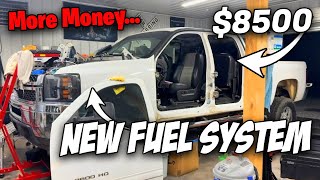
Typical fix: If metal debris is found, the entire fuel system must be replaced to prevent repeat failure. This is often sold as a 'CP4 Disaster Kit' and includes the high-pressure pump, all 8 injectors, 🎬 Watch: A complete walkthrough of the CP4 disaster kit installation. both fuel rails, and all high and low-pressure fuel lines. The fuel tank must also be removed and cleaned. If no metal is found, you may be able to replace only the Fuel Control Actuator (FCA) on the pump, but the risk of pump failure remains.
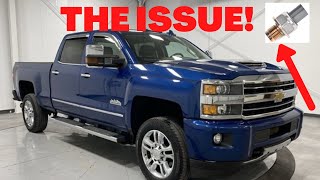
Est. part cost: $150-$300 (Regulator only), $2,700-$5,300 (Full Fuel System Kit) - Faulty Fuel Rail Pressure Sensor or Connector 🔴 High Probability → Shop Fuel Pressure Sensor This is a primary cause for the 2017-2018 L5P engine. The sensor can fail electronically, but a more common issue is a poor connection at its electrical pigtail. GM issued TSB 20-NA-197 for this exact issue, noting that corrosion or poor terminal tension at the connector can cause a variety of fuel pressure codes, including symptoms of high pressure. The sensor is located on the passenger-side fuel rail.
How to confirm: With a scan tool, observe the fuel rail pressure reading with the Key On, Engine Off (KOEO). The pressure should be near zero. If it reads a high value, the sensor is faulty or its wiring is shorted. Inspect the sensor connector for corrosion, spread terminals, or damage. Wiggling the connector while monitoring live data may show erratic readings.
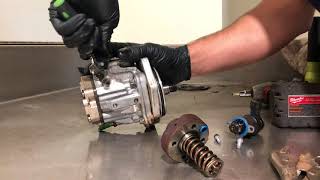
Typical fix: Replace the faulty fuel rail pressure sensor (GM Part #12686809). It is highly recommended to also replace the connector pigtail (GM Part #19367009) as per TSB 20-NA-197, 🎬 See how this sensor and connector cause L5P fuel issues. or use an aftermarket pigtail with improved gold-plated pins. Applying dielectric grease is also advised.
Est. part cost: $100-$250 (Sensor), $30-$60 (Pigtail) - Faulty Fuel Pressure Regulator #2 (Pressure Relief Valve) 🟡 Medium Probability → Shop Fuel Injection Pressure Regulator Applies to both LML and L5P engines. This is a mechanical safety valve on the fuel rail designed to bleed off excessive pressure. It can stick closed or become clogged with debris (if present from a failing LML pump), causing pressure to spike. On L5P models, it's a less common failure than the sensor but still a possibility.
How to confirm: Diagnosis is difficult without ruling out other components first. On LML models, a forum member on DuramaxDiesels.com suggested removing and cleaning the valve screen. On L5P models, mechanics often recommend replacing the entire fuel rail assembly as the valve is not always sold separately, though some vendors do offer it.
Typical fix: Replace the fuel pressure relief valve. On L5P models, this may require replacing the entire driver's side or passenger's side fuel rail assembly.
Est. part cost: $150-$400 (Valve or full rail assembly)
Rare But Worth Checking
- Excessive Lift Pump Pressure: If the truck has been modified with a high-performance aftermarket lift pump (e.g., FASS, AirDog), setting its output pressure too high can overwhelm the high-pressure pump's regulator, causing P0088. This often occurs during deceleration when fuel demand drops suddenly. A detailed YouTube diagnostic by 'Pine Hollow Auto Diagnostics' showed this exact scenario, which was fixed by slightly reducing the lift pump's output pressure.
- Wiring Harness Issue: Chafed or damaged wiring to the fuel rail pressure sensor or fuel control actuator can cause a short to voltage, resulting in a false high-pressure reading or command. A user on Diesel Bombers forum noted that on LMLs, wires behind the A/C compressor are a known spot for chafing.
Diagnosis Steps
- Connect an OBD-II scanner and confirm P0088 and any other related codes (P0087, P0191, P128E).
- Monitor live data for 'Desired Fuel Rail Pressure' and 'Actual Fuel Rail Pressure'. With P0088, 'Actual' will be significantly higher than 'Desired', especially during idle or deceleration.
- (CRITICAL STEP for 2016 LML Models) Turn off the engine. Carefully remove the fuel filter and drain its contents into a clean, clear jar. Inspect for metallic particles ('silver dust'). Use a magnet to confirm if they are ferrous (steel). If metal is found, the CP4.2 pump has failed. Do not proceed further; the entire fuel system needs replacement.
- (For 2017-2018 L5P Models) If the sensor is suspected, turn the key to 'On' without starting the engine. Check the 'Actual Fuel Rail Pressure' reading. It should be close to 0 PSI. If it shows a high reading, the fuel rail pressure sensor is likely bad or its wiring is shorted.
- Inspect the wiring harness and connector for the fuel rail pressure sensor (passenger side on L5P) and the high-pressure pump's fuel control actuator. Look for any signs of chafing, corrosion, or loose connections, paying close attention to the sensor connector as noted in TSB 20-NA-197.
- If the truck has an aftermarket lift pump, verify its output pressure. If it's adjustable, try lowering the pressure slightly to see if the P0088 code disappears during deceleration, as this can be a cause.
- If the sensor, wiring, and lift pump pressure (if applicable) are good, the issue may be the fuel control actuator (regulator) on the pump (LML) or the pressure relief valve on the rail (LML/L5P).
Parts You'll Likely Need
- High-Pressure Fuel Pump (CP4.2) & Disaster Kit
(OEM #12661059 (Pump Only))— The most common cause of P0088 on the 2016 LML engine due to its high failure rate. A full system kit is required if metal is present.
Trusted brands: Bosch (OEM), Industrial Injection (Kits), ZZ Diesel (Kits) - Fuel Rail Pressure Sensor (L5P)
(OEM #12686809 (supersedes 12647909))— A very common failure point on the 2017-2018 L5P engine, either the sensor itself or its connector.
Trusted brands: GM (OEM), ACDelco, Alliant Power - Fuel Rail Pressure Sensor Connector Pigtail (L5P)
(OEM #19367009)— Often the root cause of the sensor issue on L5P engines due to corrosion or poor terminal fit, as identified in TSB 20-NA-197.
Trusted brands: GM (OEM), ACDelco, Aftermarket (with gold pins) - Fuel Pressure Regulator #2 (Relief Valve)
(OEM #N/A (Often part of rail assembly))— Can get stuck or clogged, causing pressure spikes. A secondary cause on both LML and L5P engines.
Trusted brands: GM (OEM)
Related Codes That Often Appear With This One
- P0087 — Fuel Rail/System Pressure - Too Low. Seeing both high and low pressure codes often indicates an erratic fault, such as a sticking regulator, a failing sensor providing fluctuating readings, or widespread fuel system contamination causing unpredictable pressure.
- P0191 — Fuel Rail Pressure Sensor Circuit Range/Performance. This code points more directly to a problem with the sensor or its circuit, strengthening the diagnosis of a bad sensor or wiring issue, and is cited in TSBs alongside P0088.
- P128E — A GM-specific code related to fuel system performance, cited in TSB PIP5151F alongside P0088 as an indicator of fuel system issues, often stemming from contamination.
Technical Service Bulletins (TSBs) & Recalls
- PIP5151F: Addresses hard start, no start, and fuel pressure codes (including P0088) caused by fuel system contamination from sources like water (rust) or Diesel Exhaust Fluid (DEF).
- 16-NA-102: Similar to the above, this TSB covers DTCs P0087 and P0088 and outlines the procedure for replacing the entire fuel system in the event of injection pump failure and contamination.
- 20-NA-197: Specific to L5P engines, this bulletin points to corrosion or damage at the fuel pressure sensor electrical connector as the cause for various fuel pressure DTCs and recommends replacing the connector pigtail.
Platform-Specific Known Issues
- 2016 LML Engine: These engines are equipped with the Bosch CP4.2 high-pressure fuel pump, which has a well-documented history of failing without warning. The failure contaminates the entire fuel system with metal debris, making P0088 a critical code that demands immediate inspection for metal.
- 2017-2018 L5P Engine: A known issue exists with the electrical connector for the passenger-side fuel rail pressure sensor, which can become loose or corroded, leading to erratic signals and false P0088 codes.
Mechanic-Grade Diagnostic Values
- L5P Fuel Rail Pressure Sensor - Key On, Engine Off (KOEO) — expected: ~0 PSI. Failure: If the sensor reads a high value (e.g., 4,600+ PSI) with the engine off, the sensor or its wiring is shorted to the 5V reference.
- L5P Fuel Rail Pressure Sensor - Unplugged — expected: 0 PSI. Failure: Unplugging the sensor should result in a 0 PSI reading on the scan tool. This confirms the ECM is seeing an open circuit.
- LML Fuel System Vacuum Test (Stock system, no lift pump) — expected: Should pull at least 12 inches of Hg vacuum while cranking for 15 seconds.. Failure: Less than 12 inches of Hg can indicate a restriction in the fuel lines (like a collapsed soft line) or a weak high-pressure pump gear pump.
- LML Injector Return Flow Test — expected: Less than 3 ml in 15 seconds of cranking or idling.. Failure: Greater than 3 ml of return fuel from a single injector in 15 seconds indicates a bad injector which can affect overall rail pressure regulation.
Scan Tool Commands That Help
- GDS2 (GM Dealer Scan Tool): Fuel System Test — This function allows the technician to command specific fuel pressures and observe how the Fuel Control Actuator (FCA) and sensors respond, which is critical for isolating a faulty component without just replacing parts.
- GDS2 (GM Dealer Scan Tool): Injector Balance Rates — While not a direct test for P0088, observing injector balance rates can reveal a faulty injector that might be causing erratic fuel demand, indirectly contributing to pressure regulation problems. Rates outside of +4 to -6.9 indicate an issue.
Wiring & Ground Locations
- G218 — Located behind the driver's side kick panel, under the dash.. This is a major cabin ground point. While not directly in the engine bay, poor grounding here can cause a host of bizarre electrical issues in the BCM and other modules that can interfere with proper ECM communication and sensor readings.
- Main Engine to Frame/Battery Grounds — A primary ground cable runs from the negative battery terminal to the engine block (often near the alternator or starter) and a smaller wire to the chassis/frame near the battery.. A loose or corroded main engine ground is a known issue on K2XX trucks. This can cause voltage instability for all engine sensors, including the fuel rail pressure sensor and fuel control actuator, leading to false readings and codes like P0088. A user on DuramaxDiesels.com fixed a P0088 code by finding and tightening a loose ground wire.
- L5P Fuel Rail Pressure Sensor Connector — On the passenger side fuel rail. The connector has a red locking tab that must be pulled out before the connector can be squeezed and removed.. This connector is the subject of TSB 20-NA-197 and is a very common failure point. The terminals can lose tension or corrode, causing intermittent high or low readings. Replacing the pigtail, often with an upgraded version with gold-plated pins, is a common fix.
Real Owner Repair Stories
- Reddit user in r/Duramax (2019 GMC Sierra 2500HD L5P) — Engine would miss once or twice at highway speeds, then eventually went into limp mode with reduced power and threw code P0193 (Fuel Rail Pressure Sensor Circuit High).
❌ Tried (didn't work) Initially just ordered the new sensor.
✅ What actually fixed it Another user advised that tweaking the male terminal pins on the sensor itself for a tighter fit and applying dielectric grease can be a temporary or permanent fix. The user confirmed this is a common issue and recommended replacing both the sensor and the pigtail connector. - YouTube channel 'Pine Hollow Auto Diagnostics' (Duramax truck with an aftermarket PPE lift pump.) — P0088 code would set specifically during deceleration (off-throttle).
❌ Tried (didn't work) Initial diagnosis focused on the high-pressure side components.
✅ What actually fixed it The aftermarket lift pump's pressure was set too high (around 14-15 PSI). During deceleration, when the high-pressure pump's demand for fuel dropped, the high inlet pressure from the lift pump overwhelmed the system's ability to regulate, causing a spike. The fix was to manually adjust the lift pump's output down to around 9-10 PSI, which provided enough fuel under load but prevented the pressure spike on decel. - DuramaxDiesels.com forum user (LMM Duramax (similar fuel system principles to LML)) — P0088 code, fuel rail pressure spiking to 29,000 PSI at idle.
❌ Tried (didn't work) Replaced both fuel pressure regulators (FPR).
✅ What actually fixed it A responding user suggested checking ground and positive connections. They had experienced the same issue and found a loose ground wire was causing the rail pressure to max out intermittently.
OEM Part Supersession History
12647909→12686809— Standard part revision and update by the manufacturer.
Heads up: The new part number (12686809) is the correct replacement for the original. There are no known incompatibility issues.
Model Year Variations Within This Range
- 2016: Uses the 6.6L LML engine with a Bosch CP4.2 high-pressure fuel pump. P0088 on this engine is a strong indicator of impending CP4.2 failure and metal contamination. Diagnosis must start with checking the fuel filter for metal debris.
- 2017-2018: Uses the 6.6L L5P engine with a Denso HP4 high-pressure fuel pump. This pump is significantly more reliable. P0088 on these models is most commonly caused by a faulty fuel rail pressure sensor or, more specifically, a poor connection at its electrical pigtail (TSB 20-NA-197).
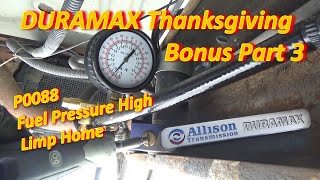
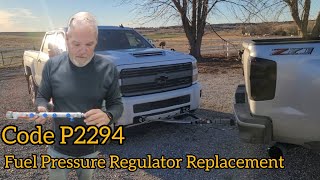
Helpful Videos
Used OEM Parts in Stock
New Aftermarket Parts Available



The information in this article is provided for general reference and educational purposes only. Vehicle specifications, procedures, and part compatibility can vary by production date, trim level, and region. Always consult your vehicle's factory service manual and verify part numbers before purchasing or performing repairs. Safety-critical components such as airbags, seat belts, and braking systems should be installed by a qualified professional.
- Gmc SIERRA 3500:
- 🧭 Diagnostic Flowchart
- 🎬 Helpful Videos
- 🛍️ Shop This Part
- What's Unique About the 2016-2018 Gmc SIERRA 3500
- Symptoms You May Notice
- Most Likely Causes
- Rare But Worth Checking
- Diagnosis Steps
- Parts You'll Likely Need
- Related Codes That Often Appear With This One
- Technical Service Bulletins (TSBs) & Recalls
- Platform-Specific Known Issues
- Mechanic-Grade Diagnostic Values
- Scan Tool Commands That Help
- Wiring & Ground Locations
- Real Owner Repair Stories
- OEM Part Supersession History
- Model Year Variations Within This Range
- 🎟️ Get 5% Off